Practical answer first: when you have extra luggage and are shopping Amsterdam travel deals, always compare total door-to-door cost and cancellation/flexibility rules across the same dates and passenger count — then test moving your trip by a day or two to see how baggage rules and change fees shift value. That short check can reveal whether a package or separate bookings will save time or money for your specific needs. Start by listing exactly how many checked bags, oversized items, or special gear you’ll bring, because inclusions differ widely. Then run four side-by-side scenarios: bundled package with baggage included, bundled without baggage, separate flight+hotel with paid bags, and train-plus-hotel alternatives. Use provider pages to verify final baggage allowances, change fees, and refund rules before booking.

Test package value fairly
| Booking approach | Best for | Tradeoff to check |
|---|---|---|
| Package with baggage included | Travelers wanting convenience and predictable luggage allowance | May carry stricter change rules and less flexibility for date shifts or oversized items |
| Package without baggage included | Flexible packers who can compare add-on baggage costs separately | Requires calculating final baggage fees and may hide higher add-on costs at checkout |
| Separate flight + hotel bookings | Travelers who need bespoke baggage options or easy date changes | More time-consuming to compare and manage separate policies and potential coordination risk |
| Hybrid: flight + rail or ferry plus hotel | Those with very large/odd-sized items or intra-Europe flexibility | May require extra transfers and logistics but can avoid airline baggage rules |
Check current package and separate options
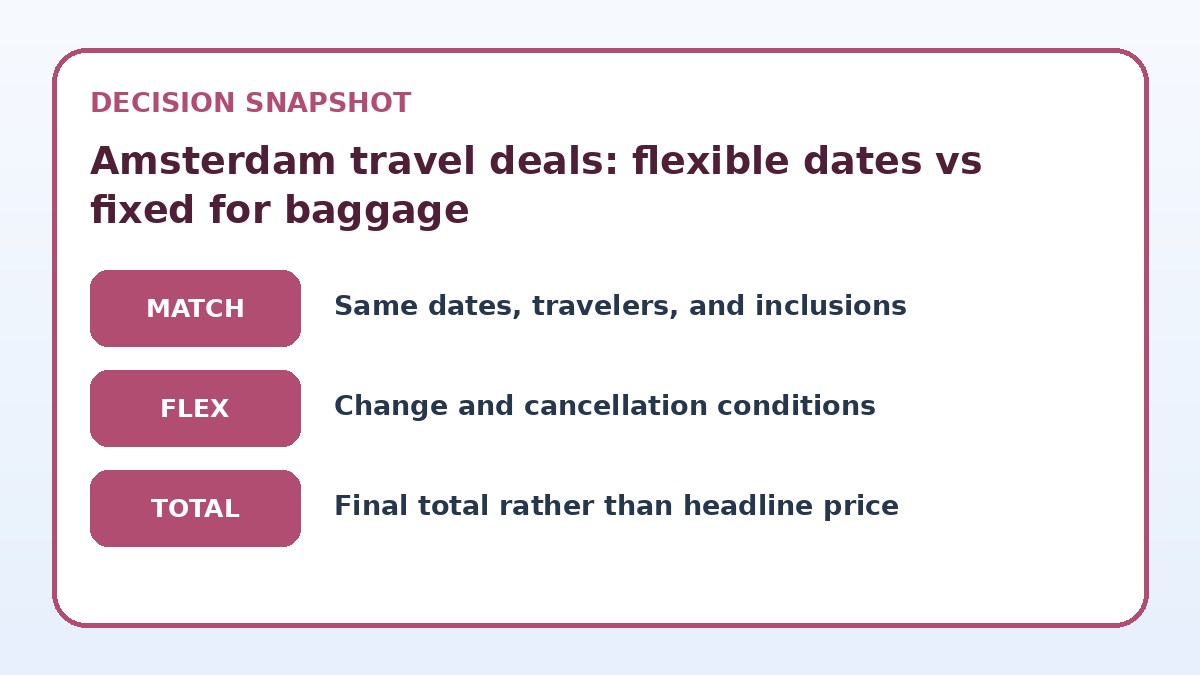
Use identical dates, travelers, room needs, baggage, and flexibility so the comparison stays meaningful.
What to compare before judging a bundle useful
Before you decide whether a package is worth it, map out the variables that most affect travelers with extra luggage: allowed number of checked bags, weight and size limits, extra-item surcharges (sports equipment, musical instruments), change and cancellation fees, and whether baggage is refundable or transferable between passengers. Don’t be distracted by headline package language that says “baggage included” without specifying the exact allowance. For example, one bundle may include a single 23 kg bag while another offers two 20 kg bags — that difference matters when you’re packing boots, camera gear, or surfboards.
Next, ensure you are comparing like with like: same travel dates, same traveler count, and identical start and end points. If you’re flexible by a day or two, run the same comparisons for shifted dates; airlines and hotels sometimes change rules or inventory between adjacent days, and a small date change can reduce baggage surcharges or open different flight routing that accommodates extra bags without connection fees. Use provider booking pages to confirm the precise baggage line items and the fine print for changes before assuming a package is superior.
Inclusions: reading the fine print for luggage rules
A headline that says “baggage included” is only the beginning. Read the package inclusions and the carrier’s baggage policy on the final booking page: how many checked pieces, maximum weight, allowed dimensions, and whether measured or priced by weight. Pay attention to special-item clauses — oversized items or sports gear are often excluded or require separate pre-purchase handling. If the package uses multiple carriers (e.g., an international flight plus a regional carrier or a ferry), baggage allowances may not transfer across segments; you may need to re-check items or pay separate fees at connection points.
Also check what happens when you change flights or dates inside a bundle. Some packages lock you into supplier change rules that apply to the included airfare only, and those rules determine bag refunds, rebooking fees, and whether purchased baggage remains valid for a new flight. Where possible, test a hypothetical change on the supplier’s booking page so you can see the fees and whether pre-paid baggage transfers to a rebooked itinerary or must be repurchased. Always capture screenshots or save booking condition text for reference.
Look past the headline total
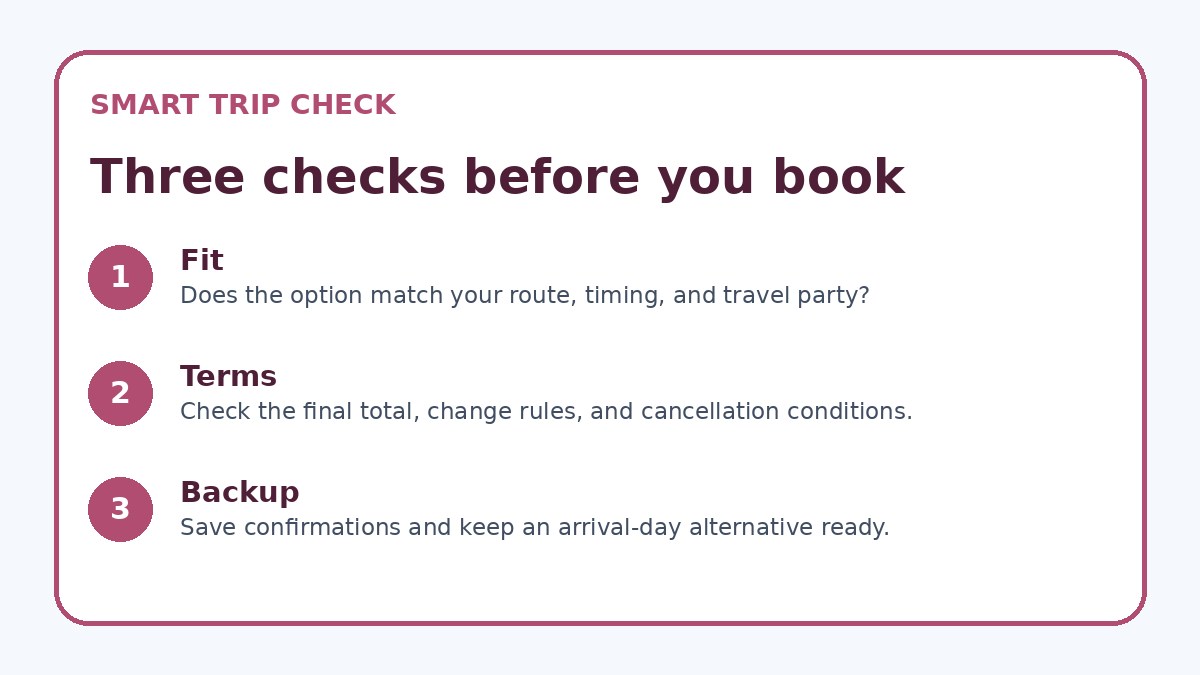
Compare inclusions and change conditions before deciding whether a package is genuinely useful for this trip.
Deal comparison checklist
- List every piece of luggage by type, weight estimate, and dimensions so you can match it to carrier limits.
- Run price comparisons for your exact passengers and luggage on your intended dates plus one day earlier and one day later.
- Open the final provider booking page for each option and copy the baggage allowance, change and cancellation policy, and any special-item rules.
- For packages, verify whether pre-paid baggage transfers to a rebooked date or requires repurchase; confirm the procedure on the supplier’s terms page.
- If carrying sports or fragile gear, contact the carrier or a specialist shipper to confirm handling, required coverings, and declared-value limits before booking.
- Save screenshots or download terms and booking confirmations showing baggage inclusions and fees for reference at check-in and in case of disputes.
Flexibility: when shifting dates helps and when it doesn’t
Flexible dates are most helpful when airlines and hotels have inventory-based baggage rules or tiered pricing that changes day-to-day. If you can move travel by a day or two, you might find flights with included checked bags or different routings that permit more luggage without fee. For hotels, shifting dates may open a rate that includes extra services (like early check-in or storage) that reduce the hassle of carrying items in the city. Run identical searches for at least three nearby date pairs: your preferred dates, one day earlier, and one day later, because small shifts can unlock different fare buckets or package options.
However, date flexibility isn’t a cure-all. If the package’s baggage terms are fixed and strict regardless of departure day, the flexibility benefit is limited. Also, moving travel to reduce baggage fees may increase hotel costs, require different transportation to/from airports, or make the trip inconvenient. Balance the change in luggage charges against added costs or logistical headaches. Always recalculate the full trip cost — including pre-paid baggage, potential rebooking fees, ground transfers, and time lost — before deciding to move dates.
Traveler-specific value: choose by luggage type and trip goals
Your optimal approach depends on what you’re carrying and how you want to travel. For a family with multiple standard suitcases, packages that include two checked pieces per person can simplify packing and often beat add-on fees. For a solo traveler with one heavy bag, a basic flight plus pay-for-bag might be cheaper. For travelers with oversized or fragile items (bikes, skis, surfboards), separate bookings where you can negotiate or pre-purchase specific handling with carriers or specialist shippers often reduce risk and give clearer liability terms.
Also factor in trip goals: are you prioritizing arrival convenience (door-to-door transfers, hotel with luggage storage), or minimizing price and maximizing flexibility? If convenience matters and you don’t mind a modest premium, a bundle that covers transfers and baggage handling could be worthwhile. If flexibility and potentially shifting plans are likely, separate bookings with refundable or easily changed components may be more valuable despite the extra legwork. Identify your highest-value luggage needs and let those steer the decision.
Travel Deals & Booking Strategy questions travelers ask
How do I test flexible dates to get better baggage terms when booking Amsterdam travel deals?
Start by running identical searches for your preferred travel window and then rerun them shifting departure and return by one or two days in each direction. Compare the total out-the-door cost for each scenario, including the exact baggage line items shown on the supplier checkout. Pay attention to route changes that appear with date shifts — a different connection or carrier can change baggage allowances. Record the supplier’s baggage policy text from the final booking page for the specific itinerary you’re comparing before relying on that option.
Are bundled packages usually cheaper for travelers with extra luggage?
Bundles can be cheaper for standard checked luggage when the package explicitly includes the number and weight of bags you need, but that isn’t always the case. A bundle may include a single bag at lower weight than you need or apply a non-refundable baggage fee if you change plans. To avoid false savings, compare total costs for the same passenger count, dates, and exact baggage allowance across package and separate-booking scenarios, and verify change and refund rules on the supplier’s final pages before deciding.
What should I verify on the provider booking page to avoid surprises at the airport in Amsterdam?
On the provider’s final booking page, confirm the number of checked pieces, per-piece or per-kilogram weight limits, maximum linear dimensions for oversized items, and whether special equipment requires advance notification or a separate fee. Check refund and transfer rules for pre-paid baggage in case you change flights, and verify whether multi-carrier itineraries treat baggage consistently across segments. Also note baggage drop deadlines and any required documentation for items with declared value; save the policy text or take screenshots for check-in reference.
Final decision note
Deciding whether a bundled package or separate bookings work best for Amsterdam travel deals when you have extra luggage boils down to matching your specific baggage needs to the precise inclusions and change rules offered. Use flexible dates as a diagnostic tool: test adjacent days to unearth different fare buckets, baggage allowances, and routings that may reduce fees or add convenience. Always verify baggage allowances and change policies on the final provider booking page before committing. If you carry oversized or fragile gear, consider separate arrangements with confirmed handling procedures. A few methodical comparisons and saved booking terms will help you choose the option that minimizes both cost and airport stress.
Continue planning
Check current options and final conditions
Use the provider page to confirm live availability, the final total, cancellation terms, and every condition that matters to your trip.
This evergreen planning guide was created with AI-assisted drafting and a structured quality review. It does not display live prices, schedules, availability, visa guidance, or provider rankings. Verify current details before booking. Some links are affiliate links; we may earn a commission at no additional cost to you.