If you’re flying from Seoul to Taipei with extra luggage, the single most practical step before booking is to compare total door-to-door baggage cost and transfer handling across flight options. That means checking carry-on and checked-bag allowances, per-kilogram or per-piece fees, size limits, and how connections or terminal changes affect whether you must reclaim and re-check bags. Also confirm whether the fare allows online add-ons, refundable baggage, or only airport purchases. Don’t forget non-airline items that affect luggage: transport to/from both airports, customs allowances for Taiwan, and whether your arrival terminal has practical baggage trolleys and extra-handling services. Below you’ll find a focused pre-booking checklist, decision tradeoffs to weigh, and concrete steps to verify on carrier booking pages so you can pick the Seoul–Taipei flight that fits bulky packing plans without surprises.
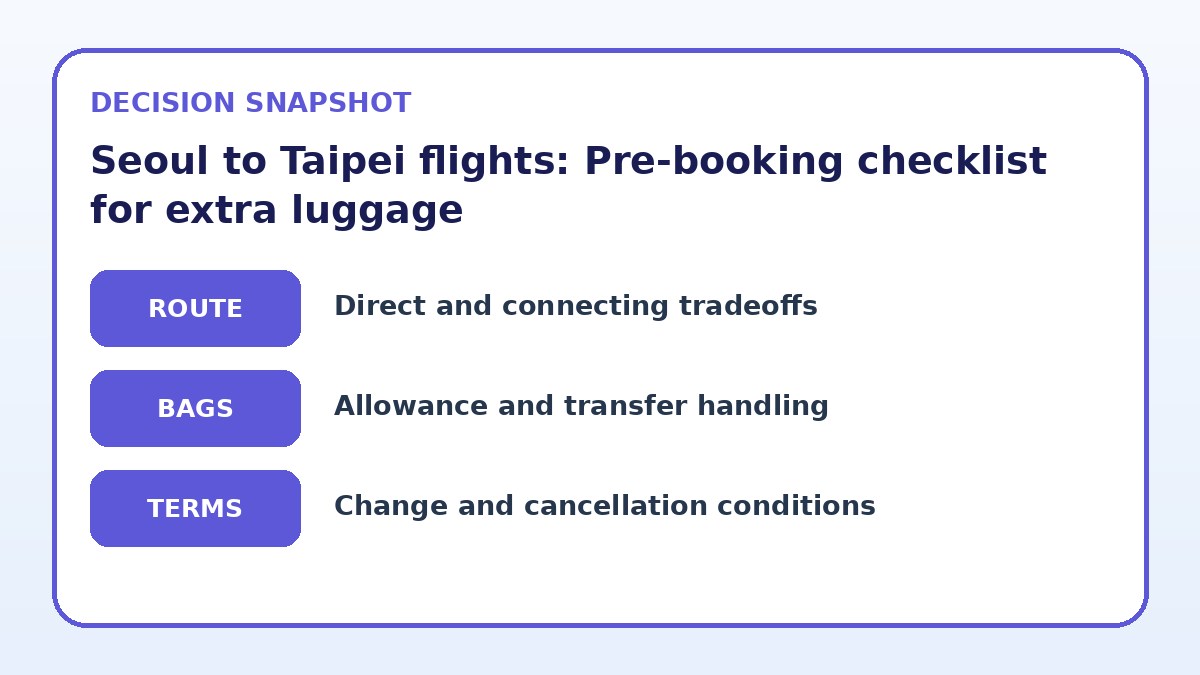
See current options before you compare the details
Availability and final conditions change. Open Trip.com now or keep reading for the practical comparison.
Understand the airline baggage rules before you pick a fare
Airlines use different systems: some allow a set number of checked pieces (piece concept), others use a weight-based allowance (kilogram concept). For travelers with extra luggage, that difference is decisive. If you plan a few heavy suitcases, a piece-based fare that includes two checked bags could be cheaper than a weight-based fare with a small included allowance and high per-kilogram fees. Also check the permitted dimensions—airlines treat oversized bags and sports equipment differently and often charge a separate oversize fee. These details are defined in the carrier’s baggage policy page and within the fare rules on the booking screen; always expand the fare rule links and read the exact baggage table shown at checkout.
When fares look similar on price comparison pages, inspect the total cost for the luggage you actually expect to bring, not the base fare. Look for explicit statements about when and how you can buy extra allowance: is pre-purchase allowed online, or must you pay at the airport? On many carriers pre-buying baggage online is cheaper and guarantees allowance, while airport purchases can be pricey and sometimes rejected if weight limits are exceeded. If you see ambiguous text, contact the airline or use the help chat on the booking site and save screenshots of any conversational confirmation about baggage entitlements.
Weigh direct versus connecting itineraries with heavy bags
Direct flights generally reduce luggage handling complexity: fewer transfers mean fewer chances for delay, loss, or extra handling fees. If a direct Seoul–Taipei service exists for your travel dates, it will often be the least risky choice for oversized or multiple checked bags. But direct options can be limited, more expensive in base fare, or carry lower included allowances depending on the airline’s product. Consider whether the higher fare is offset by avoided transfer fees, saved time, and reduced chance of needing to re-check or pay handling charges during a connection.
With a connecting itinerary you must compare transfer rules carefully. Some carriers have interline agreements that allow through-checking of bags to the final destination; others require you to collect luggage and re-check it during the layover. That matters especially if you change terminals, switch airports, or travel on separate tickets. Verify on the booking page whether the itinerary shows checked-through baggage, and if it doesn’t, contact the airline to confirm. Also factor minimum connection times and whether arrivals and departures occur in different terminals that add shuttle time and handling complexity.
| Approach | Best for | Tradeoff to check |
|---|---|---|
| Choose a higher-fare ticket with generous included bags | Travelers with several heavy suitcases who prefer all-in pricing and fewer transaction hassles | Higher base fare but usually predictable total cost and fewer airport surprises |
| Select a low base fare and pre-purchase extra kilograms or pieces | Those who can estimate pack weight precisely and prefer lower upfront ticket cost | Requires careful calculation; misunderstanding weight can lead to costly airport fees |
| Book a connecting itinerary with through-checked baggage | Travelers prioritizing price or route options while avoiding manual re-checking during connections | Depends on interline agreements; verify through-checking before booking or risk reclaiming bags |
| Ship bulky or fragile items by courier instead of carrying them | People with oversized gear or high-value fragile items who want reliable handling and tracking | Extra paperwork, transit time, and potential customs complexity compared with checked baggage |
Ready to check the option that fits your plan?
Use your exact dates and traveler details so the provider page can show the current total and conditions.
Plan for oversized, fragile, or specialty items
If you’re traveling with items like bicycles, surfboards, musical instruments, or fragile goods, they often fall outside standard checked-bag rules and are treated as special baggage or cargo. Many airlines require advance notice or reservation for bulky items and may set strict packing, weight, and dimension limits. Check whether the carrier has a special-items booking form or a separate handling fee, and whether the item must be presented to check-in counters earlier than standard baggage. Where available, buying a dedicated seat or crate for a fragile instrument can be more secure—but it requires confirming the provider’s policies and seat-blocking rules on the booking page.
If the item is valuable, look into declared-value protection or insurance—airline liability for damaged special items can be limited. If you can’t verify coverage on the airline’s page, contact them and request their special-baggage acceptance and claims process in writing. Consider alternative solutions, such as shipping via a reputable courier or cargo service if the airline’s limits, fees, or handling procedures create too much risk. Compare the total cost, transit time, and customs paperwork of shipping against paying airline special-item fees.
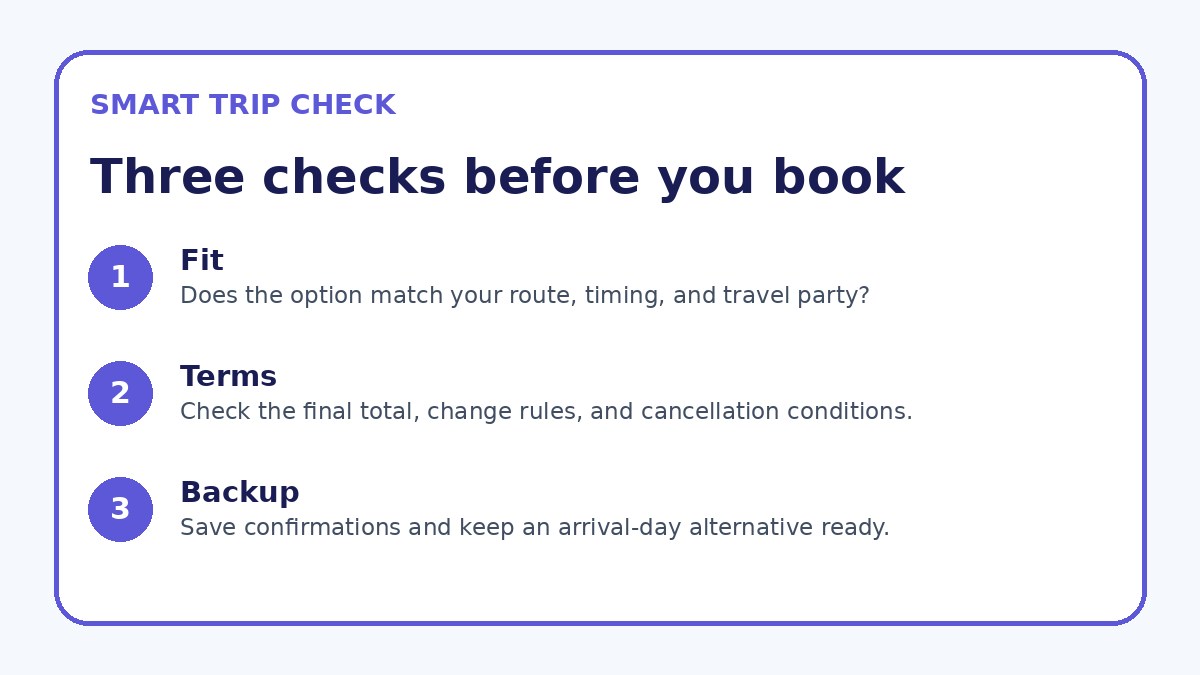
Before you book
- Confirm the precise checked-bag allowance (pieces or kilograms), per-item size limits, and oversize charges on the airline’s official baggage policy page.
- Calculate total baggage cost for your expected luggage across all itinerary legs, including both pre-purchase and airport surcharge scenarios.
- Verify whether checked luggage will be through-checked to Taipei on your chosen itinerary or must be reclaimed during any connection.
- Check terminal information and arrival/departure procedures at both Seoul and Taipei airports; note recommended check-in time for special or oversized items.
- If carrying specialty items (bikes, instruments, sports gear), reserve special baggage acceptance in advance and request written confirmation of handling requirements.
- Decide if courier or cargo shipping is a better option; compare total cost, transit time, insurance, and customs paperwork before settling the booking.
Practical checks: seats, airport logistics and documentation
Before you finalize the booking, confirm the airport logistics in both Seoul and Taipei. Different Seoul airports and terminals (for example, Incheon versus Gimpo) have varying check-in counters, baggage facilities, and transport links; Taipei likewise has facilities that differ by terminal. Confirm which terminal your flight uses and whether the airport offers assistance services or trolleys for heavy bags. If you need meet-and-assist or porter service, check whether the airline or the airport provides it and whether it must be booked in advance. Factor in travel time to the airport when accounting for extra time needed to check oversized luggage.
Also verify travel documentation that affects baggage: customs allowances and prohibited items for Taiwan, potential agricultural inspection rules, and any paperwork for restricted goods. When booking, carefully read the airline’s guidance on carrying lithium batteries or declared-value items and whether certain batteries must travel in carry-on. Always check the provider’s final booking page for the exact baggage charges and allowable sizes before completing payment; if helpful, compare availability and conditions on Trip.com or another aggregator but confirm on the airline’s site before purchase.
Frequently asked questions
Can I bring extra bags cheaper by paying at the airport instead of pre-booking online?
Whether airport baggage fees are cheaper depends on the carrier’s policy; many airlines charge higher fees at the airport than online for additional pieces or weight. Pre-purchasing online often guarantees allowance and avoids long check-in queues, while airport purchases can be higher and subject to availability limits. Before relying on an airport purchase, confirm the airline’s stated online and airport rates on the booking page and factor in the risk of delayed check-in or gate-checking if counters close earlier for large items.
What if my itinerary uses different airlines—will they transfer my luggage through to Taipei?
That depends on whether the airlines have interline or codeshare agreements and whether your connection is on a single ticket. When you book mixed carriers on one booking reference, checked baggage is more likely to be transferred to the final destination; separate tickets increase the chance you must reclaim and re-check luggage. Always verify on the itinerary page whether baggage is shown as checked through, and when in doubt contact the selling airline or both carriers to get explicit confirmation before you book.
Is it safer to ship heavy or fragile goods instead of checking them on a Seoul to Taipei flight?
Shipping can be safer for fragile or bulky items because specialized couriers provide tracking, packing guidance, insurance options, and door-to-door service. Airlines handle special items, but their liability limits and handling vary and damage claims can be slow or limited. Compare shipping transit times, customs paperwork, and total cost against airline special-item fees. If time permits and the courier offers adequate insurance and reliable tracking, shipping may reduce handling risk compared with placing delicate goods in checked baggage.
Final planning note
Traveling from Seoul to Taipei with extra luggage is manageable if you prioritize baggage rules and logistics before hitting buy. Focus on the total landed cost for your expected bags, whether allowances are piece- or weight-based, and whether your chosen itinerary allows through-checked baggage. Factor in terminal layouts, special-item procedures, and whether pre-purchasing baggage online will save both money and stress. For high-value or oversized items consider courier alternatives. Use the carrier’s final booking page to confirm exact charges and restrictions, and if you like, cross-check availability or conditions on Trip.com before final confirmation, but always rely on the airline’s published fare rules for your final decision.
Continue planning
Check current options and final conditions
Use the provider page to confirm live availability, the final total, cancellation terms, and every condition that matters to your trip.
This evergreen planning guide was created with AI-assisted drafting and a structured quality review. It does not display live prices, schedules, availability, visa guidance, or provider rankings. Verify current details before booking. Some links are affiliate links; we may earn a commission at no additional cost to you.