For a smooth Ho Chi Minh City to Da Nang transport day, prioritize your schedule, documents, and a simple backup plan. Decide first whether you’ll travel by air, rail, or bus—each has different departure points and implications for time in the city and arrival logistics. Pack a compact carry-on with essentials for meetings, chargers, and a quick-change outfit. Build arrival time into your calendar conservatively so you can clear immigration or transfer smoothly and reach your first appointment without stress. This article focuses on the immediate choices and checks to make on travel day: what to verify with providers, how to manage last-mile transfers, and which small items and confirmations will reduce friction for business travelers.
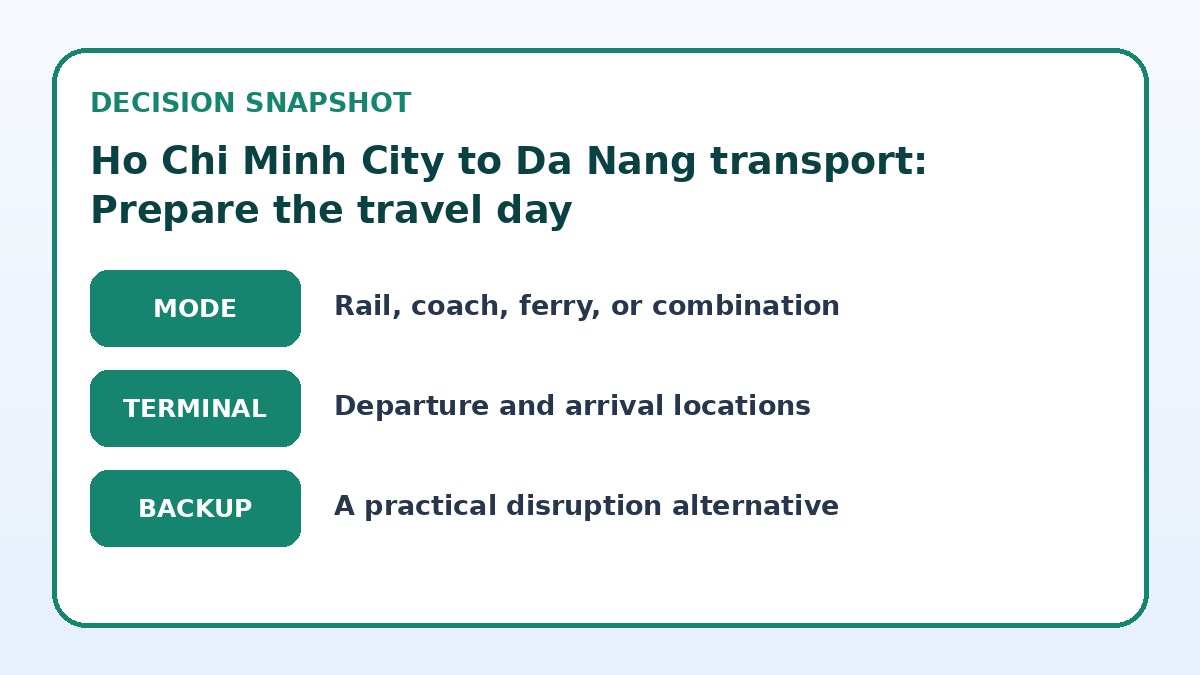
See current options before you compare the details
Availability and final conditions change. Open Trip.com now or keep reading for the practical comparison.
Choosing transport and the tradeoffs for business schedules
For business travelers the primary question is time versus predictability. Flights can shorten elapsed travel time between Ho Chi Minh City and Da Nang but introduce airport walk times, security, and potential check-in requirements. Trains or long-distance buses depart from different city locations and often deliver you closer to central districts, which can save local transfer time. Evaluate how the transport’s total door-to-door time fits with your meeting schedule, including buffers for delays and local traffic. Think beyond seat time: access to power, Wi-Fi reliability, and the ability to work en route may influence your choice.
When comparing options, weigh cancellation and change policies as part of schedule risk management. Business plans change; choose a fare or ticket type with flexible rebooking or reasonable change terms when possible. Also consider arrival time relative to evening or early-morning appointments: a later train that gets you downtown directly might beat an earlier flight that lands at a distant airport and requires a long transfer. Use official provider pages to confirm schedules and terms, and consider Trip.com or other platforms only as one place to compare live options before booking.
Timing the travel day: buffers, connections, and local transfers
Start by working backward from your first commitment in Da Nang: target an arrival slot that leaves at least 90–120 minutes margin before an important meeting to handle luggage, transport to your venue, and short refresh. If you choose a flight, check the carrier’s stated recommended arrival time for domestic departures on the booking page and add extra buffer for morning or evening peak traffic. For rail or bus, find the station’s location relative to your start and end points and allow additional time for security or platform changes. Avoid scheduling tight ground connections unless you have a confirmed itinerary and reliable local transfer.
Plan your last-mile transport in advance. Pre-booking a private transfer or a confirmed ride-hailing pick-up reduces uncertainty, but reconfirm pick-up location and expected wait times the night before travel. For downtown departure points, confirm station entrances and which platform serves your train, or which terminal your flight uses; these details are on the operator’s page and can change. If you rely on taxis or ride apps, factor surge pricing and driver availability into your buffer, especially around office-commute hours and holidays.
| Approach | Best for | Tradeoff to check |
|---|---|---|
| Flight (direct) | When absolute elapsed travel time matters and airport transfers fit your schedule. | More steps at airports and variable ground transfer time to central Da Nang. |
| Train | Working en route with reliable downtown arrival and fewer ground transfers. | Longer seat time than a flight; check station location relative to meetings. |
| Long-distance bus or coach | Budget-conscious or flexible schedules where door-to-door transport is prioritized. | Less legroom, fewer work conveniences, and potentially slower in traffic. |
| Hybrid (flight + ground transfer booking) | When flight availability is good but you want a guaranteed reliable pickup on arrival. | Higher cost and more moving parts to coordinate on travel day. |
Ready to check the option that fits your plan?
Use your exact dates and traveler details so the provider page can show the current total and conditions.
Pack and prepare: business essentials for a productive day
Assemble a carry-on with meeting essentials that keeps you presentable and functional on arrival. Include a compact, quick-iron or wrinkle-resistant outfit, portable charger and cables, a small toiletries kit for a fast refresh, and paper or digital copies of critical documents like itineraries and contact details. Place any physical tickets or confirmation printouts in an easy-to-reach folder. For train journeys, having snacks and water can be helpful; for flights, keep liquids within allowed sizes and accessible security trays.
Prepare devices and files ahead of the travel day to minimize airport or station work. Fully charge laptops and phones, and switch on airplane or offline modes as needed. Save meeting materials to local device storage and to a cloud service so you can access them if connectivity is unreliable. If you need to take calls, test noise-cancelling earbuds and identify quiet spaces at departure and arrival points where you can join short calls without background noise affecting professionalism.
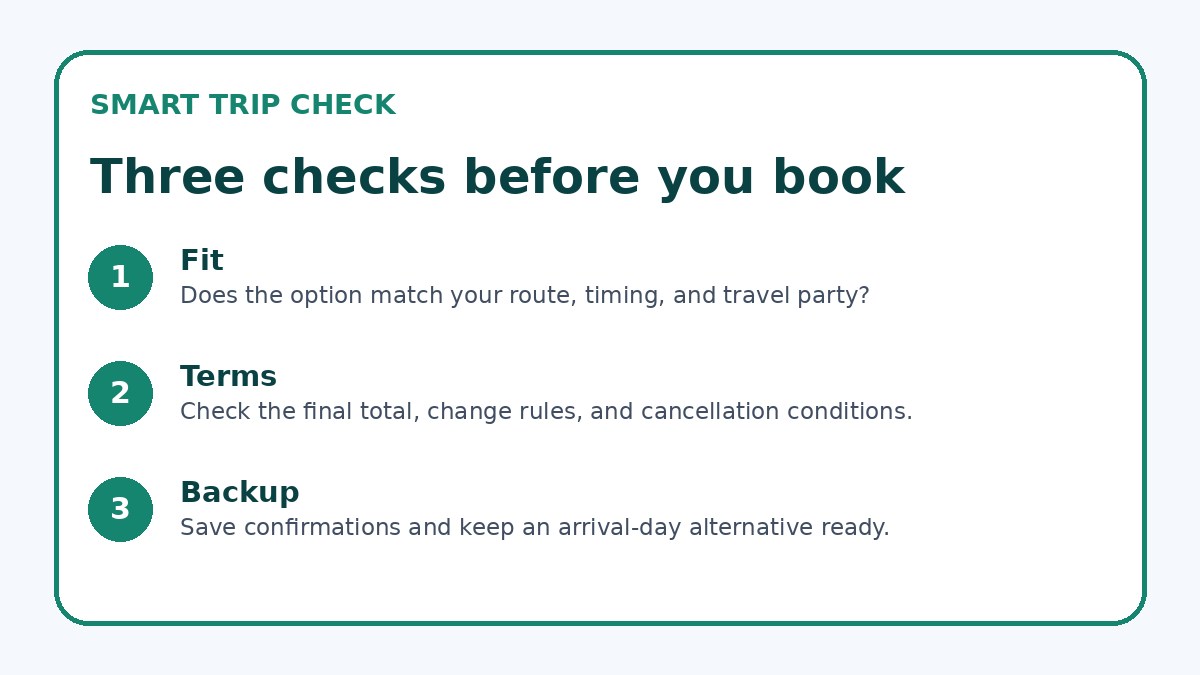
Before you book
- Confirm departure terminal/station and carrier-recommended arrival or check-in window on the final booking page.
- Pack a meeting-ready outfit, chargers, earbuds, and an offline copy of key documents in your carry-on.
- Pre-book and reconfirm your last-mile transfer (taxi, ride-hail, or private car) with exact pickup details.
- Save contact details and directions for your destination and the local office or meeting venue on your phone.
- Charge devices and store meeting files locally and in the cloud; test access without cellular data.
- Notify your first appointment of your expected arrival window and share a backup contact number.
What to verify before you finalize bookings
Before you hit confirm, check the carrier’s final booking page for exact departure location (terminal or station entrance), permitted luggage dimensions and weight, and change or cancellation terms that affect business plans. If a direct option exists, compare its total door-to-door time against connecting alternatives—sometimes a longer single-leg train or direct flight saves time by eliminating transfers. Verify any identification requirements, boarding windows, or special check-in steps listed by the operator because these affect your arrival timing and ground transfer choices.
Also confirm arrival logistics: which airport terminal or station platform you’ll reach, options for expedited immigration or security if available, and recommended ground transport providers or pick-up points. If you need corporate invoicing or receipts, ensure the booking channel provides them. Finally, check any local alerts that could affect travel day conditions, such as planned strikes or major events. For an extra comparison, Trip.com can show availability and booking terms alongside other platforms, but always rely on the carrier’s final page for definitive operational details.
Frequently asked questions
Should I choose a morning or evening travel day for business between Ho Chi Minh City and Da Nang?
Morning departures can give you more usable time upon arrival and reduce the chance of day-long delays affecting meetings, but they require earlier check-in and tend to clash with city rush hour for transfers. Evening trips might let you avoid some traffic on departure but can compress your arrival options for immediate meetings the next morning if you arrive late. Choose based on the meeting start time, your tolerance for early mornings, and whether you prefer to work en route; always build in an additional buffer for transfers and unexpected delays.
What documents and confirmations should I have ready on travel day for a smooth trip?
Keep your booking confirmations, a government ID appropriate for the carrier (national ID or passport), and any corporate travel authorizations easily accessible. Have digital backups of itineraries and meeting addresses, plus printed copies if you expect spotty connectivity. If you require receipts or corporate invoicing, verify that the booking channel delivers them and download them before travel. Also note emergency contact numbers for your transport provider and the local office in Da Nang.
How can I keep work productive during transit between Ho Chi Minh City and Da Nang?
Select transport that matches your work needs—trains often offer a steadier environment for laptop work, while flights require offline preparation and short meeting windows around boarding. Bring a power bank and charged devices, download files for offline editing, and use noise-cancelling headphones for concentration or calls. If you expect to join calls, verify signal availability and prepare a quiet spot plan for departure and arrival points. Finally, schedule critical meetings after a reasonable buffer so you arrive refreshed and not rushed.
Final planning note
Preparing the travel day for Ho Chi Minh City to Da Nang transport boils down to three practical moves: pick the mode that best matches your time and work needs, lock down precise departure and arrival details on the carrier’s final booking page, and simplify last-mile logistics with pre-booked transfers and a compact carry-on of business essentials. Build conservative buffers into your schedule, confirm contact details and document access, and have a backup plan for moderate disruptions. These steps reduce stress and help you arrive ready for productive meetings in Da Nang.
Continue planning
Check current options and final conditions
Use the provider page to confirm live availability, the final total, cancellation terms, and every condition that matters to your trip.
This evergreen planning guide was created with AI-assisted drafting and a structured quality review. It does not display live prices, schedules, availability, visa guidance, or provider rankings. Verify current details before booking. Some links are affiliate links; we may earn a commission at no additional cost to you.