
If you and your partner are planning Paris to Rome flights, the practical question to answer up front is simple: want the fastest, lowest-stress transfer, or are you willing to trade time for potential savings or schedule flexibility? For many couples a direct flight wins on convenience and fewer transfer worries; a connecting itinerary can make sense when direct options are limited, cheaper enough to justify the added time, or when you want to break the trip with a short stopover. Deciding between the two depends on your priorities: total door-to-door time, how much luggage you have, your tolerance for risk if a connection is tight, and whether either of you needs specific seating or meal preferences. Below you’ll find a clear comparison of the tradeoffs, a decision checklist couples can use while booking, and answers to common booking questions so you can make a confident choice.
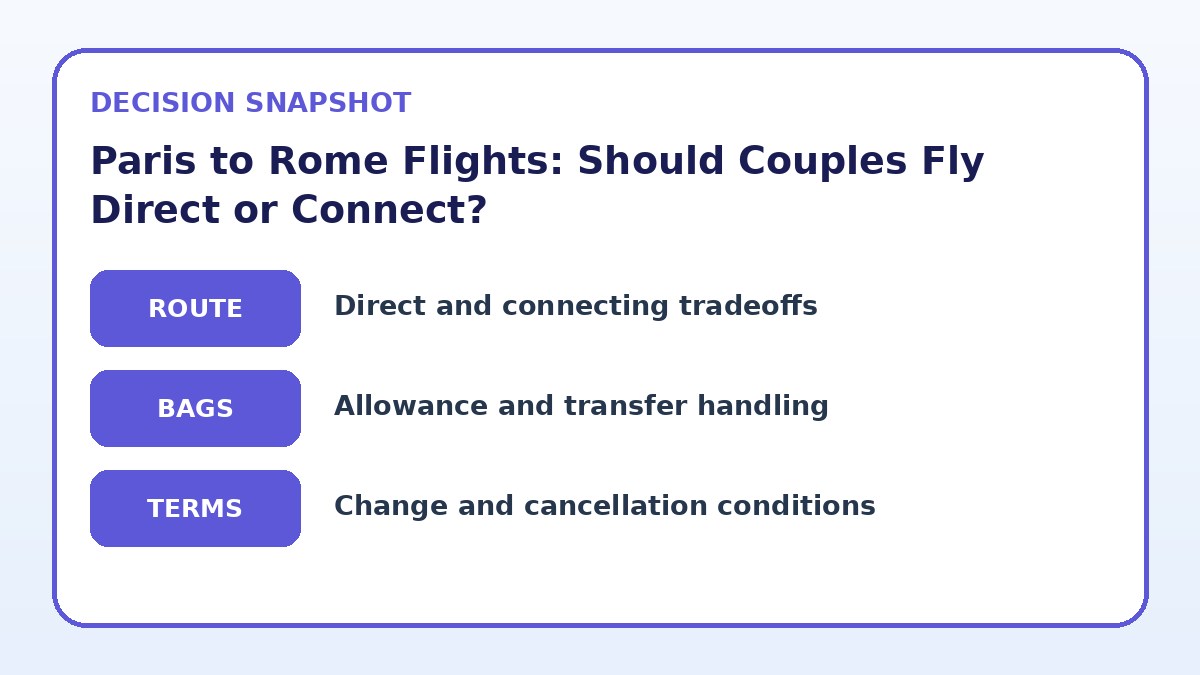
See current options before you compare the details
Availability and final conditions change. Open Trip.com now or keep reading for the practical comparison.
Practical tradeoffs: time, comfort and logistics
Direct flights typically save the most total travel time because they remove the need for a second boarding, a mid-route transfer, and extra time in the connecting airport. For couples who value maximized holiday time together—long dinners, afternoon museum visits, or an easy arrival after a late train—this can be decisive. Fewer moving parts also reduces opportunities for delays to cascade into missed connections, lost luggage, or the need to rebook. If you both prefer a relaxed itinerary and minimal airport navigation, direct service is the straightforward pick.
On the logistics side, connecting options bring extra steps: additional security checks, the potential to change terminals, and the need to monitor two flight segments instead of one. This can be manageable or pleasant for couples who like small adventures or plan to stretch their legs during a long layover. But if one partner has mobility constraints, tight connection windows, or a strong preference for simplified travel, those extra steps become a meaningful downside. Always check baggage transfer rules and whether you collect luggage during the layover before booking a connection.
Cost considerations and what to verify on booking
Connections sometimes come with lower headline fares, particularly if they allow mixing carriers or include low-cost carriers on one leg. Yet headline price alone doesn’t tell the whole story: factor in potential extra baggage fees, seat selection charges, and the value of your time. For couples traveling on a tighter budget, these savings can justify longer travel, but only after you add likely extras. When comparing options, expand the total cost column to include fees you will actually pay at checkout—many airlines present optional charges later in their booking flows.
Before finalizing any booking, verify key details on the carrier or aggregator’s final payment page. Confirm whether both legs are on a single ticket or separate tickets (which affects protection against missed connections), whether baggage transfers automatically, and the length and terminal of layovers. If you use a third-party site like Trip.com to compare options, double-check those transfer and baggage rules on the airline’s or alliance’s official booking page before paying, because provider policies and connection protections are the decisive safeguards for couples.
| Approach | Best for | Tradeoff to check |
|---|---|---|
| Direct flights | Couples valuing speed, predictability, and minimal airport stress | Often fewer fare options and sometimes higher ticket cost compared with multi-leg itineraries |
| Connecting flights with single ticket | Couples seeking potential savings with protection if schedules change | Longer travel time and more transfer logistics, though rebooking is usually handled by the carrier |
| Connecting flights on separate tickets | Couples prioritizing low upfront fares or unusual scheduling combinations | Higher risk—missed connections typically not covered and you must reclaim and recheck baggage |
| Long layovers as mini stopovers | Couples who want to break the journey and see an extra city briefly | Adds planning complexity and increases total travel time compared with a single direct hop |
Ready to check the option that fits your plan?
Use your exact dates and traveler details so the provider page can show the current total and conditions.
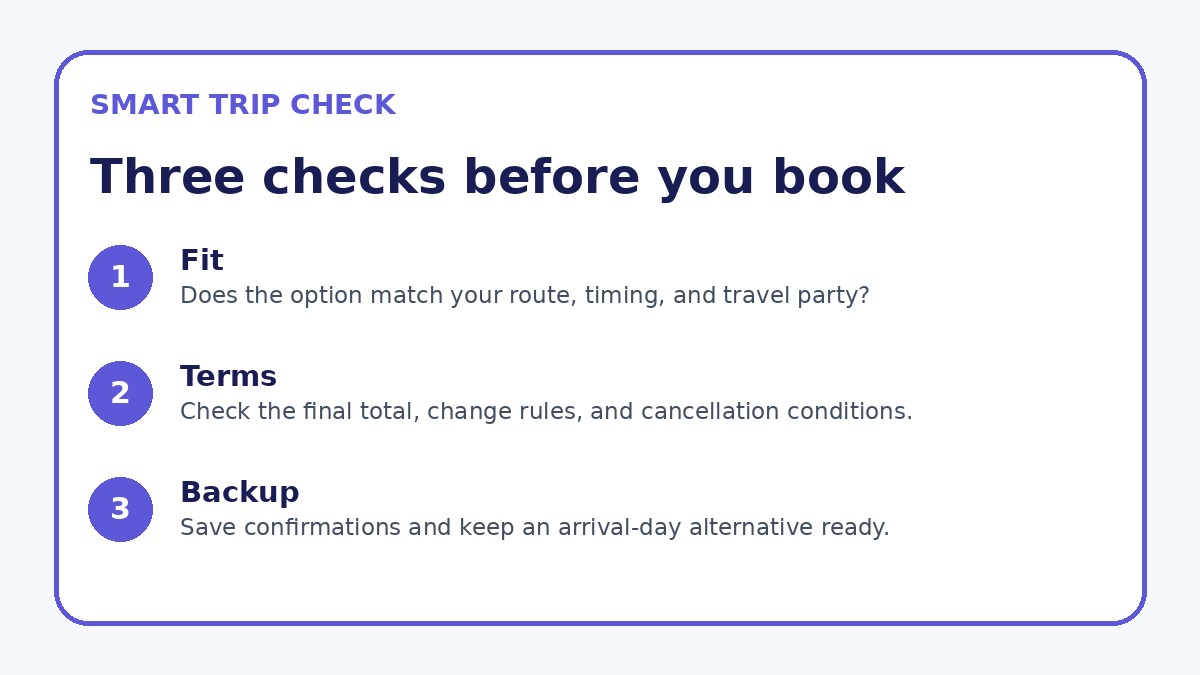
Comfort, seating and in-flight experience for couples
Couples often value being seated together and having predictable in-flight amenities, especially on a route like Paris to Rome where a short flight can still feel crowded if seating is split. Direct flights reduce the risk that aircraft change or a later check-in process will separate seats. If both partners want window and aisle or prefer a specific cabin—extra legroom, premium economy, or flexible seating—direct service generally simplifies securing those seats. Look for seat maps and upgrade availability early in the booking process to avoid last-minute compromises.
For connecting itineraries, scheduled aircraft types and in-flight amenities can differ between legs, which affects comfort. One leg might be on a narrow-body short-haul plane with minimal services, while another uses a different carrier with different policies. If onboard comfort matters—legroom, onboard service, or the ability to nap—consider how each leg’s equipment and cabin class align with your needs. Couples should also weigh the psychological comfort of fewer handoffs versus the novelty of an unexpected airport lounge visit during a long layover.
Before you book
- Compare total door-to-door time, not just airborne hours—include transport to/from airports and transfer times.
- Confirm whether your itinerary is one ticket or separate tickets and check the carrier’s missed-connection policy on the booking page.
- Check baggage rules and whether bags transfer automatically on connecting itineraries before you finalize payment.
- Reserve seats together as early as possible; seat maps change and free adjacent seats are not guaranteed at check-in.
- If you have mobility needs or tight onward plans, prefer direct flights or a connection with a comfortable minimum layover.
- Save screenshots of booking details and purchase travel protection that includes missed-connection or delay coverage if needed.
Risk tolerance and contingency planning
Connections introduce a layer of risk: delayed inbound flights, slow transfer procedures, or sudden gate changes can quickly turn a tight connection into a missed flight. Couples who prefer predictable travel, are on tight itineraries, or have important ground bookings at the destination (a confirmed dinner reservation or train) should favor longer connection windows or direct flights. If you decide to book a connection with minimal layover, ensure you understand the airline’s rebooking policy for missed connections and whether the itinerary is on one ticket—single-ticket itineraries usually provide more protection.
If you accept the risk of connecting, build contingency plans: choose longer layovers, avoid self-transfer on separate tickets unless you have plenty of buffer time, and consider travel insurance that covers missed connections. Also keep digital and printed copies of booking references, so if a delay happens you can quickly contact both carriers or seek help at transfer desks. For couples, discussing who handles rebooking, luggage retrieval, or managing the map app in case of a reroute can reduce stress if something goes off script.
Frequently asked questions
If a connecting flight is cheaper, how do couples decide if the savings are worth the extra time and risk?
Start by calculating the real value of the time you lose to a longer itinerary: airport transfers, waiting, and possible overnight layovers. Factor in extra costs—meals, lounges, and baggage fees—and the personal cost of stress or a late arrival that could affect plans at your destination. If the net savings cover these extras and you’re comfortable with potential rebooking hassles, a connection can be worth it. Otherwise, prioritize a direct flight for simplicity and peace of mind.
How much layover time is safe for a single-ticket connection versus separate tickets?
For a single-ticket connection on the same booking, airlines typically protect reasonable minimum layovers and may rebook you if the first leg is late; a layover of 60–90 minutes can be workable on tight European hubs but check the carrier’s minimum connection time. For separate tickets, allow much more buffer—several hours—to collect baggage, change terminals, and recheck; if you must cross borders or clear additional security, plan for even longer. Always verify terminal information on the booking page and consider longer layovers if anything feels tight.
Are there comfort strategies for couples traveling on a budget with connecting flights?
Yes. Choose connections with reasonable layovers that allow time to relax without rushing. Split seating costs selectively: one of you could pay for a preferred seat while the other uses a standard seat if that preserves most of your comfort on a budget. Bring compact comforts—neck pillows, noise-canceling earbuds, and a shared power bank—to improve the experience. Also scout lounge access options online; a paid lounge visit during a long layover can feel like a small, affordable upgrade for both travelers.
Final planning note
When planning Paris to Rome flights as a couple, focus on what you value most: time together, a calm arrival, cost savings, or a small stopover adventure. Direct flights tend to win for predictability, shorter travel times, and less administrative hassle, while connecting itineraries can be useful for lower fares, flexible schedules, or planned stopovers. Use the checklist above during booking—verify ticket type, baggage transfer, seat assignments, and connection protections on the carrier’s final payment page. If you compare options on an aggregator such as Trip.com, double-check the airline’s official details before you pay. Prioritize the combination of comfort and contingency that keeps both partners relaxed and excited for the trip.
Continue planning
Check current options and final conditions
Use the provider page to confirm live availability, the final total, cancellation terms, and every condition that matters to your trip.
This evergreen planning guide was created with AI-assisted drafting and a structured quality review. It does not display live prices, schedules, availability, visa guidance, or provider rankings. Verify current details before booking. Some links are affiliate links; we may earn a commission at no additional cost to you.