
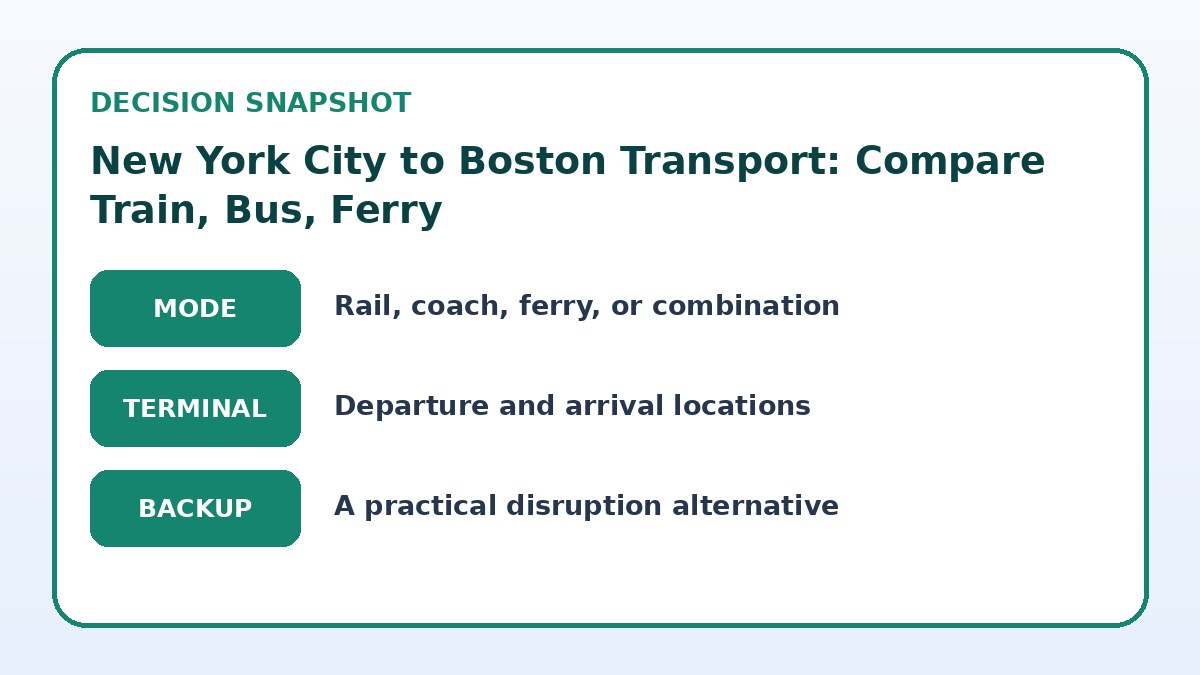
If you’re planning a family trip from New York City to Boston, pick the mode that matches your children’s ages, patience, luggage and daily rhythm. Trains give space to move and store carry-ons; coaches are usually simpler and lower-stress for short budgets; ferries are scenic but require transfers; driving gives door-to-door control but adds navigation and parking work. Start by deciding what matters most: fewer transfers, lower cost, guaranteed seats, or flexibility with stops. This piece lays out the practical tradeoffs for families—how to compare seat space, luggage rules, bathroom access, timing, and where to verify current details. Check schedules, baggage allowances, cancellation terms and any family-friendly amenities on provider booking pages (including Trip.com if you want a quick cross-check) before committing.
See current options before you compare the details
Availability and final conditions change. Open Trip.com now or keep reading for the practical comparison.
Train: best when cabin space and comfort matter
Trains can be the easiest way to manage children who need to move, eat, or sleep en route. Wide aisles, fold-down trays, and the option to walk to a café car make longer ground travel less restless. For families with strollers or several carry-ons, choose services with clear baggage allowances and accessible storage. Before you book, confirm seat reservation policies, whether seats are grouped face-to-face, and if family or quiet cars are offered; if traveling around busy holidays verify space and change/cancellation rules on the operator’s booking page.
If someone in your group needs special assistance, trains usually handle mobility needs better than buses or ferries, offering level boarding or staff help at major stations. Consider station layouts too: some New York and Boston terminals are large with elevators and food options, but transfers within a terminal can still be tiring with kids. Finally, compare actual journey patterns: some train itineraries have limited stops and fewer transfers, while others involve connections that can complicate travel with young children.
Coach: economical and straightforward for many families
Coaches often appeal because they run frequently between New York City and Boston, typically from central terminals and without complicated airport transfers. For families on a tighter budget, coaches remove the stress of driving and parking. Coach vehicles vary hugely: some have toilets, Wi-Fi and power outlets, others are very basic. Before booking, check the coach layout for seat pitch and whether there’s an onboard restroom; verify the departure and arrival terminal locations to avoid surprises on either end and confirm the provider’s luggage rules and limits.
The downside for families is limited space to walk or change a squirming toddler, and restrooms on coaches can be cramped. Also weigh the schedule: a slightly longer journey on a direct coach may still be preferable to a faster option that requires transfers. If you need flexibility, ask about change and cancellation policies and whether advance seat selection is possible—knowing exactly where you’ll sit can make a coach trip much less stressful with kids.
| Approach | Best for | Tradeoff to check |
|---|---|---|
| Train | Families wanting onboard space, restrooms and fewer interruptions | May be more expensive and require advance seat reservations; check baggage rules and schedules |
| Coach | Budget-conscious families preferring direct, simple terminals | Less room to move and cramped restrooms; seat comfort varies by operator |
| Ferry (plus connections) | Families prioritizing scenery and a relaxed travel experience | Usually involves transfers and extra coordination; schedules can be weather-dependent |
| Driving or Flying | Families needing door-to-door control or fastest possible elapsed air time | Driving adds navigation and parking; flying adds airport processing and transfers |
Ready to check the option that fits your plan?
Use your exact dates and traveler details so the provider page can show the current total and conditions.
Ferry and water-adjacent options: scenic but often indirect
Ferry travel can turn a transfer into an experience—kids often enjoy the water, and ferries provide open-air time that’s rare on road or rail. However, ferries rarely run door-to-door between New York City and Boston and usually involve an onward ride by bus, train or car. That means extra coordination with schedules and more handling of luggage and strollers. If you consider a ferry leg, verify how transfers link to terminals, check the walk time between docks and connecting services, and confirm ticketing rules on the operator’s final booking page.
Ferries also have more variable schedules and weather sensitivity than land transport, which families should treat as an important risk when timing connections. Look at the whole journey—departure points, transfer waits and total elapsed time—not just the time on the water. If your family values the scenery and you can accept transfer complexity, a mixed itinerary can be memorable; if you need minimal hassle, a single-vehicle option may be a better fit.
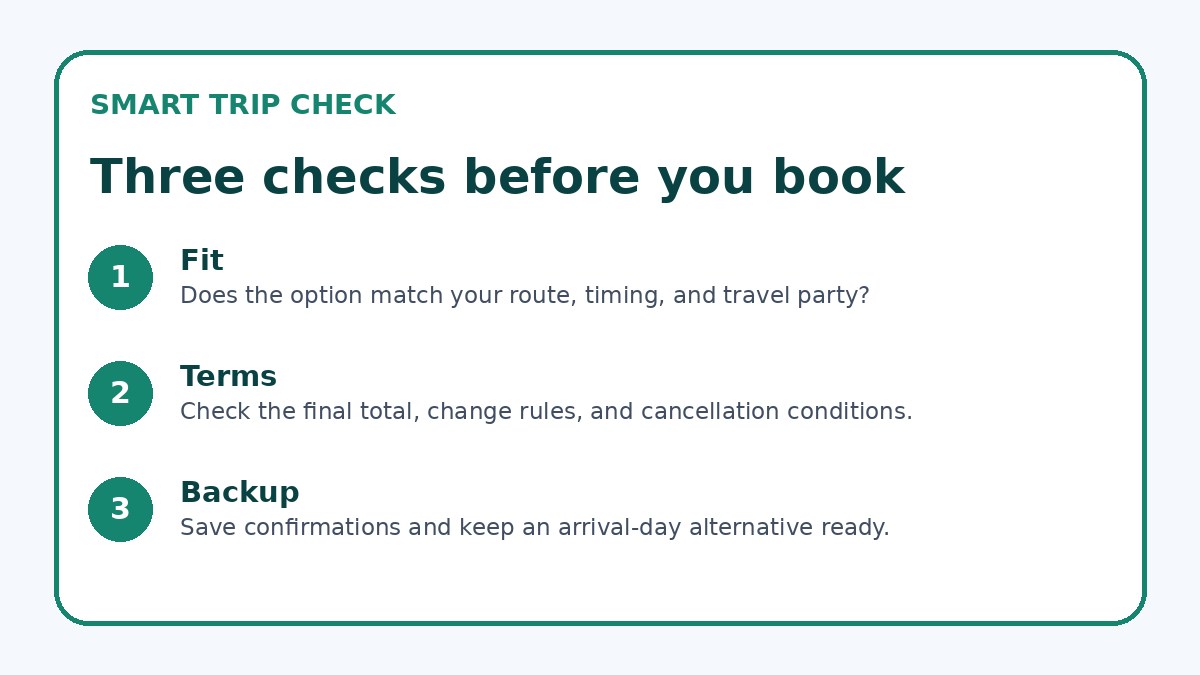
Before you book
- Decide your top priorities (seat space, lowest cost, fewest transfers, or travel flexibility) before comparing options.
- Check seat reservation, baggage allowance and restroom information on each provider’s official booking page.
- Compare door-to-door elapsed time including transfers, walking between terminals, and likely traffic at peak hours.
- Confirm child-seat rules with rental car providers or vehicle hire desks if you plan to drive or rent.
- Verify cancellation, change and refund policies so you can adapt plans if a child gets sick or schedules shift.
- Prepare a simple carry kit (snacks, small toys, wipes, spare clothes) sized to the baggage rules you confirmed.
Driving and flying: control versus speed, with practical tradeoffs
Driving puts door-to-door control in your hands—useful for carrying bags, managing nap schedules and stopping when needed. But consider parking at your Boston destination, potential tolls, congestion around both cities and the mental load of driving. If you plan to rent a car, confirm child seat availability and rental company policies on boosters or infant seats. Also compare total elapsed time to public transport once you factor in city traffic, drop-off and parking time at your final destination.
Flying offers the fastest travel time in the air but rarely wins for short city-to-city family travel once you include airport transfers, security waits and baggage handling—and with young kids those extra steps can erase any time savings. If you compare flights, check whether routes are direct or require connections, baggage allowances, and airport transfer times on both ends. For both driving and flying, verification of up-to-date schedules, parking or rental terms and any applicable travel restrictions is essential on provider pages before booking.
Frequently asked questions
Which mode is easiest with toddlers who need frequent stops?
For toddlers who need moving and regular breaks, trains often work best because they let children walk, visit a café car, and use restrooms without stopping the entire vehicle. Driving gives complete control over stops but adds the stress of traffic and parking. Coaches can be less convenient because space is limited and on-board restrooms are small. Whichever option you choose, plan for extra time at each end, bring familiar snacks and a small blanket, and review the provider’s baggage and onboard restroom policies before you book.
How do I compare total travel time across modes?
Don’t compare only the advertised transit time—add time for transfers, check-in or station access, security if flying, and likely traffic or taxi times to and from terminals. For ferries include transfer waits to and from docks. Calculate door-to-door time from your pickup origin in New York City to your final Boston destination and compare that figure across options. Use official booking pages for exact schedule details and validate transfer windows to avoid tight connections, and consider buffer time when traveling with unpredictable children.
What should I verify on the provider booking page before I buy tickets?
Always confirm seat reservation rules, luggage and stroller allowances, onboard restroom availability, and change/cancellation terms on the provider’s final booking page. If you need accessibility services or child seats, check how to request them and whether documentation is required. For combined itineraries (for example, ferry plus train), verify each leg’s ticketing rules and any minimum connection times. Trip.com can be useful for quick cross-comparison, but rely on the operator’s own page for binding policies and the latest operational notices.
Final planning note
Choosing the right New York City to Boston transport for your family comes down to what you value most—onboard space and easy movement (trains), straightforward low-cost travel (coaches), scenic variety (ferries with transfers), or total control (driving). Start by ranking priorities, then compare door-to-door times, baggage rules and change policies on provider pages. Book seats or reserved space if available, pack a compact family carry kit, and allow extra buffer time for connections and unexpected delays. With those checks done, your trip will be less about logistics and more about enjoying time together.
Continue planning
Check current options and final conditions
Use the provider page to confirm live availability, the final total, cancellation terms, and every condition that matters to your trip.
This evergreen planning guide was created with AI-assisted drafting and a structured quality review. It does not display live prices, schedules, availability, visa guidance, or provider rankings. Verify current details before booking. Some links are affiliate links; we may earn a commission at no additional cost to you.