
If you’re traveling to Toronto with large suitcases, sports gear, or multiple bags, choose a hotel within easy reach of frequent, level-access transport rather than one that only looks central on a map. The practical choice is a hotel within a short, flat walk of a major transit hub — subway, regional rail (GO), UP Express, or well-served streetcar stops — so you avoid stairs, long transfers, or crowded buses while hauling luggage. Prioritize ground-floor or elevator-equipped entrances, porter or luggage-handling options, and clear pickup/drop-off access for rideshares and taxis. Below you’ll find step-by-step decision criteria, tradeoffs between staying near airports, downtown hubs, or neighborhood stations, and an actionable checklist to use when comparing properties. Verify platform accessibility, elevator availability, and any luggage services directly on the hotel’s booking page or by calling the property, and check transit provider sites for station elevator status before you finalize plans.
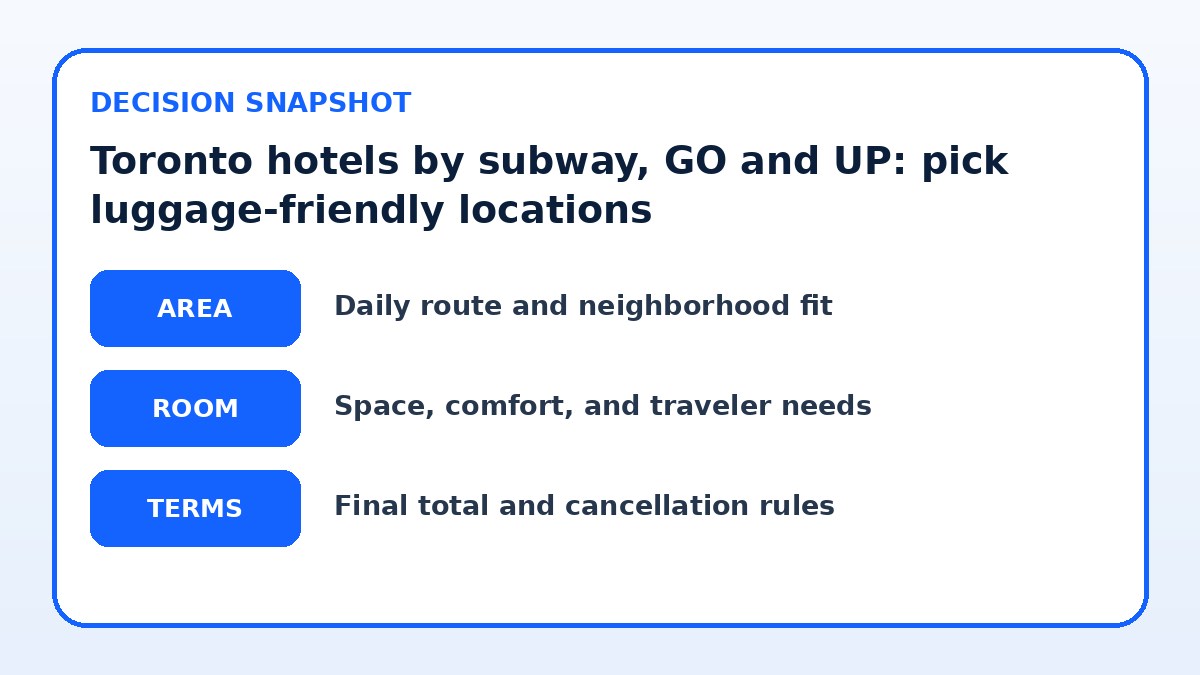
See current options before you compare the details
Availability and final conditions change. Open Trip.com now or keep reading for the practical comparison.
Which transit access matters most for luggage-heavy travelers
Not all transit is equal when you have bulky or multiple bags. For Toronto, prioritize the subway (TTC Line 1), GO Transit and UP Express because they offer frequent service, level boarding at some stations, and direct routes to downtown. Streetcars can be convenient but often require stepping up from the curb or navigating narrow platforms. Buses are flexible for neighborhoods but usually involve steps and crowded aisles. Map out the route from your arrival point — airport or intercity station — to hotels near those major corridors and note any transfers that require stairs or long ramps.
Also consider vehicle drop-off and pickup logistics. A hotel that lets you pull up to a covered entrance reduces the distance you must wheel or carry bags. Properties listing porter service, luggage storage for early arrivals or late departures, and elevators directly at the entrance give you the simplest door-to-door experience. If you plan to use rideshares, check whether the hotel has a designated pickup zone to avoid curbside congestion and the need to traverse busy streets with suitcases.
Tradeoffs: downtown hubs vs. neighborhood stations vs. airport-area hotels
Staying near downtown subway or GO hubs puts you close to attractions and reduces intra-city travel time, which is helpful when making multiple short trips with luggage. The tradeoff is higher foot traffic and possible narrow sidewalks; some older subway stations still have stairs rather than elevators. Verify accessibility information for specific stations and the hotel’s route to the station to avoid unexpected lifts or long corridor walks.
Airport-area hotels feel convenient for arrivals and departures, minimizing transfer complexity, but they often distance you from city sights, requiring an extra train or ride back into the core. Neighborhood hotels near well-served local stations offer calmer streets, easier curbside access, and often flatter sidewalks, but they might add a transfer if you need direct airport links. Decide whether minimizing transfers or minimizing distance to attractions matters more for your trip, then check each property’s specific logistics before booking.
| Approach | Best for | Tradeoff to check |
|---|---|---|
| Stay near a subway or GO station | Travelers prioritizing quick city access with frequent trains | May involve crowded sidewalks and older stations with limited elevator options |
| Stay in an airport-area hotel | Arrivals/departures where minimizing transfers is the priority | Farther from downtown attractions, requiring extra travel to explore the city |
| Choose a neighborhood hotel near a frequent streetcar stop | Those wanting quieter streets and easy curbside access | Streetcars sometimes require steps and can be slower for longer trips |
| Book hotels with porter or luggage-handling services | Travelers who prefer minimal physical strain on arrival or departure | May add dependency on hotel staffing schedules and possible extra service fees |
Ready to check the option that fits your plan?
Use your exact dates and traveler details so the provider page can show the current total and conditions.
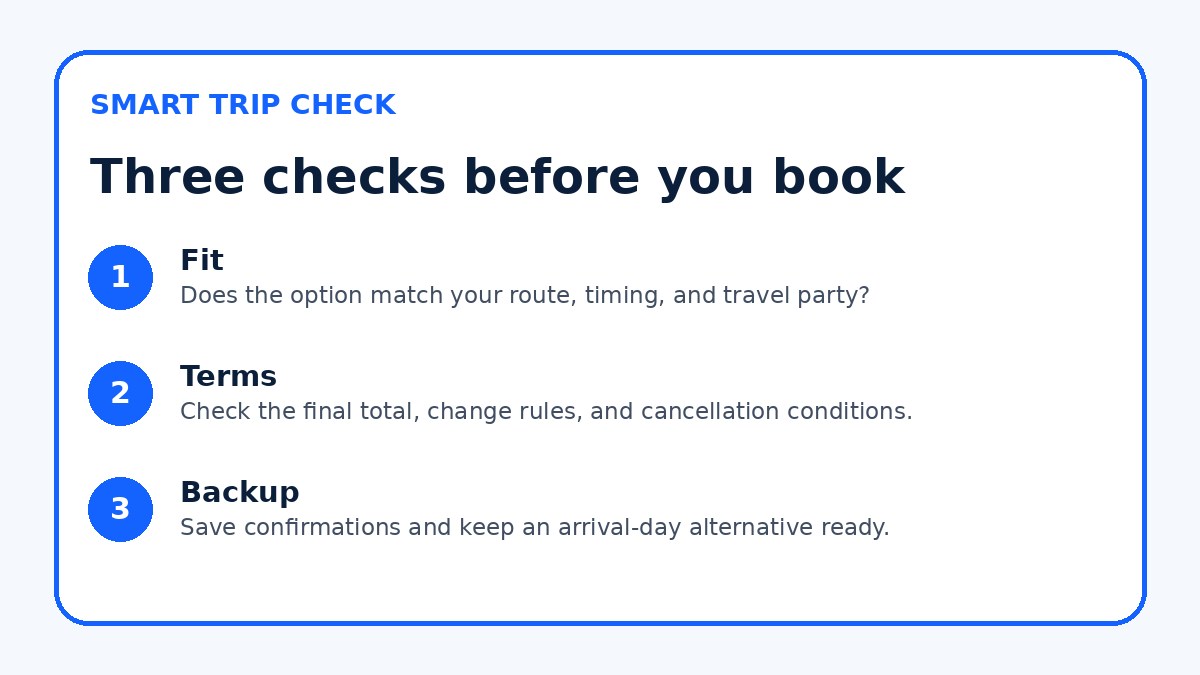
Practical checks to make on hotel and transit pages before booking
On the hotel’s booking page or by phone, confirm elevator availability from the street to the lobby and from the lobby to guest floors, details about porter or bell service, and whether luggage storage is offered and at what times. Ask where guests should be dropped off for rideshares or taxis and whether the drop-off area is covered. If the hotel advertises shuttle service to the airport or stations, clarify how to reserve it, the pickup point, and any capacity or timing limits. These are provider details that can change, so verify them at booking.
On transit operator sites, check station accessibility for elevators, ramps, and level boarding; note any planned elevator outages that could affect your arrival or departure. For arrivals at Pearson, compare the UP Express platform access and whether the station has elevators between platforms and to street level. For GO or Via Rail arrivals, confirm how far the station is from likely hotels and whether you’ll need to negotiate stairs or long pedestrian bridges. If in doubt, reach out to the transit agency’s customer service to confirm current conditions.
Before you book
- Confirm elevator access from street to lobby and to guest floors directly with the hotel before booking.
- Ask the hotel where authorized drop-off/pick-up occurs and whether it’s covered or level with the sidewalk.
- Verify whether the hotel provides porter service or luggage storage and note any time restrictions.
- Check transit station accessibility pages for elevator or ramp availability on your arrival and departure dates.
- Compare walking routes from station exits to the hotel for stairs, curb cuts, and sidewalk width using recent street-level photos.
- If arriving at Pearson, confirm UP Express or shuttle details and the hotel’s recommended transfer option on the booking page.
Packing and arrival strategies that reduce strain and delay
Distribute weight across bags and use wheeled luggage with sturdy wheels suitable for sidewalks and short curbs. Bring a compact luggage cart or collapsible shoulder straps for odd-sized items — these can make the difference between one heavy lift and manageable wheeling. If you expect stairs or transfers, pack an easily accessible day bag with essentials and valuables so you won’t need to open large suitcases mid-transfer. Consider stripping one suitcase and using it as a carry bag for the day you arrive to avoid juggling multiple items.
Plan arrivals during less busy transit periods if possible, or arrange an authorized taxi or rideshare to the hotel’s official drop-off point to bypass crowded station areas. If you have a long layover or early arrival, confirm luggage storage at the hotel and have a plan for an interim activity near the station so you aren’t carrying bags while exploring. Finally, photograph important access points — hotel entrance, station exits, and nearby landmarks — so you can navigate efficiently even if your battery runs low or you lose signal.
Frequently asked questions
Is it better to stay near Union Station or near a subway station when I have a lot of luggage?
Union Station is Toronto’s main rail hub, providing direct GO and Via Rail connections and many downtown links, so staying nearby minimizes long intercity transfers. However, Union Station’s complex layout and peak crowds can mean more walking between platforms and street level; verify elevator availability for your specific platform. A hotel close to a well-served subway station on Line 1 can offer easier, more direct street-level access for daily sightseeing. Compare the exact walking routes from each station exit to the hotel and check both hotel and station accessibility details before deciding.
Should I rely on streetcars for luggage-heavy travel within Toronto?
Streetcars are an efficient way to move around many Toronto neighborhoods, but they commonly require a small step up from the curb and can be crowded during peak hours. If you have large suitcases, streetcars may be less convenient than subway or GO trains because of narrower aisles and limited onboard storage. For shorter trips in quieter off-peak times they’re fine, but for door-to-door ease with heavy luggage, prioritize hotels near subway, GO, or direct rideshare drop-off points and treat streetcars as a secondary option.
What should I verify on a hotel’s booking page to avoid surprises with luggage?
Look for explicit mentions of elevator access, porter or bell service, luggage storage policies, and details about the hotel’s drop-off/pick-up location. If the page is vague, call the property and ask if the main entrance is level with the sidewalk, whether there are steps between the curb and the entrance, and any fees or hours for luggage handling. Also confirm shuttle schedules, if offered, and whether reservations are required. For transit connections, cross-check station elevator status on the transit operator’s site before you finalize.
Final planning note
Choosing the right Toronto hotel when you’re traveling with extra luggage comes down to practical details: how you get from arrival point to hotel, whether the hotel entrance is level and elevator-equipped, and whether luggage services are offered. Decide whether minimizing transfers (airport hotels) or minimizing walking and stair-climbing (hotels near subway/GO hubs or neighborhood stations) matters most for you. Use the checklist above to verify hotel and transit accessibility before booking, and take simple packing and arrival steps to reduce strain. If you want to compare current availability or logistics, you can check Trip.com as one option, but always confirm the final details directly with the hotel and the transit provider.
Continue planning
Check current options and final conditions
Use the provider page to confirm live availability, the final total, cancellation terms, and every condition that matters to your trip.
This evergreen planning guide was created with AI-assisted drafting and a structured quality review. It does not display live prices, schedules, availability, visa guidance, or provider rankings. Verify current details before booking. Some links are affiliate links; we may earn a commission at no additional cost to you.