If you’re renting a car for business in Lisbon, the practical first step is simple: confirm the fuel policy and any mileage limits on the quoted rate before you finalize the reservation. Fuel and mileage terms change how much you’ll actually pay, how much time you’ll lose at pickup or drop-off, and whether you can rely on a rental for day trips outside the city. For corporate travelers juggling meetings and expense reporting, small choices—full-to-full versus pre-purchase fuel, unlimited mileage versus daily caps—translate directly into invoice surprises or awkward explanations to finance teams. This article gives the specific checks to do on the booking page and at the counter, explains the tradeoffs between convenience and cost, and helps you pick the option that matches common business travel patterns around Lisbon.
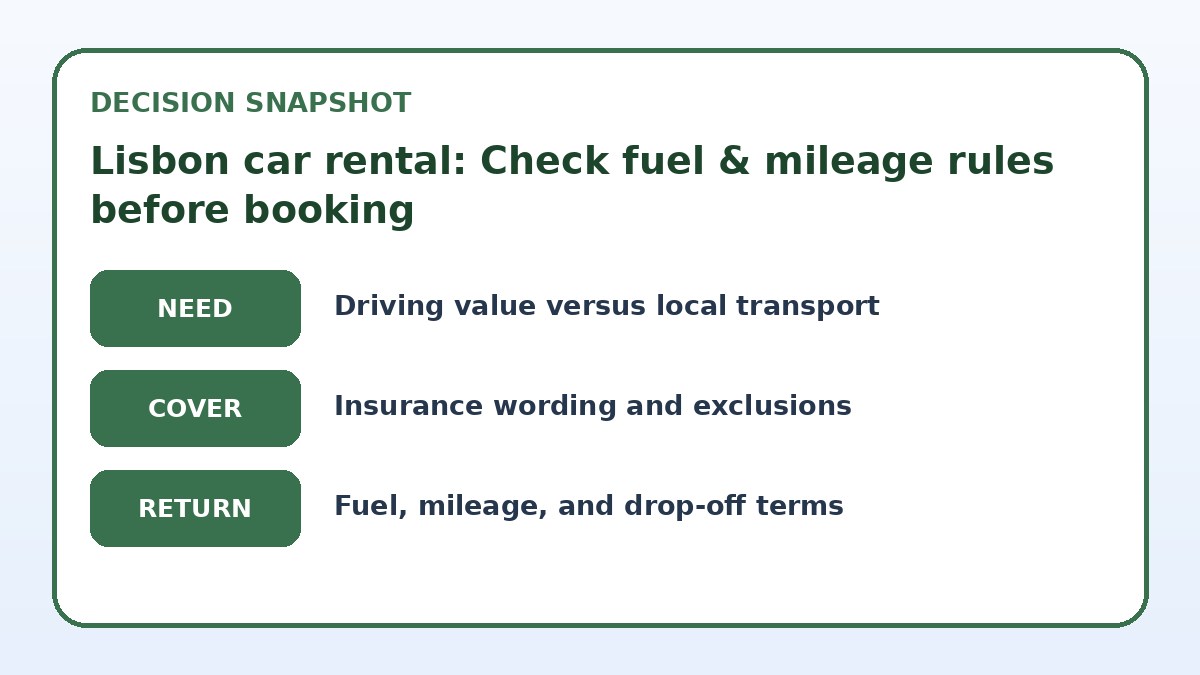
See current options before you compare the details
Availability and final conditions change. Open Trip.com now or keep reading for the practical comparison.
What to check on the booking page and reservation
Before you click confirm, find the fuel and mileage policy text on the supplier or aggregator page. The booking page should state whether the rate includes unlimited mileage, an allowance measured per calendar day, or a fixed total for the rental. It should also list available fuel options (for example, full-to-full, pre-purchase tank, or return-empty) and any extra fees tied to those choices. If the policy language is vague, use the booking platform’s chat or call the supplier to get a written clarification you can attach to your expense report.
Also note how charges will appear on your corporate card and whether the supplier places a fuel deposit or authorization hold that can affect your available credit. Check whether mileage charges are calculated per day, per rental, or per kilometer beyond a threshold—each method matters depending on whether the trip is single-city or includes an outside-Lisbon drive. If your company requires receipts or specific invoice wording, confirm that the supplier will provide those items and where on the page to request them.
Fuel policy tradeoffs: convenience versus cost control
The most common fuel options are full-to-full and prepaid fuel. Full-to-full means you collect the car with a full tank and return it full; you pay only for fuel you consumed. This approach typically offers the fairest cost outcome but requires time and planning to refill before drop-off. Prepaid fuel allows you to return the car empty and saves drop-off time, which can be convenient for tight meetings or airport departures. However, prepaid plans often charge for a full tank at a rate that can be higher than local pump prices, and you won’t get a refund for unused fuel.
Some companies advertise an 'empty-to-empty' or 'free-tank' option, but wording can hide service fees for topping up if the tank isn't empty. For business travelers, balance the value of saving time against the potential overcharge. If your itinerary involves many short trips inside Lisbon, full-to-full plus a quick neighborhood petrol stop before returning may be cheapest. If you have a tight schedule and the supplier’s prepaid fuel is clearly priced and refundable for unused liters, the convenience might justify the cost.
| Approach | Best for | Tradeoff to check |
|---|---|---|
| Full-to-full fuel policy | Travelers who can refuel locally and want to pay only for used fuel. | Requires time to refill before return and careful photo documentation of fuel level. |
| Prepaid fuel (pay in advance) | Busy business travelers prioritizing fast drop-off over fuel cost. | Often more expensive per liter and nonrefundable for unused fuel. |
| Unlimited mileage add-on | Itineraries with long day trips or uncertain distances outside Lisbon. | Higher base rental rate but protects against costly per-kilometer overage fees. |
| Mileage-limited budget rate | Short, city-only trips where distance is predictable and low. | Lower upfront cost but risky if plans change and overage charges apply. |
Ready to check the option that fits your plan?
Use your exact dates and traveler details so the provider page can show the current total and conditions.
Understanding mileage limits and when they matter
Not all Lisbon rentals include unlimited mileage. If your reservation caps kilometers per day or per rental, estimate your planned routes: airport to city center, client meetings across neighborhoods, and possible day trips to Cascais, Sintra, or Évora. Use a map app to approximate the total distance. If you expect to exceed the allowance, calculate the per-kilometer overage fee the rental contract charges—this is the real cost of a 'cheaper' rate. Sometimes a slightly higher base rate that includes unlimited mileage is cheaper once overage charges are factored in.
Mileage rules can also affect insurance considerations. Some damage waivers and corporate policies reference acceptable mileage for certain coverage levels. Confirm with your travel or procurement team whether usage beyond a cap could void part of the corporate insurance arrangement. If you plan predictable out-of-city travel, ask the supplier to add an unlimited-mileage supplement at booking so your expense report matches the reservation and eliminates ambiguity at return.
Before you book
- Read the fuel policy text on the booking page and capture a screenshot of the exact wording before payment.
- Confirm whether the quoted rate includes unlimited mileage, a per-day allowance, or per-kilometer charges and note the exact thresholds.
- Ask the supplier how fuel charges and mileage overages will appear on the final invoice and on your corporate card statement.
- Photograph the odometer and fuel gauge at pickup and ask staff to record those readings on the rental contract.
- Plan a refuelling stop near your drop-off location if you selected full-to-full, and keep fuel receipts if required by your company.
- Request a detailed final invoice showing fuel, mileage overages, and fees before approving the rental expense.
At pickup and drop-off: documentation and dispute prevention
When you collect the car, inspect and document the tank level and odometer reading before leaving the lot. Ask for the mileage and fuel level to be recorded on the rental agreement and photographed by staff if possible. Take your own timestamped photos of the dashboard and fuel gauge—these images are the simplest proof if a dispute arises later. If the car isn’t at the promised fuel level, request correction on the contract or an amended rate before driving away.
At drop-off, return the vehicle according to the chosen fuel policy and get confirmation that staff recorded the odometer and fuel level. If the supplier’s staff refuses to provide a written note or receipt, ask for a supervisor or take a return-location photo showing the vehicle state and nearby signage. For corporate billing, require a final invoice that lists fuel charges, overage fees, and any service fees by line item; verify these match the booking terms before approving expense submission.
Frequently asked questions
Is unlimited mileage standard for Lisbon car rental deals?
No—unlimited mileage is common but not automatic. Many corporate and economy rates include unlimited mileage, but some low-cost or weekend deals impose daily or total-kilometer caps. Always check the booking page and the rental agreement for the exact mileage wording. If the page is unclear, contact the supplier and get confirmation in writing so your finance team can reconcile the invoice with the reservation.
Can I dispute fuel or mileage charges after returning the car?
Yes, you can dispute charges, but it’s easier to prevent disputes with documentation. Keep timestamped photos of the odometer and fuel gauge at pickup and drop-off, save fuel receipts, and request a final itemized invoice at return. If a charge looks incorrect, raise it immediately with the rental location and follow the supplier’s dispute process in writing. For corporate rentals, involve your procurement or travel policy manager early to provide documentation and support.
Which fuel option should I pick for a one-day meeting-heavy visit to Lisbon?
For a short, city-focused visit, full-to-full is often best because it usually costs only for what you use and avoids paying for unused liters. It requires a quick refuel before return, which is typically a minor time cost. If your schedule is extremely tight and you’re willing to accept a possible premium, prepaid fuel reduces drop-off time. Compare prepaid pricing on the booking page and confirm the refund policy for unused fuel before choosing it.
Final planning note
For business travelers in Lisbon, small checks on fuel and mileage rules prevent large invoice surprises. Decide between full-to-full and prepaid fuel by weighing your schedule against likely overcharge risk; choose unlimited mileage if you plan outside-city drives or prefer certainty. Always capture booking screenshots, document odometer and tank level at pickup, and secure a detailed final invoice. These steps make expense reporting straightforward and protect you from ambiguous charges. When in doubt, verify the exact policy language on the supplier’s final booking page and share it with your corporate travel or finance team before departure.
Continue planning
Check current options and final conditions
Use the provider page to confirm live availability, the final total, cancellation terms, and every condition that matters to your trip.
This evergreen planning guide was created with AI-assisted drafting and a structured quality review. It does not display live prices, schedules, availability, visa guidance, or provider rankings. Verify current details before booking. Some links are affiliate links; we may earn a commission at no additional cost to you.