
If you’re arriving in Vancouver with extra suitcases, a practical choice is to book a hotel within an easy, predictable link to public transport or direct airport connection. Focus on properties near the Canada Line to YVR, a SkyTrain station, major bus corridors, or the SeaBus terminal—these give you fewer stairs, shorter rolling distances, and more predictable transfers than isolated downtown streets. That practical choice saves energy and time, reduces the need for expensive transfers, and lets you plan where to store and move bags during day trips. Below I explain how to pick a hotel that balances walking distance, step-free access, lift availability, and luggage handling services, plus the tradeoffs you’ll face with cost, noise, and neighborhood convenience.
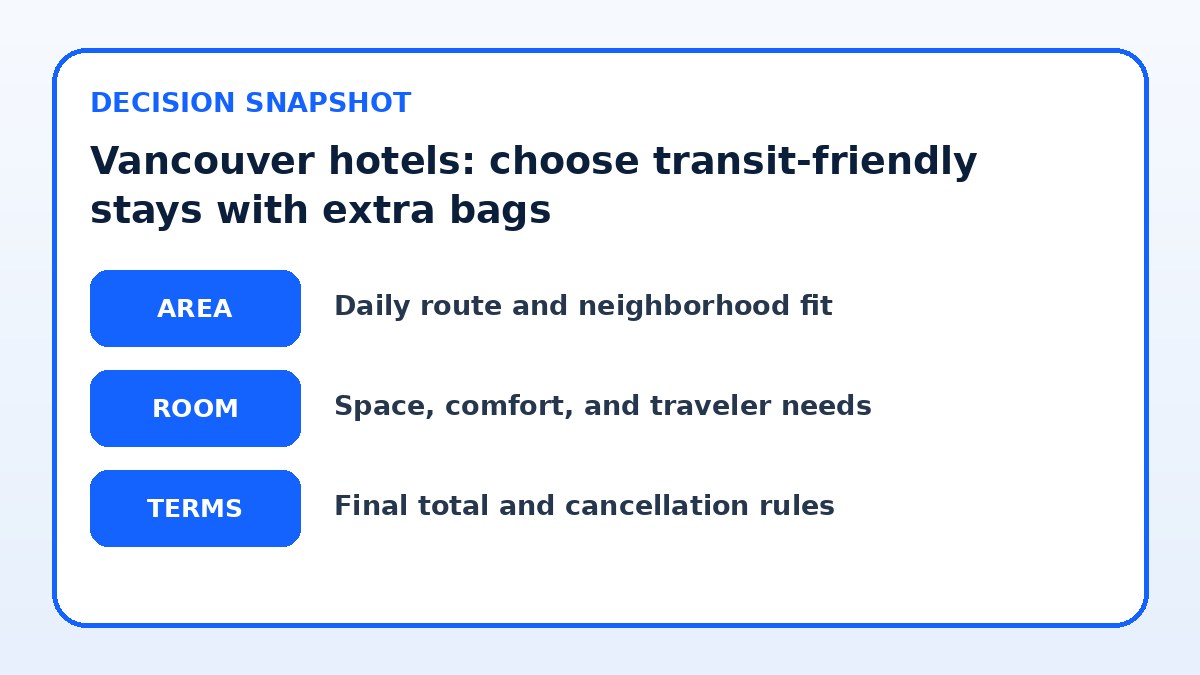
See current options before you compare the details
Availability and final conditions change. Open Trip.com now or keep reading for the practical comparison.
Decide which transport matters most for your trip
Start by matching your itinerary to the mode of transport that will move you and your bags most often. If you plan to arrive or depart via Vancouver International Airport (YVR), search for hotels near the Canada Line stations or along routes with direct shuttle services. For trips focused on downtown and North Vancouver, proximity to SkyTrain and SeaBus terminals minimizes transfers. If you’ll be island-hopping or using ferries, prioritize hotels with easy access to the relevant ferry terminals and bus connections instead.
Practical decisions should include how often you’ll move from one place to another with luggage. A hotel that’s great for a single overnight near the airport might be inconvenient if you plan daily excursions requiring repeated lugging. Consider whether you’ll store bags at the hotel between check-out and a late flight, or if you need same-day room access; these usage patterns change which transport access is most valuable.
What to check on hotel listings and bookings
On every hotel page, verify step-free arrival routes and elevator availability—look for terms like ‘accessible entrance’, ‘elevator to lobby’, or ‘ramped’ rather than assuming. Where photos show staircases or narrow hallways, request clarification from the property about wheeled-bag access to the front desk and rooms. If the listing mentions a porter or bell service, ask what hours they operate and whether there are extra charges. Trip.com can be used as one place to compare current availability and features, but always confirm specifics on the hotel’s official booking page or by phone.
Also check how the hotel defines ‘walking distance’ to transit; a 10–15 minute walk with heavy bags feels different than the same time with light carry-ons. Ask about luggage storage policies for early arrivals or late departures—many hotels will hold bags but may have limits or fees. Finally, verify room-level details that affect luggage handling: corridor widths, elevator size, and whether rooms are on multiple floors reached only by narrow staircases.
| Approach | Best for | Tradeoff to check |
|---|---|---|
| Stay next to a major transit station | Arrivals/departures with many or heavy bags | More noise and higher rates, but minimal carrying distance |
| Choose a quieter residential hotel 5–15 minutes from transit | Longer stays where calm matters more than quick transfers | Shorter walks save money and quietness but cost more effort on arrival |
| Book near the Canada Line to YVR | Air travelers prioritizing predictable airport access | Usually the fastest rail link, but proximity can increase cost |
| Select a hotel with bell service and luggage storage | Travelers who prefer hands-off handling and flexible arrival times | May add nightly cost but reduces physical strain and logistical stress |
Ready to check the option that fits your plan?
Use your exact dates and traveler details so the provider page can show the current total and conditions.

Tradeoffs: convenience, cost, noise, and neighborhood
Hotels directly adjacent to major stations or the Canada Line are practical with heavy bags: short transfers and covered paths beat long walks. But these locations can be noisier and busier, and rates may be higher because of convenience. Conversely, quieter residential blocks a few minutes further from stations deliver calmer nights and often slightly lower rates, but you’ll be balancing that savings against the effort of moving bags on arrival and departure. For many travelers, the time and physical strain of extra transfers outweigh modest nightly savings.
Another tradeoff is available services. A slightly pricier hotel that includes bell service, luggage storage, and a 24-hour front desk can be a net time—and stress—saver. If you prefer to limit spending, plan to bring luggage wheels that perform well on pavement and pack lighter for the first and last night. Remember that street layout matters: covered walkways, plazas, and station concourses can make a longer distance much more bearable than an equivalent unprotected walk.
Before you book
- Confirm step-free entrance and elevator access between street, lobby, and rooms on the hotel’s official page or by phone.
- Ask the hotel if bell service or porters are available, including hours and any extra fees.
- Verify luggage storage policy for early arrivals and late departures and whether items are held securely.
- Measure or estimate walking distance to the nearest Canada Line, SkyTrain, bus stop, or ferry terminal and check for covered routes.
- Compare total door-to-door options (rail plus short walk) against direct taxis or shuttles for cost and physical effort.
- If booking through third-party sites like Trip.com, cross-check the hotel’s cancellation rules and service descriptions on the official booking page.
Practical tips for arrival, in-city moves, and departure
On arrival, aim to pre-book arrival transfers only if they provide a clear advantage when you have many or heavy items. Compare a direct taxi or ride-hail (door-to-door) against Canada Line plus a short hotel walk or shuttle; calculate total walking with your bags rather than just trip duration. If you’re using public transit, consolidate bags into a single visibly manageable set to ease handling on elevators and during brief platform walks. Keep small essential items in a daypack so you don’t need to open large suitcases while moving.
During your stay, use hotel luggage storage strategically: drop larger items in the morning if you’re checking out before a late flight, and collect them just before leaving. If you plan urban day trips, consider leaving bulky suitcases at the hotel and taking only a small bag on public transit. Before departure, verify elevator access on your route to the station or Canada Line platform, and ask the front desk the best door to use for a quick exit—details like which entrance has a ramp can shave minutes and reduce strain.
Frequently asked questions
Which Vancouver neighborhoods are most practical with heavy luggage?
Neighborhoods with direct access to major transit—such as areas beside Canada Line stations, downtown near SkyTrain hubs, or close to SeaBus terminals—are the most practical. These spots reduce the walking and number of transfers you must make with heavy bags. For quieter options that remain practical, look a few blocks away from transit hubs on residential streets that still list clear step-free or elevator routes. Always confirm the specific hotel’s access details rather than relying on neighborhood assumptions.
Is it worth paying extra for a hotel with bell service?
For many travelers with lots of luggage, paying extra for bell service is worth it because it removes the physical burden of handling multiple heavy items and speeds arrival and departure. The time saved and stress avoided may offset the higher nightly cost, especially for short stays or when transfers are tight. If you prefer to save money, plan to travel with one rollable suitcase and a backpack, but verify the hotel’s luggage storage option in case you need to leave items before check-in or after check-out.
How should I evaluate walking distance to transit for heavy bags?
Don’t judge walking time alone—consider the route surface, presence of stairs, curb cuts, covered sections, and whether you must navigate busy intersections. A 10-minute walk across level, covered concourses is easier than a 5-minute uphill route with stairs. Ask hotels for a realistic description of the route from their door to the transit entrance and whether the path has ramps or elevators. If in doubt, request photos or a short video of the exact path used when guests with luggage would arrive.
Final planning note
When you’re traveling to Vancouver with extra luggage, prioritizing hotels with easy, step-free links to the transport you’ll use most changes the trip from a physical slog to a manageable routine. Decide whether airport rail access, SkyTrain, SeaBus, or bus corridors matter more for your itinerary, then verify elevator access, luggage services, and the exact walking route on the hotel’s booking page. Weigh convenience against noise and cost: often a slightly higher rate or busier location pays off in saved energy and fewer headaches. Use the checklist above and confirm details directly with the hotel before booking; Trip.com can help compare availability, but always verify operational specifics on official hotel pages.
Continue planning
Check current options and final conditions
Use the provider page to confirm live availability, the final total, cancellation terms, and every condition that matters to your trip.
This evergreen planning guide was created with AI-assisted drafting and a structured quality review. It does not display live prices, schedules, availability, visa guidance, or provider rankings. Verify current details before booking. Some links are affiliate links; we may earn a commission at no additional cost to you.