For business travelers moving between Fukuoka and Hiroshima, the practical priority is getting from door to meeting on time with minimal stress. Start by choosing a travel window that gives you a comfortable buffer before important appointments: earlier departures reduce the chance of cascading delays, but later departures can preserve sleep or last-minute prep. Decide whether you need an entire working seat — power access and a stable table surface matter if you’ll work en route. Pack for fast transits: keep essential documents, a portable charger, and noise-cancelling earbuds in an easily reachable carry-on. Finally, identify one reliable contingency — a later train, a different station connection, or an evening slot — and verify the provider’s live booking page for exact departure options before you book.
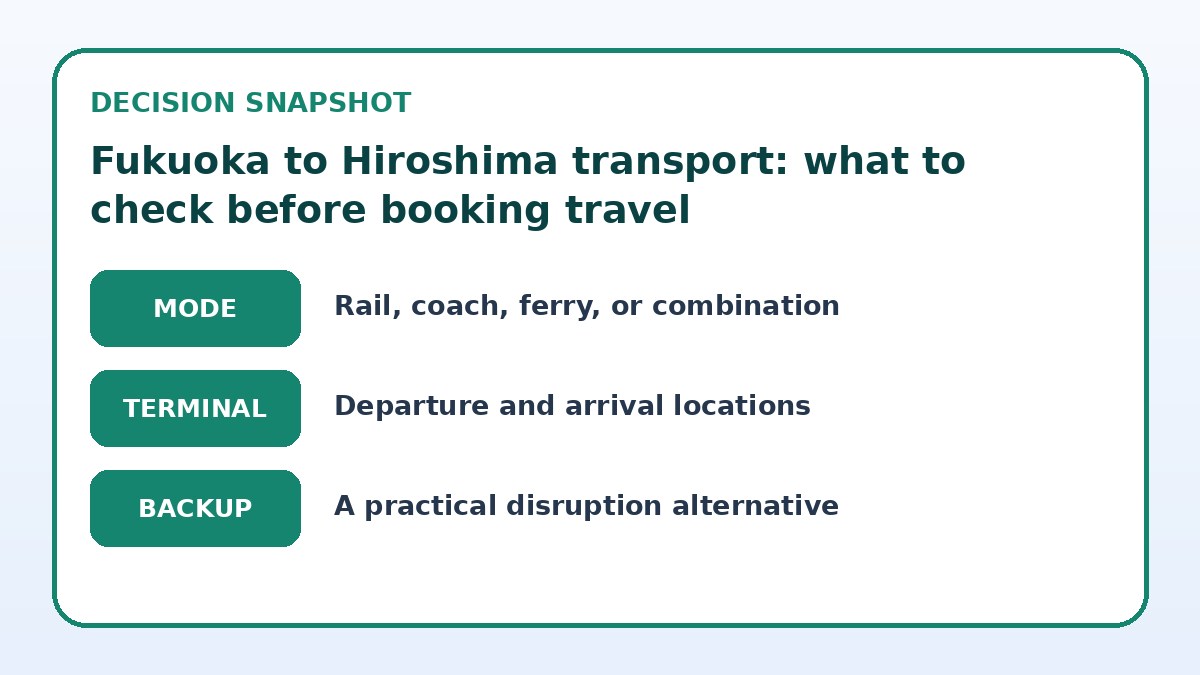
See current options before you compare the details
Availability and final conditions change. Open Trip.com now or keep reading for the practical comparison.
Choosing the best travel window
Timing is the core decision for a business travel day. Early departures lower the chance of missing meetings because they give you buffer time for delays, station navigation, and last-minute tasks. If your meeting is mid-morning, traveling the night before or catching an early morning departure makes sense; if you need to work on the train, choose a window that aligns with your peak productivity and allows for a calm pre-boarding routine. Consider how commute time to the departure station factors in: an hour saved at the station is worth more than a few extra minutes of travel time.
Weigh personal energy and preparation needs against the benefits of more margin. If you perform best after a full night’s sleep, a later morning departure might be preferable even with slightly less margin. On the other hand, some business travelers prefer the earlier block to allow same-day returns. Think through the whole door-to-door process — transit to station, luggage check, boarding, and transit to your final meeting point — and pick the slot that minimizes cognitive load and risk for you.
Seat choice, work setup, and luggage strategy
For productive travel, the right seat and a simple work setup are critical. If you’ll be on calls or editing presentations, prioritize a reserved seat in a quiet or business car where available, and check whether seats have power outlets and stable trays. Use a slim laptop stand and a compact keyboard if you depend on typing for long stretches — it makes ergonomics better in cramped spaces. If your booking platform shows seat maps and amenities, verify those specifics before you pay so you’re not surprised on travel day.
Luggage choices change how smooth the station experience will be. Opt for a single carry-on that fits under or above when possible to avoid waiting at luggage racks. Use a small, well-organized personal bag for essentials like charger, business card holder, passport, and printed documents. Label items you might need during boarding and create a quick checklist you can run through before leaving your hotel or office to avoid last-minute rummaging at the platform.
| Approach | Best for | Tradeoff to check |
|---|---|---|
| Earliest departure of the day | Travelers who prioritize schedule margin and want to avoid cascading delays | Less sleep and might require arriving at the station very early |
| Mid-morning departure | Those who need a reasonable buffer but also want enough rest or hotel prep time | Smaller margin for unexpected delays and tighter turnaround after arrival |
| Reserved business/quiet car seat | Passengers who must work or take calls while traveling | Can cost more and may reduce last-minute seat availability |
| Flexible or refundable ticket | Travelers with uncertain meeting times or who value the ability to change plans | Typically higher upfront cost compared with non-changeable fares |
Ready to check the option that fits your plan?
Use your exact dates and traveler details so the provider page can show the current total and conditions.
Station navigation and transfers
Stations between Fukuoka and Hiroshima can be busy and include multiple exits, ticket gates, and transfer corridors. Before travel day, open a map of both departure and arrival stations and note the fastest exit to your final transport (taxi rank, local tram stop, or bus platform). Allow extra time if you need to change between lines or if your route requires moving between station buildings. On travel day, arrive earlier than the platform announcement time to find your boarding area calmly and to adjust if platform numbers change.
If you have a tight itinerary, plan the last-mile transport in advance. Identify which exit leads to taxis or shuttle services and know the typical walk time to nearby business addresses. In cities where trams or local subway lines serve the station, verify schedules and stop names before you arrive. Keep critical directions and a screenshot of the route offline — mobile data can be patchy in underground areas or during peak times, and having an offline plan prevents rushed decisions.
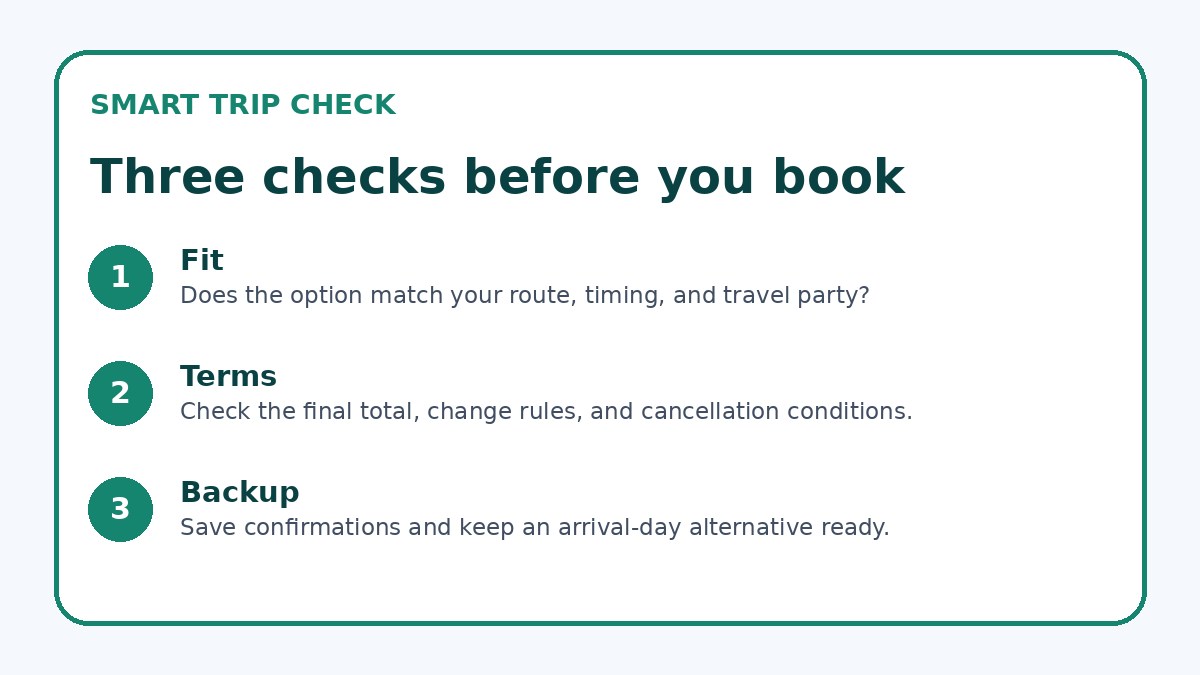
Before you book
- Confirm exact departure and arrival station names and the fastest exit to your meeting location.
- Reserve a seat with the amenities you need (power, quiet car, table) and save the seat map screenshot.
- Pack essentials in an accessible personal bag: charger, paper documents, ID, business cards, and earbuds.
- Allow at least 60–90 minutes between arrival and your first appointment for transfers and unexpected delays.
- Prepare a clear backup option (next train or alternative route) and note rebooking steps on the provider's site.
- Screenshot itinerary, station maps, and last-mile directions for offline use in case of poor mobile coverage.
Backup plans, ticket flexibility, and what to verify
A single contingency can save a business trip. Compare flexible tickets or refundable options against fixed, lower-cost fares and choose based on how critical schedule certainty is. If changing plans would be costly or stressful, the extra flexibility can be worth the peace of mind. If you prefer stricter fares, map out alternative departures and the steps to rebook or exchange on the provider’s official site so you can act quickly if needed.
On the day of booking, confirm these provider-specific facts before completing the purchase: exact departure and arrival station names, whether the connection is direct or requires transfers, seat assignment process, and the fare change or cancellation policy. Also verify whether seat amenities like outlets or quiet cars are listed and whether luggage allowances apply. For checking live availability and options, you may compare results on Trip.com as one source, but always confirm final terms on the provider’s official booking page.
Frequently asked questions
Should I travel the night before or the morning of my meeting in Hiroshima?
Decide based on how much schedule risk you accept and your personal energy rhythms. Traveling the night before removes same-day delay risk and gives you time to rest before meetings, but it costs an extra night away and may not fit short trips. Morning travel keeps your prior night at home or in Fukuoka but requires a larger buffer to absorb delays and transit time after arrival. Consider travel time to the departure station, whether you’ll need to work en route, and how flexible your meeting time is when choosing between the two.
What should I do if my booked train has a transfer or isn’t direct?
First, check the routing details on the provider’s final booking page so you understand transfer stations and platform changes. Plan the connection walk and add a cushion — transfers can involve stairs, long corridors, or ticket gates. If the transfer looks tight, identify later direct options or simpler routes. Have your documents and luggage ready for quick movement, and consider a flexible ticket if you expect changes. On travel day, ask station staff or a service desk for the fastest route between platforms if signs aren’t clear.
How can I maximize productivity during the transit between Fukuoka and Hiroshima?
Select a reserved seat in a quiet area and confirm power availability before you travel. Use a compact, ergonomic setup: a light laptop stand, a portable keyboard, and noise-cancelling earbuds for calls. Download needed documents and offline resources beforehand to avoid streaming or connectivity issues, and schedule focused work blocks with short breaks so you remain alert. If you must take calls, book a seat away from busy doors and be mindful of public-announcement volumes; test your microphone and headphones earlier to prevent technical delays.
Final planning note
A successful business travel day between Fukuoka and Hiroshima hinges on practical choices: pick a travel window that matches your risk tolerance, secure a workable seat, and plan last-mile logistics clearly. Pack and organize so transitions at busy stations are efficient, and carry one realistic backup plan with an understanding of rebooking steps and flexibility costs. Before you finalize any booking, verify provider-specific details — exact stations, transfer requirements, seat amenities, and change policies — on the official booking page. With those pieces in place, you’ll reduce stress and keep attention on the meeting, not the commute.
Continue planning
Check current options and final conditions
Use the provider page to confirm live availability, the final total, cancellation terms, and every condition that matters to your trip.
This evergreen planning guide was created with AI-assisted drafting and a structured quality review. It does not display live prices, schedules, availability, visa guidance, or provider rankings. Verify current details before booking. Some links are affiliate links; we may earn a commission at no additional cost to you.