
If you’re traveling to San Francisco with oversized bags, sports equipment, or several suitcases, the pickup location for your rental can shape the first hours of your trip. Practically speaking: choose airport pickup when you prioritize hauling luggage straight from your terminal into a larger vehicle, saving fuss with public transport and multiple transfers. Choose city pickup when you prefer to avoid airport rental center loops, want access to car types not carried at the airport, or plan an immediate downtown stay where curbside parking is limited. This guide walks you through the core tradeoffs—time, cost, vehicle choice, insurance/fees, and logistics—so you can pick the approach that minimizes hassle and hidden work on arrival. I’ll also give a short checklist of what to confirm on the rental company’s booking page before you finalize anything.
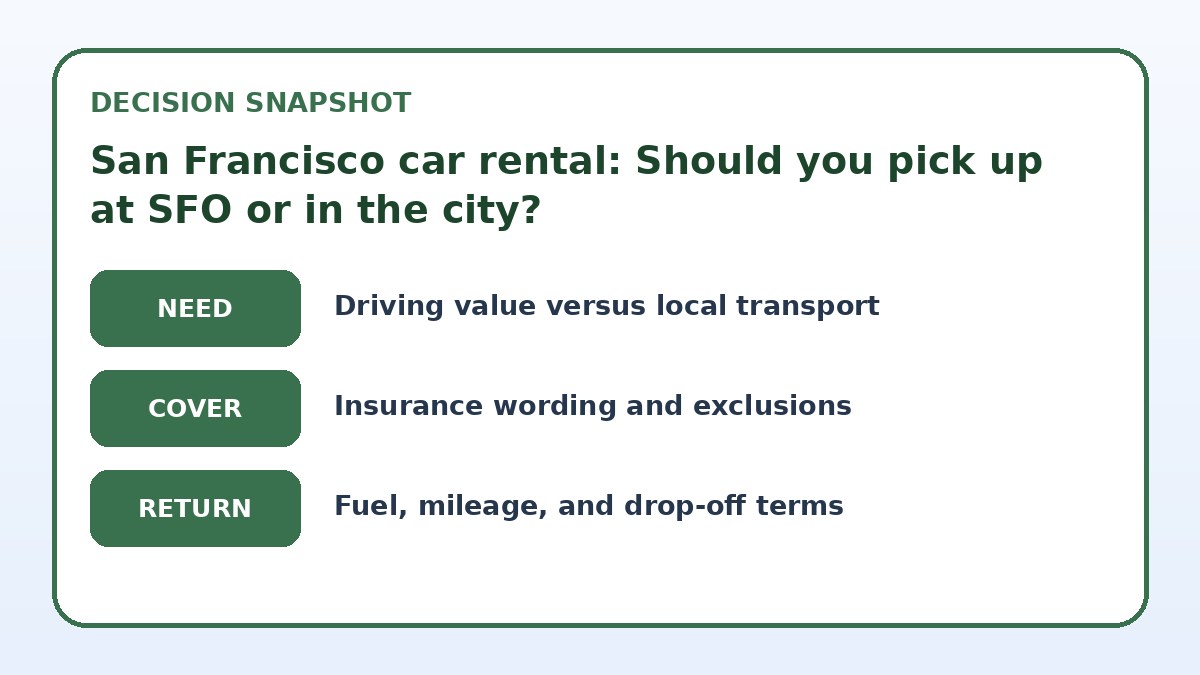
See current options before you compare the details
Availability and final conditions change. Open Trip.com now or keep reading for the practical comparison.
Convenience and time: how luggage affects your arrival flow
For travelers with extra luggage, the simplest arrival flow usually minimizes transfers. Airport pickup lets you collect bags, complete rental paperwork, and load everything into the car on airport property—no taxi, shuttle, or public transit required. That means fewer door-to-door handoffs and less handling of heavy or awkward items, which matters for families, sports teams, or anyone carrying fragile gear. But convenience varies by airport layout: some airports group rental companies in a centralized off-airport terminal requiring a shuttle, so check the specific process for your arrival airport in San Francisco before assuming it’s a curbside walk.
City pickup can be quicker only when your first destination is downtown and your hotel accepts curbside loading or has immediate parking. If you arrive into the city by transit or an earlier flight and plan to collect the car later, city pickup avoids airport rental center lines and shuttle waits. However, driving from the airport to a downtown pickup means you’ll need a reliable way to move luggage from the terminal to that car location—often a taxi or rideshare—adding cost and coordination. Balance the number of bags and the physical work you’re willing to do during the transfer.
Cost and fees: what to check before you book
Compare base rental rates between airport and city locations, but pay close attention to additional fees that often apply to airport pickups: concession recovery charges, airport facility fees, or shuttle surcharges. City locations may avoid some airport-specific surcharges but sometimes add urban location fees. Because fee structures and daily rates change, always verify the final breakdown on the rental company’s booking page—look for line items labeled airport fees, facility charges, and local taxes. If you use third-party comparison sites like Trip.com, cross-check the final vendor page to confirm what the quoted price includes.
Also factor in the indirect costs of moving heavy bags. If you must take a taxi or rideshare from the airport to a city depot, add that fare and any tip to your total. Conversely, if an airport pickup sits in a facility that requires a shuttle and you have many large items, you may want to budget extra time and possibly a small helper tip to the shuttle attendant. When comparing options, calculate the total door-to-door expense—fare, time value, and physical effort—not just the headline rental rate.
| Approach | Best for | Tradeoff to check |
|---|---|---|
| Airport pickup | Travelers who want to move luggage straight from plane to car with minimal handling. | May include airport-specific fees and require navigating rental center shuttles at some airports. |
| City pickup | Those staying downtown first or seeking different vehicle types not found at the airport. | Usually requires a transfer from the terminal to the city location, adding time and cost for luggage movement. |
| Hybrid approach (book airport, switch if unavailable) | Travelers who prioritize airport convenience but want a fallback for vehicle availability. | Requires confirming modification policies and possible rebooking fees on the rental provider’s page. |
| Pre-book added equipment (carriers, racks) | Anyone with bulky sports equipment who needs guaranteed accessories. | Accessories may be limited by branch and typically need explicit confirmation on the reservation. |
Ready to check the option that fits your plan?
Use your exact dates and traveler details so the provider page can show the current total and conditions.
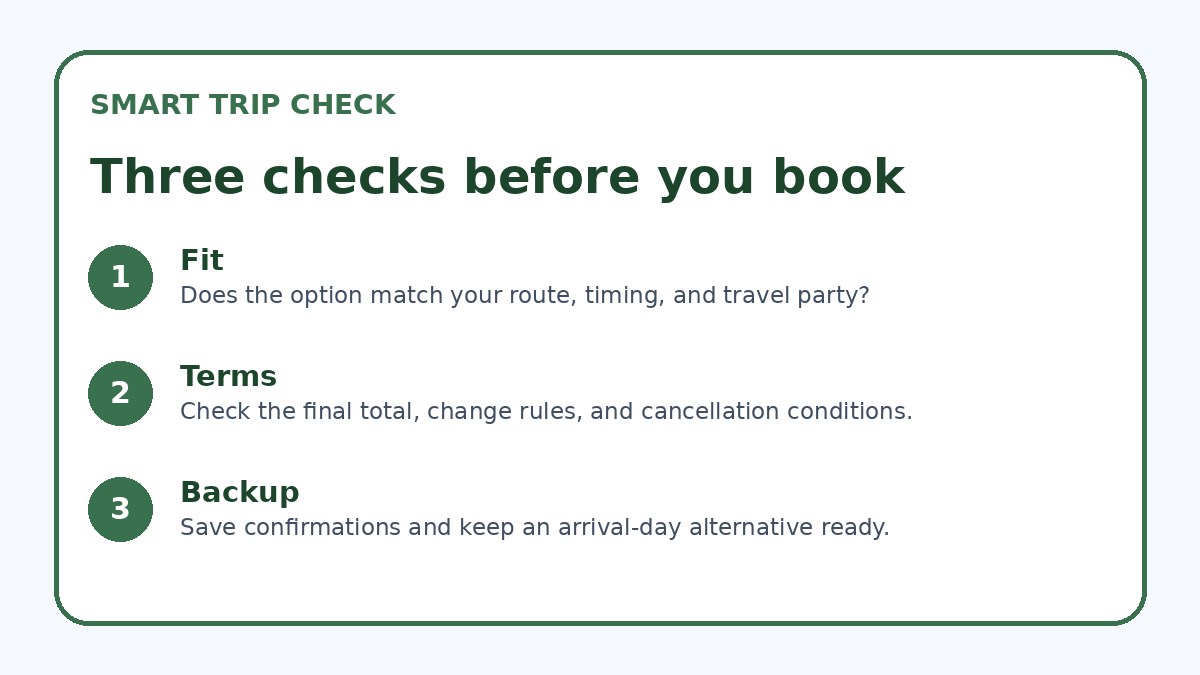
Vehicle availability and luggage capacity
If you need a vehicle with high cargo capacity—think full-size SUVs, minivans, or vehicles with roof racks—confirm that the specific pickup location actually carries those models. Some airport counters keep a broader or different fleet than downtown branches; other times the downtown branches are better stocked with premium or specialty vehicles. Don’t assume any particular model will be available at both locations. Use the booking filters to specify trunk volume or vehicle class, and note any replacement rules on the rental page in case the exact vehicle isn’t available at pickup.
When hauling sports equipment like surfboards or bikes, check whether the pickup location offers necessary accessories such as roof racks, bike mounts, or cargo carriers. These add-ons can be limited in quantity and might only be available at certain branches. If an accessory is critical, confirm its availability and the exact pickup branch on the provider’s confirmation page before finalizing the reservation. If flexibility is limited, you may find it easier to pick up at whichever location lists the appropriate vehicle and equipment outright.
Before you book
- Confirm the exact pickup address and whether an airport shuttle or curbside walk is required on the rental company’s booking page.
- Verify which vehicle classes and trunk/cargo specifications are available at your chosen pickup branch before you finalize the reservation.
- Check the booking page for any airport-related fees, facility charges, or local taxes that change the total cost.
- If you need roof racks or specialty carriers, reserve them explicitly and note the pickup branch listed on the confirmation.
- Plan your luggage transfer: estimate taxi or shuttle time, cost, and any help needed to carry oversized items to the pickup point.
- Read the return instructions and after-hours drop-off policies so you can smoothly end the rental without unexpected steps.
Logistics on the ground: parking, loading, and local driving
Consider your first stop after pickup. If you’re heading straight to a downtown hotel with narrow streets and limited curb space, unloading large luggage at the hotel can be slow and costly if valet is required. Airport pickup tends to give you more immediate space to load and organize luggage without blocking city traffic. On the other hand, if your hotel provides a dedicated loading zone or self-parking and you can drive there directly from the airport with minimal transfers, a city pickup could be less stressful than navigating airport rental centers.
Also think about navigation and traffic patterns: driving out of an airport can be faster or slower than driving into downtown depending on time of day. If you don’t want to make an unfamiliar trip with a full car and loaded roof rack during rush hour, plan accordingly. Verify where exactly to return the vehicle at drop-off as well—airport returns often have clear signage and staff, while some city branches require dropping the keys at a desk or using after-hours procedures. Confirm return instructions on the booking confirmation to avoid last-minute confusion.
Frequently asked questions
Will airport pickup always be faster when I have a lot of luggage?
Not always. Airport pickup reduces transfers because you load directly at the terminal, but some airports move rental counters to off-site centers that require shuttle rides—adding time for vehicle retrieval. Also consider the time it takes to clear baggage claim, complete rental paperwork, and wait for an available car. If your downtown hotel offers immediate curbside loading or you can arrange a short taxi to a city branch, that option can sometimes equal or beat the airport flow. Always check the specific airport’s rental procedures and the branch’s pickup instructions before deciding.
How can I make sure the car I need for my luggage is actually available?
Use the rental company’s vehicle class filters and explicitly request the size or cargo capacity you require when booking. If the online booking tool only shows general classes, contact the provider to confirm availability at your chosen branch and ask them to note your reservation with the required cargo needs. Review the booking confirmation email carefully—if the site or agent cannot guarantee a specific model or accessory, ask what alternatives they will offer if your preferred vehicle isn’t on the lot. When in doubt, secure the largest reasonable category to increase the odds of appropriate cargo space.
Are there parking or loading restrictions in downtown San Francisco I should know about?
Downtown San Francisco has many narrow streets, limited curb space, and frequent loading restrictions that vary block by block. Hotels may enforce short-term loading windows or require valet for guest luggage, so contact your hotel ahead to confirm drop-off procedures and whether they provide a loading zone. Factor potential parking fees or time limits into your plan—if you’ll be unloading a lot of baggage, arrange a brief curbside stop with the hotel or pick an off-street garage with unload access. Always verify local parking rules and hotel policies rather than assuming free or easy curb access.
Final planning note
Choosing between airport and city pickup for a San Francisco car rental when you have extra luggage comes down to one core question: which choice minimizes handling, cost, and stress for your particular arrival? Airport pickup often reduces transfers and makes loading easier, but may carry additional fees or require shuttles at some airports. City pickup can be better if your first stop is downtown or if a specific vehicle type is only stocked there—but it usually adds a transfer step for your bags. Use the checklist above before booking, confirm all fees and vehicle details on the rental company’s final reservation page, and consider contacting the provider directly if you have oversized gear. A little preparation will keep your arrival smooth and let you start your San Francisco plans with less hassle.
Continue planning
Check current options and final conditions
Use the provider page to confirm live availability, the final total, cancellation terms, and every condition that matters to your trip.
This evergreen planning guide was created with AI-assisted drafting and a structured quality review. It does not display live prices, schedules, availability, visa guidance, or provider rankings. Verify current details before booking. Some links are affiliate links; we may earn a commission at no additional cost to you.