
If you’re planning your first trip to Dubai, using flexible dates can unlock better options without complex hacks. Start by searching a small date range (three to seven days) around your preferred travel window, compare weekday versus weekend departure patterns, and toggle +/- three or seven days in flight and hotel search tools. Flexible searches expose off-peak weekday flights, short mid-week hotel stays, and rooms that include refundable or changeable rules—useful if plans shift. Be ready to weigh price against convenience: slightly longer layovers, earlier wake-ups, or a hotel outside a preferred neighborhood can be part of a lower-cost option. Below you’ll find clear decision criteria, comparisons of flexible approaches, and a checklist of concrete steps to follow before committing to any booking.
See current options before you compare the details
Availability and final conditions change. Open Trip.com now or keep reading for the practical comparison.
How flexible-date searches work and where to start
Flexible-date searches let you view availability and fares across multiple days so you can choose the best balance of price, schedule, and convenience. Begin with a core travel window—pick the week you prefer—then run two sweep tests: +/- three days and +/- seven days. The narrower window keeps your trip focused; the wider window reveals patterns like cheaper mid-week flights or lower hotel rates on nights outside local events. Many booking tools have a calendar or “whole month” view; use those to map out cheaper clusters rather than chasing a single low-fare day.
When you find better fares or rates, duplicate the search to check different combinations: shift outbound, then inbound; try departing on a weekday instead of a weekend; and test nights that add or remove a stay over Friday night, which can influence room rates. Always note the total door-to-door time, cancellation or change terms, and any transfer costs you’ll incur if the cheaper option involves long connections or a hotel farther from the areas you want to explore.
Choosing dates against Dubai’s calendar and weather
Dubai’s demand varies by season, business events, school holidays, and major exhibitions—these drive hotel and flight prices more than weekday-weekend differences alone. If your dates are flexible, target weeks outside large conventions or peak holiday windows. Check event calendars for Dubai’s main venues and compare those dates to the flexible-date search output. While you can’t rely on my listing of events, cross-referencing event schedules with available fares on booking pages will prevent surprises and help you avoid higher rates tied to specific trade shows or festivals.
Weather and daylight matter too. Cooler months tend to attract more visitors, which can push prices up, while very hot months may have fewer tourists but different service patterns. Flexible searches let you test shoulder-season windows—just remember to verify what each hotel’s pool or beach access policy is and whether activities you plan to do are available during your chosen timeframe. Always check the final provider page for specific service availability and any seasonal closures.
| Approach | Best for | Tradeoff to check |
|---|---|---|
| Narrow flexibility (+/- 3 days) | Travelers with tight schedules who want small savings without large disruptions | Less chance to find the lowest fares tied to broader date shifts |
| Wide flexibility (+/- 7 days or whole month) | Those prioritizing price discovery and willing to move dates for better deals | May require adjusting other plans and comparing more complex itineraries |
| Flexible dates with refundable/changeable fares | Anyone who expects possible plan changes and values booking peace of mind | Usually higher upfront cost than nonrefundable options |
| Rigid dates with price alerts | Travelers who must travel on specific dates but want to catch price drops | Alerts may miss short-lived windows that flexible searches would reveal |
Ready to check the option that fits your plan?
Use your exact dates and traveler details so the provider page can show the current total and conditions.
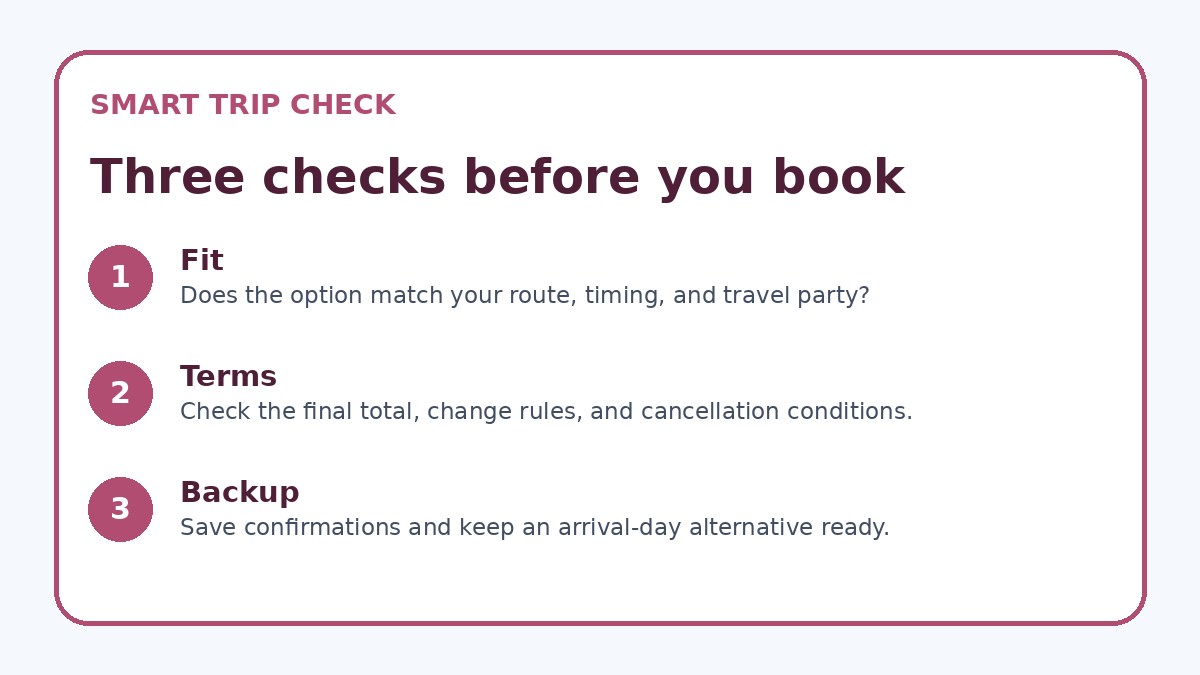
Balancing savings, time, and convenience
A lower fare or rate found through flexible dates isn’t automatically better if it adds long connections, knocks you out of preferred neighborhoods, or forces multiple hotel changes. Translate any apparent savings into total trip cost by adding transfer fares, extra nights, or the value of time lost in transit. If a flight saves money but adds an overnight connection, calculate whether that extra transit day is worth the savings or if a slightly higher direct option is better. For hotels, weigh the tradeoff between a cheaper property farther out and the convenience (and time saved) of staying in a central location.
Also consider visa and arrival logistics: arrival times that land late at night may mean limited public transport or higher taxi fares. Test different arrival/departure dates within your flexible-date window to find times that minimize costly transfers or inconvenient check-in hours. Where provider details could change—airport transfer services, hotel check-in rules, or bundled extras—double-check the booking page so you know what you’re paying for and what flexibility the rate actually offers.
Before you book
- Run a +/-3-day and a +/-7-day search for both flights and hotels, and save screenshots or notes of best options for comparison.
- For each potential flight, open the full itinerary on the airline or booking page and record total travel time, number of connections, and baggage rules.
- On hotel booking pages, confirm exact room type, cancellation policy, breakfast inclusion, and the property’s map location relative to your planned activities.
- Calculate extra transfer costs and time for any option with long connections or hotels outside central Dubai; add these to the advertised savings.
- Compare refundable/changeable versus nonrefundable rates for your chosen dates, and decide based on likelihood of schedule changes and the fee structure.
- Before finalizing, re-run the flexible-date search one last time to check for newly released seats or rooms and then confirm details on the provider’s final booking page.
Tools and techniques: what to compare on booking pages
When reviewing options identified by a flexible-date search, compare these concrete factors side by side on the provider’s final booking pages: total trip price inclusive of taxes and fees, baggage allowances, cancellation/change terms, exact flight times and connection durations, transfer options, and precise hotel location with transport links. Don’t rely on the summarized listings alone—open the hotel’s map, read the rate rules, and view the exact flight itinerary details. If a tool offers fare families or room types, expand those details to see what is actually covered and what would cost extra.
If you use third-party search engines to discover a flexible-date deal, follow through to the airline or hotel booking page before confirming. Trip.com can be used once as an additional place to compare availability and conditions, but always verify the same fare or rate terms on the provider’s final booking page—especially change and cancellation policies, which can affect the real value of a flexible booking.
Frequently asked questions
How much date flexibility do I need to see meaningful differences in Dubai travel deals?
Start with a +/- three-day window to spot weekday-weekend shifts; expand to +/- seven days if you can move your travel. Many savings show up when you avoid peak weekend or event dates, but the scale of difference depends on demand and airline or hotel inventory. If your schedule is constrained, set price alerts for your exact dates and run flexible searches periodically; this combination helps you know whether a small date shift will actually lower costs enough to be worth changing plans.
Should I always pick the cheapest option found with flexible dates?
Not necessarily. The cheapest option can add hidden costs: longer layovers, additional nights, late-night arrivals, or hotels far from the areas you want to explore. Convert any savings into a full trip budget that includes transfers, extra meals, and time cost. If the cheapest fare is nonrefundable or restricts changes, weigh that risk against slightly higher refundable rates—sometimes a modest fare premium pays off if your plans are uncertain.
Which tools are best for flexible-date searches and what should I verify afterward?
Use flight and hotel search engines with calendar or whole-month views to scan date ranges quickly, plus set price alerts for specific dates. After you identify candidate options, always click through to the airline or hotel’s final booking page to verify total price including taxes and fees, exact baggage and cancellation rules, precise flight times and connection lengths, and the hotel’s specific amenities and location. Trip.com can be used once to compare availability, but the provider’s booking page is the authoritative source for final terms.
Final planning note
Flexible dates are a practical lever for first-time visitors to Dubai: they reveal options that balance cost, comfort, and convenience. Start with narrow windows, expand them to discover larger patterns, and always verify what’s included on provider pages before you commit. Factor in transfer times, connection lengths, and hotel location so a small fare saving doesn’t become an inconvenient trip. Use refundable rates when your schedule is uncertain, and maintain simple documentation of the comparisons you run so you can choose with confidence. With this approach, you’ll make a booking decision that fits your travel priorities rather than one driven only by a single low headline price.
Continue planning
Check current options and final conditions
Use the provider page to confirm live availability, the final total, cancellation terms, and every condition that matters to your trip.
This evergreen planning guide was created with AI-assisted drafting and a structured quality review. It does not display live prices, schedules, availability, visa guidance, or provider rankings. Verify current details before booking. Some links are affiliate links; we may earn a commission at no additional cost to you.