For business travelers leaving Kuala Lumpur, the most practical answer is to choose the airport transfer that matches your flight time, luggage, meeting schedule and tolerance for risk. If you need a tightly timed departure after a meeting, prioritize booked car transfers or airport taxis that you can reserve in advance. If you have flexibility and free time before your flight, rail or shared shuttle services can be reliable and lower-stress during peak traffic. This article walks you through the decision points—door-to-door options, how to factor city traffic, what to verify when booking, and how to pack timing cushions into a tight business itinerary—so you can choose the right transfer and avoid last-minute scramble.
See current options before you compare the details
Availability and final conditions change. Open Trip.com now or keep reading for the practical comparison.
Which transfer type fits a business schedule?
Business travelers must match transfer type to schedule constraints. A reserved private car or hotel-arranged transfer gives the most predictable door-to-door travel and minimizes transfers with luggage. These options are best when meetings end close to your departure time because you control pickup time and avoid public transport waits. However, reserved cars require confirming pickup points in advance and considering traffic variability on city roads and expressways.
Rail options, like airport express services, offer consistent travel times that are less affected by road congestion but require reaching the station and managing last-mile logistics between your meeting location and the rail terminal. If your itinerary places you near a rail station and you can comfortably handle luggage, an express train can be both time-efficient and easier to plan around fixed schedules. Always check the final-leg options from the rail terminal to the airport building when timing a business departure.
Timing and traffic: building a reliable buffer
Traffic between central Kuala Lumpur and KLIA can vary by hour and day; plan with buffers. For car transfers, add contingency time for typical rush hours or unexpected road incidents when calculating pickup time. If you have a hard check-in deadline, add at least one buffer segment: time from meeting to pickup, pickup to airport, and airport check-in/security. Adjust those buffers higher if you must travel during known peak periods or if you rely on surface roads rather than expressways.
When using rail, buffers shift from road congestion to the rail timetable and station access time. Confirm the train departure times and frequency, then calculate time to get from your meeting venue to the station, including walking, elevator waits, and luggage handling. Also factor in the time to move from the train terminus to the airport departure hall. Whether by road or rail, planning conservative buffers reduces stress and helps ensure you are at the airport with time to complete security and boarding formalities.
| Approach | Best for | Tradeoff to check |
|---|---|---|
| Reserved private car | Tight schedules and door-to-door convenience | More expensive and affected by road traffic |
| Airport express rail | Predictable travel times and avoiding road congestion | Requires last-mile transfers and luggage handling |
| Hotel-arranged shuttle | Simple booking through your accommodation | Fixed schedules and possible wait times before departure |
| On-demand taxi or rideshare | Flexible pickup times and quick departures from varied locations | Variable pricing and less schedule predictability |
Ready to check the option that fits your plan?
Use your exact dates and traveler details so the provider page can show the current total and conditions.
What to verify before booking any transfer
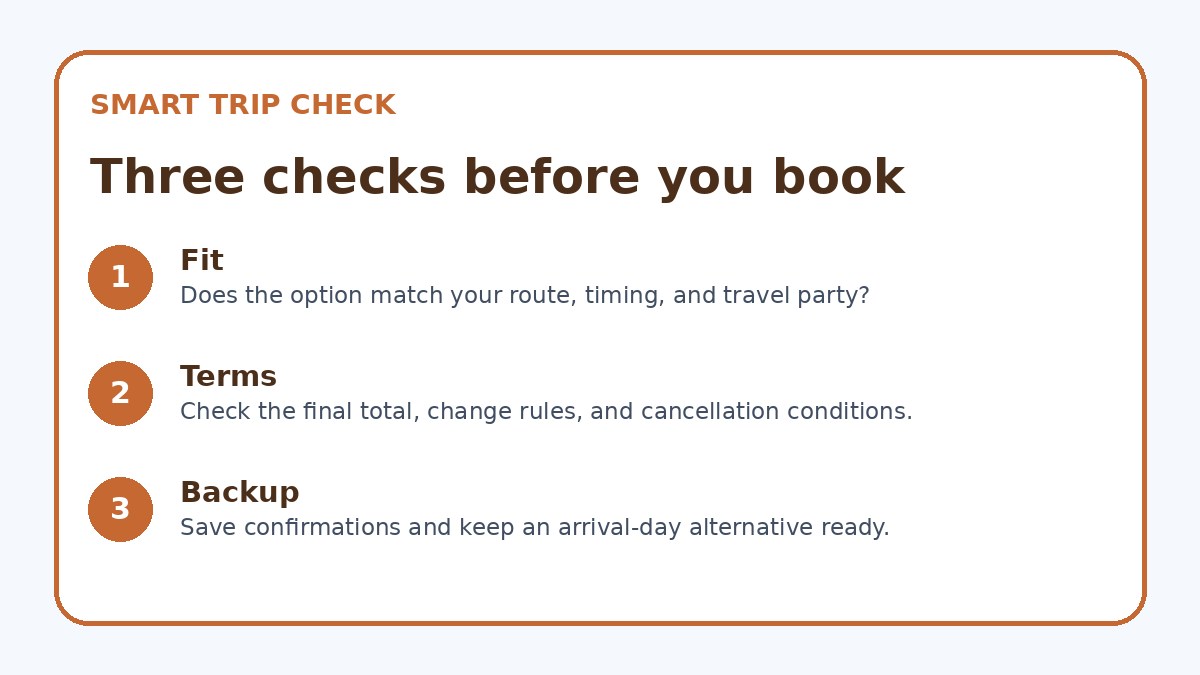
Provider pages hold details that change and will affect your choice—verify pickup address, exact drop-off terminal, luggage rules, and whether the vehicle has meet-and-greet service. If you’re booking through your hotel, confirm where the driver will meet you and what to do if your meeting runs late. For pre-booked car bookings, check cancellation and modification terms so you can update times if the meeting overruns. For rail, confirm service frequency, final departure points, and any last-mile transport you’ll need from the station.
Also check payment and contact options: ensure the booking page lists a local contact number or app-based live support, and confirm whether payment is taken upfront or at pickup. If you plan to use a rideshare or local taxi service, verify whether the app supports English, if the driver will accept cards, and where the designated pickup points are at your meeting venue. Small details—like whether the transfer includes tolls or airport surge fees—should be confirmed on the provider’s final booking page before you commit.
Before you book
- Confirm which KL airport terminal your flight uses and include terminal walk times in your schedule calculation.
- Book or reserve your transfer earlier in the day and verify pickup location, vehicle type, and luggage allowance on the booking page.
- Add a time buffer for traffic or train schedules—set calendar alerts for departure that include the buffer.
- Save the local contact number for your transfer provider or hotel front desk and test in-app messaging before you leave the meeting.
- Pack carry-on essentials and digital boarding passes where you can access them quickly during the transfer and security checks.
- Identify a backup transfer option in your ride-hailing app or note the next train time in case your primary plan fails.
Packing the plan: logistics for smooth execution
Prepare for the transfer by consolidating documents and allowing hands-free movement between venues. Keep digital and printed copies of flight details, your booking confirmation, and the pickup reference easily accessible. If you expect to leave the office or meeting location quickly, pre-position luggage, remove bulky items from the workspace, and store boarding passes on your phone for faster security screening. If you rely on a private transfer, share your meeting end-time and a mobile contact with the driver or operator in advance.
Consider contingency options: identify nearby hotels or coworking spaces where you could wait comfortably if your schedule shifts, and save the numbers of alternate transfer methods in your phone. If you’ll arrive at the rail station with limited time, know which platform and entrance to use, and avoid excess baggage that slows movement. Building alternative plans and key contacts into your calendar reduces friction and helps maintain a professional rhythm when the unexpected happens.
Frequently asked questions
Should I book a private transfer or rely on the airport express train?
Choose a private transfer if your schedule is tight, you value door-to-door service, or you have heavy or awkward luggage. Private transfers eliminate the need to move between modes and reduce the risk of missed connections due to local last-mile delays. Opt for the airport express train when your meeting ends with plenty of lead time, you are near a station, and you want a travel time that’s less susceptible to road congestion. When deciding, compare total door-to-door time instead of just in-vehicle time.
How much buffer time should I allow for a business departure from central Kuala Lumpur?
Buffer needs vary by time of day and your tolerance for risk. For road transfers, add extra time for peak-hour congestion and possible delays—this means planning a pickup significantly earlier than the minimum required to reach check-in. With rail, buffers are focused on the time to reach the station and the train schedule frequency. Whatever option you pick, build a cushion for unexpected meeting overruns and allow time for airport check-in and security procedures; err on the side of a longer buffer when your flight is critical.
What details should I verify on the transfer provider’s booking page?
Confirm pickup location (exact address or hotel lobby instructions), drop-off terminal, luggage allowance, cancellation and amendment policies, and whether a meet-and-greet service is provided. Check payment method, local contact number or app support, and any additional fees such as tolls, airport drop charges, or late pickup surcharges. If you’re using rail, verify station names, train departure times, and whether the train terminus requires an extra shuttle to the airport. These specifics will determine how smooth your departure will be.
Final planning note
Planning your Kuala Lumpur airport transfer for a business trip is mainly about matching convenience to schedule constraints and verifying the practical details that affect door-to-door travel time. Decide whether you need the predictability of a reserved car or the timetable reliability of rail, then build conservative buffers that account for local traffic patterns or rail station access. Before you book, check pickup points, luggage rules, contact numbers and change policies on the provider’s booking page. Save alternative options and local contacts in your phone so you can pivot quickly if plans shift, and you’ll leave Kuala Lumpur with a calm, professional exit.
Continue planning
Check current options and final conditions
Use the provider page to confirm live availability, the final total, cancellation terms, and every condition that matters to your trip.
This evergreen planning guide was created with AI-assisted drafting and a structured quality review. It does not display live prices, schedules, availability, visa guidance, or provider rankings. Verify current details before booking. Some links are affiliate links; we may earn a commission at no additional cost to you.