
If you and your partner are deciding how to travel from Taipei to Kaohsiung, the most useful starting point is this: prioritize a ticket with change and refund options when your plans could shift, and pick a simpler nonrefundable fare only if your itinerary is locked. For couples, ticket flexibility covers more than money: it affects stress, timing, seating together, and the option to adjust plans after a morning delay, event, or chance discovery. This guide explains the types of ticket flexibility you’ll encounter—refundable, changeable with a fee, and strictly nonrefundable—and shows how to weigh those against price and convenience. It also outlines what to verify on the provider’s booking page before you pay, and offers practical checklists so you and your partner make the right choice for your trip and comfort level.
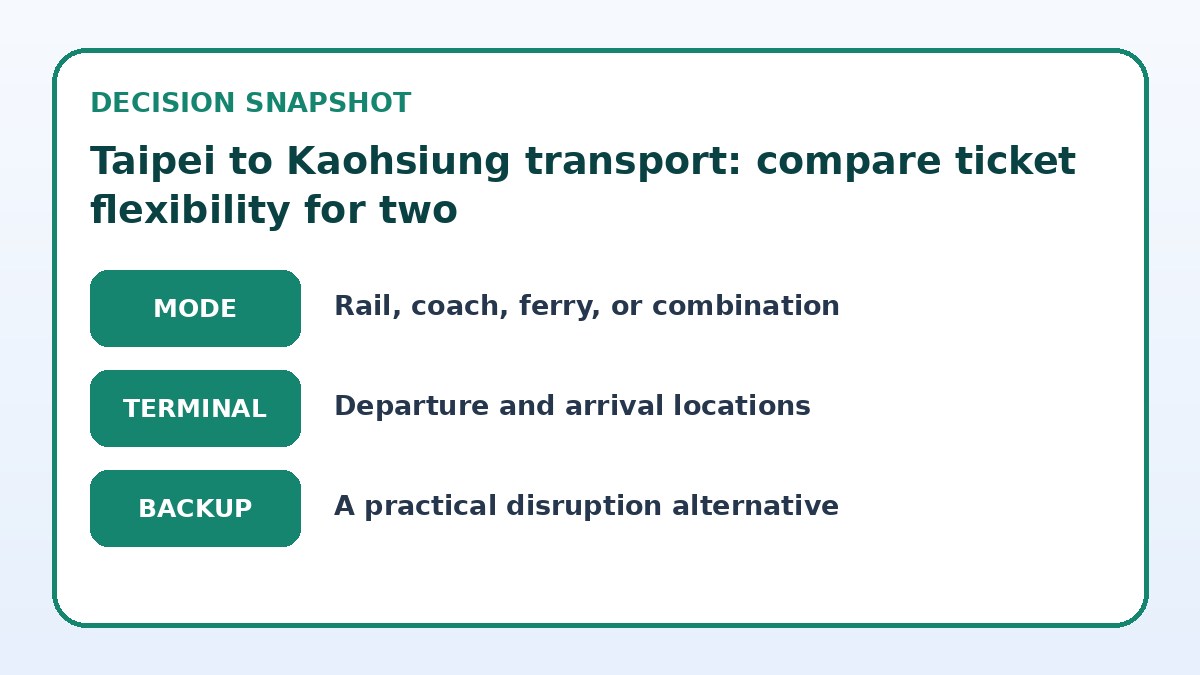
See current options before you compare the details
Availability and final conditions change. Open Trip.com now or keep reading for the practical comparison.
Understand the flexibility spectrum
Ticket flexibility usually falls into three practical categories: refundable, changeable with a fee, and nonrefundable/nonchangeable. Refundable tickets give you the broadest freedom but often come with a higher up-front cost. Changeable fares let you alter departures or dates for a specified fee or fare difference; depending on the provider, the fee might be a fixed amount or a percentage.
Nonrefundable tickets are the strictest and tend to be the least expensive, but they provide little recourse if plans shift. For couples, the choice is not only financial: amenability to splitting or rescheduling a leg because one partner is delayed can make the trip less stressful. Evaluate how likely one of you is to change plans, whether work commitments could intervene, and how much peace of mind you want when picking along this spectrum.
How to compare direct and connecting options
Direct trains or services are simpler: less chance of missing a connection and often easier to manage seating for two. If a direct option exists, check how flexibility differs between direct and connecting tickets; sometimes a connecting itinerary sold at a lower fare can be more restrictive, or each segment may have its own change rules you must follow separately.
When connections are necessary, read the transfer rules carefully. Some providers treat a multi-leg booking as a single contract, allowing a single change or refund; others require handling each leg individually, which can multiply fees and complicate adjustments. For couples, weigh the convenience of a direct option against any cost savings from connecting itineraries that may add risk if one partner’s schedule changes.
| Approach | Best for | Tradeoff to check |
|---|---|---|
| Refundable fares | Couples who need maximum plan flexibility and want simple refunds. | Higher upfront cost compared with other fares. |
| Changeable fares with fees | Couples who expect possible changes but want a balance of cost and flexibility. | Fees or fare differences can still add up for multiple changes. |
| Nonrefundable, nonchangeable fares | Couples with fixed, confirmed itineraries who prioritize lower cost. | No refund or free changes, raising risk if plans shift. |
| Multi-leg bookings vs single-contract tickets | Couples who want lower prices from mixed segments or who need specific timings. | May require separate changes per segment, increasing complexity and potential fees. |
Ready to check the option that fits your plan?
Use your exact dates and traveler details so the provider page can show the current total and conditions.
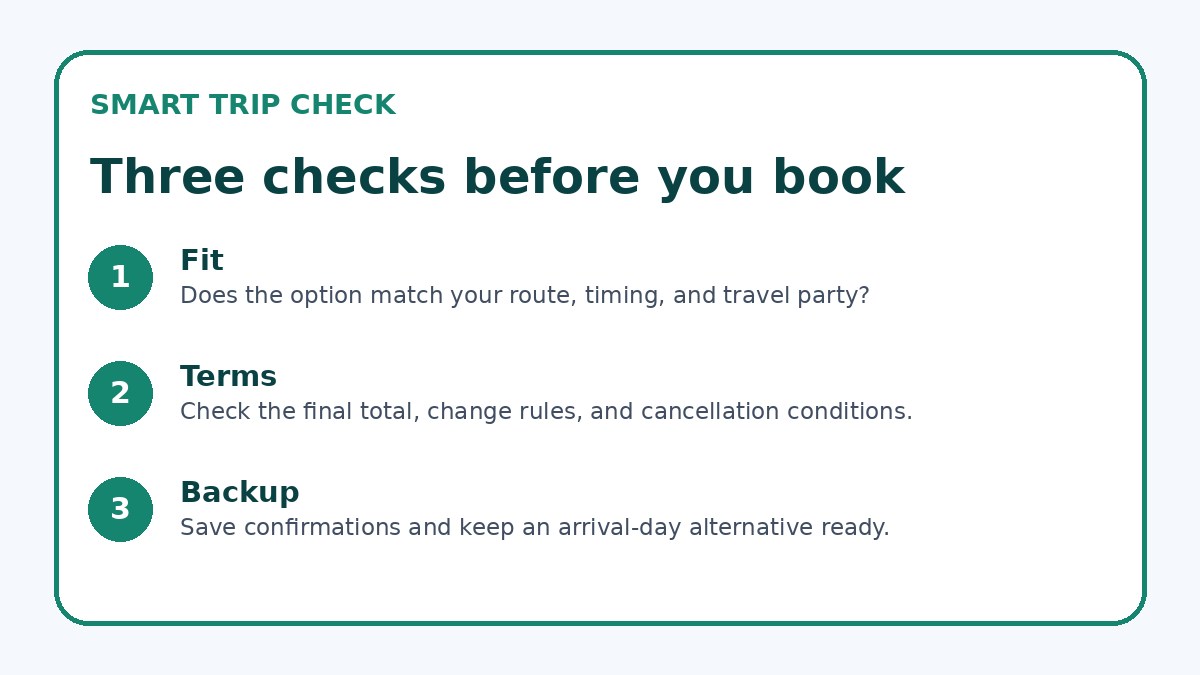
Decision criteria for couples
Start with a simple checklist of priorities: flexibility tolerance, budget headroom for change fees, the importance of sitting together, and how fixed your return plans are. If either partner has unpredictable work or health constraints, flexibility should rank higher. If you both prefer a stress-free morning and want assigned seats together, factor seat selection into your ticket comparison because some flexible tickets bundle this benefit.
Also consider travel time windows and backup plans. If your schedule allows multiple departures, a less flexible but cheaper ticket may be reasonable. If you rely on a specific arrival time for an event or check-in, pay for changeability to protect that commitment. Communicate openly—agree in advance how you will handle last-minute changes and who will manage booking modifications to avoid confusion later.
Before you book
- Confirm whether the fare allows free changes, chargeable changes, or no changes at all and note the precise change fees or fare difference rules.
- Verify refund rules: who issues the refund, the refund method, and any processing time or deadlines for claiming money back.
- Check seat-assignment policies and reserve adjacent seats if staying together is a priority, or choose fares that include seat selection.
- If booking a connecting itinerary, confirm whether each leg has independent rules or if the whole booking is managed as a single contract.
- Compare booking directly with the operator and with one aggregator like Trip.com, then verify the operator’s final terms before payment.
- Keep all confirmation emails and screenshots of the fare rules; these can be essential if you must request a change or refund later.
What to verify on the booking page before paying
Always read the fine print on change and refund policies: how much notice is required, whether a fee applies, and whether refunds are issued to the original payment method or as travel credit. If you book through a third-party site or aggregator, verify whether changes must be handled with the seller or the operator, because that can affect timelines and refund options.
Check seat-assignment rules, luggage allowances, and any differences for couples—some services let you reserve adjacent seats only with specific fare types. Also confirm the timeline for making changes (for example, up to departure time or only 24–48 hours prior). If you want to compare live availability or policies, Trip.com can be used as one place to view options, but always confirm the operator’s final terms on their booking page before committing.
Frequently asked questions
If one partner needs to change the ticket, can couples modify only one passenger’s booking?
Whether you can change a single passenger’s ticket depends on the provider’s rules and how the booking was made. Some systems treat each passenger’s ticket individually so you can change one name or leg with a proportional fee; others tie all passengers to a single record and require changes to the whole booking. Before buying, check the booking page for single-passenger change options and any extra fees. If you expect different needs between partners, consider booking separate tickets to preserve independent flexibility—compare the total cost and the risk of losing adjacent seats.
Are flexible fares always better for couples traveling with luggage or special needs?
Flexible fares can help when plans change, but they don’t automatically include extra luggage or special-assistance services. Read the fare details to see what’s bundled—seat selection, extra baggage allowance, and priority boarding may be included with certain flexible classes but not others. If you need guaranteed baggage or assistance, prioritize a fare that explicitly lists those features rather than assuming flexibility covers them. Confirm logistics like platform access, assistance request windows, and how to add services after purchase if needed.
How far in advance should couples book to maximize both flexibility and seat choice?
There’s no universal window that guarantees both the best seat selection and flexibility; it’s a tradeoff based on the operator and demand patterns. If keeping adaptive plans is most important, focus on a fare with flexible change terms and book as soon as you need a confirmed departure. If sitting together is the priority, earlier booking typically improves seat choice—check when seat maps open for the service you choose. Always review the change cutoff times and make sure the fare you choose allows you to change within those timelines if needed.
Final planning note
Choosing the right Taipei to Kaohsiung transport ticket as a couple comes down to balancing how certain your plans are against the cost you’re willing to accept for flexibility. If either partner’s schedule is fluid, pay extra for changeable or refundable options to avoid stress and complicated splits. When plans are firm and price is the priority, a nonrefundable fare can be acceptable—but only after you’ve confirmed seat arrangements and the consequences of any needed change. Before you buy, read the operator’s final terms on the booking page (or through your chosen seller), confirm seat policies, change and refund deadlines, and who will handle a modification. With that information, you and your partner can pick the option that protects your trip and the time you’ll spend together.
Continue planning
Check current options and final conditions
Use the provider page to confirm live availability, the final total, cancellation terms, and every condition that matters to your trip.
This evergreen planning guide was created with AI-assisted drafting and a structured quality review. It does not display live prices, schedules, availability, visa guidance, or provider rankings. Verify current details before booking. Some links are affiliate links; we may earn a commission at no additional cost to you.