The practical choice for business travelers flying Seoul to Jeju is to decide whether schedule flexibility or door-to-door convenience matters more for your trip and then pick the flight and transfer plan that matches. If meetings are fixed and time-sensitive, prioritize earlier direct departures and transportation links that minimize variability. If you need buffer time for delays, opt for later departures and flexible tickets or refundable change options. Many business travelers mix approaches: book a convenient flight that also offers a change option, or pick a slightly longer connection that reduces risk of missed appointments. Below you’ll find clear criteria to compare direct versus connecting flights, how to judge airport-to-city transfers, what to verify on booking pages, and a checklist to finalize the right plan for your schedule and priorities.
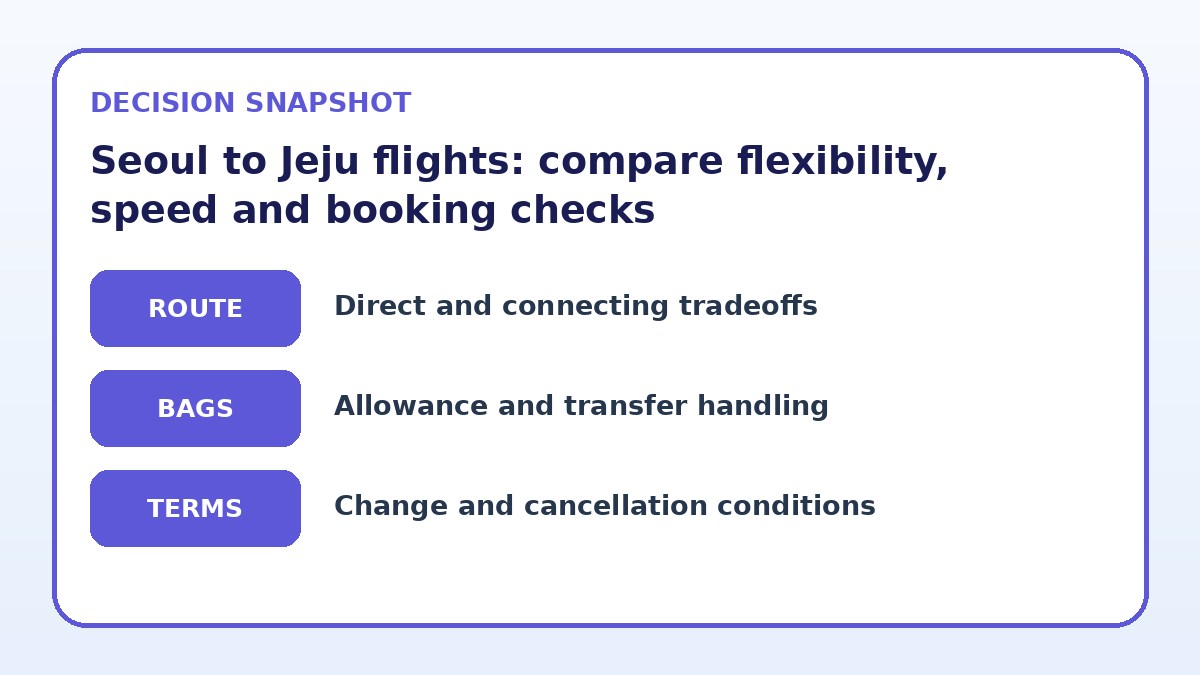
See current options before you compare the details
Availability and final conditions change. Open Trip.com now or keep reading for the practical comparison.
Direct flights vs. connections: what to weigh
Direct flights cut complexity: fewer legs reduce the chance that a delay or baggage issue on one segment ruins the whole trip. For short business trips between Seoul and Jeju, direct service usually shortens travel time and lowers the risk of missed appointments. But direct services can be less frequent at off-peak hours, and when they are, you might need to accept a departure time that doesn’t perfectly match your meeting schedule. Always check whether a flight labeled direct includes an intermediate technical stop that might add boarding or turnaround delays.
Connecting itineraries sometimes offer more schedule options and lower perceived risk of a missed meeting if they include buffer time, but they add transfer tasks and two boarding cycles. For business travelers who value schedule flexibility, a connection with a comfortable layover can be preferable to a tight direct that leaves little room for disruption. When comparing, tally expected transfer time, the minimum connection time recommended by the carrier, and whether connections occur within the same terminal—this affects how much time you really need between planes.
Departure airport and transfers: pick the right base in Seoul
Seoul has multiple airports and several ways to reach them; the airport you choose affects your total travel time and the risk profile of your trip. Consider travel time from your office or hotel, typical traffic patterns at the time you’ll travel, and how reliable the airport’s ground transport is during your departure and return windows. Business travelers should favor the airport with the most convenient commute rather than the one that simply offers the cheapest flight, because a saved hour on the road often beats a marginal fare difference.
Also factor in the terminal layout and connections once you land on Jeju—some terminals provide faster luggage delivery, simpler transfers to taxis or buses, and fewer security checkpoints. If you have a morning meeting, prioritize departures that avoid peak-hour traffic to the airport and that arrive on Jeju with enough buffer to reach your venue. On the booking page, verify which terminal the flight uses and confirm typical ground transport options to and from that terminal to estimate realistic door-to-door times.
| Approach | Best for | Tradeoff to check |
|---|---|---|
| Earliest direct departures | Fixed morning meetings with low tolerance for delay | Fewer scheduling options and little buffer if inbound legs are delayed |
| Later direct departures with flexible fares | Meetings that can shift and travelers who value convenience | Higher ticket cost for changeability and reduced morning hours on Jeju |
| Connecting flights with long layovers | Travelers who prioritize schedule buffers over total travel time | More airport time, extra boarding steps, and potential for terminal changes |
| Cheaper non-flexible fares with extra transfer buffers | Cost-conscious travelers who can absorb schedule risk | Potential loss or rebooking fees if your itinerary changes unexpectedly |
Ready to check the option that fits your plan?
Use your exact dates and traveler details so the provider page can show the current total and conditions.
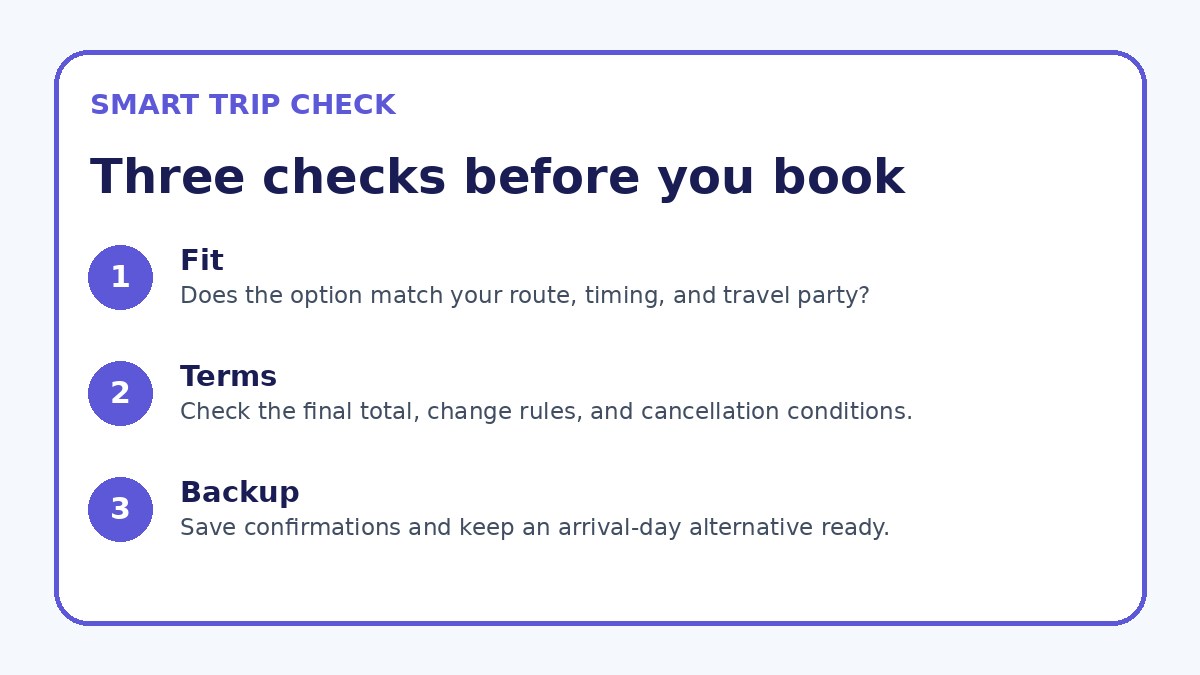
Ticket flexibility and cancellation tradeoffs
Flexible fares cost more but save time and stress when plans change. For business trips where meetings can shift, the main value of a flexible ticket is the ability to rebook to a different flight without losing the entire fare or paying a punitive fee. Before buying, read the provider’s change and refund policy on the booking page: check the allowed change window, fees, and whether you can hold a booking briefly while you confirm a meeting. If you rely on corporate travel policies or expense approval, make sure the fare type meets those rules.
If you choose a lower-fare, non-flexible ticket to reduce cost, mitigate risk with secondary strategies: book earlier flights, add longer transfer buffers, and consider travel insurance that covers trip interruption. For same-day or next-day itinerary changes, verify how easily the airline’s customer service can process changes and whether airport counters provide faster rebooking. Always keep screenshots or PDFs of policy pages and confirmation emails; those will help if you need to argue a change or refund with the provider.
Before you book
- Confirm your meeting start time and work backward to set a minimum arrival-on-site target including local transfer time.
- Compare total door-to-door time for each flight option, adding realistic transfer and traffic buffers.
- Read the carrier’s fare rules on the airline’s final booking page: change fees, allowed changes, and refund conditions.
- Select a flight whose terminal and ground transport options match your office or hotel commute to minimize transfers.
- Decide whether a flexible fare is worth the extra cost for your trip, and document fare change policies before purchase.
- Save PDFs or screenshots of your booking confirmation and the fare rules, and add the itinerary to your work calendar.
Practical booking checks and last-minute tips
Before you finalize any booking, compare total travel time and not just the airborne minutes. Confirm the flight’s terminal, the airline’s recommended check-in time for domestic flights, and whether priority boarding or expedited security is available with your fare class. For business travelers on tight schedules, add a realistic buffer for traffic to the departing airport and for disembarkation at the destination—these are common sources of underestimated delay.
If you use a corporate travel tool, sync itineraries with calendar invites and leave contact numbers readily available. When finalizing a purchase, verify baggage allowances, seat selection options, and whether the carrier’s fare includes refundable changes or credits. You can check current schedules and availability on sites like Trip.com, but always confirm policies and fees on the airline’s official booking page before trusting the fare rules.
Frequently asked questions
Should I always prefer a direct Seoul to Jeju flight for business travel?
Not always. Direct flights reduce the number of possible failure points and usually shorten travel time, which is valuable for business trips. However, if direct schedules don’t match your meeting times, a connecting itinerary with a comfortable layover can provide useful flexibility. Evaluate whether the direct option’s departure or arrival times create risky tight connections to meetings or ground transport; if so, a strategically chosen connection or a flexible fare may be the better choice.
How much buffer time should I allow between landing and an important meeting on Jeju?
A prudent buffer includes time to disembark, collect any luggage, and reach your meeting location by taxi or other ground transport. For most business settings, plan at least 60–90 minutes after landing for urban drop-offs; allow extra time if your meeting is outside the central area or if you fly during busy travel periods. Adjust upward when you expect heavy traffic, unpredictable luggage waits, or if your meeting requires getting to a specific hotel or venue with complicated directions.
What exact fare and policy details should I verify before booking?
Check the airline’s official booking page for change and cancellation rules, any required fees, how credits are issued, and what counts as refundable or non-refundable. Verify baggage allowance and whether seat selection or priority boarding is included in the fare. If corporate reimbursement applies, ensure fare type aligns with company policy. Finally, confirm terminal information and whether the airline imposes check-in or boarding deadlines that might affect your ground travel timing.
Final planning note
Business travel between Seoul and Jeju demands a practical tradeoff between schedule certainty and convenience. Choose the option that matches how firm your meeting times are: early direct flights reduce travel risk for fixed appointments, while flexible fares or connections add breathing room when plans may shift. Always calculate door-to-door time, verify terminal and transfer details on the airline’s final booking page, and document fare rules before you buy. These steps let you travel with a plan that prioritizes punctuality without sacrificing the practical convenience you need on a short business trip.
Continue planning
Check current options and final conditions
Use the provider page to confirm live availability, the final total, cancellation terms, and every condition that matters to your trip.
This evergreen planning guide was created with AI-assisted drafting and a structured quality review. It does not display live prices, schedules, availability, visa guidance, or provider rankings. Verify current details before booking. Some links are affiliate links; we may earn a commission at no additional cost to you.