For business travelers flying from Seoul to Tokyo the two most useful levers to control trip stress are luggage choices and realistic airport time. Decide first whether a carry-on-only approach fits your trip length, wardrobe needs, and company luggage policies — that choice changes how early you need to arrive and whether you’ll need baggage reclaim in Tokyo. If you must check a bag, adopt a faster handover plan: pack an essentials folder and a small carry bag with chargers, a change of clothes, and any meeting materials. Equally important is picking the right arrival and departure airports and confirming if your flight is direct or connects. Direct flights shorten total travel time but may still require similar airport buffer for immigration or transit between Tokyo airports. This guide lays out practical packing rules, airport arrival timing, decision tradeoffs, and a checklist to prepare confidently for Seoul to Tokyo flights.
See current options before you compare the details
Availability and final conditions change. Open Trip.com now or keep reading for the practical comparison.
Choose carry-on or checked baggage based on trip needs
For most two- to four-day business trips between Seoul and Tokyo, a carry-on plus a personal item is often sufficient. Prioritize wrinkle-resistant clothing, neutral layers, and a compact toiletry kit that meets liquids rules. A slim laptop sleeve and travel organizer for chargers and adapters keeps electronics ready for security checks and arrival meetings. Carry-on travel avoids baggage reclaim delays and the risk of mishandled luggage, but it forces tough choices about footwear and extras like presentation materials or samples.
Checking luggage makes sense when you need bulkier footwear, promotional materials, or extra suits and cannot rely on local laundry. If you check a bag, select an airline bundle or fare that clearly states size and weight limits before purchase — different fare classes and corporate agreements change allowances. Also plan a carry-on emergency kit: a shirt, essential toiletries, a spare charging cable, and a compact set of documents for the first 24 hours in Tokyo, so a delayed bag doesn’t derail your important meetings.
Plan airport time: when to arrive and what to expect
For direct Seoul departures, build baseline arrival time at the airport around your comfort level and the tasks you must complete: check-in and bag drop, security screening, possible immigration exit procedures, lounge access, and a buffer for unexpected queues. Business travelers who need lounge workspaces, printed boarding passes, or to brief colleagues should add extra time. If you favor minimal wait and are traveling light, arrive later — but leave room for traffic to the airport and fluctuations in security wait times.
If your itinerary includes a connection, especially between different airports or terminals, expand your buffer to cover transfers, baggage re-check, and immigration/entry checks where applicable. Compare direct and connecting options not only by flight time but by total door-to-door time: a short connection might be risky if you must collect and re-check luggage or move between airports. When booking, verify on the carrier’s or booking page exactly how much minimum connection time applies and whether carriers protect you in case of missed connections.
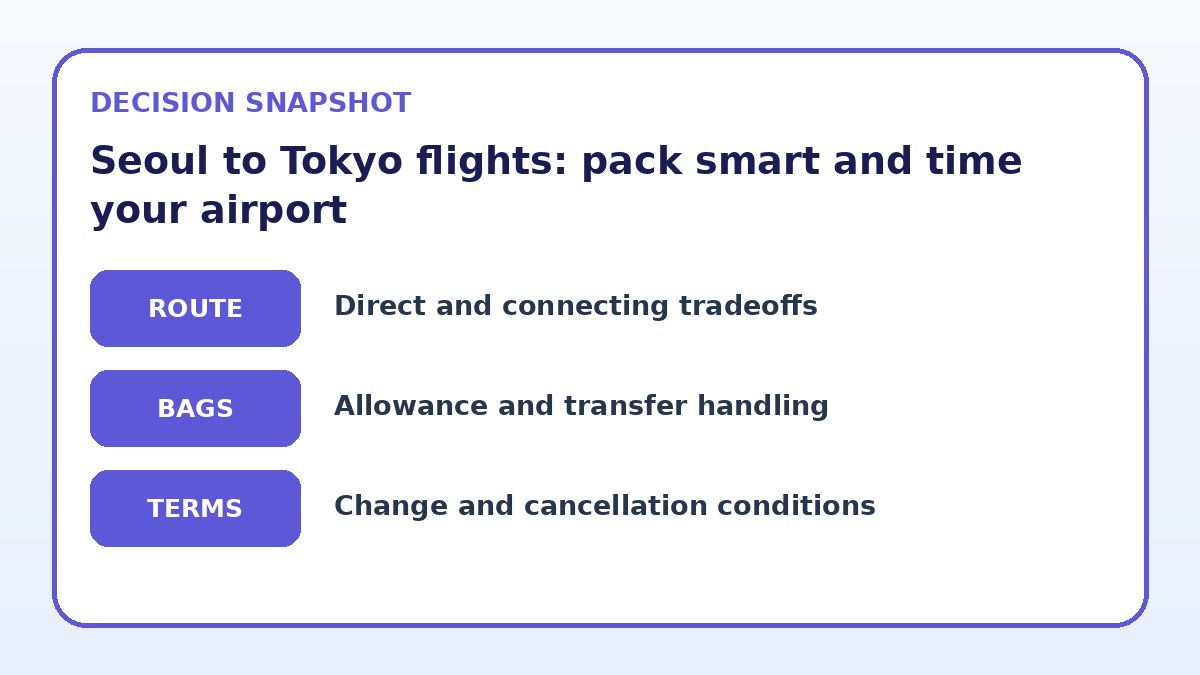
| Approach | Best for | Tradeoff to check |
|---|---|---|
| Carry-on only | Short trips, tight schedules, single-bag travelers | Limited clothing and samples; stricter packing discipline required |
| Checked baggage | Longer stays, bulky items, or promotional materials | Adds reclaim time and risk of delay; needs an on-arrival essentials kit |
| Direct flight | Minimizing total travel time and fewer transfer risks | May still need same airport buffer for security and immigration |
| Connecting flight | Lower fares, flexible schedules, or unavailable direct times | Requires larger connection windows and careful baggage transfer planning |
Ready to check the option that fits your plan?
Use your exact dates and traveler details so the provider page can show the current total and conditions.
Airport logistics on both ends: Seoul departure and Tokyo arrival
At the Seoul departure airport, confirm which terminal serves your carrier and whether there are express check-in or bag-drop services for business passengers. If you rely on airport lounges for preparing presentations, check lounge access rules tied to your fare class, credit card, or frequent-flyer status. For ground transport, allow extra time for peak-hour road congestion when planning taxi or car service pickups. Keep digital and printed copies of boarding documents and contact details for your travel supplier in case you must change plans quickly.
On arrival in Tokyo, immigration and baggage reclaim procedures will determine how quickly you can be in a taxi or train to your meeting. If you need to clear customs with goods or samples, read the customs guidance in advance and separate those items from your main bag to speed inspection. Factor time if you must move between Tokyo airports or from the airport to a hotel meeting hub. Have local transport options pre-booked when possible and confirm pickup times, especially for early or late arrivals.
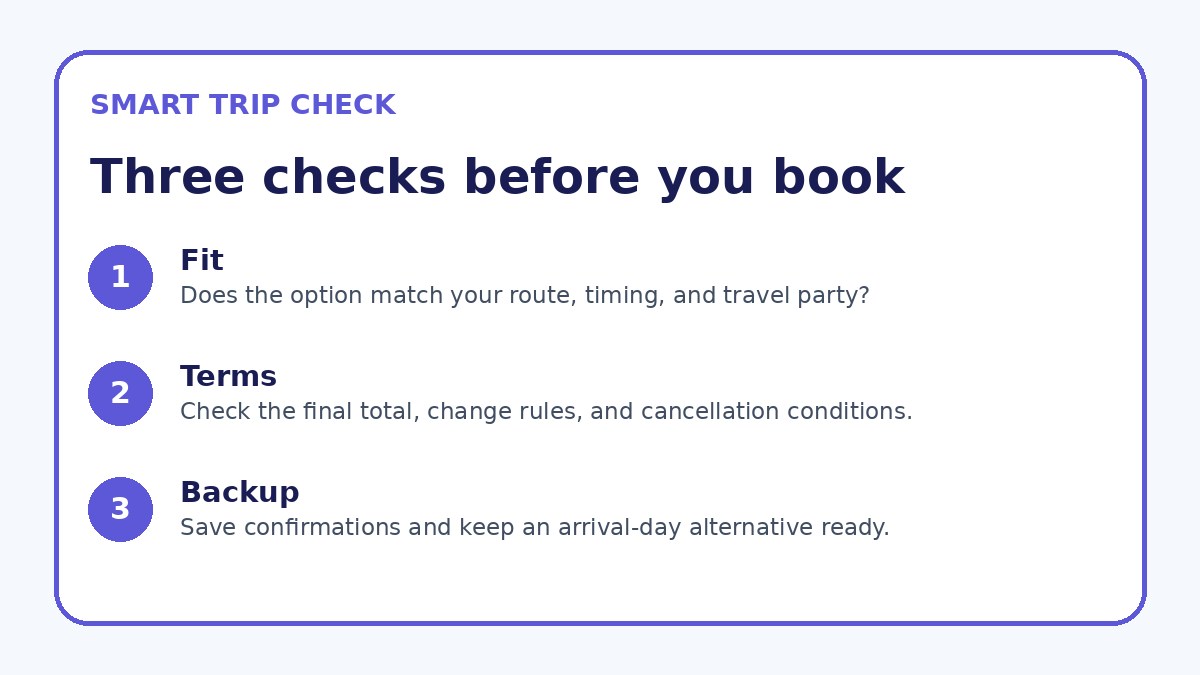
Before you book
- Confirm your airline’s baggage size and weight limits on the official booking page and note fees tied to your fare class.
- Pack a personal-item essentials kit with a fresh shirt, charger, travel-size toiletries, and a printed copy of critical documents.
- Check whether your departure or arrival airport requires earlier arrival during peak times and schedule ground transport with margin.
- If checking luggage, label the exterior and include contact info inside; attach a luggage tracker if important materials are inside.
- Pre-download boarding passes, presentation files, and maps to offline devices and store backups in a secure cloud folder.
- Verify lounge access, priority lines, and business-class services on the airline’s site and arrange them before arrival when possible.
Packing tactics and tech to save time and stress
Adopt a modular packing system: a rolling garment folder, a slim toiletry pouch, and a tech organizer make security lines and seat stowage faster. Use neutral, wrinkle-resistant fabrics and plan outfits that mix-and-match to reduce the total items. Store travel documents, business cards, and a pen in the outer pocket of your carry-on for quick access at immigration and customs. Keep one outfit and critical electronics in your personal item in case checked luggage is delayed.
Leverage technology to shave minutes: mobile boarding passes, airline apps for check-in and bag tags, and notification alerts for gate changes cut uncertainty. Pre-download material you’ll present and keep backups in cloud storage and on a USB or encrypted external drive. For international power, carry a compact multi-plug that fits both South Korean and Japanese sockets, and bring a small portable charger for transit. Always verify any airline-specific rules on the booking page before you travel, and consider comparing current availability on Trip.com if you want a quick view across carriers.
Frequently asked questions
How early should a business traveler arrive at the Seoul airport for a direct flight to Tokyo?
Arrival time depends on tasks you need to complete before departure. For carry-on-only passengers who have checked in online and only need security screening, arriving 60–90 minutes before departure may be sufficient if you are comfortable with minimal buffer. If you plan to drop checked luggage, use an airport lounge, or expect busy security lines, add 30–60 minutes to that baseline. For early morning or peak-hour departures and when traveling with colleagues or equipment, factor in additional time for road travel to the airport and potential queues. Always confirm recommended arrival times on your carrier’s booking page before leaving.
Should I book a direct flight between Seoul and Tokyo or accept a connection to save time or money?
Compare total door-to-door travel time, not just airborne hours. A direct flight usually cuts transfer uncertainty and is preferable when you have tight meetings. However, a connecting itinerary might offer better departure times or a lower cost; you must then add sufficient buffer for baggage transfers, possible terminal changes, and immigration procedures. If the connection requires switching airports in Tokyo or Seoul, account for transit time between airports. Verify minimum connection times and whether the carrier protects missed connections on the booking page, and weigh that protection against the potential savings or schedule fits.
What items should always travel in my carry-on for Seoul to Tokyo business trips?
Keep irreplaceable items and next-day essentials in your carry-on: laptop and presentation materials, chargers and adapters, a complete change of shirt, essential toiletries under liquids limits, any prescription medication, and a compact power bank. Also carry physical and digital copies of travel documents, business cards, and a small stationery kit to sign forms or notes. If you transport samples or items subject to inspection, separate them and have invoices or paperwork ready. Having this kit ensures you can attend your first meeting even if checked baggage is delayed.
Final planning note
For business travelers between Seoul and Tokyo, decisions about baggage and airport time drive the entire trip experience. Prioritize a carry-on strategy when speed and flexibility matter, but pick checked baggage when materials or wardrobe needs demand it — and then mitigate the extra time with an essentials kit. Always verify baggage allowances, connection minimums, and lounge or priority service details on the airline or booking page before finalizing plans. Compare direct and connecting itineraries on total door-to-door time instead of flight duration alone. Use the checklist to make concrete preparations; with a clear baggage choice and realistic airport buffers, you’ll arrive in Tokyo ready to work, not to scramble.
Continue planning
Check current options and final conditions
Use the provider page to confirm live availability, the final total, cancellation terms, and every condition that matters to your trip.
This evergreen planning guide was created with AI-assisted drafting and a structured quality review. It does not display live prices, schedules, availability, visa guidance, or provider rankings. Verify current details before booking. Some links are affiliate links; we may earn a commission at no additional cost to you.