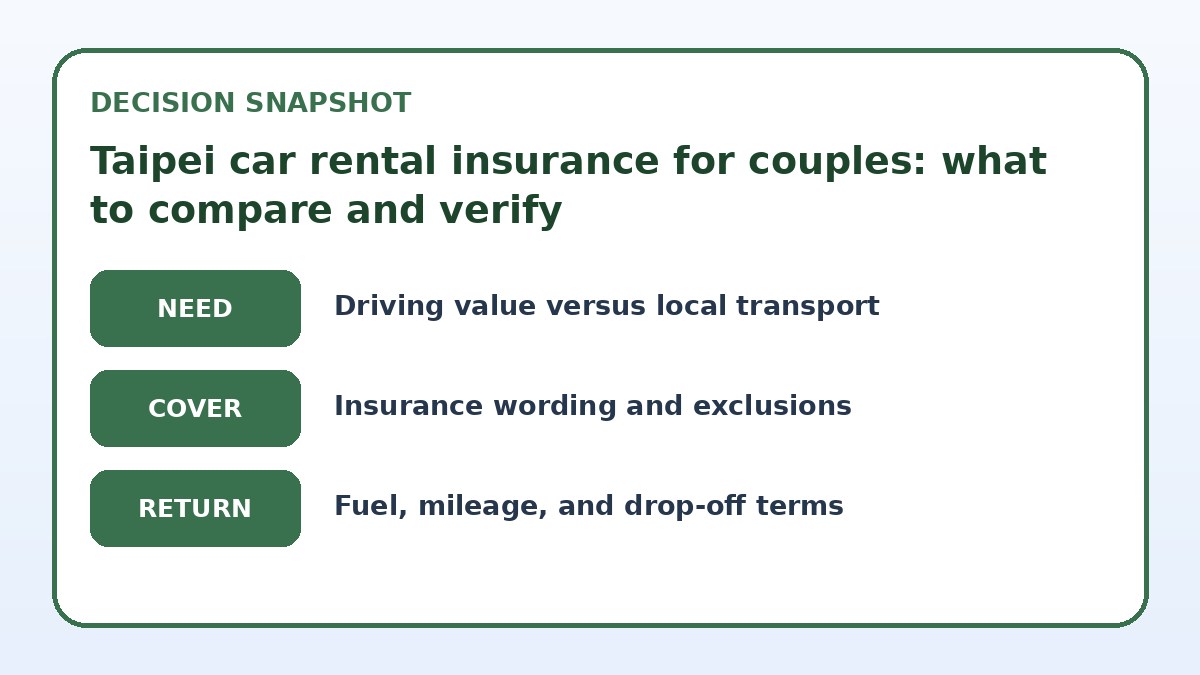
If you and your partner plan to rent a car in Taipei, the single most useful thing to do before booking is read the insurance wording — not just the highlighted coverage name. Policy language defines who is an authorized driver, what counts as damage, where the car can be driven, and which incidents are excluded. For couples this matters: one partner driving a scooter, switching drivers mid-trip, or parking in a congested district can change your liability. Start by confirming authorized drivers, excess amounts, and whether third-party liability, collision damage waiver (CDW), and theft protection are actually included or offered as optional add-ons. Then check territory restrictions and towing/roadside terms. I explain the common phrases you’ll see, the tradeoffs between cheaper and fuller coverage, and a short checklist of items to confirm on the provider’s final booking page.
See current options before you compare the details
Availability and final conditions change. Open Trip.com now or keep reading for the practical comparison.
Key insurance words couples must understand
The labels providers use — CDW, LDW, TP, PAI — are shorthand for complex conditions. Collision Damage Waiver (CDW) often appears to “cover” damage to the rental car, but that wording usually limits the provider’s recovery from you only after you pay an excess or deductible. Loss Damage Waiver (LDW) can combine CDW and theft protection, yet some LDWs still exclude specific incidents like windscreen, undercarriage, or interior damage. For couples, asking which items are excluded matters: a small scrape in a tight Taipei alley or broken mirror from a coverable incident might still fall outside the waiver if the policy lists those parts as not covered.
Third-party liability or Third-Party Insurance (TP) protects you if you injure others or damage property. Many basic rentals include a statutory minimum, but that is not the same as commercial-level coverage. Couples should confirm whether TP limits are adequate for busy urban driving and whether adding supplemental liability is necessary. Also watch for “named driver” or “additional driver” wording; some quotes include one free additional driver while others charge per driver or require each driver’s details at booking. Never assume an unlisted partner is covered — that can void claims.
How deductibles, waivers, and excess work for two drivers
The excess (or deductible) is the amount you must pay before insurance covers the remainder. Some waivers reduce or eliminate the excess, but often this is only if you accept an optional daily or per-rental waiver upgrade. For couples sharing driving duties, check whether the waiver applies per driver or per vehicle; some providers tie responsibility to the primary renter and still hold secondary drivers liable in certain circumstances, like unauthorized drivers or breaches of the rental agreement.
If you plan to split responsibility, ask how refunds of the excess work after a claim. Procedures differ: some companies hold the excess on your card and release it once liability is settled, while others require you to pursue reimbursement from a separate insurer. Also confirm whether roadside assistance and towing are included; an added driver should have the same access to assistance. The booking page will list excess amounts, optional waivers, and the process for excess reimbursement — verify those exact phrases before you click confirm.
| Approach | Best for | Tradeoff to check |
|---|---|---|
| Basic included coverage (lowest rate) | Short city drives where you accept higher financial risk | Lower daily cost but higher excess, more exclusions, and potential denied claims for common incidents |
| CDW/LDW with reduced excess | Couples who want simpler claims and lower immediate liability | Higher daily rate but less worrying about small damages and faster resolution on-site |
| Third-party supplemental excess insurance | Travelers seeking lower upfront rental fees and excess reimbursement later | Cheaper upfront but requires filing with an external insurer to recover held excess |
| Comprehensive package with authorized drivers included | Couples sharing driving duties and wanting full on-road support | Most expensive per day but simplifies claims, includes roadside assistance, and covers multiple drivers |
Ready to check the option that fits your plan?
Use your exact dates and traveler details so the provider page can show the current total and conditions.
Common exclusions and scenarios that trip up couples
Providers often list common exclusions in policy wording: driving under the influence, driving on unpaved roads, leaving keys in the car, using the car for certain commercial activities, unauthorized drivers, and parking violations. For couples sightseeing around Taipei, pay attention to unattended-vehicle rules — leaving the car unlocked or with the engine running can void theft claims. Similarly, damage from poor parking in narrow lanes or motorcycle-heavy streets might be excluded if the policy specifies certain types of dents or scrapes are not covered.
Another common area is geographical limits. Some policies restrict coverage to Taiwan island only or prohibit travel to offshore islands or cross-border trips; if you plan a day trip beyond Taipei into rural or mountainous areas, confirm that those roads are covered. Also watch sublimits for glass, tires, and roof racks — a low-clearance garage scrape or broken windshield may only be partially covered or excluded entirely. When something seems ambiguous, take photos at pickup and ask for clarification in writing on the booking page.
Before you book
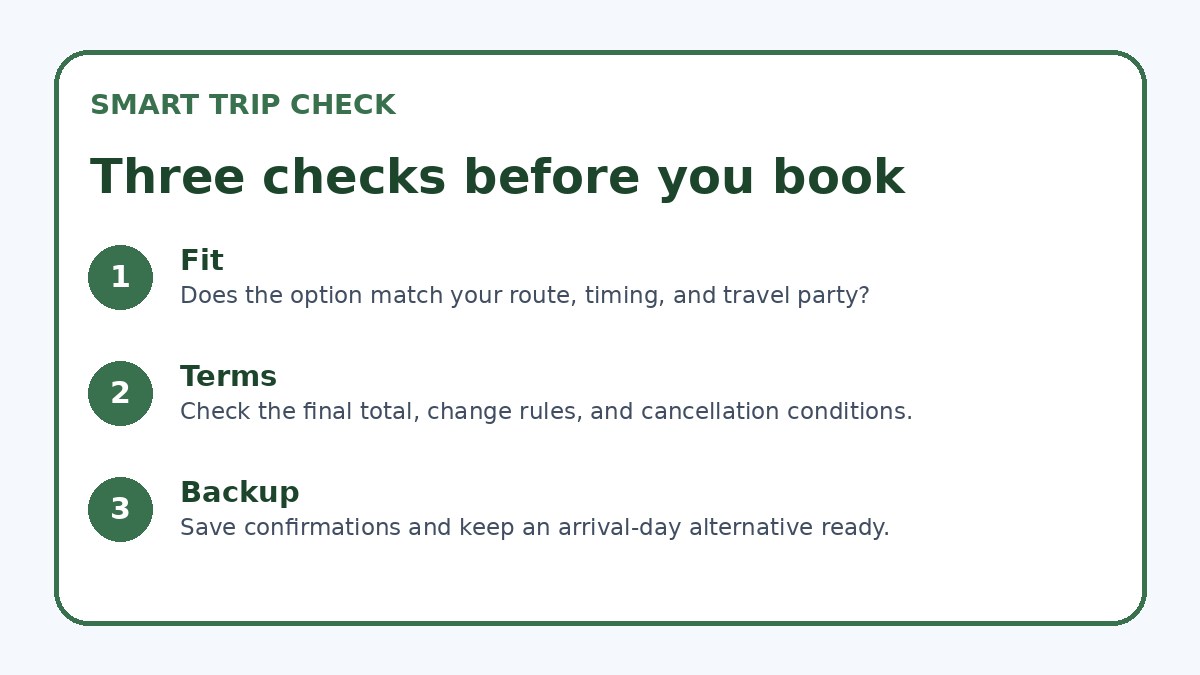
- Confirm both partners are listed as authorized drivers on the booking page and note any additional driver fees.
- Check the stated excess amount and whether an optional waiver reduces or removes it; save the exact wording shown at checkout.
- Verify which parts are excluded (windscreen, tires, undercarriage, roof) and whether separate glass/tyre coverage is offered.
- Read the theft and unattended-vehicle wording; ensure coverage requires locks and parking rules you can reasonably follow in Taipei.
- Confirm geographic limits and whether trips outside Taipei or to islands are excluded from coverage.
- Take time-stamped photos of the vehicle at pickup and ask the agent to note pre-existing damage on the rental contract.
How to compare quotes and decide what to buy
Comparing the sticker price is not enough; you need to compare the final liability exposure and the process during a claim. Start by listing what each quote includes: basic liability, CDW/LDW, theft protection, excess amount, roadside assistance, and whether both drivers are authorized. Calculate the real out-of-pocket worst-case cost by adding the stated excess to any known sublimits, and weigh that against the daily cost of an optional reduced-excess waiver. For couples on a short Taipei city trip, a higher daily waiver may be worth it to avoid a large block on your card.
Also think about convenience and documentation. Some insurers let you buy supplemental coverage from a third-party insurer that reimburses the excess rather than replacing the rental company’s waiver; this can be cheaper but adds a step when making a claim. Decide whether you prefer a single-source booking with simpler claims handling, or a layered approach that could save money but requires more paperwork. Whatever you choose, take screenshots of the booking page’s insurance wording, keep the rental agreement, and verify contact procedures for accidents before driving off.
Frequently asked questions
If only one partner is listed as the renter, can the other still drive the car?
It depends on the rental agreement wording. Many companies allow additional drivers if they are listed and approved at booking or pickup; some include one free additional driver, others charge per person. If the unlisted partner drives and is involved in an incident, insurers can deny claims based on unauthorized-driver clauses. To be safe, add the other partner as an authorized driver and keep their driver’s license details on file. Verify the exact phrase about additional drivers and any age or license restrictions on the rental provider’s final booking page.
Will my personal car insurance or credit card cover the rental in Taipei?
Coverage from personal car insurance or credit cards varies widely and depends on the issuer and the policy wording. Some personal policies exclude international rentals or require the rental company’s CDW to be declined for the card benefit to apply. Credit card coverage often reimburses collision damage but may not cover liability, theft, or certain vehicle parts. Before relying on this, read your policy wording and the card benefit rules, and confirm whether you must pay with that card to be eligible. Always verify these exact conditions before declining the rental company’s waivers.
What documentation should couples keep with them in case of an accident in Taipei?
Keep the rental agreement, insurance booklet or screenshots of the booking page’s insurance wording, both drivers’ licenses, and contact numbers for the rental company and emergency services. Take clear photographs of the scene, vehicle damage, license plates, and any third-party vehicles involved. Note names, contact details, and insurance information of other parties. If police attend, obtain the report number and officer details. These items and photos will streamline any claim and support reimbursement requests with either the rental company or a third-party insurer.
Final planning note
For couples renting a car in Taipei, thinking like a claims handler before you drive will save time, stress, and money. The single practical step is to read and save the exact insurance wording on the booking page: authorized drivers, excess, named exclusions, geographic limits, and the process for excess refund are the lines that matter. Balance the daily cost of added waivers against the worst-case out-of-pocket exposure and how much paperwork you’re willing to handle after an incident. Finally, add both partners as authorized drivers, take thorough vehicle photos at pickup, and keep all rental and insurance screenshots handy. That approach keeps your trip flexible while minimizing surprises if something goes wrong.
Continue planning
Check current options and final conditions
Use the provider page to confirm live availability, the final total, cancellation terms, and every condition that matters to your trip.
This evergreen planning guide was created with AI-assisted drafting and a structured quality review. It does not display live prices, schedules, availability, visa guidance, or provider rankings. Verify current details before booking. Some links are affiliate links; we may earn a commission at no additional cost to you.