If you need a quick practical answer: choose the travel mode that matches your priorities—speed (intercity trains), flexibility and cost (express buses), or itinerary control (rental car with planned stops). For a multi-city ground-transport plan from New York City to Boston, combine one main trunk segment (NYC–Boston) with local transit links in each city and one or two contingency options for unexpected delays. Start by mapping your arrival and departure neighborhoods, then pick the mode that minimizes cross-city transfers and aligns with your luggage, mobility needs, and schedule. Below I explain how to weigh travel time, comfort, station placement, frequency, and complexity so you can design a realistic plan that’s easy to execute on travel day.
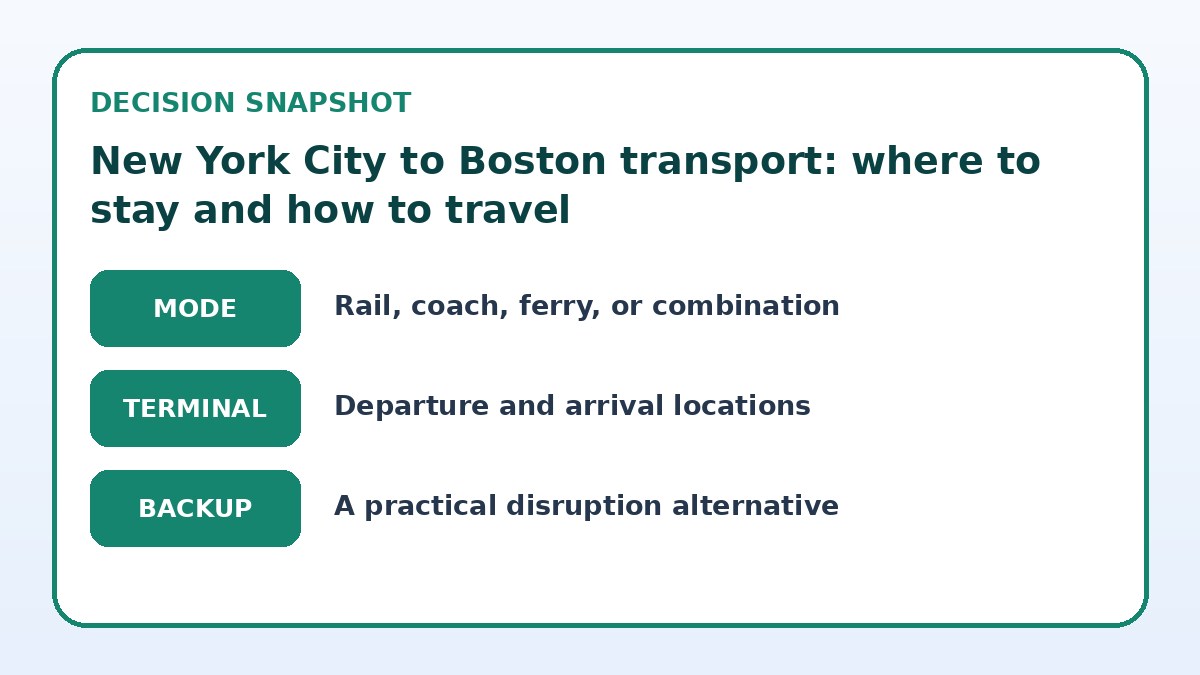
See current options before you compare the details
Availability and final conditions change. Open Trip.com now or keep reading for the practical comparison.
Decide your trunk segment: compare trains, buses, and car
Choosing the trunk segment determines almost every other part of your multi-city plan. Trains usually offer a predictable schedule and central stations, which can reduce time spent on transfers into city centers. Buses often sell more frequent and flexible departures and can be cheaper if you are willing to board at curbside terminals or outlying bus stations. A rental car gives you itinerary control, useful if you plan to stop in towns between the cities, but it requires planning for tolls, parking, and variable traffic—especially near either downtown area.
To decide, list your priorities: speed versus flexibility, minimal transfers versus sightseeing stops, and luggage or mobility needs. Check where each mode’s stations or stops are located relative to your accommodations so you know door-to-door time rather than just in-transit time. Remember to verify on the provider’s booking page any baggage rules, exact terminal addresses, and cancellation or change policies before you finalize reservations.
Integrate local transfers and time buffers
A multi-city plan must include reliable transfer legs within each city: how you’ll get from your hotel to the train station, from the Boston terminal to your next destination, or between parking garages and attractions. For every scheduled trunk departure, add realistic time for check-in or boarding, clearance through busy stations, and last-mile transport. If you’re carrying large luggage or traveling during peak commuter windows, add extra buffer time. Factor in typical morning or evening congestion when traveling by car or bus near major bridges and tunnels.
Avoid tight chains of connections unless you can rebook easily. If you prefer minimal stress, choose departures that allow a buffer of 60–90 minutes from the time you expect to leave your lodging to the scheduled departure. For connections within the city using local transit, identify the specific subway or bus lines and check the operator’s site or apps for service advisories on the day you travel. If you prefer, add a paid transfer or rideshare option as your standing backup—confirm pickup points and expected travel time on the provider’s booking page.
| Approach | Best for | Tradeoff to check |
|---|---|---|
| Intercity train | Travelers who want predictable schedules and central station access | Less flexible for intermediate stops and dependent on specific station locations |
| Express bus | Budget-conscious travelers needing frequent departure choices | Boarding locations can be outlying curbside terminals and subject to road congestion |
| Rental car | Itineraries with multiple stops or remote destinations between cities | Requires planning for parking, tolls, and variable traffic near both cities |
| Hybrid plan (train/bus plus local car) | Travelers balancing speed with local flexibility for side trips | More moving parts to coordinate and higher chance of needing backups |
Ready to check the option that fits your plan?
Use your exact dates and traveler details so the provider page can show the current total and conditions.
Design multi-city stops and overnight choices
If your plan includes stops—say a coastal town or a college campus between New York and Boston—decide whether to integrate them on a single ground-transport day or to overnight. An overnight lets you relax and explore without hurrying, but it requires an extra booking and adds packing logistics. If you prefer same-day stops, pick a trunk option with flexible change policies so you can hop off and resume with minimal penalty. Map realistic driving distances or transit connections for each stop and check parking availability or station access before committing.
When choosing where to stay, prioritize proximity to the station or main transit lines you’ll use the following morning. Staying near a station reduces morning transfer time and lowers the risk of missed departures. If you’ll be moving between multiple neighborhoods in a single day, factor in luggage storage options at stations or hotels and confirm the hours and fees on the provider’s pages. Always verify whether accommodations offer late check-in or luggage holds so your plan remains flexible.
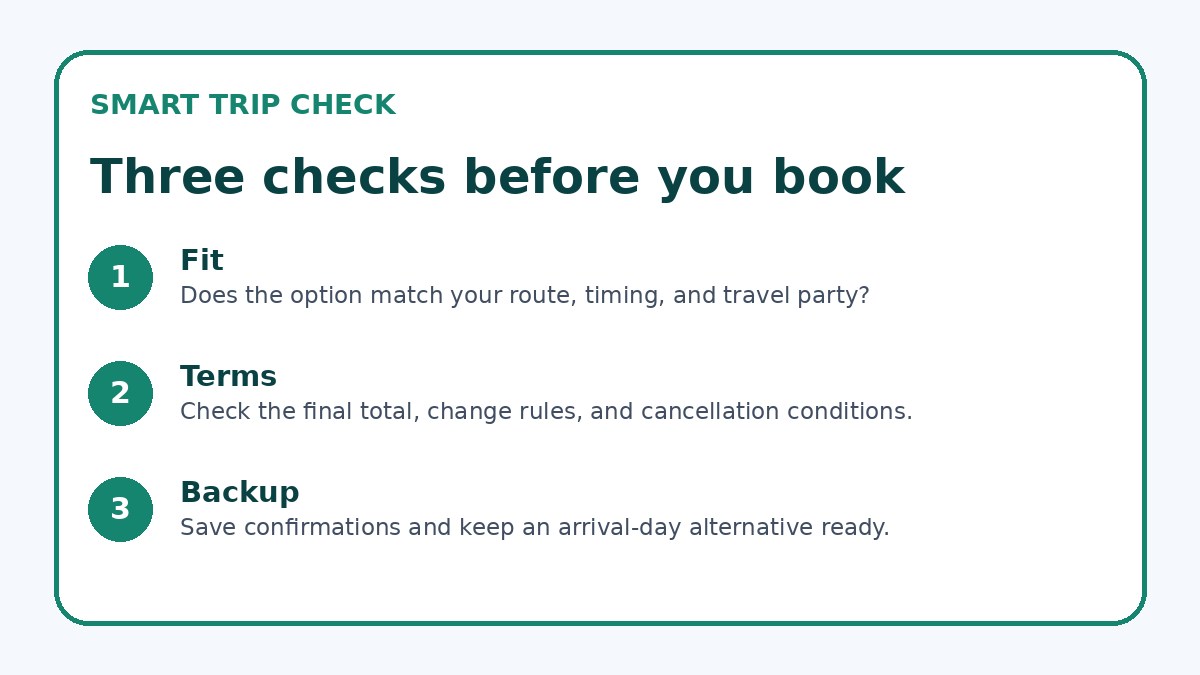
Before you book
- Map departure and arrival addresses and calculate door-to-door travel time for each transport option.
- Compare schedules and change/cancellation terms on the carrier’s final booking page before you pay.
- Reserve a backup departure or alternate carrier in case your preferred service is delayed or full.
- Confirm last-mile transport options (subway, rideshare, taxi) and note pickup points and expected travel time.
- Arrange luggage storage or check late check-in policies if you plan an overnight stop or tight same-day connections.
- Save digital copies of tickets, terminal addresses, and a local emergency contact in an accessible place.
Practical booking rules and contingency planning
Before you book, compare schedules, seat class options, and change or cancellation terms directly on the carrier’s site. When provider-specific facts can change, note the final booking page’s terms for baggage limits, refund windows, and allowed changes. Consider refundable or flexible tickets if your itinerary has tight onward connections, and make contingency options—such as a later departure or alternate carrier—part of the plan. You can check comparative availability on platforms like Trip.com but always confirm the final details with the carrier.
On travel day, have a plan B: a later train or bus, a pre-saved rideshare route, or the nearest car rental agency that allows one-way returns if you need to alter the trunk leg. Keep digital copies of reservations and key addresses, and save maps showing walking routes between terminals and nearby transit stops. If weather or large events could affect travel, allow extra time and check service advisories the morning you travel.
Frequently asked questions
Should I take the train, bus, or drive from New York City to Boston on my first visit?
It depends on what you value most. If you want a straightforward, city-center-to-city-center option with predictable boarding, consider the train. If you need lower cost and frequent departures, buses can be a practical choice—but check where the bus boards and how that affects your last-mile time. If you want to visit towns or have full control over timing, a rental car lets you create a tailored route. Think about luggage, comfort, and how comfortable you are driving in busy urban traffic when making the choice.
How much connection time should I allow when planning door-to-door travel between the two cities?
Allowing a buffer of 60–90 minutes from leaving your lodging to a scheduled trunk departure is a good general rule for first-time visitors. Factor in walking to the station, time to find your platform or curbside stop, and any ticketing or security procedures. If you’re traveling during rush hour, carrying lots of luggage, or transferring between different transport types, add more time. For tight onward connections after arrival, build extra contingency time or choose flexible tickets you can change without large penalties.
Can I mix modes—like train into Boston and then rent a car for nearby day trips?
Yes, mixing modes is common and often efficient. For example, you can take a trunk train or bus into Boston and then rent a car for regional day trips, which avoids city driving and parking congestion during the main transit leg. When planning a mixed approach, check rental pickup locations near the arrival terminal and confirm one-way rental policies if you intend to return the car elsewhere. Always verify pickup hours, required identification, and any deposit or insurance details on the rental company’s booking page.
Final planning note
Building a multi-city ground-transport plan from New York City to Boston starts with one clear decision: pick the trunk segment that matches your priorities, then design local transfers and contingencies around it. Trains minimize transfers and place you in the heart of each city; buses offer scheduling flexibility; cars give route control. Whichever you choose, map door-to-door time, confirm provider terms on final booking pages, and reserve a backup departure or alternate carrier. With a few realistic buffers and checked pickup points, you’ll have a practical plan that keeps stress low and options open during your trip.
Continue planning
Check current options and final conditions
Use the provider page to confirm live availability, the final total, cancellation terms, and every condition that matters to your trip.
This evergreen planning guide was created with AI-assisted drafting and a structured quality review. It does not display live prices, schedules, availability, visa guidance, or provider rankings. Verify current details before booking. Some links are affiliate links; we may earn a commission at no additional cost to you.