
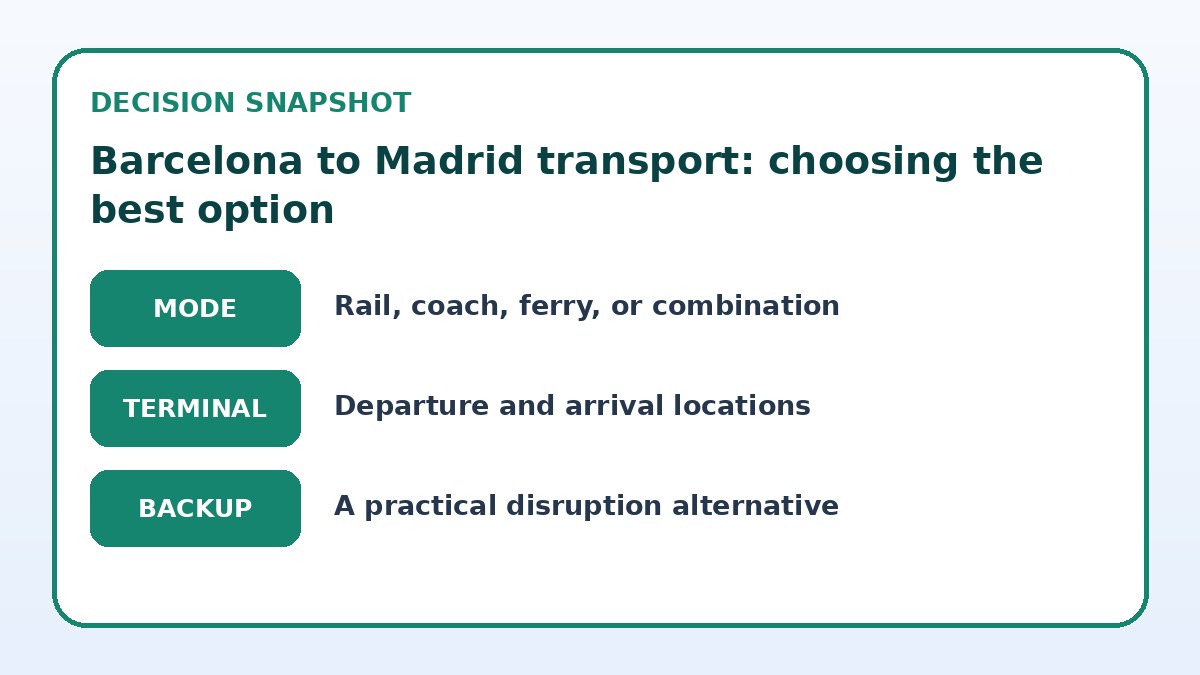
If you and your partner want the most practical way to travel between Barcelona and Madrid, take the high-speed train for the simplest balance of comfort, convenience and predictability. Trains typically leave from central stations in both cities, avoid airport transfers, and let you settle into a shared seat or table without the security queues and extra time that airport travel often needs. That said, there are circumstances where flying, driving or a night option can make more sense — for example if you need a specific arrival airport, want total personal space, are carrying lots of luggage, or are combining stops. Below I explain the tradeoffs couples should weigh, what to compare when booking, and the specific checks to run on provider pages before you finalize anything.
See current options before you compare the details
Availability and final conditions change. Open Trip.com now or keep reading for the practical comparison.
Why the train is usually the practical default
For most couples the train strikes the right balance of convenience and shared comfort. Trains run between central stations in Barcelona and Madrid, so you’re often closer to city-center accommodations at both ends and avoid the added transfer time and expense of airports. Onboard you can sit face-to-face, move around, and share snacks or conversation without the privacy trade-offs of a car or the cramped routine of many short-haul flights. Planning is simpler too: you compare departure times, choose seats together, and bring luggage without strict cabin-size pressure on many services.
Still, “practical” depends on your priorities. If your itinerary forces tight onward connections at either end, or you’re traveling with bulky sports gear, driving or a flight that lands at a closer airport may be preferable. Also consider how each partner handles travel stress: rail tends to favor relaxed pacing and shared experience, while driving requires one person to take on navigation and road stress unless you split driving time. Use these behavioral and logistical preferences to decide whether the convenience of rail aligns with your travel style.
When flying makes more sense for couples
Flying can be a better pick when door-to-door time is reduced by a nearby airport on one end or when you have a loyalty program, elite status, or a checked-bag allowance that matches your needs. Flights also become practical if you must reach a specific airport for an onward international connection or if rail options require inconvenient transfers that negate their city-center advantage. For couples who value getting to the destination quickly over scenic travel, a short flight with minimal transfers may be the way to go.
But remember the extra steps: airport check-in, security lines, and potential transport between airport and city can add uncertainty. Before booking, compare combined door-to-door times using realistic transfer assumptions and factor in how each partner feels about airport logistics. Verify baggage allowances, seat assignments, and whether your chosen fare lets you sit together. Always confirm the airline’s final details on its booking page and check current ground-transport options at both airports to avoid surprises.
| Approach | Best for | Tradeoff to check |
|---|---|---|
| High-speed train | Couples wanting city-center departure/arrival and relaxed shared time | Less flexibility to detour and may not suit very large or unusual baggage |
| Flight | Those prioritizing shortest possible door-to-door time in specific airport pairings | Adds airport transfers, security time and possible baggage constraints |
| Driving | Couples who want private space and freedom to stop or carry extra gear | Driver fatigue, parking costs and urban driving hassles on arrival |
| Night travel or mixed modes | Travelers seeking to save daytime hours or combine benefits of different transport | Comfort varies widely; requires careful verification of sleeping arrangements |
Ready to check the option that fits your plan?
Use your exact dates and traveler details so the provider page can show the current total and conditions.
Driving and road trips: freedom with tradeoffs
Renting a car or driving your own vehicle gives couples the most control over schedule, stops and private space. A road trip lets you pause in smaller towns, vary the route, and carry more gear without paying airline baggage fees. It’s also a private way to spend long stretches together without the public environment of trains or planes, which many couples find appealing when they want uninterrupted conversation or flexibility to detour and explore.
That freedom comes with responsibilities: you must consider tolls, parking availability in city centers, fuel costs, driver fatigue, and where you’ll leave the car when you’re in Madrid. Driving urban centers can be slow and parking expensive; decide whether you need a car for the whole stay or can return it upon arrival to avoid city hassles. If you rent, compare pick-up and drop-off locations, insurance options, cross-border rules (if relevant), and whether one or both partners are comfortable with the driving demands.
Before you book
- Check departure and arrival station names, not just city names, to compare true door-to-door convenience.
- Estimate door-to-door time for each option including transfers, security, and likely city-center travel times.
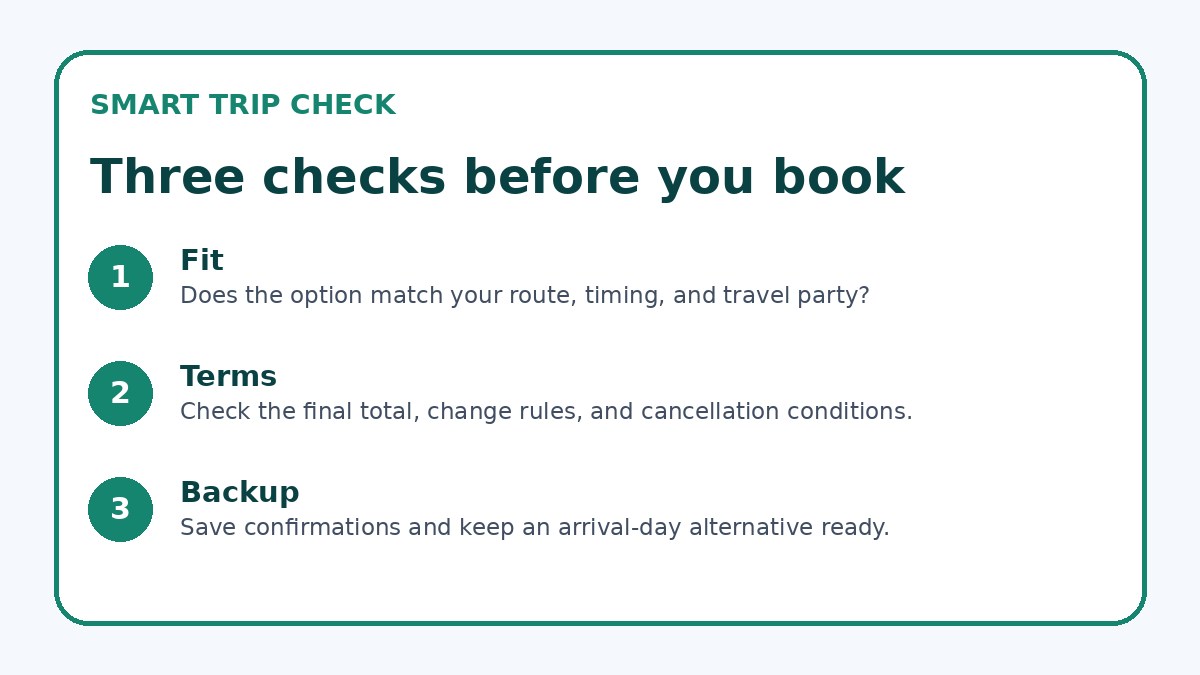
- Verify seat or cabin type and whether linked fares let you reserve seats together before final payment.
- Check luggage rules, size limits and whether bulky or sports gear needs pre-booking or special handling.
- If driving, confirm parking options and likely costs at your Madrid accommodation before committing to a car.
- Read cancellation and change policies on the provider’s booking page and confirm any travel insurance or refunds you may need.
Night travel and mixed options for smarter planning
Night trains or overnight buses can be useful if you want to save a hotel night or arrive early in the morning, but these options differ widely in comfort. For couples, check whether an overnight service offers private compartments, beds or reclining seats that let you rest properly. If sleeping quality matters, don’t assume all night services are equally restful—verify exact accommodations and whether the timetable matches when you want to arrive and to which station.
Mixed itineraries also deserve consideration: one-way driving combined with a one-way train, or flying outbound and returning by rail, can deliver convenience without committing to a single mode. When choosing a mix, ensure your luggage transitions smoothly and verify cancellation or change policies for each leg. Use provider pages to confirm exact station names, transfer locations, and seat or berth types before you book to avoid mismatches between expectations and reality.
Frequently asked questions
How do we compare total door-to-door time between train, plane and car?
Add realistic transfer times to each option: for flights include time to reach the airport, check-in or bag drop, security, and airport-to-city transfer; for trains include time to reach the station and any local transit to your accommodation; for driving include typical traffic and parking time. Use map tools to estimate travel to and from stations or airports, then add conservative buffer time both partners are comfortable with. The option with the lowest combined time may still lose out if it causes stress or scheduling risk, so weigh time savings against comfort and reliability.
Can we be sure we’ll sit together on trains or planes?
Seat policies vary by service and fare class. Many trains let you choose or reserve adjacent seats during booking, but some lower-cost fares may restrict seat assignments until check-in. Airlines often assign seats at booking only for certain fare types or for an extra fee; if sitting together matters, pay attention to seat selection options on the booking page or call the provider. Confirm the exact seat selection policy and any additional seat fees before you finish payment, and consider arriving early to request adjacent seats if needed.
What should couples check about night travel before deciding?
Confirm the exact type of sleeping accommodation offered—whether reclining seats, couchettes or private compartments—and read provider descriptions carefully for privacy and bedding provisions. Check arrival and departure station locations and how you’ll get from the station to your accommodation late at night. Also consider whether you and your partner are likely to sleep well in the chosen configuration; if one person is a light sleeper or worried about safety, an overnight option may reduce enjoyment despite saving a hotel night.
Final planning note
For most couples, the high-speed train is the practical default between Barcelona and Madrid because it minimizes transfers, keeps you in city centers, and lets you travel together comfortably. That doesn’t make it automatically right for every pair: flying can win when airport locations or connections shorten door-to-door time; driving is ideal for private flexibility and side trips; and night or mixed options suit those prioritizing saved daytime hours. Before you book, compare realistic door-to-door times, seat or cabin arrangements, luggage rules and cancellation policies on the provider’s final booking page. If you want one place to compare current availability, you can check Trip.com as an option, but always verify details with the carrier or rental company before confirming.
Continue planning
Check current options and final conditions
Use the provider page to confirm live availability, the final total, cancellation terms, and every condition that matters to your trip.
This evergreen planning guide was created with AI-assisted drafting and a structured quality review. It does not display live prices, schedules, availability, visa guidance, or provider rankings. Verify current details before booking. Some links are affiliate links; we may earn a commission at no additional cost to you.