Practical answer first: for many family trips to Los Angeles a rental car makes sense when your plans include multiple neighborhoods, day trips to beaches, theme parks, or national parks, and when you travel with young children or lots of gear. If you plan to stay mainly in a compact neighborhood like central Hollywood, Downtown, or Santa Monica and rely on one hub for activities, you can usually manage without a car using transit, rideshares, and occasional taxis. Before you decide, sketch your daily plans, note how many adults and children are traveling, and list bulky items (strollers, car seats, coolers) that add friction to public transit. The sections that follow unpack tradeoffs—time versus cost, parking versus doorstep convenience—so you can match the choice to your family's priorities and the kind of Los Angeles days you want to have.
See current options before you compare the details
Availability and final conditions change. Open Trip.com now or keep reading for the practical comparison.
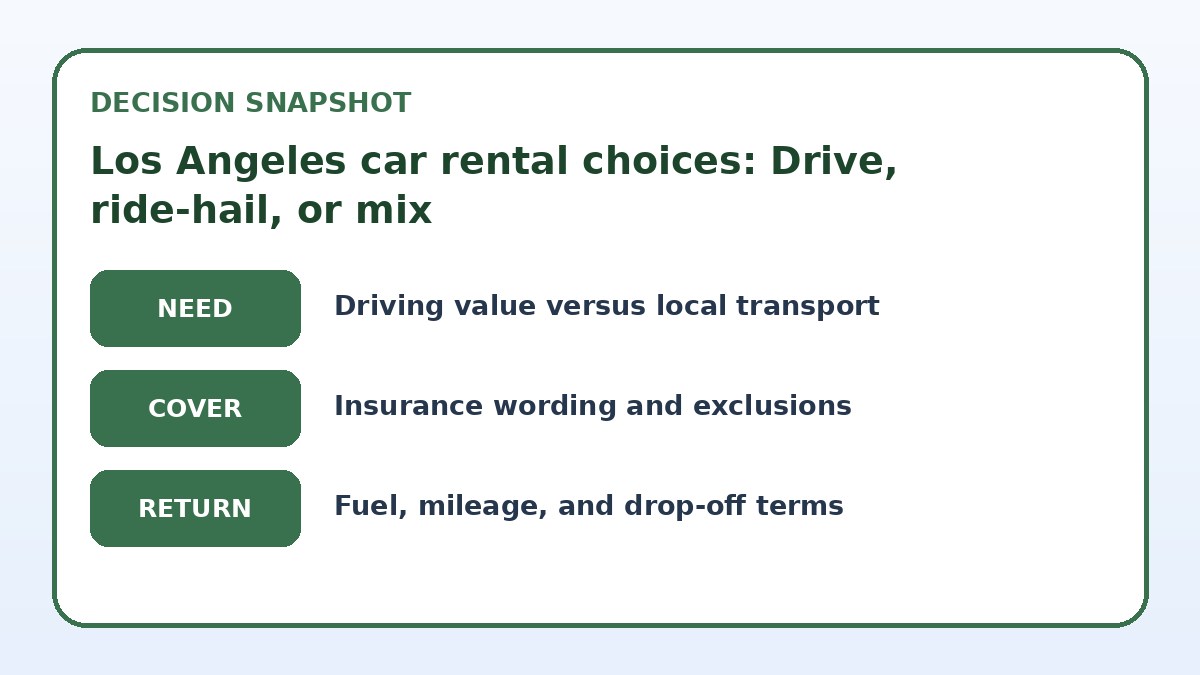
When a rental car is the right call
Choose a rental car when your family itinerary includes destinations that are spread across the region or outside core transit corridors. Examples include day trips to Griffith Observatory and Malibu, multiple theme parks in Anaheim, beaches along the Pacific Coast Highway, or nature areas like Angeles National Forest. A car reduces transfer time between places, lets you carry beach gear and coolers easily, and gives parents the flexibility to leave early or stay late without depending on scheduled services.
Travel with young children, infants, or a large family? A car simplifies car-seat installation and naps on the go, and can be less stressful than hauling folding strollers and luggage across sidewalks and busy transit stations. Also consider group size: four or more people often make driving comparatively economical when you split the rental and fuel costs. Finally, if your lodging is outside central neighborhoods or has limited walking access, the convenience of a rental often outweighs the extra planning for parking and driving.
When to skip the car and use transit or rideshares
If your stay centers on a walkable neighborhood—such as downtown Los Angeles, West Hollywood, or the Santa Monica pier area—and your family prefers shorter trips and fewer transitions, you can save money and avoid parking headaches by using public transit, e-scooters, and rideshares. Many attractions within these zones are reachable on foot or via relatively short shared rides. Transit can also be calmer for kids because adults avoid driving stress and can relax on trains or buses while children nap.
Consider skip-the-car if you plan to visit a small set of nearby attractions and don’t need early morning departures or late-night returns. Transit and rideshare options work best when your group is light on bulky gear and when you prefer not to arrange for and install car seats. Note that door-to-door convenience decreases as your itinerary spreads out, and last-minute rideshares can become expensive during peak hours or major events—so weigh those variables against the savings from avoiding rental fees and parking.
| Approach | Best for | Tradeoff to check |
|---|---|---|
| Full rental for entire trip | Families with multi-neighborhood plans, early/late schedules, or lots of gear | Higher total cost and parking stress, but maximum flexibility and convenience |
| No rental: transit and rideshares only | Families staying in a compact, walkable neighborhood with light luggage | Lower cost and less parking hassle, but reduced flexibility and more transfers |
| Hybrid: rent only for day trips | Families who enjoy city days but want a car for specific excursions | Saves money while retaining flexibility, requires planning pickup/dropoff logistics |
| Guided day trips and shuttles | Families who prefer no driving and curated itineraries to outlying attractions | Less independence and fixed schedules, often simpler logistics for parents |
Ready to check the option that fits your plan?
Use your exact dates and traveler details so the provider page can show the current total and conditions.
Hybrid strategies: rent selectively
Many families find a hybrid approach practical: rely on public transit and rideshares while in dense neighborhoods and rent a car just for planned day trips. This reduces overall rental days and parking costs while still giving you the flexibility for longer excursions. For example, pick up a car for two or three consecutive days that include a planned beach day or theme park visit, and return it when you’re back in the city for downtown sightseeing or museum days.
Make the hybrid plan work by coordinating pickup and drop-off locations, and by checking rental office hours and policies (airport counters vs. neighborhood branches vary). If you want the simplicity of having a car at the airport arrival, verify shuttle options from the terminal to the rental center. Always confirm child-seat availability and any one-way drop fees on the provider’s final booking page before you commit, because those details affect the convenience and cost of short-term rentals.
Before you book
- List each day’s main stops and measure driving times or transit connections between them.
- Check parking availability and nightly charges at your accommodation and at major attractions.
- Confirm child-seat policies and availability with the rental company on their final booking page.
- Compare total estimated costs (rental days, fuel, insurance, parking, tolls, and car-seat fees).
- Decide whether to rent at the airport or a neighborhood branch based on convenience and office hours.
- Plan buffer time for traffic for every driving day and identify nearby rest stops and kid-friendly breaks.
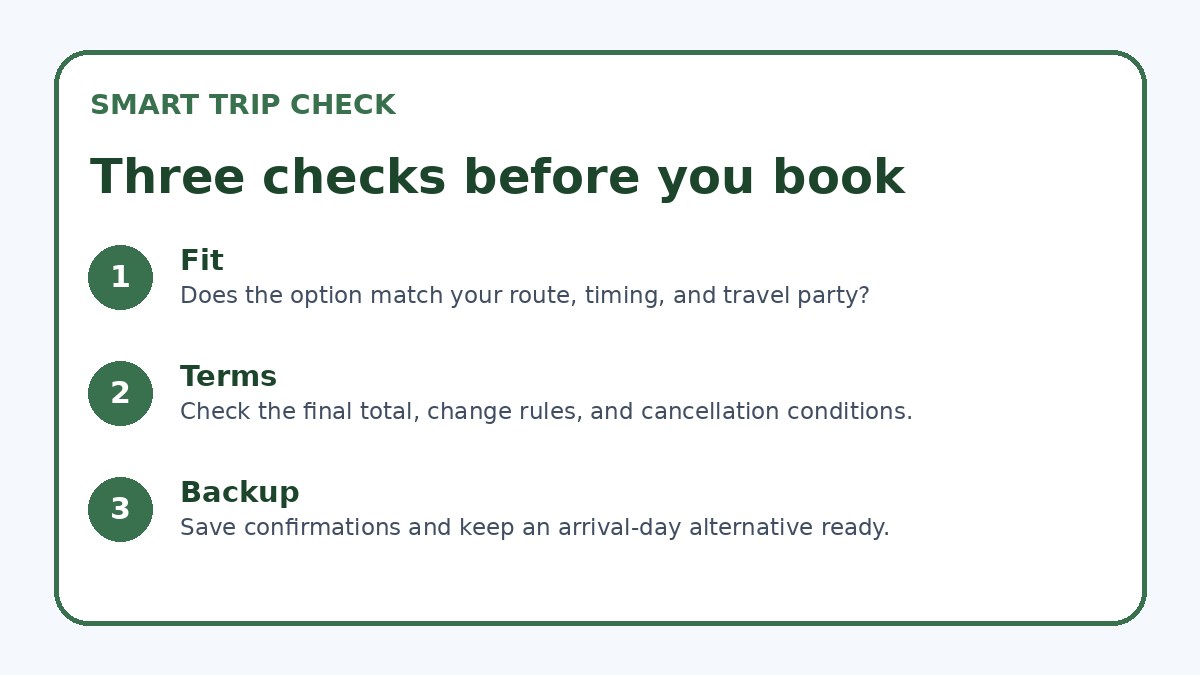
Practical checks before you book
Before reserving, map your daily stops and mark driving distances and typical routes. Estimate parking options and fees at each overnight stay and major attraction—hotel parking, street rules, and private lots differ by neighborhood. If you plan to park near beaches or busy tourist sites, research whether lots require advance reservations. Also consider the vehicle size you need for child seats and luggage: a compact car may be cheaper but feel cramped with multiple car seats and bags.
Verify the rental company’s policies on child seats, mileage limits, insurance options, and age or license requirements on the final booking page—rates and rules change often. If you prefer a specific pick-up or drop-off location, check hours and potential after-hours returns. If comparing options online, you can use Trip.com to view availability, but confirm every detail on the provider’s site before completing payment. Finally, plan for traffic: Los Angeles congestion is real; build buffer time into all driving segments when touring with kids.
Frequently asked questions
Can families rely on public transit in Los Angeles for a kid-friendly visit?
Yes, but it depends on your plans. Los Angeles has bus and rail lines serving many neighborhoods and attractions, and those can be perfectly adequate for museum days, downtown activities, or visits to Santa Monica when combined with short rideshares. However, transit trips may include transfers and walking with children and gear, which can be tiring. For outings outside major corridors—like long beach days or mountain visits—transit becomes less convenient. If you plan to use transit, research specific routes in advance, check schedules for the times you’ll travel, and pack a stroller that’s easy to fold for buses and stations.
Do I need car seats with a Los Angeles rental, or will the rental company provide them?
Rental companies often offer child seats for an extra fee, but availability and types vary. If you require a specific seat model or need multiple seats, it’s safer to supply your own or reserve seats in advance and confirm the booking page details before pickup. Also check local laws and the rental company’s guidance to ensure seats meet safety standards for your children’s ages and weights. Installing familiar seats you own can save time and ensure the best fit for your family, especially when planning longer drives or frequent stops.
How should I handle parking and traffic when driving with kids in Los Angeles?
Expect busy streets in popular neighborhoods and slow-moving traffic during peak commute hours; plan drives outside rush windows when possible. For parking, look into hotel parking rules, reserve garage spots when available, and identify where free or low-cost lots exist near attractions. Keep essentials accessible in the car—snacks, water, sun protection, and entertainment—so short delays don’t become stressful. Finally, use real-time navigation to check congestion and parking options, and leave extra time between activities so the family isn’t rushed if traffic or parking takes longer than expected.
Final planning note
Deciding whether to rent a car in Los Angeles for your family comes down to where you’ll spend most of your time and how much flexibility you value. Rent if your plan includes distant day trips, lots of gear, or early/late travel; skip a car if you’ll stay in a compact, walkable neighborhood and prefer to avoid parking. Consider a hybrid plan if your visit mixes city days with a couple of excursions — it often balances convenience and cost. Whatever you choose, map your daily plans, confirm child-seat and pickup details on the rental provider’s final booking page, and build traffic buffers into each driving day so the trip stays enjoyable for everyone.
Continue planning
Check current options and final conditions
Use the provider page to confirm live availability, the final total, cancellation terms, and every condition that matters to your trip.
This evergreen planning guide was created with AI-assisted drafting and a structured quality review. It does not display live prices, schedules, availability, visa guidance, or provider rankings. Verify current details before booking. Some links are affiliate links; we may earn a commission at no additional cost to you.