If you're planning your first trip to London, the most helpful thing you can do right now is check cancellation and change rules before you complete any booking. Focus on three product categories—flights, accommodation, and prepaid experiences—and confirm whether you get refunds, vouchers, or only date changes if plans shift. Read the fine print on the provider’s final booking page: the cancellation window, refund processing time, any administrative or credit-card fees, and whether the policy changes at check-in or only through the online portal. For combined offers or package deals, check each component separately because one restrictive leg can make the whole deal costly to alter. Use the opening decision — flexible vs non-refundable — to decide whether to pay a bit more for peace of mind or accept stricter terms to save upfront, then prepare a backup plan for the likely tradeoffs.
See current options before you compare the details
Availability and final conditions change. Open Trip.com now or keep reading for the practical comparison.
Flights: how to interpret airline flexibility
Airline policies are often the most consequential for London-bound travelers because international flights can be expensive to change. When assessing a fare, look for whether the ticket is refundable, whether changes are permitted without a fare difference, and how the airline calculates the fee if you cancel or rebook. Beware of promotional tickets that appear cheap but are non-changeable. Confirm the carrier’s policy for name changes, involuntary reroutes, and partner airline rebookings if your itinerary involves codeshares. Always verify the exact wording on the final booking page—terms posted during search can differ at checkout—and note who issues the ticket (the operating carrier or a third-party reseller), since that affects who processes refunds.
Deciding whether to pay for a flexible fare depends on how likely your dates will move and whether you hold expensive onward connections or long-stay reservations in London. If you prefer not to pay extra, consider booking a cheaper refundable fare and holding it until the refund window closes, or purchase a non-refundable fare plus a separate travel insurance policy that covers cancellations for your reasons. Travel insurers differ in covered reasons and claim processes; verify the insurer’s conditions and how they interact with the airline’s refund timing to avoid gaps between a denied airline refund and a successful insurance claim.
Accommodation: refundable rates, deposits, and check-in rules
Hotel and apartment policies vary widely even within the same property, so examine the exact rate rules before committing. Common options include fully refundable rates up to a specified date, free cancellation up to 24-48 hours before arrival, or strictly non-refundable advance-purchase deals. Look for how deposits are handled, whether the property charges for no-shows or early departures, and whether any credit-card pre-authorizations become charges. Many booking platforms show cancellation cutoffs at search time, but always confirm the final line on the property’s booking page and the confirmation email. If a third-party site is used, check whether cancellations must be made through that site or directly with the hotel.
Your decision should balance price sensitivity and flexibility needs. If your London schedule is tentative, paying more for a refundable rate or a short free-cancellation window can save considerable hassle later. Conversely, if your dates are fixed and savings are substantial, a non-refundable prepaid rate may be acceptable—just accept the risk and plan a contingency budget. For long stays or during high-demand periods, consider a hybrid approach: book the most uncertain nights on refundable rates and the core nights on cheaper prepay deals, then tighten up as plans firm.
| Approach | Best for | Tradeoff to check |
|---|---|---|
| Book fully refundable fares and hotels | Travelers with uncertain schedules or those who value flexibility | Higher upfront cost and potentially fewer promotional savings |
| Choose non-refundable advance deals | Travelers with fixed plans comfortable accepting risk | Lower price but possible total loss if plans change |
| Mix refundable core nights with cheap advance nights | Those balancing budget and flexibility across a trip | Requires active management to rebook and monitor cutoffs |
| Buy non-refundable package for convenience | Travelers prioritizing simplicity and single-vendor support | One restrictive component can make changes costly or complex |
Ready to check the option that fits your plan?
Use your exact dates and traveler details so the provider page can show the current total and conditions.
Tours, attractions, and trains: voucher policies and rescheduling
Many popular London experiences—museums, West End shows, hop-on-hop-off buses, and day tours—use timed tickets and limited capacity, so cancellation and rescheduling rules matter. Check whether tickets are refundable up to a certain period, convertible to a voucher, or eligible for date changes and standby. For guided tours, ask who issues the refund: the tour operator, a marketplace, or a local partner can each have different timelines and paperwork. For train travel to/from London, compare flexible tickets, advance discounted fares, and whether open or exchangeable tickets are offered for your route; never assume a direct service is available without checking connections and booking options separately.
When deciding what to prebook, weigh the chance of missing a specific date against ticket scarcity. For bucket-list shows or tours that fill in advance, securing a non-refundable seat may be reasonable if you will make every effort to attend. For sights with frequent availability, prefer flexible booking or wait to buy onsite if that reduces risk. For multi-component days (train plus tour), check each supplier’s cancellation policy and consider booking refundable train times or travel insurance that covers missed connections to protect the more expensive components.
Before you book
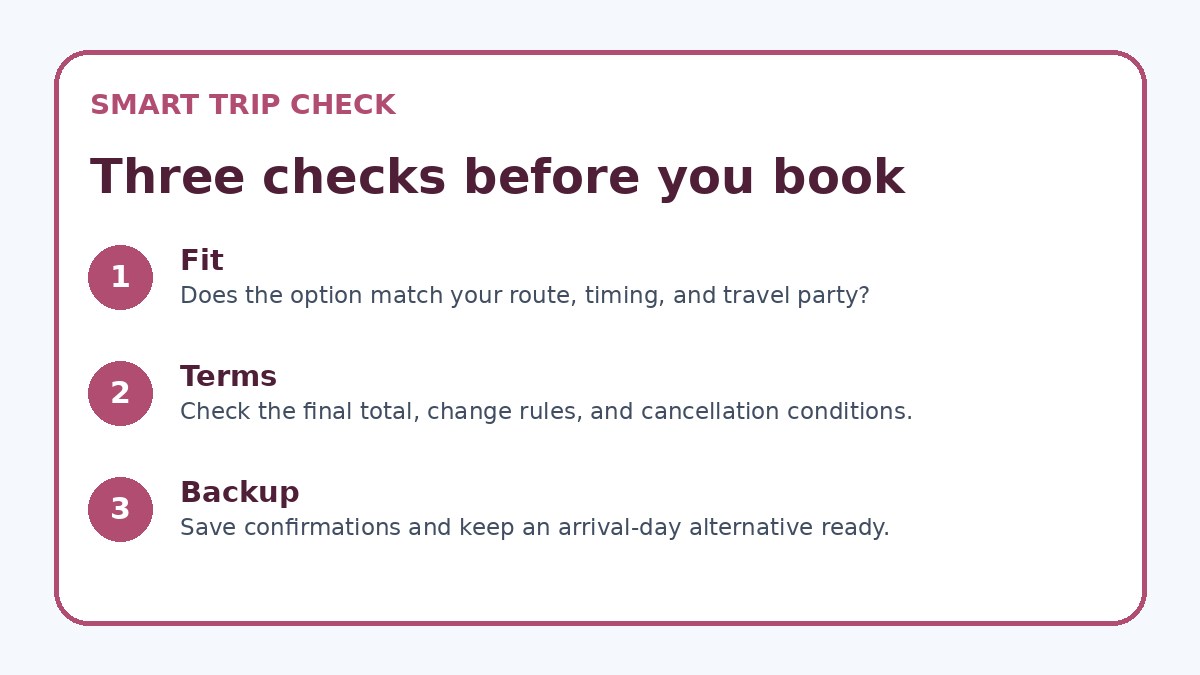
- Open the airline, hotel, and tour final booking pages and copy the exact cancellation text and deadlines into a note.
- Confirm who issues refunds (operating carrier, hotel, or third-party reseller) and the expected refund processing timeframe.
- Compare at least one flexible fare/rate and one non-refundable option to see the actual price difference before choosing.
- Check whether prepaid tickets convert to vouchers and whether vouchers have expiry dates or blackout periods.
- If booking a package, request the seller’s cancellation flow in writing and keep screenshots of confirmation pages.
- Buy travel insurance only after verifying its covered cancellation reasons, claim process, and interaction with supplier refunds.
Packages, transfers, and insurance: how to combine flexibility
Package deals and bundled transfers can simplify planning but can also tie your fate to the strictest supplier policy in the bundle. When booking a package, list each element—flight, hotel, airport transfer, and tours—and read every cancellation clause. Ask whether the package seller has a single cancellation policy that overrides supplier terms or whether they act simply as a reseller. If the package appears attractive, confirm who processes refunds and whether the seller offers partial refunds when only some components are cancelled. For airport transfers, clarify cancellation windows and whether drivers or operator charges apply for late changes.
Travel insurance acts as a final layer of protection but is not a substitute for understanding supplier rules. Compare policies for cancellation reasons covered (e.g., illness, jury duty, work changes) and the documentation required for claims. Note also how claims are paid—some insurers reimburse you after the supplier refuses a refund; others insist you exhaust supplier remedies first. If your trip includes non-refundable high-value items, make sure insurance coverage limits and exclusions align with those risks. Before buying any package or insurance, verify terms on the seller and insurer final booking pages.
Frequently asked questions
Should I always pick a refundable hotel rate when visiting London for the first time?
Not always. A refundable rate gives you the most flexibility if schedules are tentative, but it often costs more. If your dates are firm—confirmed leave from work, fixed events, or connecting bookings—you might prefer a non-refundable prepay rate to lower cost. Consider a hybrid approach: book uncertain nights as refundable and lock the essential nights with cheaper prepaid rates. Always note the final cancellation cutoff on the booking confirmation and keep a buffer in your budget in case you need to change plans.
Can travel insurance replace the need for flexible tickets when booking London travel deals?
Travel insurance can cover many cancellation reasons but usually requires documentation and may not cover every scenario or the full amount. Insurers also have exclusions and limits; some require you to try to get a refund from the supplier first. Insurance is best used to supplement sensible supplier flexibility, not replace it entirely—especially for the most expensive components like international flights. Read the insurer’s policy wording to confirm covered reasons, claim deadlines, and how payouts interact with supplier refunds.
If a tour operator or hotel changes their cancellation terms after I book, what should I verify?
If terms change post-booking, verify whether the new terms apply to existing bookings or only to new reservations; the provider’s final booking page and confirmation email should state this. Ask the supplier in writing to confirm your original booking’s terms. If you booked through a third-party marketplace, check their policy for handling retroactive changes and whether they will advocate for state-your-rights protections. Keep records of all communications and consider escalating to a customer service manager if the change imposes additional charges you did not accept at booking.
Final planning note
For first-time visitors to London, making cancellation flexibility a core part of your decision process reduces stress and financial risk. Start by identifying which trip elements are most likely to change—typically flights and initial arrival nights—and prioritize flexibility there. Read final booking pages carefully, track who issues refunds, and compare hybrid strategies that mix refundable and prepaid options to balance cost and peace of mind. Use travel insurance as an additional safety net, but do not rely on it to fix supplier-level restrictions. If you want to quickly compare current availability and policies, consider checking a marketplace like Trip.com alongside supplier pages, but always verify the exact terms on the provider’s confirmation before you finalize payment.
Continue planning
Check current options and final conditions
Use the provider page to confirm live availability, the final total, cancellation terms, and every condition that matters to your trip.
This evergreen planning guide was created with AI-assisted drafting and a structured quality review. It does not display live prices, schedules, availability, visa guidance, or provider rankings. Verify current details before booking. Some links are affiliate links; we may earn a commission at no additional cost to you.