If you need to book a family trip to Melbourne, the simplest practical answer is: choose the approach that matches how settled your dates and priorities are. Families with fixed travel dates, a clear hotel preference and straightforward flights often find package deals convenient because they bundle flight, hotel and sometimes transfers, reducing the number of separate confirmations to manage. Families who have specific hotels in mind, want different flight times for each family member, or plan to mix rental cars and short-term stays usually save flexibility by booking flights, accommodation and activities separately. Below I’ll explain the tradeoffs — cost transparency, change fees, seat and bed assignments, loyalty points, and child-friendly cabin or room options — and give decision criteria and a checklist so you can compare apples to apples before you click "book."
See current options before you compare the details
Availability and final conditions change. Open Trip.com now or keep reading for the practical comparison.
When packages make family sense
Packages usually work best when your travel dates are fixed and you want a low-effort plan. For busy families juggling school schedules and work, a package reduces the number of bookings to manage: you get a single point of sale for flight-and-hotel logistics, which eases check-in coordination and often includes transfer options from the airport. A packaged offer can also give clarity on the package inclusions and total charges in one contract, which helps parents avoid hunting through multiple confirmation emails and separate receipts during the trip.
Packages are particularly useful for families who prefer convenience over fine-grained control. If you are happy with mid-range hotels that reliably provide family rooms and cribs, and you don’t need exact flight times or frequent-flier credit, the convenience of a package offsets the loss of granular options. However, always verify transfer pickup points, bed configuration policies, baggage allowances, and how child fares are applied on the booking page before you confirm — these operational details can substantially affect comfort and cost for families.
When separate bookings are better for families
Booking flights, hotels, and activities separately gives families more control and often clearer cost transparency per component. This approach lets you choose specific flight times, pick seats together on long sectors, and select the precise room type or apartment layout that suits children. If your family benefits from airline loyalty programs, earning and using points, or you prefer boutique family-run apartments and self-catering kitchens, separate bookings let you mix providers and secure better matching to your needs than a one-size package might provide.
Separate bookings also help when your travel involves complex plans, like multi-city itineraries within Australia, combining rideshares and car rentals, or splitting time between relatives and hotels. The tradeoff is more confirmations to manage and potentially higher risks with connections: if flights are separate reservations, an earlier delay may not obligate the airline to protect you on a later segment. That’s why families who choose separate bookings should budget time buffers, buy flexible tickets where needed, and keep contact details for each provider easily accessible.
| Approach | Best for | Tradeoff to check |
|---|---|---|
| Package booking (flight + hotel bundle) | Families seeking simplicity, single invoice and combined logistics | Less room and flight-level control; check inclusions and transfer details carefully |
| Separate bookings (book flights, hotel, transfers individually) | Families wanting specific flights, room layouts, or loyalty benefits | More confirmations to manage and higher coordination responsibility |
| Hybrid approach (package plus separate add-ons) | Families who want a base convenience but need specific local arrangements | Can complicate refunds and change handling—verify which provider controls each element |
| Agent-built custom package | Families wanting curated family-friendly services with an agent handling details | May cost more for tailoring; always confirm on-the-ground service details and child provisions |
Ready to check the option that fits your plan?
Use your exact dates and traveler details so the provider page can show the current total and conditions.
How to compare true cost and convenience
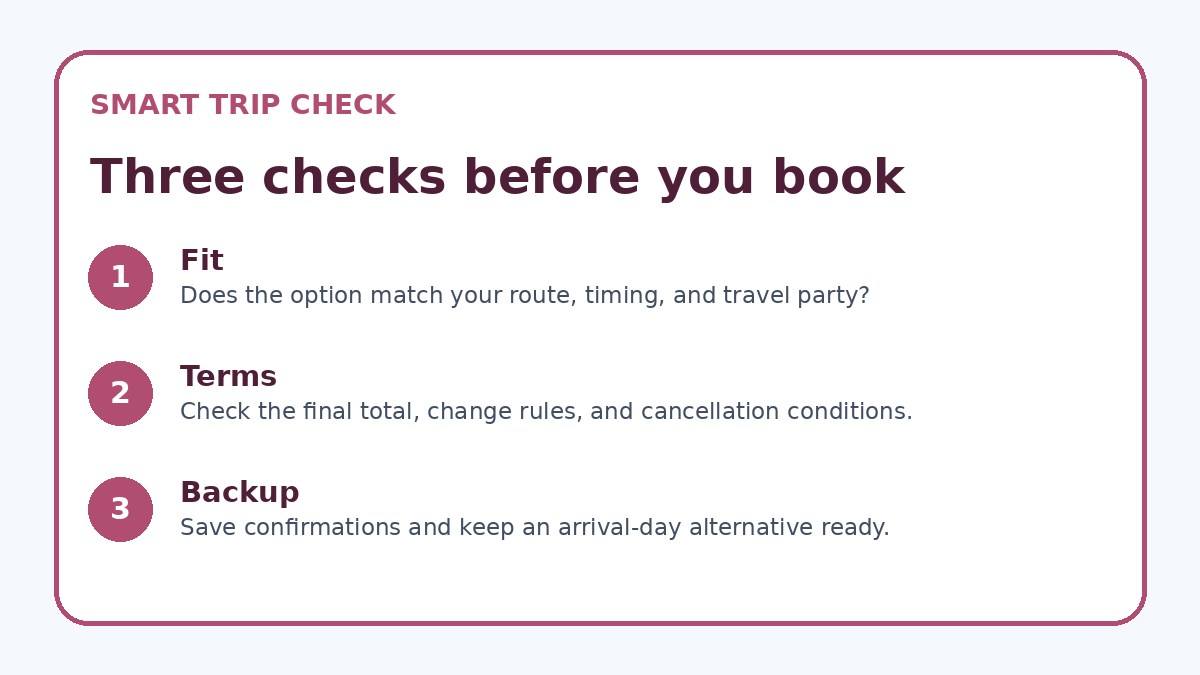
Start by creating a side-by-side comparison of the full out-the-door costs for package versus separate bookings. Include not just fare and nightly rates but baggage, infant or child seat charges, airport transfers, parking, and any mandatory resort or city fees. For separate bookings, add likely taxi or rideshare costs between flights and accommodation, plus the potential cost of travel insurance if the separate components have different cancellation rules. For each option, note who you would contact if something goes wrong: a single agency for a package or multiple airlines, hotels and car rental firms for separate bookings.
Next, compare flexibility and risk: review each supplier’s change and cancellation terms on their official booking pages before payment. Check whether the package supplier reissues tickets under different rules, or whether separate providers allow free changes within a short window. Consider how refunds and rebookings are handled for children’s fares, and whether any selections—like adjoining rooms or baby cots—are guaranteed or merely requested. Trip.com can be used as a comparison tool, but always verify the final terms directly on the airline, hotel or tour operator’s site before purchasing.
Before you book
- Confirm total out-the-door price including taxes, baggage, transfers, and any child-specific fees before comparing options.
- Verify room layout and bedding configuration with the hotel (request photos or a written confirmation) if family sleeping arrangements matter.
- Check airline seat selection and baggage rules for each passenger at the fare class level on the airline’s booking page.
- Read change and cancellation policies for every component and note who issues refunds in mixed or packaged itineraries.
- Document transfer collection points, child seat availability, and contact numbers for providers; save confirmations offline on your phone.
- Buy travel insurance that covers whole-family cancellations and medical coverage, matching the flexibility you need for your bookings.
Practical booking tips and family safeguards
Use a checklist while comparing options so you don’t overlook essentials. Confirm the hotel room layout (two beds vs one large bed), crib availability, and whether cots are free or charged. On flights, check seat selection rules and baggage inclusion for children, and whether infant fares require lap seating or a separate seat. If a package mentions transfers, get the exact pickup location and whether the operator provides child seats. Always screenshot the key terms and keep a PDF of confirmations accessible on your phone and offline.
Buy suitable travel insurance that covers illness, trip interruption and cancellations, tailored to family travel. When booking separately, note minimum connection times and whether airlines have interline agreements that protect missed connections. If visiting during busy school holidays, prioritize refundable or changeable options even if they cost a bit more upfront; the convenience of adjusting plans with kids often outweighs small fare savings. Finally, schedule arrival times to match your family’s routine—early evenings after long travel are harder with small kids—so plan at least one low-key day after arrival.
Frequently asked questions
Are packages usually cheaper than booking flights and hotels separately for a family?
Packages can be cheaper in some cases because suppliers bundle inventory and offer a single price, but that is not always true. To know which is cheaper for your family, compare the full cost of a package with the total of individual components, including baggage fees, child fares, airport transfers and any required extras. Also consider non-monetary factors—time saved on booking and a single point of contact—which might justify a small premium for convenience. Verify final prices and terms on the provider’s checkout page before booking.
If I book flights and a hotel separately, how do I protect against missed connections?
When flights and hotels are booked separately, protect against missed connections by leaving longer buffers between flights and other ground arrangements, choosing refundable or changeable tickets where possible, and avoiding tight same-day connections for important onward travel. Keep emergency contacts for both airlines and hotels, and consider adding a small margin for delays when scheduling activities on arrival day. If you need guaranteed protection between carriers, look for itinerary bundling or codeshare/interline options, and check the carrier’s policy directly on their site.
Should I use a travel agent for a family Melbourne trip or search online myself?
A travel agent can save time and may find family-friendly room configurations, bundled itineraries, or local services that match your needs, especially for multi-stop trips or special requests. Agents can also simplify post-booking support if something goes wrong. Conversely, self-booking online gives you direct control over flight times, seat selection and loyalty benefits. If you go online, compare offers across platforms (you may check Trip.com as one comparison source) but always verify the final terms directly with the airline, hotel or tour operator before payment.
Final planning note
For most families traveling to Melbourne, the decision comes down to a tradeoff between convenience and control. Choose a package if you want fewer confirmations, a single bill, and straightforward logistics; choose separate bookings if you need precise flight times, specific room types, loyalty benefits, or complicated multi-leg travel. A hybrid approach can blend both: use a basic package for core travel and add individual bookings for special needs. Whichever route you take, carefully compare total costs, read change and refund policies on the provider’s booking page, document room and seat requests, and buy appropriate family travel insurance to protect your plans.
Continue planning
Check current options and final conditions
Use the provider page to confirm live availability, the final total, cancellation terms, and every condition that matters to your trip.
This evergreen planning guide was created with AI-assisted drafting and a structured quality review. It does not display live prices, schedules, availability, visa guidance, or provider rankings. Verify current details before booking. Some links are affiliate links; we may earn a commission at no additional cost to you.