Practical answer first: if you and your partner value minimizing stress and travel time, prioritize a more convenient itinerary—shorter connections or direct routing, central airports, and simpler transfers. If you value flexibility—easier changes, refundable or changeable fares, and spare buffer time—choose a more flexible fare or allow extra time between segments even if it adds travel time or cost. For most couples, the best compromise is a moderately flexible fare on a convenient routing: a reasonably short total journey with the ability to change plans without punishing penalties.
Below I explain the tradeoffs and decision criteria so you can choose precisely which conveniences to keep and which flexibilities to buy. I’ll walk through departure and arrival airport choices, timing and connection planning, fare types and seat considerations, and how to compare options when both direct and connecting services may be offered. Where provider-specific conditions can change—refundability, baggage rules, or change fees—I’ll tell you exactly what to verify on the airline or booking page before paying.
See current options before you compare the details
Availability and final conditions change. Open Trip.com now or keep reading for the practical comparison.
Picking airports and times that suit both of you
Amsterdam has multiple air access options and Rome likewise has choices; pick which airport and departure window match how you travel as a couple. Consider your home-to-airport time, how tired you want to be on arrival, and whether either of you has mobility or luggage needs. For morning flights you’ll often need to leave very early; evening flights can mean arriving late in Rome. Choose a time that fits your tolerance for early starts, jet lag, and the first evening in the city so you can enjoy dinner rather than dragging through check-in.
If either partner dislikes rush-hour traffic, factor surface transit variability into your schedule. Allow buffer time for security and lines—arrive at the airport with comfortable margins rather than minimal check-in time. Also think about arrival airport location in Rome and how you’ll transfer to your accommodation: a slightly later arrival at a central airport can be more convenient than an earlier landing at a more distant one, even if the airborne time is the same.
Direct versus connecting: risk, cost, and peace of mind
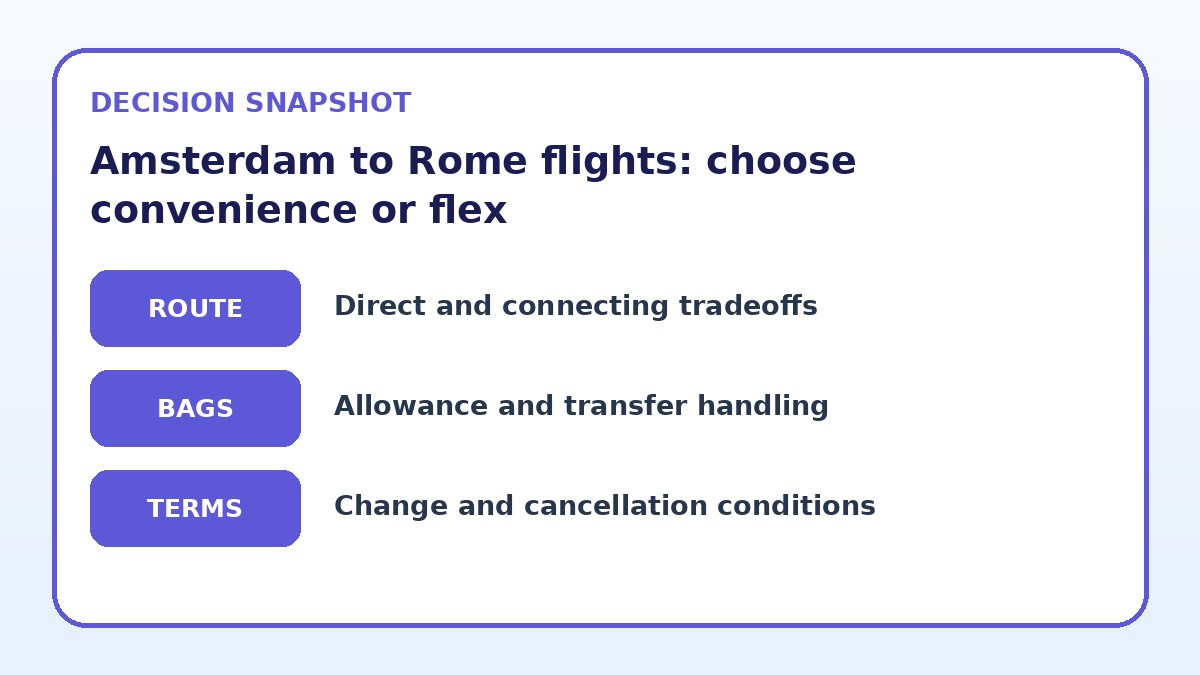
Direct flights reduce the number of stress points—no rechecking baggage, no second boarding, and less chance of missing a connection—but they can be less flexible or more expensive. Connecting itineraries often offer more schedule choices and cheaper fares, and they can be useful if your ideal departure time or airline loyalty preference isn’t available nonstop. When weighing a connection, compare total travel time and the length of the layover. Short connections save time but increase the risk of missed transfers, which is particularly important for couples traveling with a lot of luggage or with limited mobility.
If you pick a connection, choose a buffer that matches your risk tolerance: tighter for confident, seasoned travelers traveling light; longer for those who prefer calm, or when connections require changing terminals. Also check the minimum connection time listed by the airline and whether the itinerary is protected (booked on one ticket) or requires separate tickets. Protected connections usually mean the airline must assist with missed legs; separate tickets transfer that risk to you. Verify these conditions on the booking page before purchasing.
| Approach | Best for | Tradeoff to check |
|---|---|---|
| Prioritize convenience (shortest total journey) | Couples focused on maximizing vacation time and minimizing transfer stress | Often higher fares and less flexible change rules |
| Prioritize schedule flexibility (easy changes) | Couples with uncertain plans or those who value changeability over speed | Longer travel times or more complex itineraries |
| Balanced approach (moderate travel time and some flexibility) | Most couples who want a stress-reduced trip without overspending | May require paying a modest premium for flexible fare bands |
| Hybrid travel (overnight or long layover for cost savings) | Couples treating the trip itself as part of the experience or on tighter budgets | Adds fatigue and logistical complexity, needs careful scheduling |
Ready to check the option that fits your plan?
Use your exact dates and traveler details so the provider page can show the current total and conditions.
Fare rules, seat choices, and flexible options to consider
Fare classes determine change and cancellation policies; flexibility usually costs more but can be worth it for couples whose plans may shift. Look at the specific allowed changes, fees, and refundability on the airline or booking site. Some fares offer free date changes within a window or allow pay-at-change pricing; others only permit paid changes or credit vouchers. If you plan to adjust your trip, a fare with straightforward change rules can save money and prevent stress—even if the upfront cost is a little higher.
Seat selection matters for comfort and connection speed. Booking adjacent seats, aisle access for at least one person, or seats near the front can make the trip smoother. If you want the ability to move flights at short notice, some airlines sell more expensive flexible fares or add-ons that include same-day standby or unlimited changes. When comparing options, confirm on the supplier’s final booking page whether the fare includes seat selection, how baggage is handled, and how changes and refunds are processed.
Before you book
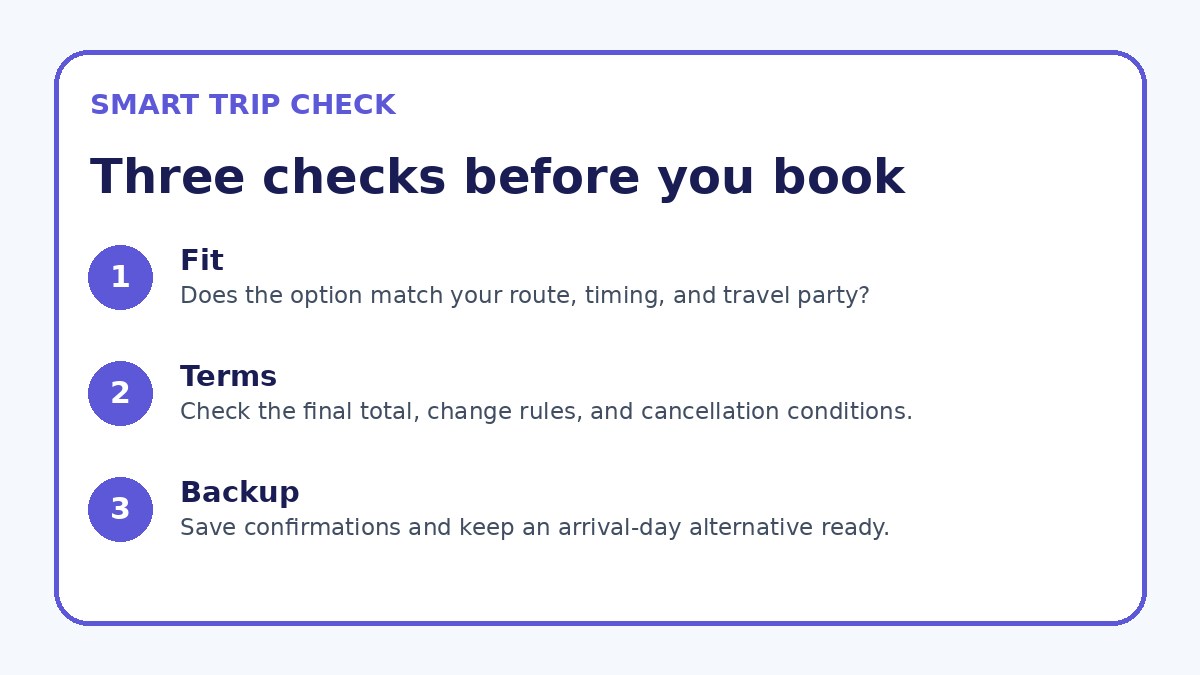
- Decide whether total door-to-door time or changeability is more important for your trip purpose and comfort level.
- List acceptable departure windows and arrival times for both partners to avoid last-minute disagreements.
- Compare total travel time including airport transfers and security, not only airborne duration.
- Verify fare rules on the airline’s final booking page: change fees, refundability, and baggage allowances.
- Choose seat assignments that reduce stress—adjacent seats, aisle preference, or forward cabin as needed.
- Save booking confirmations and fare rules; set calendar reminders for change windows and check-in times.
Practical comparison steps and what to verify before booking
Compare itineraries by total door-to-door time and overall convenience rather than by headline fare alone. Add estimated travel time to and from each airport, typical security wait expectations, and the time you will likely need for baggage pickup and transfers. Use a single spreadsheet or comparison list for both partners to see how each option stacks up on convenience, change policy, price, and personal comfort. If you use an aggregator or Trip.com to surface options, always click through to the airline’s or train operator’s final booking page to confirm exact rules.
On the provider’s final page verify change and cancellation rules, baggage allowances and fees, seat selection availability, and whether the itinerary is protected under a single ticket. Confirm transfer times between connecting flights, whether terminal changes are required, and how missed connections are handled. If you rely on loyalty benefits or specific aircraft types for comfort, check those details on the airline site. Print or save all confirmation emails and the fare rules to avoid surprises if your plans change.
Frequently asked questions
Should couples always pick the cheapest fare when flying from Amsterdam to Rome?
Not necessarily. A very cheap fare can save money but often comes with strict change and baggage rules, which can create stress if plans shift. Couples should weigh the actual cost after fees—add baggage, seat selection, and potential change fees—against the convenience of a more flexible fare. If your dates are firm and you travel light, a lower fare may be fine. If either partner wants the option to change plans without penalty, a fare with clearer and looser change rules is usually worth the extra cost.
How much connection time should we allow when traveling together?
Allow connection time that matches your tolerance for risk and the factors involved: whether you must change terminals, how much luggage you carry, and whether either partner has mobility needs. For same-airline protected connections, shorter layovers can work. For separate tickets, long connections reduce missed-connection risk. Budget more time for unfamiliar airports, slow immigration lines, or late-night transfers. Always verify the minimum connection time cited by the airline on the booking page and add a personal buffer beyond that if you prefer calm over speed.
If one of us prefers convenience and the other prefers flexibility, how can we compromise?
Aim for a middle-ground itinerary: choose a convenient routing with a moderately flexible fare. For example, select a direct or single-connection option with a fare class that allows date changes for a modest fee or credits with a reasonable validity. Alternatively, pick a slightly longer layover that reduces connection risk but still keeps travel time acceptable. Discuss which elements matter most—arrival time, luggage handling, change policy—and split priorities across different legs if needed, ensuring both partners’ key concerns are addressed before booking.
Final planning note
For couples traveling from Amsterdam to Rome the best decision balances both partners’ tolerance for travel time and the likelihood plans will change. If you prioritize convenience, lean toward shorter itineraries or direct flights and invest in comfortable seats and efficient transfers. If flexibility matters more, buy fares with clear and reasonable change options or allow extra layover time to reduce stress. A balanced approach—moderate travel time with flexible fare conditions—often gives the most reliable, pleasant experience for two people traveling together. Before you book, confirm the specific fare rules, baggage terms, and connection protections on the airline’s final booking page so there are no surprises later.
Continue planning
Check current options and final conditions
Use the provider page to confirm live availability, the final total, cancellation terms, and every condition that matters to your trip.
This evergreen planning guide was created with AI-assisted drafting and a structured quality review. It does not display live prices, schedules, availability, visa guidance, or provider rankings. Verify current details before booking. Some links are affiliate links; we may earn a commission at no additional cost to you.