
If you’re planning your first trip to Osaka, the core choice is simple: buy a bundled package (flight + hotel + extras) or assemble each piece yourself. A package often reduces the time you spend comparing options and can include conveniences — transfers, a few prebooked experiences, or a single checkout. Booking separately gives you control over carrier choice, hotel neighborhood, and timing, which matters if you want to prioritize a particular area like Namba or Umeda, or need a specific flight schedule. This article gives a practical short answer up front, then walks through the tradeoffs you should weigh—cost transparency, flexibility, convenience, and how to check final provider pages for up-to-date terms. Use the quick checklist at the end to turn this into an actionable booking plan.
What a package gets you (and when it helps)
A packaged Osaka travel deal typically bundles core travel elements—airfare, hotel, and sometimes airport transfers or a curated activity. For a first-time visitor, the main advantage is convenience: fewer sites to compare, one payment flow, and straightforward documentation for arrival. This can ease stress during planning, especially if you prefer a predictable itinerary and want someone else handling logistics like transfer coordination. Packages can also be helpful if you need seat or room options bundled with a transfer time that matches the arrival flight, but you should verify each element on the provider’s booking page because inclusions vary widely.
Packages can reduce the number of decisions and may include benefits such as pre-arranged welcome transfers or a basic guided tour, which is useful when you want to maximize sightseeing on a short stay. However, read the fine print before you commit: check cancellation windows, which components are refundable, baggage allowances attached to the bundled fare, and whether the hotel location suits your priorities—central nightlife, proximity to subway lines, or quiet neighborhoods. Don’t assume transfers or breakfast are included; confirm those specifics on the vendor’s final page before paying.
Why separate bookings appeal to DIY travelers
Booking flights, hotels, and activities separately gives you granular control. For example, you can choose a long-haul carrier with preferred routing or a late-night arrival that aligns with your plans, then pick a neighborhood hotel that matches your interests—Dotonbori for food and nightlife, Umeda for shopping and rail connections, or Shin-Osaka for easy bullet-train access. Separate booking helps when you want to mix accommodation types—an inner-city hotel for the first nights and a quieter ryokan-style stay elsewhere—or when you want flexibility to change only one element without affecting the rest.
The tradeoff is time: separate bookings require comparing multiple platforms, checking seat and room availability, and coordinating arrival logistics like airport transfers or local rail passes. You’ll need to confirm baggage fees and whether low-cost carriers or basic fares restrict changes. Keep a checklist for each booking so you don’t overlook visa requirements, travel insurance, or how to get from the airport to your hotel. If you use an aggregator like Trip.com to preview availability, always verify the final terms on the provider’s official booking page before finalizing.
| Approach | Best for | Tradeoff to check |
|---|---|---|
| Package booking (bundled flight+hotel) | Travelers who want time-saving convenience and a single vendor to coordinate logistics. | Less granular control over flight times, hotel choice, and add-on fees unless clearly specified. |
| Separate bookings (DIY flight, hotel, transfers) | Visitors who want full control over schedule, neighborhood selection, and specific carriers. | More time researching and managing multiple confirmations and potential coordination issues. |
| Hybrid approach (package + individual add-ons) | Those who want a core package for convenience but still desire customization for certain days. | Can mix the complexity of separate bookings with the limited flexibility of packaged elements. |
| Use an aggregator to compare then book with provider | Shoppers who want to quickly compare options and then confirm terms directly with the seller. | Aggregators simplify search but you must verify final terms, fees, and cancellation policy on the provider page. |
Cost transparency and where hidden value appears
Cost comparisons are rarely straightforward. Packages sometimes look cheaper because they offer a single headline price, but that can obscure components such as transfer surcharges, resort fees, or seat-choice charges. With separate bookings you see individual prices and can hunt for deals on specific elements—upgrading a room or selecting preferred seats—so you control where to spend. When comparing, calculate the full out-the-door cost: add baggage fees, local transit, any mandatory hotel surcharges, and the cost of getting to or from the airport if a transfer isn’t included.
To make a fair comparison, create a side-by-side list of inclusions and exclusions for the package and then price equivalent separate items. Note cancellation penalties and the ease of making changes; sometimes a slightly higher package fare is worth it if it includes free changes or better customer support. Always confirm on the supplier’s final booking page which fees are included, what happens if your flight is delayed, and whether the package terms change with seasonal availability.
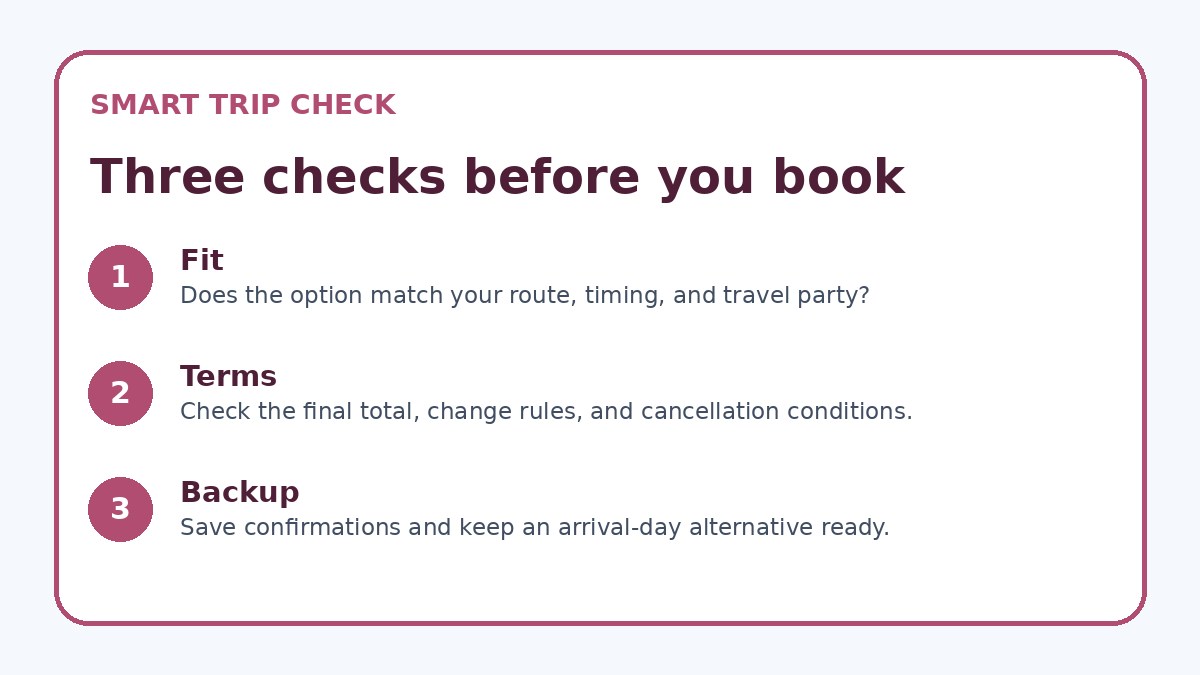
Before you book
- List your non-negotiables (arrival window, preferred neighborhood, bed type) and use them to test packages versus separate options.
- For each package, open the provider’s final booking page and confirm what’s included: transfers, baggage, breakfast, and cancellation terms.
- Price a separate-booking scenario by adding flight fare, hotel nightly rate, airport transfer, and typical local transit costs for parity.
- Check cancellation and change fees for every component and note which party handles rebookings in case of a disruption.
- Compare total travel time and connection complexity: verify whether flights are direct or connecting and decide how much layover risk you accept.
- If you need language support or special assistance on arrival, confirm provider customer-service hours and how to contact them internationally.
Flexibility, risk, and customer support considerations
If your schedule is fixed and you value a single point of contact, a package may reduce stress when problems arise: one vendor handles rebooking or coordinating refunds across components. That clarity can matter on arrival day when you want assistance with airport issues or re-routing. But that convenience depends on the package provider’s support policies—how they handle cancellations, delays, and changes—which you must verify before booking. Look for explicit language about support hours, the process for flight disruptions, and who is responsible for missed connections.
Conversely, separate bookings shift responsibility to you: you manage rebookings and claims with the airline or hotel directly. That can be more work, but it can also be faster when an airline re-accommodates passengers and offers alternatives immediately. Independent bookings also allow you to choose providers with known customer service reputations. Whether you pick a package or separate reservations, document refund windows, emergency contact procedures, and how to show proof of purchase in a language you can use while in Japan.
Frequently asked questions
Can a package be modified if my flight time changes?
It depends on the package provider’s change policy and whether the flight is included as a refundable or flexible fare. Some packages allow modifications but charge change fees or require reissue procedures; others tie the hotel to the original flight and treat changes as separate claims. Before booking, check the provider’s explicit policy on flight changes and refunds, and ask how they handle missed hotel nights if you rebook with a different carrier. If flexibility is essential, either choose a package with clear flexible terms or book the flight separately under a fare class that permits changes.
How do I decide which Osaka neighborhood to prioritize when comparing packages?
Start by listing your priorities—nightlife, food, shopping, rail connections, or quiet streets. Compare neighborhoods: Dotonbori and Namba are central for first-time food and nightlife experiences; Umeda is convenient for shopping and rail links; Tennoji and Shin-Osaka offer access to regional trains. When evaluating packages, confirm the hotel’s exact neighborhood and nearby stations on the provider’s page, and weigh whether saving time with a package is worth a longer daily commute to the sights you want to visit.
Is it safer to book transfers in a package or arrange transport later?
Prebooked transfers included in a package remove the need to navigate arrival logistics and can be reassuring after a long flight, but they may come at a premium. Arranging transport independently—on public rail, airport limos, or taxis—often provides more flexibility and sometimes lower costs, especially if you travel light. Check provider details: if a package includes transfers, verify pick-up times, meeting points, and rebooking procedures on the final booking page. If you prefer to handle transfers yourself, research Osaka airport-to-city options and typical journey steps in advance.
Final planning note
First-time visitors to Osaka should weigh convenience against control. Packages simplify planning and centralize support, which benefits travelers who want fewer decisions and a single contact for issues. Independent bookings give you choice over flight times, hotel neighborhoods, and flexible upgrades, at the cost of more research and coordination. A hybrid approach—using a package for core needs while booking key elements yourself—often balances both concerns. Whatever you choose, verify inclusions, change terms, and customer-support procedures on the final booking page before paying. Use the checklist to ensure you compare apples to apples and feel confident in your Osaka travel deal decision.
Continue planning
Check current options and final conditions
Use the provider page to confirm live availability, the final total, cancellation terms, and every condition that matters to your trip.
This evergreen planning guide was created with AI-assisted drafting and a structured quality review. It does not display live prices, schedules, availability, visa guidance, or provider rankings. Verify current details before booking. Some links are affiliate links; we may earn a commission at no additional cost to you.