If you’re booking Busan to Jeju flights for a family trip and you expect a long connection, start by prioritizing the things that make the day easier: total door‑to‑door time, number of transfers, and places to rest and feed children. The practical answer is simple — pick the itinerary that trades the least amount of useful family time for transit: fewer transfers, reasonable layovers that match your children’s sleep or meal schedule, and airports or transfer hubs where short‑term comfort (lounges, quiet areas, play spaces) is available. After you’ve identified one or two candidate itineraries, compare the real cost of each option in time and convenience, not just the fare. Below I lay out how to assess direct versus connecting routes, what to check on provider booking pages, and a step‑by‑step family checklist so your long connection becomes a manageable part of the trip instead of a stress point.
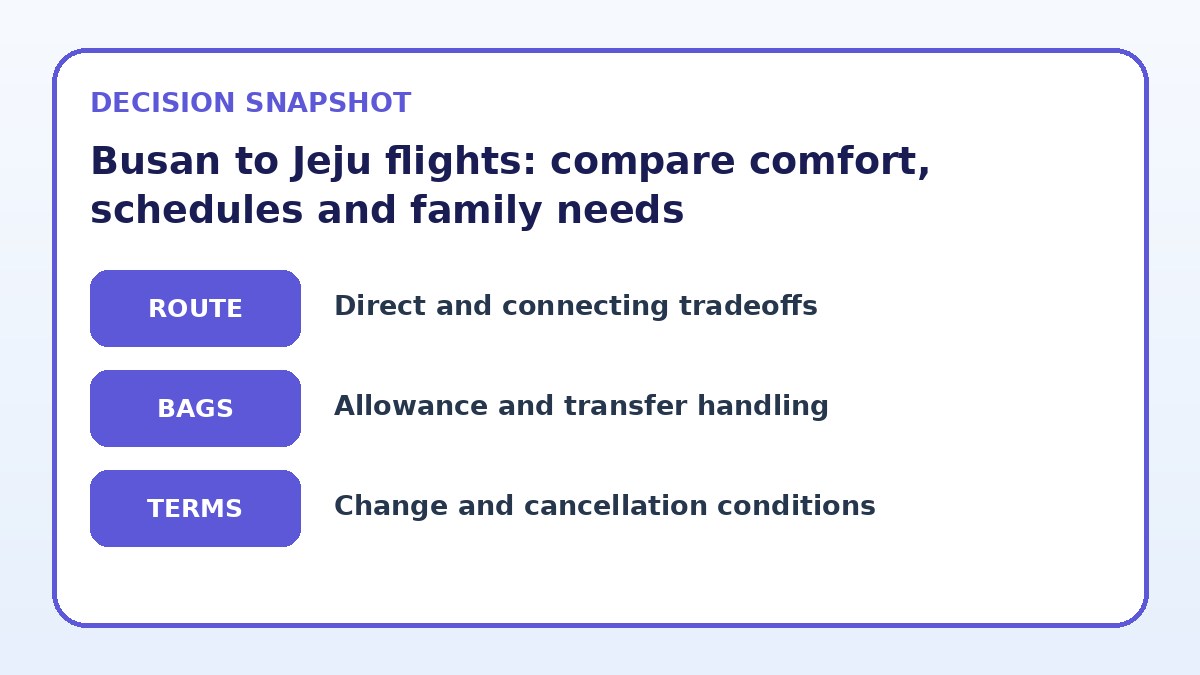
See current options before you compare the details
Availability and final conditions change. Open Trip.com now or keep reading for the practical comparison.
Direct vs connecting: comfort tradeoffs for families
Direct flights are usually the simplest choice for families because they reduce handling, minimize the number of boarding events and short‑term disruptions, and remove the need to navigate unfamiliar terminals with carry‑on kids. If a direct Busan to Jeju service is available for your dates, it often means less time spent in transit overall and fewer opportunities for delays to cascade. For families with young children or mobility needs, a single boarding and a predictable arrival window can be worth a higher fare or less convenient departure time.
Connecting itineraries can still work well when direct options aren’t available or are inconvenient, but they require deliberate planning. Long connections give you time to rest or pace activities, but they also add complexity: luggage transfer rules, the possibility of changing terminals, and the need to factor in customs or re‑check procedures if a connection crosses carriers. Make a list of what each connection requires — terminal transfers, passport checks, or bus rides — and weigh those steps against the rest time the layover provides.
Choosing layover length and location with kids in mind
When you must endure a long layover, aim for a window that reduces stress rather than amplifies it. Short layovers can feel rushed and risky if flights are tight; excessively long waits tire everyone and deplete patience. Ideally pick a connection that aligns with a child’s nap or meal time — long enough to relax and eat but not so long that boredom sets in. Also evaluate the airport itself: some hubs have family rooms, changing facilities, and child‑friendly spaces that make a three‑ to five‑hour connection reasonable.
Location matters as much as duration. A long layover at a compact, well‑equipped airport is usually better than the same length of time at a sprawling or poorly signed hub. Check whether the transfer requires leaving a secure zone, changing terminals by shuttle, or completing additional checks. Those steps add time and friction that will matter more than the clock face on a schedule. If possible, pick a connection at an airport you can find reliable layout info for online so you can plan a step‑by‑step route between gates and facilities ahead of travel.
| Approach | Best for | Tradeoff to check |
|---|---|---|
| Direct flight | Families seeking fewer disruptions and simpler logistics | May have less convenient schedules or slightly higher fares |
| Single long connection at a child‑friendly hub | Those needing a daytime break for meals or naps | Requires planning for transfers and possible terminal changes |
| Split ticket with separate carriers | Travelers balancing cost and specific flight times | Higher risk: you’re responsible for missed connections |
| Overnight layover with short hotel stay | Families preferring rest and a full night’s sleep between legs | Adds time and logistics for getting to/from the airport hotel |
Ready to check the option that fits your plan?
Use your exact dates and traveler details so the provider page can show the current total and conditions.
Practical in‑flight and airport comfort strategies
Bring a compact comfort kit for each child: noise‑reducing headphones, a small favorite toy, familiar snacks, and a lightweight blanket or hoodie for naps. For longer waits, foldable stroller or carrier options that can be gate‑checked are invaluable. Pack spare clothing for kids and an extra plastic bag for soiled items. Consider booking seats together and, if available, bulkhead or window/aisle combinations that let adults stand and move more easily; if seat maps are unclear, verify seat assignments on the airline’s booking page before finalizing.
At the airport, make use of lounges, family rooms, or quiet corners when you need downtime — a short paid lounge access can pay off if it provides sofas, space, and clean facilities. If lounge access isn’t an option, identify restaurants or cafés with children's menus and restroom locations with changing tables. Plan simple activities for transitions: a short walk to break pent‑up energy, a coloring book, or a tablet preloaded with shows and offline games. Keep a modest first‑aid and medication kit handy, and know where to find medical assistance in the terminal.
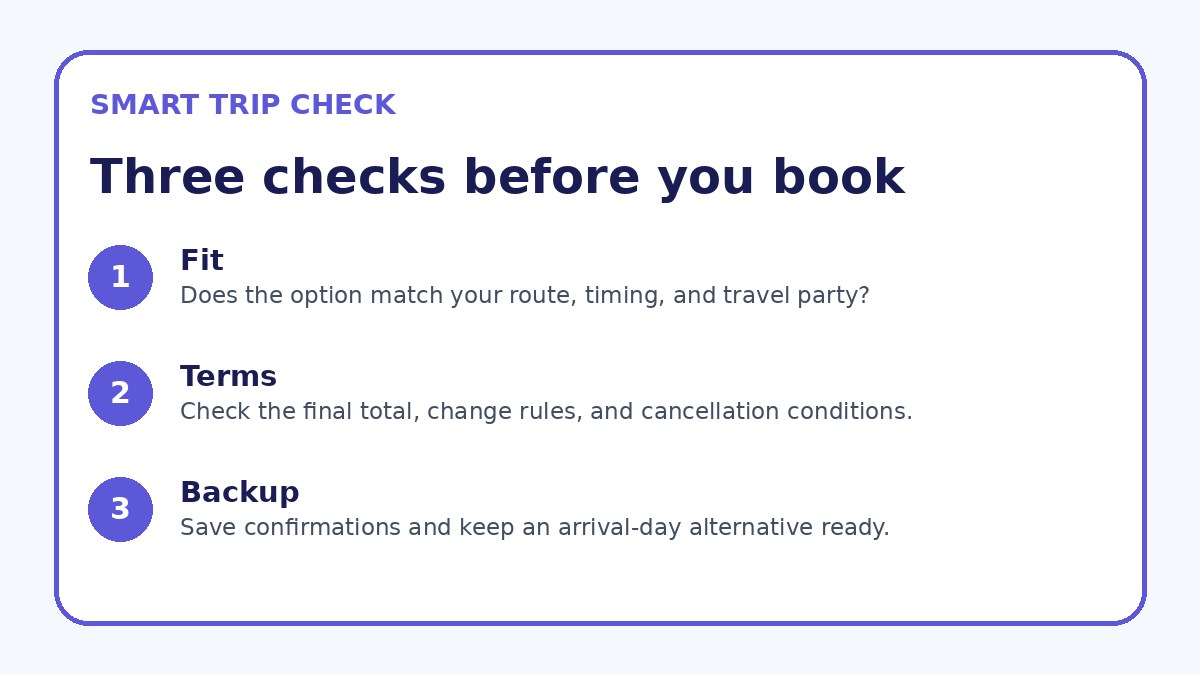
Before you book
- Compare total door‑to‑door travel time, not just flight duration, before choosing a fare.
- Confirm whether checked baggage, strollers, and car seats are transferred automatically on each itinerary.
- Pick connection windows that align with your children’s nap or meal schedule when possible.
- Preload entertainment and download offline maps or boarding passes to reduce screen‑time friction.
- Note the specific terminal transfer steps and whether you must leave secure zones during the layover.
- Verify seat assignments, lounge access options, and infant/child policies on the airline’s official booking page.
What to verify on provider pages before booking
Always confirm baggage transfer rules for connecting itineraries: whether bags are checked through to the final destination, or if you must collect and re‑check them during the layover. Check infant and child policies such as whether car seats count as checked items, lap‑seat rules, and how the carrier handles strollers at the gate. Verify seating policies — some fares restrict seat selection until check‑in — and review the provider’s official change and cancellation conditions. If you rely on a third‑party site, cross‑check these points on the actual airline or operator booking page before you complete payment.
Also confirm practical details specific to your travel day: how early to arrive for domestic flights in South Korea, whether online check‑in is available and when it opens, and any assistance options for families or passengers requiring mobility help. If your connection involves two different carriers, check whether the itinerary is protected as a single ticket or if you’ll need to make separate bookings, which affects missed‑connection responsibility. If you want to compare availability and conditions, Trip.com can be used to view options, but always verify the final booking terms with the carrier’s official page.
Frequently asked questions
Are direct Busan to Jeju flights always the best option for families?
Direct flights are often the most convenient because they minimize transfers and handling, which reduces the number of stressful moments for families. However, the best option depends on your family’s priorities: if a direct schedule forces a child to travel at a difficult hour or it requires a very early start, a carefully chosen connection that allows travel during nap time or provides a comfortable hub can be preferable. Always weigh total travel time, the number of boarding events, and the quality of the transfer airport when deciding.
How long should a layover be when traveling with young children?
There’s no single ideal layover length; think in terms of what you want to use the time for. For a quick stretch and snack, two to three hours might be sufficient if terminals are compact. For safe, relaxed transfers or a restful meal and play time, three to five hours is more comfortable at a family‑friendly hub. If you plan to exit and stay overnight, build in extra time for hotel transfer and morning check‑in. Always allow a cushion for unexpected delays and the time needed to re‑clear any checks.
What should I do if a connection requires switching airlines?
If switching airlines means separate tickets, treat the legs as independent journeys: leave more time for baggage collection and re‑check, confirm visa or immigration steps if relevant, and prepare for the possibility the first carrier won’t cover missed second flights. If you can, book both legs on a single ticket or through an alliance code‑share so the carriers share responsibility for missed connections. On all bookings, verify transfer rules, baggage handling, and whether the second carrier requires online check‑in before you commit.
Final planning note
When planning Busan to Jeju flights for a family with a long connection, the single guiding idea is to convert transit time into predictable, manageable time. Choose the itinerary that minimizes stressful tasks (extra transfers, baggage re‑check, terminal sprints) and aligns with your children’s routines. Use layovers proactively — plan a meal, a nap, or a short play session — and verify crucial operational details on the carrier’s booking page: baggage handling, seat assignment rules, and any fees or assistance procedures that affect your day. With a clear checklist, a compact comfort kit, and a chosen backup plan for longer delays, a long connection can be an organized pause rather than an ordeal. If you want to compare live availability, Trip.com can show options, but always confirm final terms on the airline or operator page before booking.
Continue planning
Check current options and final conditions
Use the provider page to confirm live availability, the final total, cancellation terms, and every condition that matters to your trip.
This evergreen planning guide was created with AI-assisted drafting and a structured quality review. It does not display live prices, schedules, availability, visa guidance, or provider rankings. Verify current details before booking. Some links are affiliate links; we may earn a commission at no additional cost to you.