
If you’re traveling from Tokyo to Osaka with extra luggage, the practical answer is to choose a transport option that matches how much you want to manage on the move, then plan three things for the travel day: physical transfer (how you’ll get on and off trains, planes or buses with big bags), storage options (left-luggage, station lockers, or door delivery), and time cushions (boarding windows and transfers). Start by listing how many large items you have, how mobile you are, and whether door-to-door luggage services are acceptable for your schedule and budget. That short inventory will make it much easier to compare train, bus, and flight options and to arrange pre-booked luggage handling or last-mile help before you leave Tokyo.
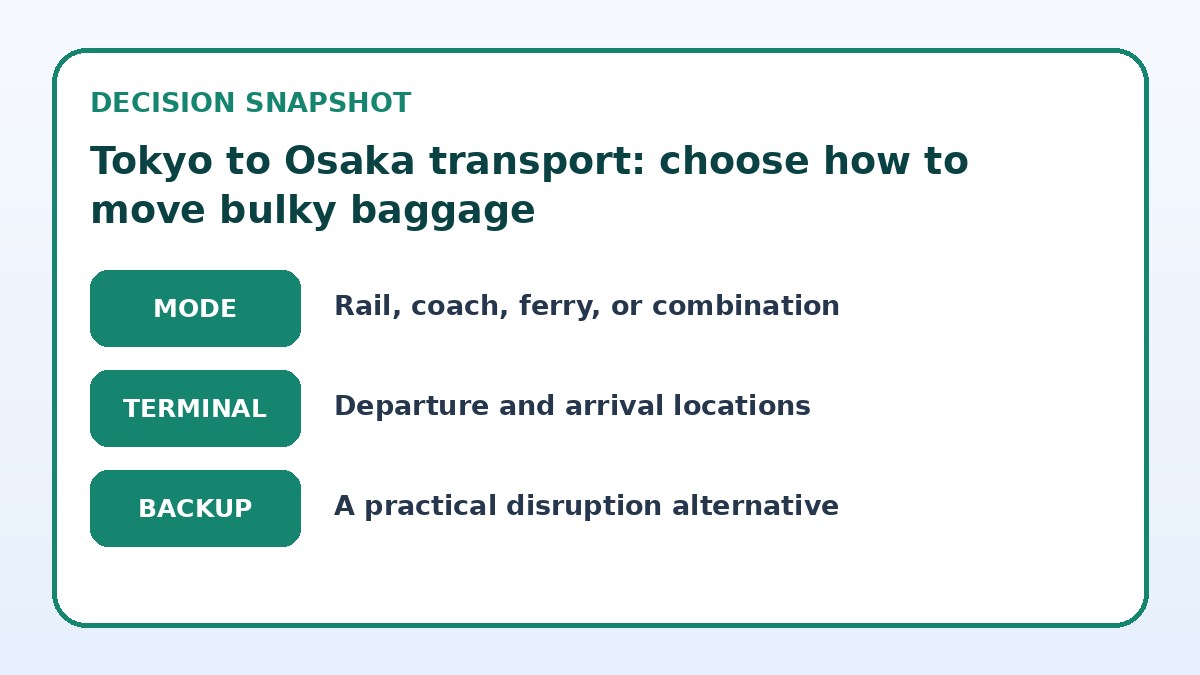
See current options before you compare the details
Availability and final conditions change. Open Trip.com now or keep reading for the practical comparison.
Which transport suits heavy or bulky luggage?
Decide whether you want to minimize handling or minimize travel time. Trains (including long-distance services) typically give you the freedom to keep bags with you but require lifting into overhead racks or strapped in vestibules; they avoid airport security but may involve stairs and long platform walks. Buses can be economical for very large items since underfloor cargo holds take the weight, though you must be nearby when luggage is loaded and unloaded. Flights move you fastest but add two layers of handling — check-in luggage and local transfers — and can mean airport shuttles or taxis at each end.
For travelers with extra luggage the practical tradeoffs focus on door-to-door effort and transfer complexity. If you want the fewest touches, professional luggage delivery services pick up in Tokyo and deliver to an Osaka hotel or address, letting you travel with a single carry bag. If you prefer to keep all items with you, prioritize services with easy platform access, elevators, or staff assistance and factor in time to board and stow oversized pieces safely without obstructing other passengers.
Planning the travel day timeline
Create a realistic timeline that starts with final packing and ends after you reach your Osaka door. Work backward from your latest acceptable arrival time, adding buffer for delays at each stage: elevator waits at your accommodation, transit to the departure point, ticket collection or check-in, security or station navigation, and the physical loading/unloading of luggage. If you’re using a luggage delivery service, include the scheduled pick-up slot and any required presentation of ID or labeling. If you’re using public transport, add at least one extra transfer buffer to avoid rushed lifts with heavy bags.
On the travel day, keep essentials in an accessible small bag — medications, documents, chargers, and one change of clothes — so you can handle a temporary separation from main luggage. Photograph packed items and label everything clearly with your name, phone, and destination address; that speeds identification if you need staff help or if a delivery service handles your bags. Also prepare backup payment options and contact numbers for any booked courier or hotel so you can confirm handoffs quickly during the day.
| Approach | Best for | Tradeoff to check |
|---|---|---|
| Carry all luggage yourself on trains | Travelers who prefer total control and no delivery fees | Requires lifting, finding storage space, and negotiating station stairs and crowds |
| Use luggage delivery to Osaka and travel light | Those valuing convenience and easy boarding on the travel day | Adds a separate service to arrange and a delivery window to coordinate |
| Book long-distance bus with underfloor cargo | Large or oddly shaped items that don’t fit in train racks | You must be present for loading/unloading and schedules can be slower |
| Fly and use airport transfer services | Travelers prioritizing speed over handling complexity | More touchpoints (check-in, security, transfers) and possible extra ground transfers |
Ready to check the option that fits your plan?
Use your exact dates and traveler details so the provider page can show the current total and conditions.
Luggage handling options and station logistics
Before you book, check station layouts and services where you start and finish. Major Tokyo stations and Osaka terminals often provide left-luggage services, coin lockers, or staffed baggage counters with size limits; smaller stations may not. If you plan to use lockers, measure your biggest case to ensure it fits; many lockers accept suitcases only up to certain dimensions. When you rely on station staff or baggage counters, verify their opening hours and whether reservations are needed for large items.
Consider professional luggage delivery (takkyubin-style) when convenience matters more than cost. These services usually pick up from hotels, residences, or counters and deliver within a day or two. Confirm delivery windows and whether the recipient needs to be present. If you decide to carry luggage yourself through stations, identify elevator locations and accessible routes in advance using online station maps or by asking hotel staff. During peak hours, staff assistance can make a big difference, so plan travel outside crush times where possible.
Before you book
- Count and photograph every large item; label each bag with your name, phone, and Osaka delivery address if using courier service.
- Measure the largest suitcase and compare its dimensions to station locker sizes or carrier size limits before booking.
- Reserve train seats or bus space that allow luggage, or schedule a luggage pick-up slot with a delivery service the day before travel.
- Plan and map elevator-accessible routes at departure and arrival stations, and note staff assistance points and main entrances.
- Pack an accessible day bag with documents, chargers, medications, and an outfit to use if main luggage is delayed.
- Confirm pick-up and drop-off instructions with your hotel, courier, or transport provider and save contact numbers for the travel day.
Making choices at booking: what to verify
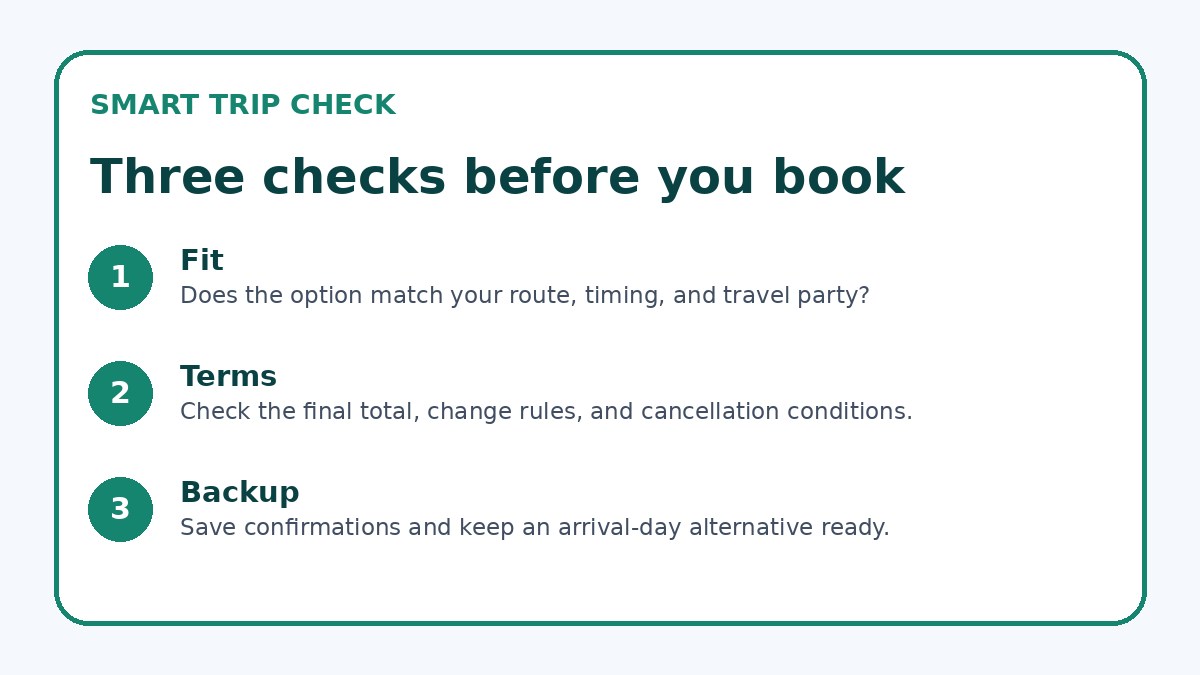
When comparing tickets and services, check provider pages for luggage policies, size and weight restrictions, and any required fees or reservations for oversized items. For trains and long-distance buses, luggage rules vary: some services allow large suitcases in dedicated areas while others require reservations for oversized luggage or restrict it entirely. For flights, verify carry-on and checked baggage allowances as well as transfer baggage handling rules. Always confirm the final terms on the provider’s booking page before purchasing.
Also verify timing details that affect the travel day: earliest check-in or boarding times, baggage counter closing times, and any mandatory arrival windows for assisted boarding or luggage drop-off. If you use a delivery service, confirm pick-up instructions, required labeling, and any prohibitions on fragile or restricted items. Trip.com can be a quick place to compare availability and conditions, but always follow up directly with the transport or delivery provider to confirm final rules and schedules.
Frequently asked questions
Can I bring oversized suitcases on long-distance trains between Tokyo and Osaka?
Rules for oversized suitcases vary by carrier. Some long-distance trains allow larger bags in designated areas or require a reservation for oversized luggage. Before you book, read the carrier’s luggage policy on the official booking page to confirm size limits, any mandatory reservations, and whether staff assistance is available at your boarding station. If the policy is unclear, contact the carrier directly and ask about measurements, restricted items, and recommended handling on the travel day.
Is luggage delivery from Tokyo to Osaka reliable for same-day travel?
Many door-to-door delivery services operate reliably between major Japanese cities, but delivery timing can depend on pick-up slots, the service’s route, and unexpected delays. If you need luggage at your Osaka address the same day, confirm the provider’s guaranteed delivery window for your route and the latest possible pick-up time. Request written confirmation and keep contact details handy. For time-sensitive items, consider carrying them yourself or using a service that explicitly confirms same-day delivery for your specific itinerary.
What’s the easiest way to move between station platforms with heavy bags?
The easiest approach is to plan routes that avoid stairs: identify elevators, escalators, and barrier-free paths on station maps before the travel day. Arrive earlier to allow time for elevator waits and to find staff help if needed. Consider booking seats near carriage doors that provide quicker access to platform exits and elevators. If your bags are extremely heavy, hire porter assistance where available or use a luggage delivery service so you only carry a small personal bag on the platform.
Final planning note
Preparing for a Tokyo to Osaka transport day with extra luggage comes down to three practical choices: keep everything with you and plan for physical handling, use a bus or flight to redistribute handling points, or outsource baggage movement with a delivery service. Balance time, cost, and how much you want to touch your bags. Whatever you choose, verify luggage policies and pick-up/drop-off windows directly on the provider’s booking page, measure cases against locker or carrier limits, and build comfortable buffers into your schedule. With a clear plan, the travel day becomes manageable and far less stressful.
Continue planning
Check current options and final conditions
Use the provider page to confirm live availability, the final total, cancellation terms, and every condition that matters to your trip.
This evergreen planning guide was created with AI-assisted drafting and a structured quality review. It does not display live prices, schedules, availability, visa guidance, or provider rankings. Verify current details before booking. Some links are affiliate links; we may earn a commission at no additional cost to you.