
If you’re planning your first trip to Da Nang, make cancellation flexibility the first filter when scanning travel deals. Opting for a refundable hotel rate or a flight with flexible change/cancel terms can remove a lot of planning stress, but those options usually come with tradeoffs: higher base costs, different payment rules, and sometimes stricter time windows for free changes. This guide gives the quick answer up front — when to choose flexible options and when to accept a stricter deal — then walks through practical criteria to compare offers, points to verify on the provider’s booking page, and everyday scenarios that change the right choice. Use these steps to match cancellation terms to your risk tolerance, itinerary certainty, and budget priorities before you hit book.
See current options before you compare the details
Availability and final conditions change. Open Trip.com now or keep reading for the practical comparison.
Why cancellation flexibility matters for first-time Da Nang visitors
First-time visitors often face unknowns: flight connections, unusual weather windows, or the desire to extend or shorten the stay after arriving. Cancellation and change policies are the core levers that turn uncertainty into manageable risk. When a booking allows free changes up to a certain time, you gain the freedom to reshuffle plans without losing the full fare. Conversely, strict nonrefundable options can be tempting on price alone, but they transfer most of the downside back to you, the traveler. For a first trip, that downside often outweighs the upfront savings because unfamiliar local factors can force unexpected schedule shifts.
Beyond pure schedule flexibility, cancellation terms interact with other parts of the trip. A refundable hotel rate makes it easier to adjust where you’ll base yourself if you find a better neighborhood or want to split time between the beach and the city. Refundable or changeable flights let you respond to delays or missed connections without scrambling for emergency funds. The best approach balances how firm your dates are against how much you can comfortably lose if plans change—think of flexible bookings as insurance that preserves your options without requiring you to predict every detail in advance.
How to compare the true value of flexible vs nonrefundable deals
Start by identifying the decision points: which element of travel would be most expensive to lose (usually international flights or a multi-night central hotel). For each option, calculate the incremental cost of the flexible rate versus the strict rate and then weigh that against the financial exposure if you had to cancel. For example, if the flexible hotel rate costs 20% more but would save you the full room total if canceled, that premium might be worth it if you judge your cancellation risk high. Don’t forget indirect costs like new rebooking fees, differences in seat availability, or the time and stress of arranging last-minute changes.
Next, check the exact terms on the final booking page: timing for free cancellations, whether a voucher or credit is offered instead of a cash refund, any administrative fees, and whether changes are permitted without penalty or only for a fee. Also confirm whether third-party bookings add restrictions—some platforms manage refunds differently from the hotel or airline. If a provider’s policy language is unclear, contact customer service for a written clarification before payment; vague policy text is a red flag when you value flexibility.
| Approach | Best for | Tradeoff to check |
|---|---|---|
| Flexible refundable bookings | Travelers who expect schedule changes or want peace of mind | Higher upfront cost and sometimes stricter advance notice rules |
| Nonrefundable discount deals | Firm-date travelers looking to save on predictable plans | Little to no recourse if plans change, full financial exposure |
| Mixed approach (flexible key item only) | Balanced travelers protecting the trip’s most expensive booking | Requires judgment about which item to protect and may leave gaps |
| Nonrefundable plus travel insurance | Budget travelers seeking protection against specific risks | Insurance has exclusions and filing claims can be time-consuming |
Ready to check the option that fits your plan?
Use your exact dates and traveler details so the provider page can show the current total and conditions.
Practical booking strategies for different traveler profiles
If you’re cautious about disruptions—first-time visitors, travelers with connecting flights, or those on a tight schedule—prioritize flexibility on the single most expensive or critical item rather than trying to buy full flexibility across everything. Lock in a flexible flight or a refundable cancellation window on your main hotel, then take lower-rate options for side bookings like day tours or short transfers. For budget-focused solo travelers with confident dates, a mixed approach can work: nonrefundable basics where losses are small, and a refundable anchor booking that protects the core of the trip.
Families and travelers with complex logistics (multiple destinations, group members with different needs) should err on the side of more flexible booking across more items, because one change can cascade into many. Consider refundable airport transfers or flexible car hires, and confirm how third-party ticket reissue works if you booked a multi-segment itinerary. Whatever your profile, explicitly map which booking you’d choose to cancel first if plans changed—this clarifies where flexibility matters most and keeps cost increases targeted.
Before you book
- Identify the single booking (flight or main hotel) whose loss would hurt your budget most and prioritize flexibility there.
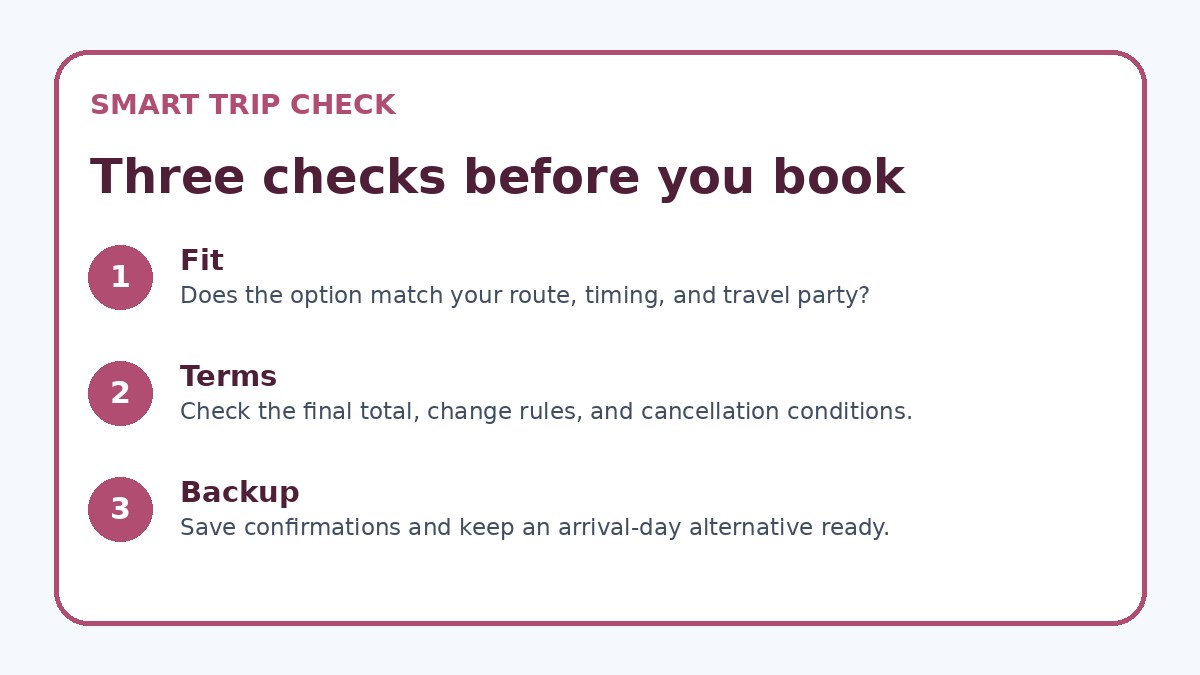
- On the final booking page, copy the cancellation deadline, refund method, and any stated fees into a note or screenshot for later reference.
- Compare the incremental cost of flexible versus strict rates and calculate the break-even cancellation probability where flexibility pays off.
- If using a third-party platform, verify whether refunds are handled by the platform or by the supplier and which contact to use for disputes.
- Decide whether travel insurance is necessary to cover gaps in the supplier policy and confirm policy exclusions before purchasing.
- Before payment, ask customer service in writing about unclear terms—don’t rely on vague policy language or assumptions.
What to verify on the booking page and before you finalize
On every booking page, verify the exact cancellation window (date and time relative to arrival or departure), the refund method (credit, voucher, or cash), and any administrative or processing fees deducted from refunds. Also check whether taxes or third-party fees are refundable, and whether the fare class or rate code has blackout periods. If the wording is ambiguous about who charges the fee—your card issuer, the booking platform, or the supplier—seek clarification so you won’t be surprised by a deduction when you request a refund.
Finally, note any documentation or proof the supplier may require for exceptions, such as medical emergencies or government restrictions. If you plan to rely on travel insurance, confirm that the supplier’s refund policy won’t void an insurance claim and that your policy covers the specific cancellation reasons you care about. Remember that after booking the provider’s published terms on the final confirmation are what control any future dispute, so either download or screenshot those terms and your confirmation for reference.
Frequently asked questions
Should I always choose flexible cancellations for my first trip to Da Nang?
Not always. Choosing flexible cancellations depends on how certain your dates are and how much you can tolerate losing if plans change. If your travel dates are tentative, you’ll be connecting through other flights, or you're traveling with a group whose plans might shift, flexible options reduce stress and potential loss. If your dates are fixed and you’re looking to save money, a nonrefundable deal can be acceptable—just protect the most expensive element or buy insurance. Always read the booking page to see whether flexibility truly means a full refund, a credit, or a voucher with limits.
What exact policy details should I confirm on a booking page before paying?
Confirm the cancellation cutoff (specific date and time relative to arrival/departure), whether refunds are returned as cash or credits/vouchers, any administrative or processing fees, and if taxes or third-party charges are refundable. Also check whether changes are allowed and whether they incur fees, and whether refunds are automatic or require a request. If you booked through an intermediary, make sure the page states whether the intermediary or the supplier processes refunds. Save or screenshot all confirmation pages and policy text in case you need them later.
Can travel insurance replace flexible cancellation policies for Da Nang travel deals?
Travel insurance can cover certain cancellation reasons that supplier policies don’t, such as illness, some weather events, or covered emergencies, but it’s not a blanket substitute. Insurance policies have exclusions, maximum payout limits, and required documentation for claims, and they typically won’t reimburse you for routine changes of mind. If you rely on insurance, verify that your policy covers the specific risks you care about and that it coordinates with supplier refunds (for instance, whether an insurer reduces a payout by the amount a supplier already refunded).
Final planning note
For a first trip to Da Nang, balance your need for flexibility against the extra cost by protecting the single booking that would hurt most if lost. Read the final booking page carefully for exact cancellation windows, refund types, and any fees—those specifics determine whether a “flexible” rate actually gives you useful options. Use a mixed strategy when appropriate: a refundable anchor booking and lower-cost nonrefundable side items, or selective insurance to plug gaps. If you want a quick check of current offerings, Trip.com is one optional place to compare terms, but always trust and save the provider’s final confirmation. That preparation keeps choices open without needlessly inflating your budget.
Continue planning
Check current options and final conditions
Use the provider page to confirm live availability, the final total, cancellation terms, and every condition that matters to your trip.
This evergreen planning guide was created with AI-assisted drafting and a structured quality review. It does not display live prices, schedules, availability, visa guidance, or provider rankings. Verify current details before booking. Some links are affiliate links; we may earn a commission at no additional cost to you.