
Practical answer up front: for most couples staying in central Boston (Back Bay, Beacon Hill, South End, or the North End) and planning to focus on the city and close suburbs, public transit plus walking usually saves time and stress. Rent a car if your plans include day trips to Cape Cod, the Berkshires, distant coastal towns, or if you need flexibility for mobility issues or a lot of luggage. Couples who split activities—one exploring the city, the other driving out—often combine both approaches.
Below I compare the real tradeoffs you should weigh when booking: convenience, time on the road, parking hassles, costs to verify, and how each option affects where you stay and what you can comfortably see in a short trip.
See current options before you compare the details
Availability and final conditions change. Open Trip.com now or keep reading for the practical comparison.
Assessing convenience and daily rhythm
Boston’s urban core is dense: many neighborhoods and attractions lie within short walking distances or a single transit ride. For couples who enjoy wandering between cafes, galleries, and historic sites, public transport reduces time spent dealing with traffic and parking. Subways, buses, and commuter rail connect key points but require a little planning each day—check routes and wait times before you set off so you don’t lose valuable sightseeing hours to transfers.
Driving changes your daily rhythm. You’ll gain flexibility—leave when you want and follow on-the-spot ideas—but you also introduce parking decisions into every stop. In busy neighborhoods, parking can mean searching for spaces, paying hourly garage rates, or walking from a lot outside your planned area. Couples who prefer relaxed mornings or frequent spontaneous stops may still find a car valuable, but budget time each day for driving and parking tasks.
Cost factors and what to verify
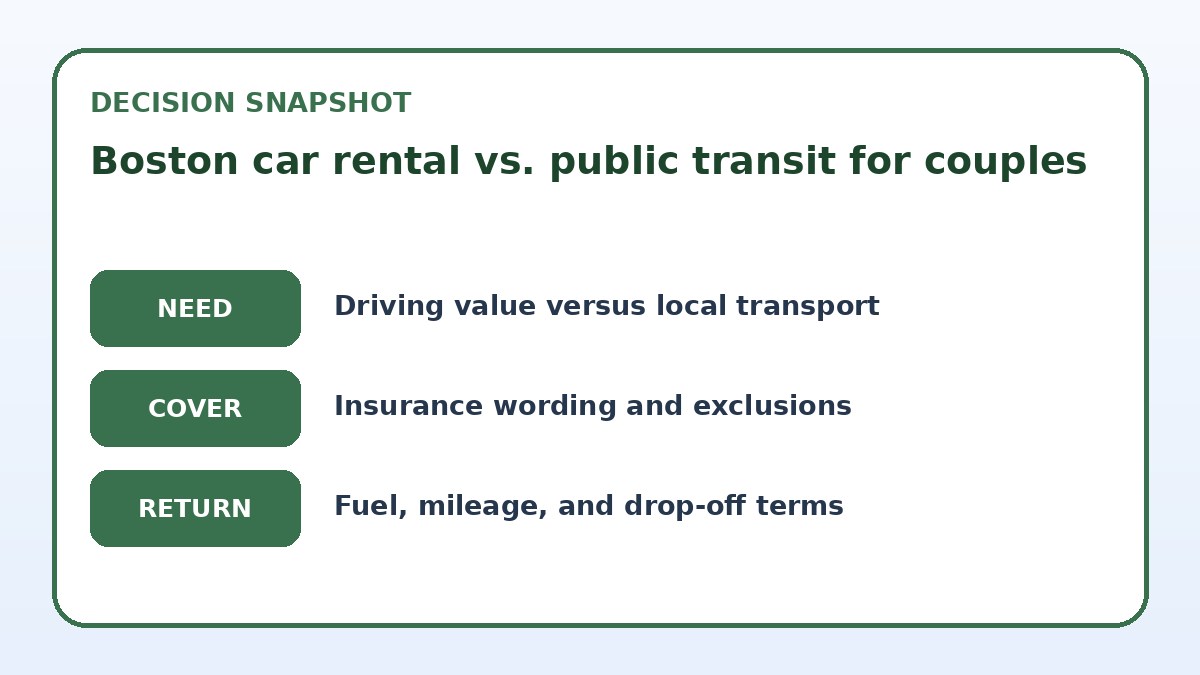
Compare total trip costs, not just the headline rental rate. For car rentals check mandatory taxes, insurance options, fuel policy, and where the rental allows returns. Verify additional driver fees, age surcharges, and whether mileage limits apply. For transit, tally passes or fare cards you’ll need, and check whether rideshares or taxis will be used late at night or for specific transfers. Make a spreadsheet of likely expenses for your planned days to compare apples-to-apples.
When provider details could change, always confirm on the booking page: exact insurance coverage, pickup/dropoff locations, fueling rules, and any location-specific restrictions (like airport-only returns). For transit, verify service advisories, weekend schedules, and whether certain lines have planned maintenance during your dates. Trip.com can be one place to compare current availability, but check the car rental or transit operator pages for final terms and up-to-date service notices.
| Approach | Best for | Tradeoff to check |
|---|---|---|
| Public transit and walking | Couples focused on in-city sightseeing, dining, and museums | Less flexibility for distant day trips and dependence on schedules or transfers |
| Car rental for the whole stay | Couples planning multiple regional outings or needing door-to-door mobility | Adds parking, driving time, and extra booking checks like insurance |
| Transit in town + rental for day trips | Couples who want the best of both: easy city life, flexible excursions | Requires coordinating pickup/drop-off and possibly extra logistic steps |
| Rideshares and occasional car hire | Short stays with mixed late-night plans or minimal luggage | Potentially higher per-ride costs and variable availability at peak times |
Ready to check the option that fits your plan?
Use your exact dates and traveler details so the provider page can show the current total and conditions.
Itinerary types that favor each option
Choose public transit if your itinerary stays inside Boston or heads to nearby neighborhoods served by commuter rail. Museums, theaters, public markets, and dinner neighborhoods are usually well-connected and easier to reach without a car. Also, walking together becomes part of the experience—short neighborhood strolls, river walks, and exploring historic streets are smoother without worrying about parking or tolls.
Rent a car for planned regional exploration or less-connected destinations. If your couple’s priority is visiting coastal towns, scenic drives, or rural spots outside transit corridors, a car lets you set your own schedule and reach remote viewpoints. A rental is also useful when traveling with bulky recreational gear or when one partner needs reachable mobility support. For combined trips, consider renting only for those specific day trips rather than the entire stay.
Before you book
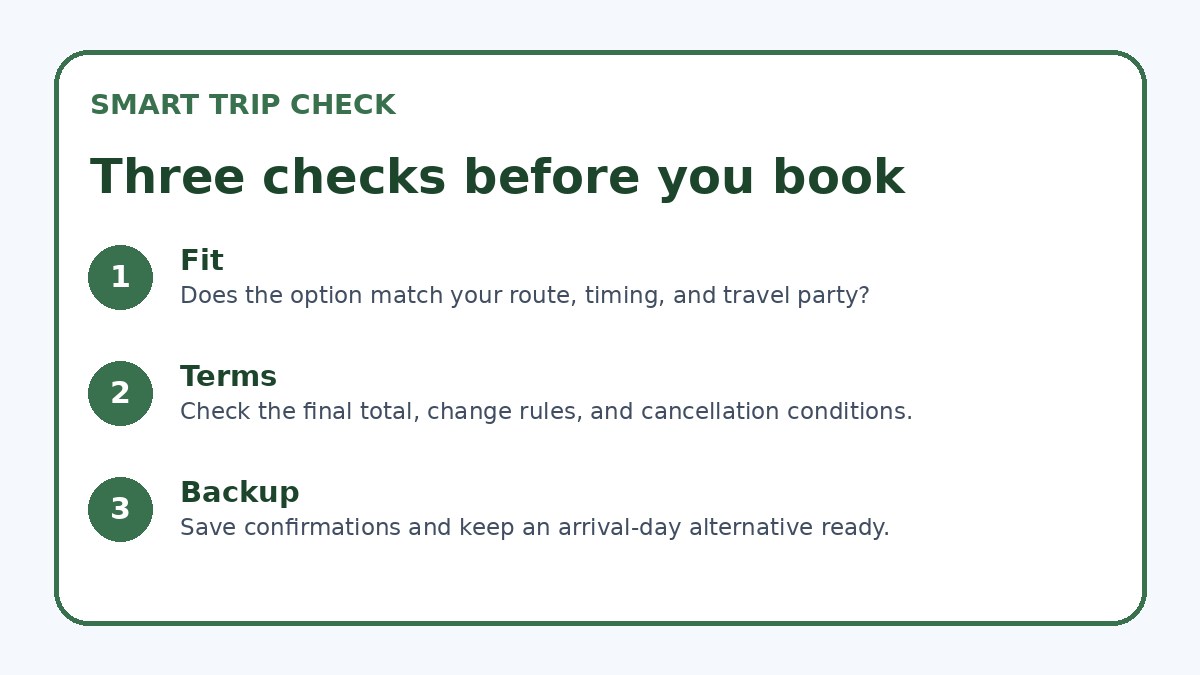
- Map your planned daily itinerary and mark each stop with nearest transit lines, stations, or driving routes to see which mode covers most needs.
- Add estimated parking steps for driving: likely garage options near your main stops and whether your lodging includes parking.
- Compare a multi-day transit pass versus single fares for your group, and note refund or exchange rules on the operator’s booking page.
- If renting, confirm insurance coverage you already have (credit card or personal policy) and verify the rental company's accepted documents before pickup.
- Check commuter-rail or regional bus options for any intended day trips and review schedules for early mornings or late returns.
- If combining modes, plan vehicle pickup/drop locations and flexible cancellation policies in case your schedule shifts.
Where to base yourselves and how that affects the choice
Where you stay shapes how useful a car will be. Central neighborhoods offer easy access to attractions and transit nodes, making a car redundant and more of a liability. Couples who prioritize dining, theater, and neighborhood walks gain by staying centrally and relying on transit and occasional taxis or rideshares for late-night returns. Think about proximity to subway stations or commuter-rail stops when selecting a hotel or apartment.
If you plan early departures for day trips, staying near highway access or a commuter rail station makes a rental day smoother. Parking availability at your lodging matters: some places advertise valet or garage access, while others have no on-site parking, which could add daily shuttles or walking. Match your accommodation search to your transport choice—if you rent, verify parking options with the property and confirm any extra fees before booking.
Frequently asked questions
Is it hard for couples to drive and park in central Boston?
Driving in central Boston involves narrow streets, one-way systems, and frequent pedestrian areas that require attention. Parking is available but often limited and may be costly; many couples find it more convenient to park once and walk or use transit. If you do drive, factor in time for finding garages or permitted street parking and confirm your accommodation’s parking arrangements before booking to avoid surprises.
Can couples reasonably rely only on public transit for a week in Boston?
Yes—if your plans center on city neighborhoods, museums, dining, and nearby waterfronts, public transit plus walking covers most needs for a week. For any specific day trips beyond commuter-rail reach, plan those separately by booking a guided tour, regional transport, or a rental for just that day. Always check transit schedules and service notices for the dates you’ll be traveling to avoid disruptions.
How should couples decide between renting for the whole trip or just one day?
Start by listing the furthest points you want to visit and how many days require a car. If more than one or two days need a vehicle, a multi-day rental may be simpler. If only a single day calls for driving, book a one-day rental and rely on transit in-city. Compare time spent coordinating a short rental against potential savings and convenience to choose the smoother option for your couple’s pace.
Final planning note
For most couples staying in Boston’s central neighborhoods, public transit combined with walking gives the smoothest, lowest-hassle city experience. Rent a car when your priorities include multiple regional day trips, mobility needs, or carrying bulky gear. A mixed strategy—transit for daily exploration and a rental for specific excursions—often balances convenience and cost. Before you book, map your actual days, verify rental terms and insurance, and confirm parking options at your lodging. Use transit schedules and operator booking pages to confirm service details; Trip.com can be a helpful comparison tool but always review provider pages to finalize terms.
Continue planning
Check current options and final conditions
Use the provider page to confirm live availability, the final total, cancellation terms, and every condition that matters to your trip.
This evergreen planning guide was created with AI-assisted drafting and a structured quality review. It does not display live prices, schedules, availability, visa guidance, or provider rankings. Verify current details before booking. Some links are affiliate links; we may earn a commission at no additional cost to you.