
If you’re traveling to London with extra luggage, the most practical first step is to run flexible-date searches across flights and long-distance trains to reveal options that reduce baggage fees and connection stress. Look for departure and return windows of three to seven days rather than fixed dates, and check different arrival airports and nearby train stations. Flexible dates often expose lower-cost tickets that either include higher baggage allowances or allow you to buy a better fare class affordably. Equally important: compare arrival times against public transport and hotel check-in windows so you don’t face expensive taxis with bulky bags. This article walks you through decision tradeoffs, how to set flexible searches, and what to verify on the booking page before you commit.
See current options before you compare the details
Availability and final conditions change. Open Trip.com now or keep reading for the practical comparison.
How flexible-date searches change the baggage math
Flexible-date searches let you see patterns that single-date lookups hide. Airlines often price fare classes and ancillary fees differently across adjacent days; a flight two days earlier may include checked baggage in a higher fare bucket or allow a cheaper paid-baggage add-on. Similarly, train operators may have different seat types or luggage rules at off-peak times. When you change dates your options may also shift between direct and connecting itineraries—each with a different practical baggage impact, from handling multiple transfers to paying separate operator fees on a multimodal route.
To make the comparison straightforward, create a simple spreadsheet or note of: fare class, included baggage allowance, extra-bag fee, number of transfers, and likely transfer costs (local trains, buses, or taxis). Add an estimate for awkward-item handling (oversized suitcases, sports gear) and potential overnight stays if arrival times force you to book an extra night. The goal is to compare total expected cost and hassle for each date, not just the headline fare, and flexible searches reveal which dates lower the combined price of transport plus baggage management.
Where flexible dates deliver the biggest savings
Savings are most likely when alternative dates shift you between peak and off-peak travel days, or when a change in date allows you to use a different airport or major train operator with more generous baggage rules. Early-week and late-evening departures often have lower base fares or more flexible fare classes. For example, a flight landing at a secondary London airport outside peak hours may pair with cheaper public transport or an affordable pre-booked transfer that handles luggage, whereas the same flight into a central airport at peak time could force costly taxi rides.
Also watch for seasonal ripples: long weekends and school holidays tighten capacity, pushing up baggage add-on prices, while midweek dates frequently offer both lower fares and more available seat types that include checked luggage. If your travel window allows it, move the trip by a couple of days to access that quieter inventory. When comparing options, factor in the inconvenience of extra transfers—multiple changes can be inexpensive but physically taxing with heavy bags, which may justify paying a bit more for a direct or single-transfer option.
| Approach | Best for | Tradeoff to check |
|---|---|---|
| Shift travel dates by a few days | Travelers who control departure and return timing and want lower baggage fees | May disrupt personal schedules or require negotiating time off; savings vary by market |
| Choose a different London airport or rail terminal | Those willing to trade a longer transfer for better baggage rules or lower fares | Potentially higher transfer time or cost; check onward transport schedules and luggage handling |
| Book a higher-fare flexible ticket | Travelers valuing reduced transfer stress and included baggage allowances | Higher upfront cost that may still be cheaper overall for heavy-luggage trips |
| Keep fixed dates and buy extra baggage separately | People with strict date constraints who must travel on set days | Often higher incremental fees and more chance of airport pay-on-day surcharges |
Ready to check the option that fits your plan?
Use your exact dates and traveler details so the provider page can show the current total and conditions.
Practical tactics for searching and booking
Set flexible-date parameters in flight or rail search tools (±3–7 days) or use calendar views to scan entire weeks. When you find a promising date, click through to the provider’s final booking page to confirm baggage allowances, size limits, and exact fees—don’t assume summary pages show the full terms. If an itinerary mixes operators or codeshares, check each operator’s baggage policy because one airline’s inclusion doesn’t always apply to a partner segment. For rail travel, confirm luggage policies for any connecting bus or regional service you’ll use.
Use filters to compare itineraries that include checked bags or have refundable/transferable fare classes if you value flexibility. Consider booking refundable or flexible tickets for peace of mind when carrying valuable or oversized items, but price the tradeoff: higher flexibility often costs more than a cheap nonrefundable ticket plus a separate baggage fee. Finally, if you need an extra item of luggage or oversized allowance, compare pre-purchase fees versus pay-at-gate fees—flexible-date searches sometimes reveal a date where the pre-purchase option is substantially cheaper.
Before you book
- Run a flexible-date search for flights and trains covering at least ±3 days to spot better baggage terms.
- Record fare class, included baggage, and extra-bag cost for each date option in a simple comparison chart.
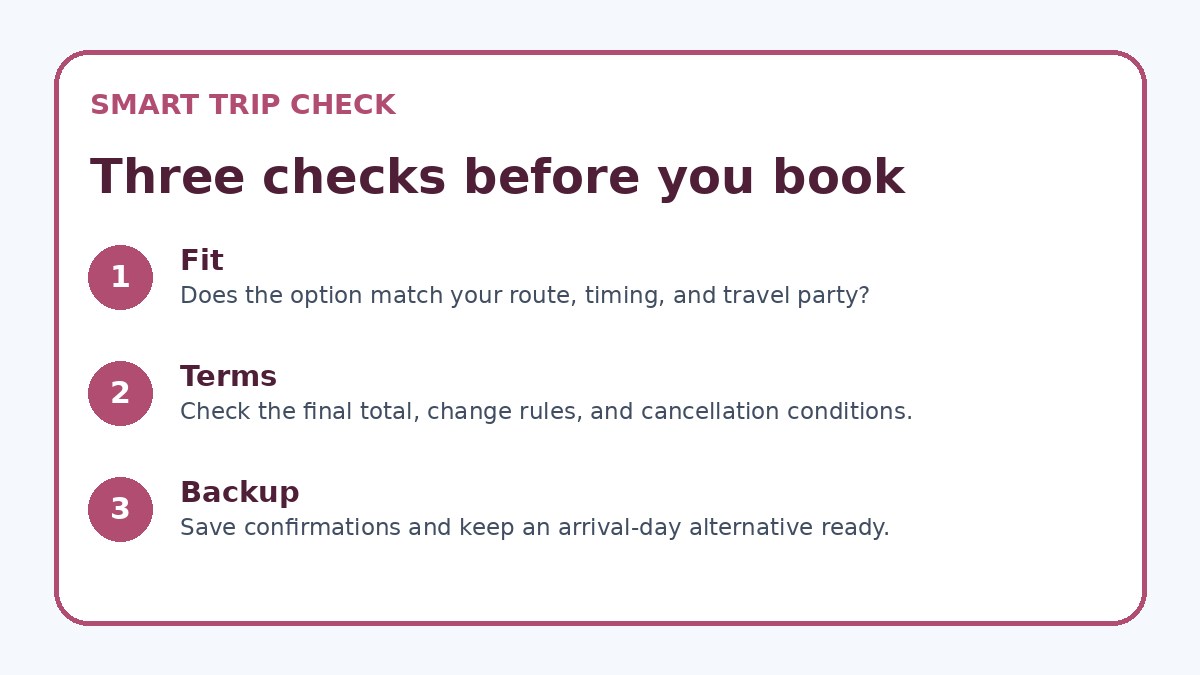
- Open the final booking page for every promising itinerary and verify exact baggage size, weight limits, and fees.
- Compare total door-to-door cost including transfers, overnight needs, and potential taxi fares with bulky luggage.
- If carrying oversized items, confirm whether pre-notification or special booking is required and arrange it in advance.
- Choose arrival times that align with public transport hours or book a pre-arranged transfer to avoid late-night taxi premiums.
What to verify on the booking page and at arrival
Before you commit, verify these specifics on the provider’s final booking page: exact weight and dimension limits for checked and carry-on items, whether bulky or sporting equipment needs pre-notification, the exact cost and timing for adding extra bags, and whether baggage rules differ for different fare classes on the same itinerary. If your trip includes partner-operated legs, open the partner’s baggage policy too. For train tickets, check luggage restrictions on each operator and whether oversized items require a reservation or incur a supplementary fee.
At arrival, prioritize transport choices that match your luggage and energy levels—public transit can be cheap but crowded, while pre-booked private transfers add convenience. If you arrive off-hour, confirm hotel late-check-in policies to avoid paying for an unused night. Keep receipts for any unexpected baggage charges or transfer costs, and photograph your baggage tags and booking confirmations in case you need to dispute fees or file a claim. These checks reduce unpleasant surprises and help you pick the flexible-date option that truly fits your needs.
Frequently asked questions
How many days of flexibility should I search to see meaningful baggage savings?
Aim for a window of three to seven days around your ideal travel dates. A ±3-day range often surfaces alternative fares or fare classes with different baggage inclusions; a longer window up to seven days increases the chance of finding a day that crosses from peak to off-peak pricing. The marginal benefit diminishes past a week for most routes, but if your schedule allows it, expanding the window helps identify cheaper pre-purchase baggage options or different arrival airports that better accommodate extra luggage.
If a cheaper flexible-date ticket has a late arrival, is it still worth it with heavy bags?
Late arrivals can negate fare savings because of higher transfer costs or the need to pay for an extra night at a hotel. With heavy or bulky luggage, late-night public transport may be impractical and taxis more expensive. Balance the fare savings against realistic transfer options and physical effort—sometimes paying a little more for an earlier arrival or for a direct option reduces overall stress and outlays. Estimate transfer costs and factor in whether you’ll need an overnight stay before deciding.
What should I check when an itinerary uses multiple carriers or operators?
For mixed-operator itineraries, check the baggage policy for each carrier involved, because allowance may not transfer across segments. Verify who issues the ticket and whether interline baggage rules apply; if not, you may need to collect and recheck luggage during a connection. Also confirm transfer time is sufficient for handling bags, and read the final booking page to see whether partner segments impose different size or weight limits. If policies conflict, consider alternative dates or a single-carrier option for simpler baggage handling.
Final planning note
Flexible dates are one of the most useful levers you can pull when traveling to London with extra luggage. They let you compare fare classes, different airports or rail terminals, and arrival times that materially affect baggage allowances and transfer costs. The real work is in comparing total door-to-door cost and inconvenience: use flexible searches to identify candidate dates, verify baggage rules on the final booking page, and factor in transfer logistics and potential overnight needs. With those checks, a small date shift can reduce fees and physical hassle, making your London arrival smoother and less costly overall.
Continue planning
Check current options and final conditions
Use the provider page to confirm live availability, the final total, cancellation terms, and every condition that matters to your trip.
This evergreen planning guide was created with AI-assisted drafting and a structured quality review. It does not display live prices, schedules, availability, visa guidance, or provider rankings. Verify current details before booking. Some links are affiliate links; we may earn a commission at no additional cost to you.