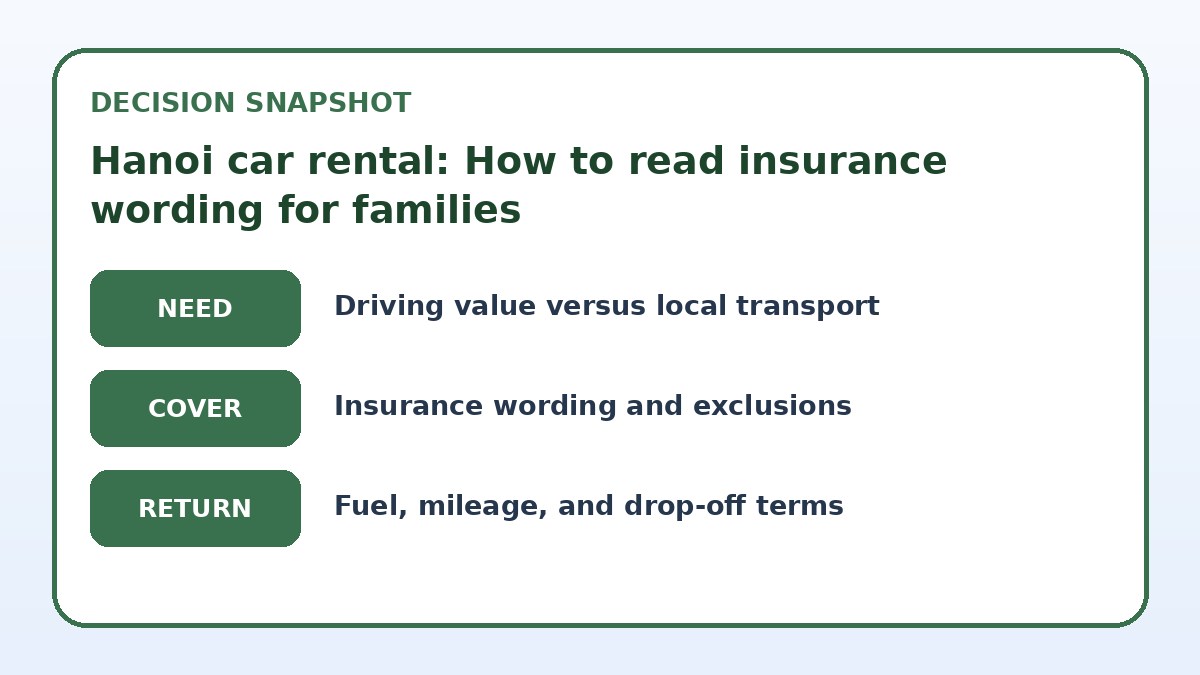
If your family plans to rent a car in Hanoi, the single most useful thing you can do before picking a vehicle is learn the insurance wording. The policy language tells you who is insured to drive, what counts as damage, whether you’re liable for third-party claims, and how an excess (deductible) works—details that matter more when you have children, child seats, and luggage to protect. Focus first on three items: who is named as an additional driver and whether family members can be added without extra fees; whether child seats are covered for loss or damage; and the difference between loss/damage waivers and third-party liability. After the practical checklist I’ll explain the tradeoffs and how to compare policies so your family can choose protection that matches your comfort level and planned driving around Hanoi.
See current options before you compare the details
Availability and final conditions change. Open Trip.com now or keep reading for the practical comparison.
Who counts as a covered driver and why that matters
Insurance wording often distinguishes between the main renter, named additional drivers, and authorized drivers. For families, this matters when a partner, older teen, or grandparent may need to drive during the trip. Some contracts allow any licensed adult traveling with the vehicle to drive; others require each driver to be explicitly named, sometimes for a fee. A policy that requires naming drivers increases paperwork and potential extra costs, while a policy that allows household or family members to drive can be more flexible.
When reading the clause, look for age limits, license requirements (domestic versus international license), and any penalties for unauthorized drivers. Also check how quickly you must add a driver after an incident—some providers void cover if an unauthorized driver caused damage. If you plan to switch drivers during long day trips or expect your teen to take short drives, choose wording that includes multiple named drivers or broad 'family member' coverage to avoid claim disputes.
Collision, theft, and what exclusions commonly mean
Collision Damage Waiver (CDW) or Loss Damage Waiver language reduces or removes your financial responsibility for damage to the rental car but rarely eliminates all risk. Wording will list exclusions—common ones include damage to the roof, undercarriage, tires, rims, windscreen, and damage from off-road use or driving on closed roads. Families should pay attention to exclusions that matter for typical family activities, such as driving up steep rural roads, parking on uneven surfaces, or beachside stops where underbody damage or sand-related wear can be excluded.
Theft coverage is usually separate and often depends on whether the vehicle is locked and keys secured; some insurers deny theft claims if keys are left inside a vehicle or if the renter ignored clear security advice. Read how the policy defines theft and the obligations it places on you after a theft—filing a police report, notifying roadside assistance, and preserving evidence. That wording affects whether a lost or stolen child seat or luggage inside the car might be covered. If you have concerns, ask your rental agent to clarify and put their explanation in writing on the rental agreement.
| Approach | Best for | Tradeoff to check |
|---|---|---|
| Minimal included cover with named drivers only | Travelers wanting lower base rental rates and willing to add named drivers individually. | Lower upfront cost but potential gaps if someone else in the family drives without being named; more admin and fees. |
| Broad family-driver wording and basic CDW | Families planning shared driving with children and occasional longer day trips. | More flexibility for drivers but still possible exclusions like windscreen and underbody damage. |
| CDW plus reduced excess and theft protection | Families seeking lower financial exposure for vehicle damage or theft incidents. | Higher rental price or optional daily fees; read whether reductions exclude specific items like tires or seats. |
| Top-up third-party liability and medical cover | Families who want stronger protection for others' injuries or expensive third-party claims. | Adds complexity and cost; verify coordination with your travel or health insurance to avoid overlapping or missing coverage. |
Ready to check the option that fits your plan?
Use your exact dates and traveler details so the provider page can show the current total and conditions.
Third-party liability and medical coverage basics
Third-party liability covers injury or property damage you cause to others while driving. Wording will show limits per person and per claim, and sometimes separate property damage sub-limits. For families traveling in Hanoi, where traffic conditions are dense and minor collisions are possible, check whether the policy covers bystanders, passengers, and other vehicles adequately. Some local policies provide modest limits compared with international standards, so it’s essential to confirm the level of cover and whether you must top up with supplemental liability insurance.
Also read how passenger medical payments are handled. Some policies include personal accident coverage for passengers; others require separate travel insurance. If a child is injured in a minor crash, the wording will dictate which hospital bills the rental policy pays versus what your travel or health insurance must cover. Cross-reference the rental wording with your family’s health or travel insurance so there are no surprise gaps when seeking medical attention after an accident.
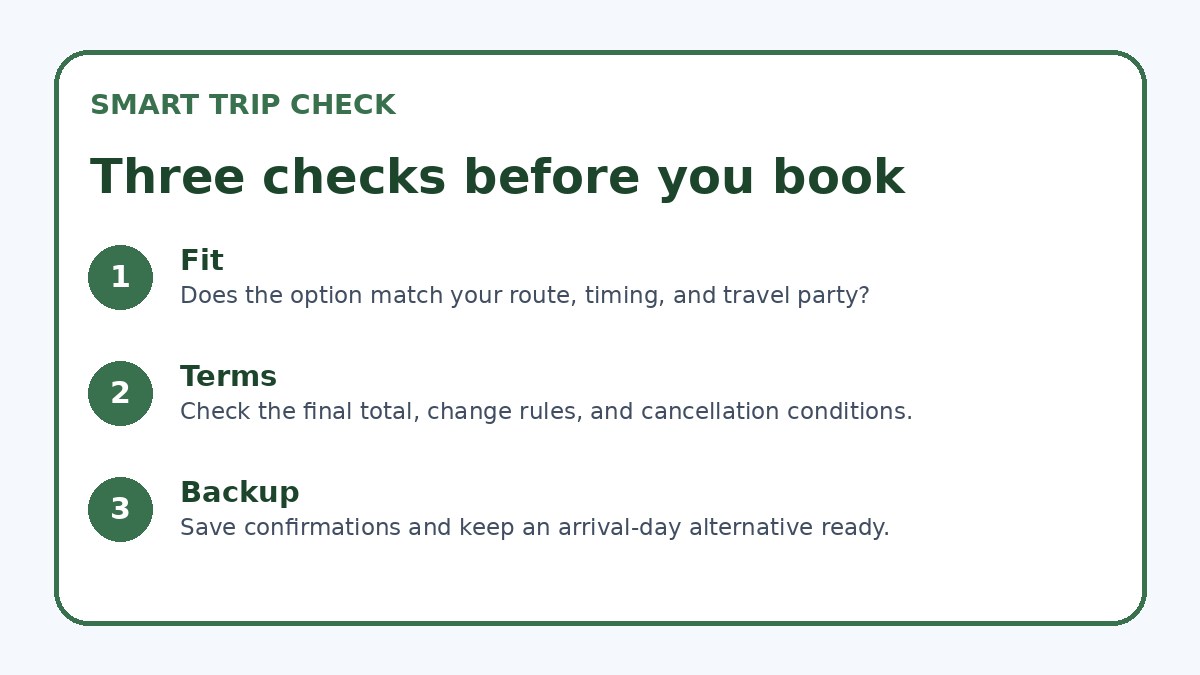
Before you book
- Confirm who counts as a covered driver (named drivers, family members, or authorized drivers) and add any additional drivers in advance if needed.
- Read the CDW and theft wording line by line to spot exclusions for windscreen, tires, undercarriage, and passenger property.
- Check the excess amount and whether an optional excess reduction removes or only reduces the deductible; request written confirmation.
- Verify third-party liability limits and whether passenger medical payments are included or require separate travel insurance.
- Ask the rental provider how deposits and holds are handled and whether paying with debit versus credit card affects coverage.
- Save screenshots or a PDF of the final booking page and the insurance wording; keep the agent’s written clarifications with your rental contract.
Excess, deposit, and optional reductions explained
The excess (or deductible) is the amount you’re liable for when you make a claim. Wording will explain whether the excess applies per event, per claim, or per category of damage. For families, a high excess can be a real budget risk if you need repairs after a minor scrape. Optional excess-reduction products are often available from the rental company, but check whether the option actually removes the excess or merely reduces it and whether the reduction excludes certain damage categories like windscreen or tires.
Also verify deposit and hold terms in the wording—many contracts require a security hold on a credit card for the excess amount. Some providers accept debit cards or cash for a deposit, but the wording will state whether this affects cover; often using a debit card changes the insurer’s position. Before booking, confirm on the provider’s final booking page what payment methods apply to the deposit and whether an optional waiver is honored when paying with your chosen card.
Frequently asked questions
Can I rely on my personal car insurance or credit card when renting in Hanoi?
Possibly, but wording differs. Some personal auto policies exclude foreign rentals or require a specific endorsement; many credit cards offer rental protection only when you decline the rental company’s CDW and pay with that card. For families, that can be risky if the card cover has driver restrictions or excludes passengers. Verify the card’s rental insurance wording, confirm whether it applies in Vietnam, and check driver age or nationality limits. Always compare the card’s exclusions to the rental contract’s exclusions and ask the card issuer in writing if family members and additional drivers are covered.
Are child seats and their damage usually covered by rental insurance?
Not always. Policies rarely list child seats as automatically covered for loss or damage; when they do, the wording will define conditions—such as secure installation and when theft occurs from a locked vehicle. More commonly, damage to child seats falls under the renter’s responsibility unless you purchased a specific rental provider add-on. If child seat protection matters to you, request explicit wording from the rental company or consider using your own seat and confirming whether its damage would be covered by any excess-reduction option.
If an uninsured driver causes damage, will family coverage protect me?
Policy wording will dictate responsibility. Many contracts void cover if the person driving was unauthorized or unlicensed. Even family-member clauses can have exceptions for intoxication, banned drivers, or drivers under a certain age. If an uninsured or unauthorized driver causes damage, the renter (usually the person whose name is on the contract) may be held liable. To avoid this, add any likely drivers to the contract, understand the definition of unauthorized driving, and check whether optional protections still apply in such cases.
Final planning note
Understanding insurance wording before you finalize a Hanoi car rental is a small time investment that prevents big headaches later. For families, the critical parts are who is permitted to drive, what damage categories are excluded, the size and application of the excess, and how third-party and passenger medical coverage interact with your existing travel or health insurance. Use the checklist to compare options, ask clear written questions to the rental provider, and keep copies of the final booking wording. If you want to compare live offers and current terms, Trip.com can be a place to start—but always confirm the exact insurance wording and deposit rules on the provider’s final booking page before you commit.
Continue planning
Check current options and final conditions
Use the provider page to confirm live availability, the final total, cancellation terms, and every condition that matters to your trip.
This evergreen planning guide was created with AI-assisted drafting and a structured quality review. It does not display live prices, schedules, availability, visa guidance, or provider rankings. Verify current details before booking. Some links are affiliate links; we may earn a commission at no additional cost to you.