If you’re arriving in Paris with extra or bulky luggage, the fastest way to make a smart transfer choice is to match your constraints: time, mobility, budget, and how much you want to lift. Public transit (RER, buses, metros) can be the cheapest and sometimes quickest option if you’re near a direct RER connection and willing to wheel bags across stations. Private transfers — taxis, rideshares, or prearranged cars — reduce handling, give door-to-door service, and simplify connections when you have heavy or many bags. This article lays out the practical tradeoffs and decision criteria for travelers who need to move through airports and into central Paris, explains how to compare options for your arrival time and terminal, and lists exactly what to verify on provider booking pages so you don’t discover limits after you buy.
See current options before you compare the details
Availability and final conditions change. Open Trip.com now or keep reading for the practical comparison.
Practical advantages of public transit in Paris with luggage
Paris’s public network can work well for travelers with extra suitcases when a direct airport rail link aligns with your arrival terminal and final location. RER trains and some express buses drop you close to major stations where hotel check-in or luggage storage is often available. Platforms and trains accept standard suitcases, and rolling bags fit in most carriages; peak-time congestion is the main issue to consider. If your route avoids multiple changes, public transit minimizes traffic risk and is predictable because it follows published timetables.
However, public transit requires handling your bags through station stairs, escalators, or elevators that may be crowded or out of service. You should inspect station layouts and elevator availability for the specific stations you’ll use, and allow extra time for transfers. For journeys involving a metro change or short walk with bags, choose stations that have step-free access or ask staff where the elevator is. Public transit is best when you can manage your baggage physically and want the resilience of a schedule-based connection.
When private transfers make sense for extra baggage
Private transfers remove most of the physical and logistical friction: the driver meets you at arrivals, helps load and unload, and drops you off directly at your door. This reduces the number of times you must lift or roll heavy cases, which is especially valuable if you travel with fragile items, bulky sports equipment, or several large suitcases. For groups or families, a single vehicle can be simpler and may cost little more than multiple transit fares when you factor luggage and convenience.
Keep in mind that private vehicles can be affected by Paris traffic and roadworks; travel time is less predictable than rail. When booking a private transfer, verify on the provider’s booking page the vehicle size, maximum luggage count and dimensions, meeting point details at your arrival terminal, any waiting-time policy, and whether child seats or accessible vehicles are available. If you need to book a specific vehicle type (van, estate car, or wheelchair-accessible vehicle), confirm the provider’s exact vehicle assignment before you finalize payment.
| Approach | Best for | Tradeoff to check |
|---|---|---|
| Public transit (RER, bus, metro) | Travelers with manageable luggage and a direct rail link to their neighborhood | Requires carrying bags across platforms and possible elevator or transfer issues |
| Taxi or rideshare | Passengers wanting door-to-door service and minimal handling for several suitcases | Subject to traffic delays and needs clear terminal pickup instructions |
| Prebooked private car/van | Groups, families, or travelers with oversized or many pieces of luggage | Higher upfront cost and must confirm vehicle size and luggage capacity |
| Meet-and-greet with porter service | Those prioritizing assistance with heavy or awkward items from curb to hotel door | May involve separate fees and requires booking from a reputable provider |
Ready to check the option that fits your plan?
Use your exact dates and traveler details so the provider page can show the current total and conditions.
How to compare total travel time, cost, and effort
Compare door-to-door time, not just scheduled ride time. For public transit, add walking time to and from stations, waiting for the next service, and time to manage luggage through transfers. For a private transfer, include driver waiting time, possible traffic delays, and the time the driver needs to reach the terminal’s pickup point. If you’re on a tight arrival window or connecting to a timed activity, simulate both options using realistic buffers: elevators or crowds for transit, and urban congestion for car travel.
Cost comparison should include incidental effort: the physical strain of carrying bags, the cost of extra metro/RER tickets or luggage supplements if applicable, and tipping or airport pickup fees for private rides. If your journey requires a lot of walking or multiple changes, a private vehicle can save time and energy even if its headline fare is higher. Conversely, if you land at a terminal with an excellent direct rail link to your neighborhood, public transit could be simpler and quicker despite being less private.
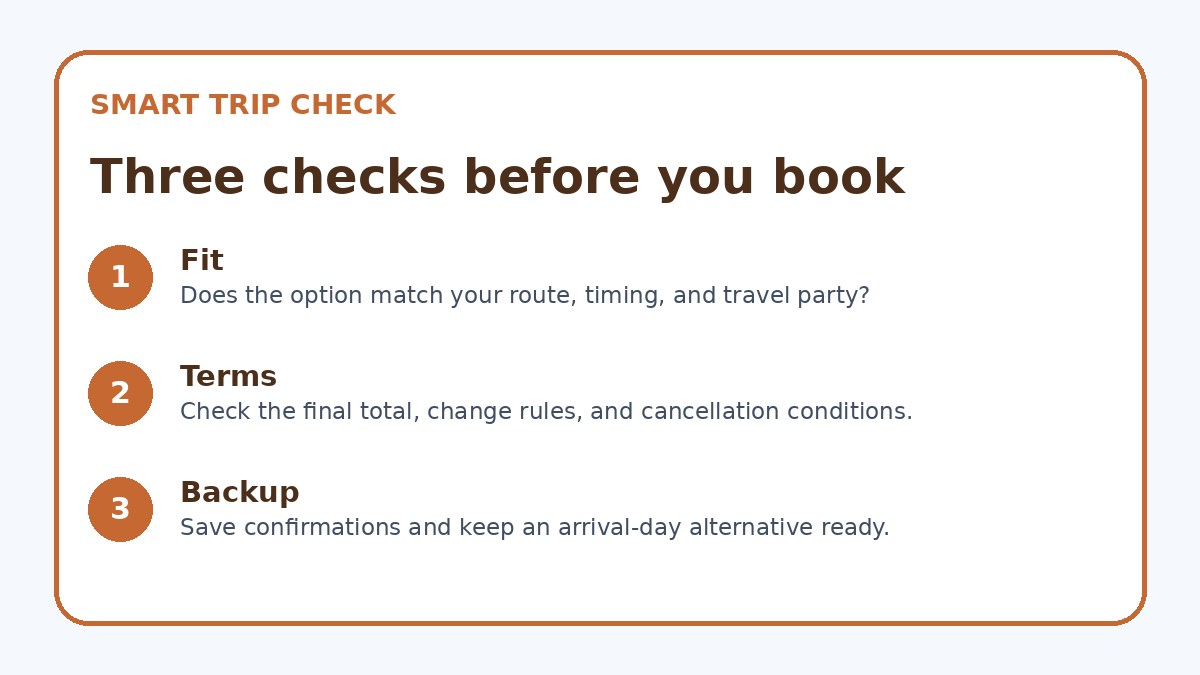
Before you book
- Confirm which terminal you arrive at and which public rail or bus lines serve that terminal on your travel date.
- Measure or list your luggage (count and largest dimensions) and compare it to the provider’s stated luggage allowance.
- If booking private, request the vehicle type you need (sedan, estate, van, accessible) and get written confirmation.
- Check the pickup meeting point and how the driver will identify you; save the driver's contact number after booking.
- If using public transit, map step-free routes between arrivals, platforms, and your final station and add time cushions.
- Ask about waiting-time, cancellation, and reroute policies on the booking page and keep the confirmation email accessible.
Practical checks before booking any transfer
Always verify specifics that change frequently on the provider’s final booking page. For public transit, check which terminal connects to which RER line or bus and whether there are scheduled engineering works on your travel date. For private transfers, confirm the driver meeting point, how they identify you, luggage limits, vehicle type, and the cancellation and waiting policies. If the provider has a phone or local office contact, save it to handle any arrival deviations.
If accessibility or special luggage handling matters—such as bikes, golf bags, or oversize items—ask the provider to confirm acceptance and any packing requirements. If you plan to use train options, compare direct versus connecting routes and evaluate whether a single-ticket journey is possible. You can check availability and up-to-date conditions on platforms like Trip.com as an option, but always rely on the final provider pages and confirmation emails for the definitive booking terms.
Frequently asked questions
Can I use regular taxis in Paris if I have oversized luggage?
Yes, regular Paris taxis can usually carry oversized luggage but space is limited in standard sedans. If you have several large suitcases or items like bicycles, it’s better to request a larger vehicle or a van when booking. When hailing a taxi on the curb, tell the driver about the luggage first; drivers may refuse if the load prevents safe travel. For certainty, reserve a prebooked vehicle that explicitly lists luggage capacity on the provider’s booking page and confirm how luggage will be loaded.
Are RER trains and metro stations accessible for travelers with heavy suitcases?
Some RER stations and newer metro stations have elevators and step-free access, but many Paris metro stations have stairs and limited accessibility. RER lines that serve airports often provide more space for luggage than metro cars, but you may still need to navigate platforms and stairs. Before relying on public transit, check station accessibility information for your specific arrival and destination stations, and allow extra time in case elevators are out of service or crowds slow your progress.
How far in advance should I prebook a private transfer for arrivals with lots of baggage?
Prebooking a private transfer is sensible when you need a guaranteed vehicle size, assistance, or a specific pickup arrangement. How far ahead depends on season and demand—busy periods often book earlier—so reserve as soon as your arrival time and terminal are confirmed. When you book, verify the supplier’s terms on the booking page: look for vehicle assignment guarantees, luggage limits, and any policies about changes or late arrivals to avoid surprises at the airport.
Final planning note
Choosing between public transit and a private transfer in Paris when you have extra luggage comes down to physical effort, predictability, and door-to-door convenience. If you can navigate stations and want to avoid traffic, public rail or bus links can be efficient; if you need minimal handling, specific vehicle size, or direct assistance, a private car or porter service is usually worth the extra steps to confirm details. Always check the provider’s final booking page for luggage policies, meeting points, vehicle specifications, and waiting or cancellation terms. With those facts in hand, pick the option that matches your group size, luggage profile, and tolerance for lifting and walking.
Continue planning
Check current options and final conditions
Use the provider page to confirm live availability, the final total, cancellation terms, and every condition that matters to your trip.
This evergreen planning guide was created with AI-assisted drafting and a structured quality review. It does not display live prices, schedules, availability, visa guidance, or provider rankings. Verify current details before booking. Some links are affiliate links; we may earn a commission at no additional cost to you.