
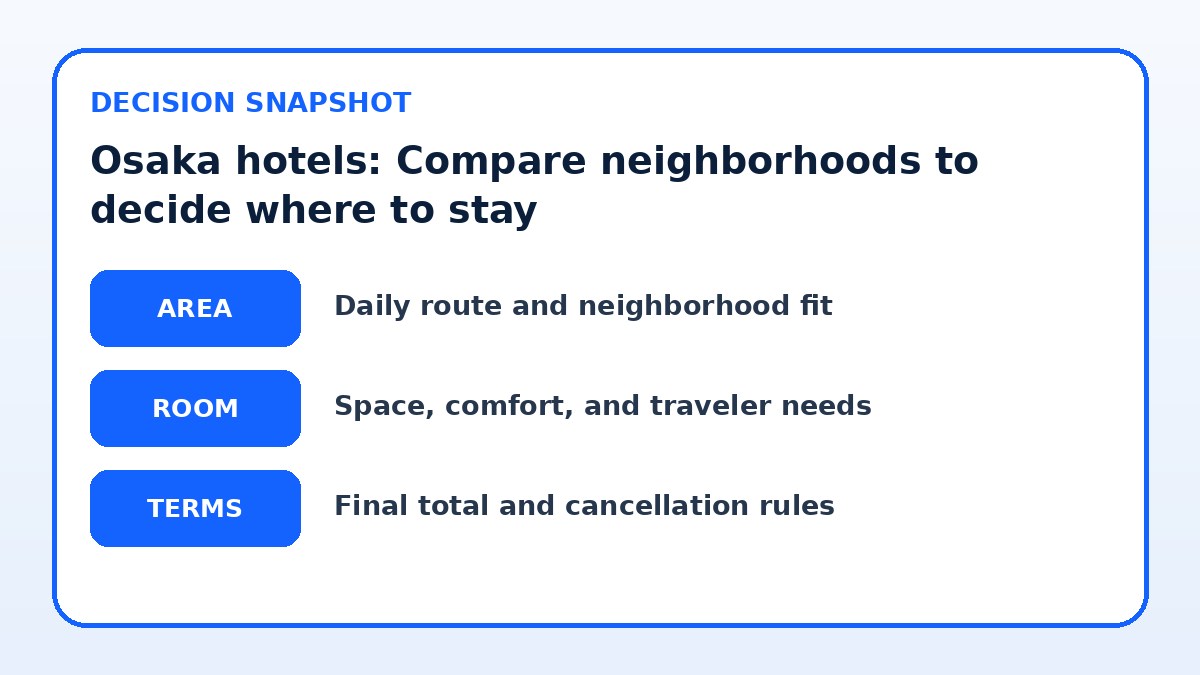
Practical answer: if you want nightlife and neon, stay in Namba; for quick train links and a mix of business and sightseeing, choose Umeda; for a calmer, traditional feel near Osaka Castle, book in Temmabashi or Tenma; for families and aquarium access, consider Minato (Osaka Bay). Those choices balance convenience, atmosphere, and walking distance to top sights. This article compares the top areas by what they offer first-time visitors — convenience, food, nightlife, and transport — and explains the tradeoffs to help you choose a hotel that fits your priorities. Read the quick comparison, then use the decision criteria and checklist to confirm practical details before you reserve. When you check specific hotels, verify current room types, cancellation rules, and exact transit connections on the provider’s booking page (Trip.com is one place to compare availability).
Namba: best for food, nightlife, and first-time excitement
Namba is the district most visitors picture when they think of Osaka: bright signs, endless restaurants, and Dotonbori’s canal-side restaurants and bars. Staying here means you can walk to street-food stalls, izakaya rows, and entertainment complexes without relying on trains late at night. Hotels range from compact city rooms to midscale international chains concentrated around Namba Station and Nankai lines. This area buzzes late, so it’s ideal if your priority is sampling Osaka’s food scene, trying takoyaki and okonomiyaki, and being in the center of evening activity.
Tradeoffs are straightforward: rooms tend to be smaller and noise levels higher than in quieter districts, and some attractions like Osaka Castle or Universal Studios Japan require a transfer. If you plan many late nights or want immediate access to variety in dining and nightlife, Namba saves transit time. If you prefer calm at night or a larger hotel room for work or family time, compare options in nearby Umeda or Tennoji before booking. Always check exact walking routes and station exits on the hotel listing so you know which streets you’ll use at night.
Umeda (Kita): best for train connections and hotel choice
Umeda, the northern downtown area, is the city’s transportation hub with multiple subway lines, JR lines, and private rail services converging near Osaka Station. That makes it the most practical base if your itinerary includes day trips to Kyoto, Kobe, or Nara, or if you prefer to reach Kansai Airport via an express train connection. Hotels here include a broader range of business and upscale properties and often slightly larger rooms than central Namba, plus easy access to department stores, observatories, and office districts.
The tradeoff is atmosphere: Umeda feels busier and more commercial by day and quieter by night compared with Namba’s neon and street food. It’s a strong choice for visitors who prioritize efficient travel and a wide hotel selection over immediate nightlife on the doorstep. If you need specific train services or airport transfers, verify which lines serve the hotel and whether a short walk or shuttle is required. Confirm on the booking page which station exit the hotel is nearest to and whether luggage service or early check-in options are available.
| Approach | Best for | Tradeoff to check |
|---|---|---|
| Central nightlife base (Namba) | Food-focused travelers and nightlife seekers | Smaller rooms, more noise, longer transfers to northern sights |
| Transport hub base (Umeda/Kita) | Visitors prioritizing train connections and airport access | Commercial atmosphere, less evening street life |
| Sightseeing and calm (Temmabashi/Tenma) | Those who want proximity to Osaka Castle and quieter nights | Fewer nightlife options and occasional extra transfers |
| Family and attractions (Osaka Bay/Tempozan) | Families and aquarium-focused visits | Farther from central shopping and nightlife; longer transit to central stations |

Temmabashi / Tenma: best for sightseeing and quieter evenings
Temmabashi and nearby Tenma offer proximity to Osaka Castle, riverside parks, and quieter neighborhoods with small restaurants and cafés. These areas are often overlooked by visitors focused on nightlife, which makes them pleasant for travelers who want to explore castle grounds, museums, and leafy promenades during the day then return to a peaceful hotel. Accommodations here tend to be smaller boutique properties or business hotels that appeal to couples and culture-minded travelers.
Choosing this area means trading instant nightlife and major shopping for a calmer stay and shorter walks to historic sites. Transit connections are good but typically require one or two transfers to reach Umeda or Namba. If your priority is daytime sightseeing, this can reduce daily travel; if evenings out are important, plan one or two nights in a livelier district. For any property, check the exact rail lines and transfer steps listed on the hotel page, and verify how late trains run near your stay if you plan late returns.
Before you book
- Confirm the exact station name and exit nearest the hotel on the booking page so you know walk routes and transfer needs.
- Verify room size, bed configuration, and whether rollaway or family rooms are available before finalizing a booking.
- Check the hotel’s cancellation policy, early check-in options, and whether luggage hold is provided for flexible arrival times.
- Compare how long typical transfers take by train between your hotel and major sights (Osaka Castle, Universal Studios, Dotonbori) using official transit timetables.
- If airport logistics matter, confirm the nearest express train or shuttle stops and whether the hotel offers an airport transfer service.
- Read recent guest comments about noise, cleanliness, and staff helpfulness on the provider’s booking page to set realistic expectations.
Minato (Osaka Bay) and Tempozan: best for families and aquarium visits
Osaka Bay, including the Tempozan area with the Kaiyukan Aquarium and nearby shopping complexes, concentrates family-friendly attractions. Staying here puts you a short walk from the aquarium, cruise piers, and the Ferris wheel, which is convenient for families with young children or visitors who want easy access to daytime waterfront entertainment. Hotels here often offer larger family rooms and resort-style amenities that make long days with children easier to manage.
The downside is distance from central shopping and nightlife; reaching Namba or Umeda requires a longer ride by subway or tram. If your itinerary centers on Osaka Bay attractions or you value larger rooms and child-friendly services, this area reduces daily logistics. For mixed itineraries, consider splitting your stay or choosing a hotel with good transit links to central Osaka. Always confirm on the booking page what transit stops are nearest, whether the property provides family extras, and whether luggage storage is available to ease transfers.
Frequently asked questions
Which Osaka area is best if I have only two full days?
If you have two full days, choose your base according to priorities: stay in Namba to maximize food and nightlife with short walking access to Dotonbori and day trips by train; choose Umeda if you want efficient rail links to squeeze in a day trip to Kyoto or Kobe; or pick Temmabashi if you prefer waking near Osaka Castle for a concentrated sightseeing day. For a mix, stay in Umeda or Namba and plan an early morning visit to the castle, then an evening in Dotonbori. Before booking, verify nearby train times and the hotel’s proximity to the station to avoid losing time on short trips.
Is it worth splitting my stay between two neighborhoods?
Splitting a stay can work well if your interests are split—one or two nights in Minato for aquarium and family time, then the remainder in Namba or Umeda for nightlife and transit convenience. Consider luggage logistics and the extra time spent checking in and out; if you have heavy bags or short stays, the time cost might outweigh the benefit. Use luggage storage services or hotels that hold bags for you on the booking page. When planning, map travel times and train transfers to confirm the split reduces daily transit rather than adding complexity.
How do I balance room size and location when many Osaka hotel rooms are small?
Prioritize what you’ll use most: if you’ll be out all day and only need a place to sleep, a centrally located compact room in Namba or Umeda may be more convenient; if you need workspace or family space, seek hotels advertising larger rooms or family configurations, often found near Umeda or Tempozan. Check the provider’s photos and square footage or bed layout details when booking. Read guest reviews for realistic room-size impressions and confirm whether extra amenities (small kitchenettes, luggage storage) are available if space is a concern.
Final planning note
For first-time visitors, pick the area that matches your priorities: Namba for food and nightlife, Umeda for transport convenience and hotel variety, Temmabashi/Tenma for proximity to historical sights and quieter nights, and Osaka Bay for families and aquarium access. Each area offers a different rhythm and tradeoff between atmosphere and transit time. Use the checklist to verify station exits, room sizes, and cancellation terms on the hotel’s booking page before you commit. If you want a quick comparison of current availability or to view multiple properties at once, you can check Trip.com, but always confirm specific room details, cancellation rules, and exact transit links on the provider’s final booking page.
Continue planning
Check current options and final conditions
Use the provider page to confirm live availability, the final total, cancellation terms, and every condition that matters to your trip.
This evergreen planning guide was created with AI-assisted drafting and a structured quality review. It does not display live prices, schedules, availability, visa guidance, or provider rankings. Verify current details before booking. Some links are affiliate links; we may earn a commission at no additional cost to you.