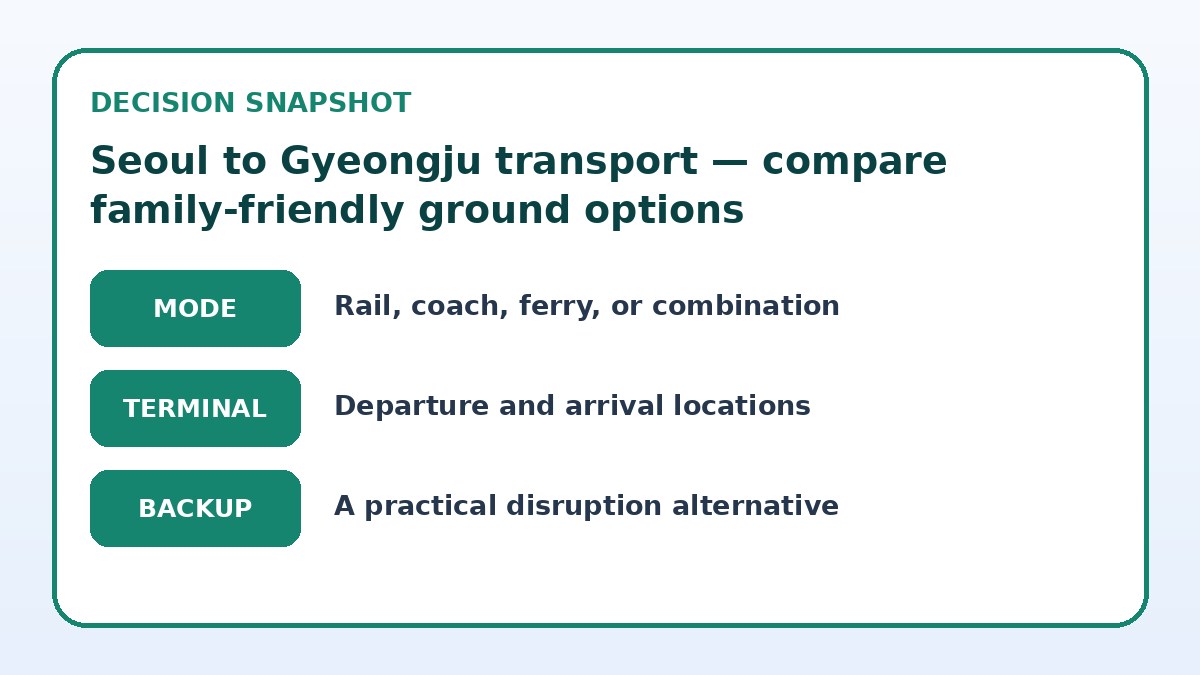
Practical answer first: for most families building a multi-city ground-transport plan from Seoul to Gyeongju, prioritize a high-speed or intercity train for the backbone segment, add regional buses or local trains for intermediate stops, and reserve a rental car only for flexible rural detours where public transit is limited. Start by mapping must-see stops between the cities, then layer realistic travel legs with buffer time for children, meals, and rest breaks. Choose accommodations near the stations you’ll use to shrink transfer time, and pack a small bag for day stops while keeping main luggage in station lockers or hotel storage where possible. Read the provider’s booking page to confirm luggage rules, seat-reservation options, and cancellation policies before you finalize plans.
See current options before you compare the details
Availability and final conditions change. Open Trip.com now or keep reading for the practical comparison.
Choosing the backbone: train versus car for families
For families, the backbone choice determines rhythm. Trains (high-speed or intercity) usually offer predictable travel times and less stress than driving in unfamiliar traffic; kids can move, use screens, nap, or visit the café car. Train stations in Korea also connect well with local buses and subways, making it easier to reach central accommodations without long taxi rides. Use the backbone as the day’s fixed point: build your schedule from departure and arrival station times rather than flexible road estimates to avoid underestimating transfer time with children and luggage.
A rental car gives total flexibility for off-the-beaten-path attractions, changing the route on the fly, and carrying child seats or large gear. Yet driving adds fatigue for the parent(s) who navigate, and you’ll need to factor parking, tolls, and narrow rural roads into planning. If you choose driving for specific segments, consider a hybrid plan: train into a hub city, pick up a rental there for an overnight loop, then return the car and continue by train or bus. That mixes comfort with flexibility while limiting driving hours for tired parents.
Designing multi-city legs and family-friendly stops
Break the Seoul–Gyeongju route into manageable legs with one longer transfer day and shorter exploration days. Aim for a single long travel segment no longer than a typical school day; follow that with rest or low-effort sightseeing so children can recover. Select stops that offer straightforward attractions — a science museum, a park with playgrounds, or a historical village with short walks — that won’t require prolonged attention. Consider staying in towns with station-area hotels or pensions so you can arrive late without extra transfers, and factor in grocery or convenience stores for quick snacks and supplies.
When choosing must-see sites, match activity intensity to kids’ ages: toddlers need playgrounds and naps, school-age kids may enjoy interactive museums or hands-on cultural centers, and teenagers might prefer scenic walks or food markets. For each stop, list two backup activities in case of rain or fatigue. Also plan meal windows around travel legs: book stations or nearby restaurants known for kid-friendly seating or quick service, and keep water and snacks accessible. That small buffer makes daily plans resilient to the unpredictability of family travel.
| Approach | Best for | Tradeoff to check |
|---|---|---|
| Train backbone with occasional taxis/local buses | Families prioritizing predictability, rest, and simple transfers | Less flexible for remote rural sites; requires good station-to-hotel planning |
| Hybrid: train plus short-term rental car | Families wanting flexibility for one or two rural day trips | Adds driving fatigue and extra logistics for car seats and parking |
| Full car-based road trip | Families wanting door-to-door control and varied rural stops | Greater driver responsibility, potential navigation stress, and parking costs |
| Bus backbone with local train connectors | Families on tighter budgets or visiting towns with strong bus networks | Longer, less predictable travel times and potentially more frequent stops |
Ready to check the option that fits your plan?
Use your exact dates and traveler details so the provider page can show the current total and conditions.
Transfers, luggage, and seat reservations for families
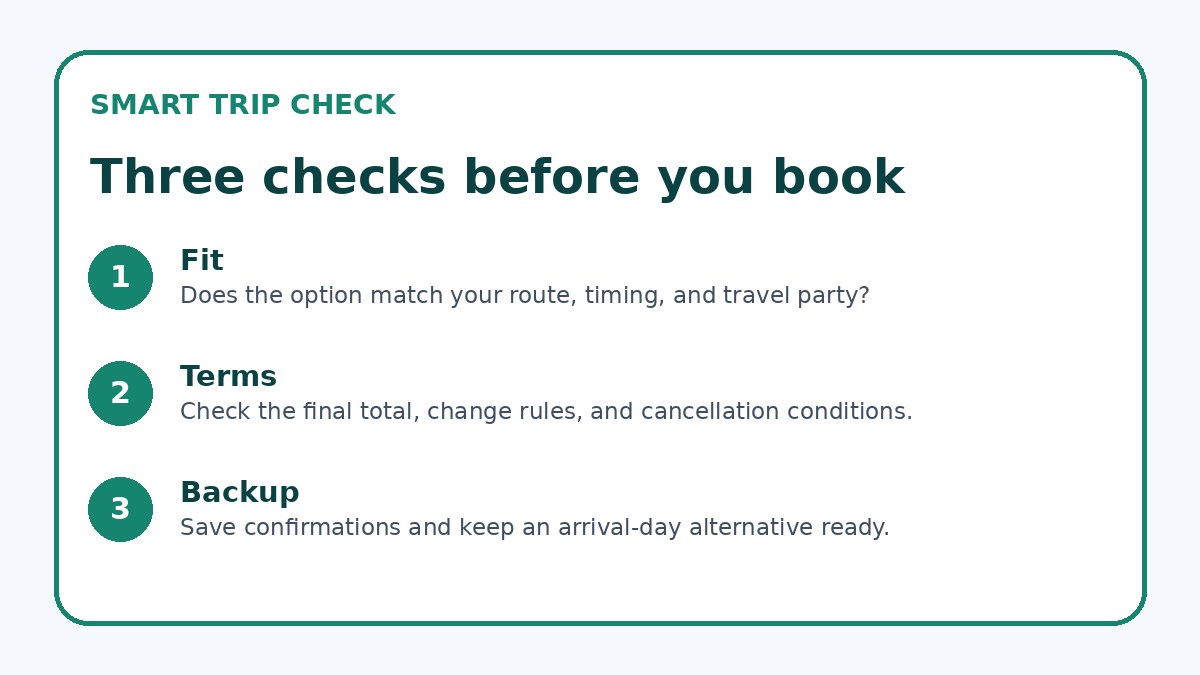
Minimize transfers by aligning accommodations with transport nodes. If you’re changing between train types or switching to a bus, allow at least an extra 30–60 minutes in your schedule to navigate platforms, restrooms, and ticket gates when traveling with children. Verify luggage allowances and carriage restrictions on the provider booking page before you go; some trains have limited overhead space or dedicated luggage areas. To reduce stress, keep a day bag with essentials (medications, snacks, spare clothes, small toys) and use lockers or hotel storage for larger suitcases during day trips.
Seat reservations and contiguous seats make long legs much easier for families. When booking, try to reserve adjacent seats and request assistance where available — on busy days, ticket agents can sometimes help place young children next to caregivers. If you plan to drive parts of the route, reserve child seats in advance through the rental company and confirm installation options. Always check cancellation and change policies on the booking pages so you can adapt if illness or sudden timing changes force a plan shift.
Before you book
- Map your route and mark 1–2 child-appropriate stops per travel day with nearby station addresses.
- Choose a backbone transport (train or bus) and reserve adjacent seats or buy tickets with family seating where possible.
- Pack a dedicated day bag with medication, snacks, spare clothes, and small entertainment items for each child.
- Confirm luggage rules, seat-reservation options, and cancellation/change policies on the provider’s official booking page.
- If driving any segment, reserve a child seat through the rental company and photograph its installation for peace of mind.
- Save screenshots and printed copies of ticket confirmations, station addresses, and hotel check-in instructions for quick access.
Practical checks and apps to keep the trip smooth
Before you leave, download transit apps and offline maps covering your route and the towns you’ll visit. Use apps that combine train timetables, local bus routes, and walking directions to coordinate connectors between stations and hotels. Keep screenshots of critical tickets and confirmation numbers in case of spotty service, and have backup payment methods accessible for taxis or on-board purchases. Also note station addresses and a local emergency contact — a hotel or embassy line — in a printed copy, which is useful when phone batteries are low or when a quick taxi driver instruction is needed.
On travel days, keep a simple checklist for each leg: bookings and ticket screenshots, children’s IDs and health information, snacks and entertainment, and a small first-aid kit. Teach older children how to stay near you in stations and how to identify station staff if they get separated. If you want to compare live availability and schedules when you’re ready to book, consider checking Trip.com as one data point, but always confirm details on the provider’s official page so you understand luggage, seat, and cancellation rules directly from the carrier.
Frequently asked questions
What is the easiest way to manage luggage when moving between Seoul and Gyeongju with kids?
Reduce transfer stress by storing large suitcases at your Seoul hotel or a station locker when taking day trips, and carry a compact day bag with essentials for children. Choose hotels near stations so you can drop bags quickly and walk short distances between transport and lodging. If you’ll be using both trains and a rental car, keep one helpful rolling bag per adult and distribute smaller items across backpacks to make transfers simpler and avoid managing many loose pieces.
When should a family consider renting a car instead of relying only on trains and buses?
Consider a rental car when your itinerary includes rural temples, coastal routes, or national parks with limited public transit connections, or when your group includes young children or elders who need door-to-door convenience. Use a car for specific multi-hour loops rather than the entire Seoul–Gyeongju corridor to reduce overall driving burden. Always check the rental company’s child-seat policies, parking availability at your planned stops, and whether your accommodation provides parking before deciding to add a car segment.
How much buffer time should families plan between connections and activities?
Build generous buffers: aim for at least 45–60 minutes between scheduled train arrivals and the next activity or departure to allow for restroom breaks, snacks, ticket gates, and walking between platforms. On days with a car pickup or longer station transfer, allow 60–90 minutes to account for traffic, parking, or unexpected delays. These buffers keep days flexible, let children rest between activities, and reduce the chance that a single delay will disrupt the entire family’s schedule.
Final planning note
A well-built Seoul to Gyeongju family ground-transport plan balances a predictable backbone (usually a train) with selective flexibility for local exploration. Start by choosing the spine of your trip, then design short, child-friendly legs and reserve seats near each other to reduce friction. Use station-area hotels and luggage storage to simplify transfers, and add a rental car only when public transit won’t reach your chosen rural sites. Confirm luggage and seat rules on provider booking pages, keep digital and printed confirmations, and build time buffers for rest and meals. With these steps you’ll craft an itinerary that handles surprises, keeps travel days manageable, and leaves room for the small, memorable discoveries that make family trips worthwhile.
Continue planning
Check current options and final conditions
Use the provider page to confirm live availability, the final total, cancellation terms, and every condition that matters to your trip.
This evergreen planning guide was created with AI-assisted drafting and a structured quality review. It does not display live prices, schedules, availability, visa guidance, or provider rankings. Verify current details before booking. Some links are affiliate links; we may earn a commission at no additional cost to you.