If you’re landing late in San Francisco for business—after a long day, tight connection, or an evening meeting—the two priorities are fast, reliable access to your room and enough rest to perform the next day. The practical answer: book a hotel near your arrival point (airport or train station) or in the neighborhood where your morning meeting is, confirm late-check-in and transport options, and pick a room type that maximizes sleep (quiet side, higher floor, or a business-friendly room). These choices trade off cost, travel convenience, and evening food options. This guide explains the decision criteria you’ll use at booking, the tradeoffs of different locations, and a checklist so you don’t get stuck outside reception or with no reliable ride.
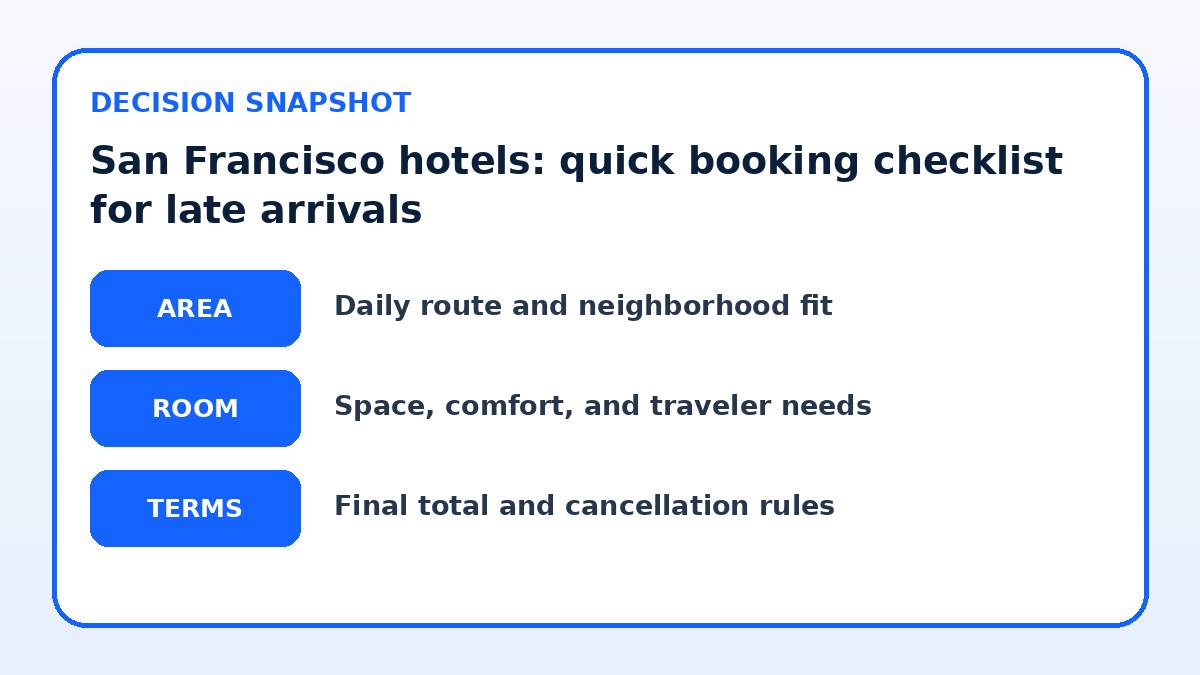
See current options before you compare the details
Availability and final conditions change. Open Trip.com now or keep reading for the practical comparison.
Location first: airport vs. downtown vs. meeting neighborhood
The single biggest decision after a late arrival is where to base yourself: near the airport, downtown, or in the neighborhood of your meeting. An airport-area hotel minimizes post-flight hassle if you want to sleep immediately and depart early. These properties often offer quick shuttle connections and are easier if your flight is delayed or you have heavy luggage. However, airport hotels can be less convenient for downtown meetings and offer fewer evening dining options. If your schedule begins late morning or later, staying closer to downtown or your meeting neighborhood reduces commute risk and gives more evening choices.
Downtown San Francisco gives access to restaurants, taxis, and public transit but can mean more noise and longer routes to the airport if you have an early departure. Neighborhood hotels—Embarcadero, SoMa, Union Square, or FiDi—offer direct proximity to different business districts; pick the one nearest your morning appointment. When evaluating locations, consider typical morning traffic flows and transit reliability for your travel time: a 20-minute midday ride could become 45 minutes during peak commute, so choose the spot that reduces the most morning unknowns.
Confirm check-in, keys, and late-arrival procedures
Before you book, verify the hotel’s late-check-in policy and the exact process for arrivals after hours. Some hotels have 24-hour desks; others use electronic key lockers, a night manager, or require an emailed arrival time. Ask for written confirmation or clear instructions in your reservation notes so you can access the room without calling repeatedly. If you rely on a third-party booking channel, verify the provider’s final booking page for the hotel’s stated check-in procedure and contact details—policies can vary between channels and direct bookings.
Also check what identification and payment the hotel needs at arrival. Some properties require a credit card for incidentals or pre-authorization, which can complicate a late arrival if your card is delayed or you prefer to pay cash. If you anticipate arriving very late, request the hotel to put instructions in your reservation or send a confirmation email with the front desk phone number and the pickup point for after-hours guests. That small step prevents fumbling for contact info in a tired moment.
| Approach | Best for | Tradeoff to check |
|---|---|---|
| Airport-area hotel | Very late arrivals or early flights | Less convenient for city meetings; fewer evening dining options |
| Downtown hotel (Union Square/SoMa) | Evening meetings and more dining/transport choices | Potentially noisier and longer route to the airport |
| Hotel near your meeting neighborhood | Minimizing morning commute and transit risk | May lack 24-hour front desk or airport shuttles |
| Boutique or small property | Personalized service and quieter rooms | Check-in flexibility and business amenities may be limited |
Ready to check the option that fits your plan?
Use your exact dates and traveler details so the provider page can show the current total and conditions.
Transport and arrival logistics to minimize uncertainty
Plan the last-mile from airport or station to hotel before you land. Identify the rideshare pickup zone, hotel shuttle stop, and the nearest public-transit option. San Francisco has multiple arrival points—SFO, OAK, and Amtrak—and each has different pickup procedures and nighttime service levels. If you prefer rideshares, confirm the pickup app’s designated zones and any airport surcharges that affect wait times. If the hotel offers a scheduled shuttle, make sure the final run aligns with your flight schedule; if it doesn’t, have a backup plan.
If you’re taking public transit late, check the last train or bus times and how long the walk from the stop to the hotel will be. For safety and speed, prefer well-lit walking routes or short taxi rides over long walks with luggage. If you anticipate delays, message the hotel with your flight number and new ETA so they can prepare for a late check-in. A brief confirmation reduces the stress of finding a room when you finally arrive.
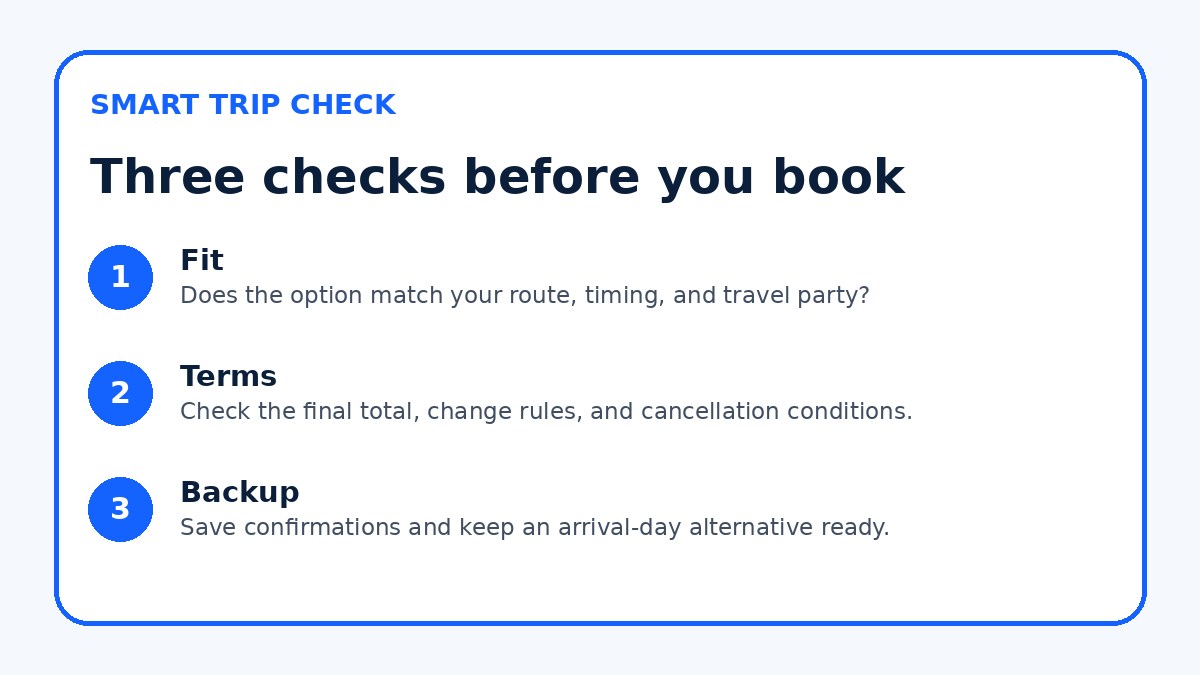
Before you book
- Confirm the hotel’s late check-in policy and ask for explicit after-hours entry instructions before you finalize the booking.
- Save the hotel’s direct phone number, exact pickup point, and the rideshare pickup zone for your arrival airport or station.
- Book a room on a higher floor and request a quiet side away from elevators, street-facing noise, and service areas.
- Verify payment and ID requirements so you won’t be refused entry or delayed by a card pre-authorization at midnight.
- Arrange a backup transport option (local taxi number or alternate rideshare app) in case hotel shuttle or transit is unavailable.
- Request essential in-room items—coffee maker, extra towels, and a late snack option—so you can be ready the next morning.
Room selection and amenities for a productive morning
For business travelers arriving late, room choice should focus on rest and readiness. Ask for a quiet room away from elevators, trash chutes, or street noise; higher floors generally reduce noise and deliver better views, which can help you get oriented in the morning. If sleep is critical, bring or request a white-noise option, earplugs, or a room with solid blackout curtains. Consider a room with a work desk, comfortable chair, reliable Wi-Fi, and accessible power outlets so you can handle urgent emails before bed or first thing in the morning.
Also confirm simple in-room conveniences: a kettle or coffee maker for an early caffeine fix, a fridge for overnight snacks, and whether the hotel can provide a grab-and-go breakfast or early room service. If you need to join calls early, check the hotel’s business center availability or the possibility of a quiet meeting room. Communicating these needs at booking and on arrival helps staff prioritize your room and avoid surprises—small pre-arrival requests pay off when time and rest are limited.
Frequently asked questions
What if my flight is delayed and I won’t arrive until very late—how should I handle the reservation?
If your flight may arrive very late, contact the hotel ahead of time with your updated arrival window and flight number. Ask them to note your reservation for late arrival and confirm how they will provide keys after the desk closes. If you booked through a third-party platform, check that platform’s reservation details too and share the hotel’s contact info. Having written confirmation reduces the risk of miscommunication and ensures staff know to hold your room or provide after-hours access instructions.
Is it better to book a refundable rate in case of arrival uncertainty?
Refundable rates give flexibility if your arrival time is uncertain, but they are often pricier. Weigh the cost against the stress and potential problems of missing a nonrefundable booking. If you must secure a room to guarantee a place to sleep, choose a rate that balances cancellation flexibility with the likelihood of using the room. Whatever you pick, verify cancellation terms and any check-in deadlines on the hotel’s final booking page before you commit.
How can I guarantee a quiet room for sleep after a late-night arrival?
To increase the odds of quiet, request a high-floor room away from elevators, service areas, and busy streets when you book. Ask staff to note a ‘quiet room’ preference and, if possible, call ahead on arrival so they can place you in a suitable available room. Bring travel earplugs and a sleep mask as inexpensive backups. If noise is a critical risk for your next-day performance, discuss options for a room change on arrival or an early morning move if the first room proves disruptive.
Final planning note
Handling a late arrival in San Francisco comes down to reducing uncertainty: select a hotel location that minimizes the riskiest leg of your schedule, confirm the property’s late-check-in and payment procedures, and plan transport and room needs before you land. Airport hotels favor hassle-free sleep and easy departures; downtown or meeting-neighborhood hotels cut morning commute risks but require more careful late-arrival planning. Use the checklist to lock in logistics and verify any provider-specific facts—check the hotel’s booking page for exact policies and contact details. With those few confirmations, a late arrival becomes a minor part of a productive business trip.
Continue planning
Check current options and final conditions
Use the provider page to confirm live availability, the final total, cancellation terms, and every condition that matters to your trip.
This evergreen planning guide was created with AI-assisted drafting and a structured quality review. It does not display live prices, schedules, availability, visa guidance, or provider rankings. Verify current details before booking. Some links are affiliate links; we may earn a commission at no additional cost to you.