
If you’re carrying extra luggage to Busan, price alerts are useful — but they can also tempt you into impulsive bookings that ignore baggage fees or inconvenient schedules. The practical approach: set targeted alerts for flights and ferries, tag hotels with generous baggage-friendly features or flexible check-in, and use a short “cooling” period before confirming any purchase. When an alert fires, immediately check the carrier’s full baggage policy, change/cancellation rules, and the final total on the booking page before you consider booking. Keep a simple comparison spreadsheet or note with the alert timestamp, total landed cost including checked-luggage allowances, and the deadline for the fare or rate. This habit helps you respond fast to good deals while avoiding rushed decisions that become expensive once extra-luggage fees are added.
See current options before you compare the details
Availability and final conditions change. Open Trip.com now or keep reading for the practical comparison.
How to set useful price alerts for Busan travel deals
Don’t create broad, catch-all alerts. Narrow them by departure airport, travel dates or date ranges, and the specific ticket type or cabin you actually plan to buy. For travelers with extra luggage, prioritize fares labeled with checked-baggage allowance or refundable/holdable tickets you can change without heavy penalties. If an alert tool allows adding notes, record what baggage allowance you expect; this saves time when an alert triggers and prevents you from comparing a basic no-bag fare to a bundled option that fits your needs.
Use staggered alerts: one for the cheapest fare class that includes baggage, one for a mid-tier flexible fare, and one for a refundable or change-permitted option. Also consider setting alerts for trains, ferries, or multi-leg itineraries where baggage rules might differ. If a tool offers price prediction or probability flags, treat these as additional signals but not as decisions — always verify on the provider’s final booking page whether the fare includes the luggage allowance you need and what change or cancellation rules apply.
Avoiding impulse booking when an alert fires
When a price alert notifies you of a lower fare, don’t click straight to purchase. Take a fixed short delay — for example 12 to 24 hours — to verify the total costs. During that pause check the booking page for explicit baggage allowances and upgrade costs for additional or oversized items. Also check how transfers work: if you have a connection, confirm whether separate tickets require re-checking luggage or if through-checked baggage is offered, because extra handling can add time and fees.
Use objective comparison criteria so decisions don’t rely solely on price. Compare total landed cost, convenience (directness of itinerary and baggage transfers), change or cancellation fees, and the provider’s policy on overweight or oversized bags. If you use a travel agent or a booking site like Trip.com to compare availability, make sure the final purchase page with terms and the provider’s official baggage policy match what was advertised in the alert before you confirm.
| Approach | Best for | Tradeoff to check |
|---|---|---|
| Buy the lowest alert fare without checking baggage | Travelers prioritizing short-term savings and willing to risk added fees | May incur significant extra baggage or change fees and unexpected inconvenience |
| Choose an alerted fare that explicitly includes checked bags | Travelers who prefer price clarity and minimal surprise fees | Higher upfront cost but fewer unknowns and smoother airport handling |
| Pick a slightly higher flexible fare with easy changes | Travelers with bulky items or uncertain plans needing flexibility | Pays for convenience; can be better value if changes are likely |
| Use holds or short free-cancellation windows after an alert | Travelers who need time to verify baggage rules and coordinate logistics | Requires monitoring and quick follow-through before the hold expires |
Ready to check the option that fits your plan?
Use your exact dates and traveler details so the provider page can show the current total and conditions.
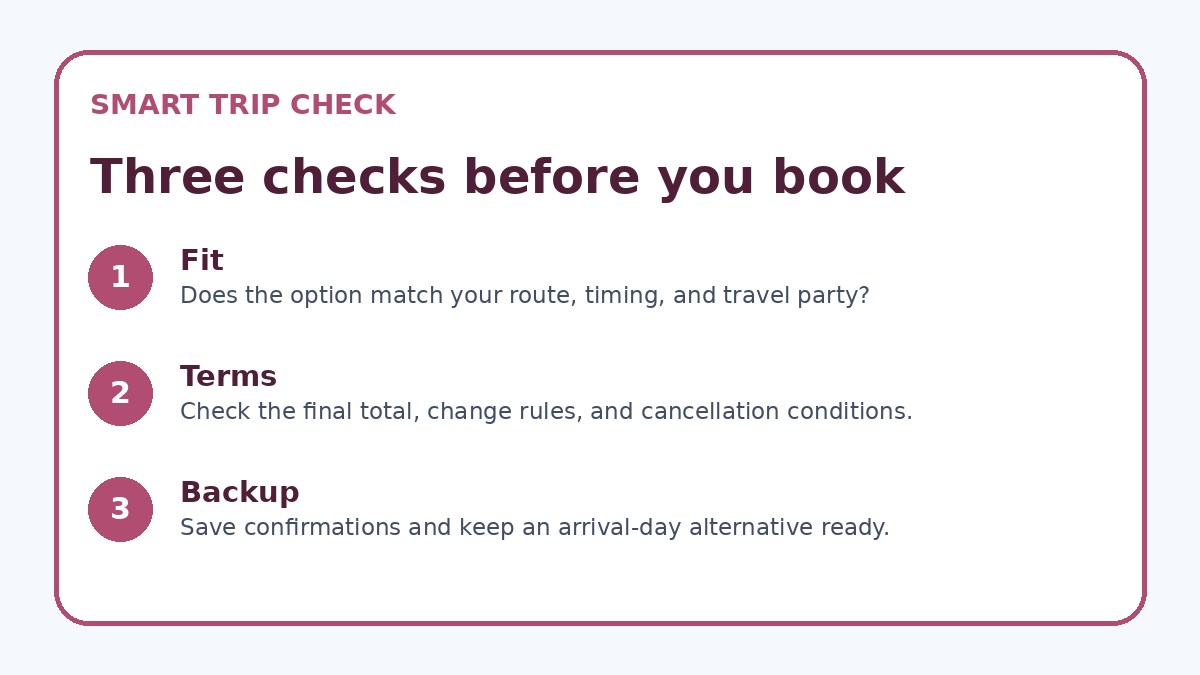
Decision tradeoffs: price vs baggage convenience
Lower fares often come with tighter baggage rules: either no checked bags included or strict size/weight limits. For travelers carrying extra luggage, the time you save buying the cheapest fare can be eaten up by extra baggage fees, rebooking costs, airport handling, or even needing a larger taxi. When evaluating a deal, estimate potential extra-baggage charges and the non-monetary costs such as extra time or stress. If the fare difference is small after adding baggage fees, a slightly higher fare that includes checked baggage or allows easier changes may be a better overall value.
Flexibility matters for bulky or valuable items. If your extra luggage increases the chance of needing to change dates or routes, prioritize fares that permit changes at low cost or offer partial refunds. Decide whether you prefer to prepay for additional baggage online (usually cheaper) or risk paying at the airport. Make that call in advance and factor the most likely scenario into your comparison, rather than gambling on the cheapest alerted fare assuming you’ll avoid baggage fees.
Before you book
- Set three targeted alerts: baggage-included fare, mid-flex fare, and a refundable option for your travel dates and departure airport.
- When an alert triggers, copy the exact search parameters and timestamp into a comparison note before further action.
- Open the provider’s final booking page and verify the checked-baggage allowance, size/weight limits, and upgrade costs.
- Confirm change, hold, and cancellation rules on the booking page and record any deadlines or penalties.
- Estimate extra transport or handling costs for oversized or multiple bags at each arrival point in Busan.
- Use a 12–24 hour cooling-off rule after an alert unless the fare’s total landed cost clearly meets your pre-set criteria.
Practical booking checklist and monitoring routine
Adopt a simple routine: define alert rules, maintain a one-page comparison of open alerts, and set a cooling-off window for any fired alert. When an alert arrives, immediately record the exact search parameters (dates, departure, cabin, fare class) and the timestamp. Open the provider’s final booking page and copy the baggage allowance and change/cancellation terms into your note before you do anything else. If the booking page contradicts the alert or omits clear baggage details, treat the alert as incomplete until verified.
Keep documentation for at least the booking window. Save screenshots or PDFs of the fare summary and baggage rules before purchase, so you have proof if the provider’s terms differ later. Consider booking options with paid hold or 24-hour free cancellation if you need time to make a final decision without risking price movement. These actions add a little effort up front but prevent the common trap of impulse-buying the cheapest alert only to discover significant additional baggage or change fees.
Frequently asked questions
Can I trust a price alert that advertises a low fare for Busan travel deals?
Price alerts are a good signal but not a guarantee of total cost. Always verify the provider’s final booking page because the alert may not show baggage fees, seat charges, or change penalties. Check the fare class details and baggage allowance there, and compare the full landed cost to other alerted options. If the alert comes from a third-party site, cross-check directly with the carrier or operator’s own page to confirm that baggage policies and final totals match before booking.
Should I prepay checked baggage when booking an alerted fare to Busan?
Prepaying checked baggage is usually cheaper than dodging fees at the airport, but your decision should depend on your certainty about trip plans. If your flight or ferry is non-refundable or you might change dates, prepaying can become wasteful if you later need to modify the reservation. If you plan is fixed and the provider’s booking page shows a discounted online baggage price, prepaying reduces risk. Always document the prepayment confirmation and the provider’s change policy for your baggage purchase.
How do I handle multi-leg itineraries with separate carriers and luggage rules for Busan?
For separate tickets or mixed carriers, verify whether bags transfer automatically or must be collected and rechecked across legs. This affects connection time and potential fees for checked luggage. If an alert includes a multi-carrier itinerary, open each carrier’s booking page to confirm their baggage allowances and whether through-check is offered. Allow extra time at connections if you need to recheck bags, and factor potential additional charges into your comparison of alerted fares.
Final planning note
Price alerts are a practical tool for finding Busan travel deals, but for travelers with extra luggage they must be used with discipline. Narrow your alerts to the fare classes you will actually use, verify baggage allowances and change rules on the provider’s final booking page, and keep a short cooling-off routine before purchasing. Comparing total landed cost — not just headline fare — and saving screenshots of booking pages will protect you from costly surprises. With a clear checklist and a calm response plan when alerts fire, you can capture genuine value without falling into impulse-buy traps.
Continue planning
Check current options and final conditions
Use the provider page to confirm live availability, the final total, cancellation terms, and every condition that matters to your trip.
This evergreen planning guide was created with AI-assisted drafting and a structured quality review. It does not display live prices, schedules, availability, visa guidance, or provider rankings. Verify current details before booking. Some links are affiliate links; we may earn a commission at no additional cost to you.