
If you’re visiting Auckland for the first time, pick the cancellation flexibility that matches how certain your dates and plans are. For short stays with firm dates, non‑refundable fares or prepaid hotel rates often cost less but leave little wiggle room. If flights or meetings could shift, choose fares or rates that allow free changes or modest penalties—even if they are more expensive up front. For multi-part trips (connecting flights, ferries to islands, or booked experiences), prioritize flexibility on the segment which would be hardest or costliest to replace. Always check the provider’s final booking page for the exact cancellation window, change fees, and refund process, and compare options side by side. Trip.com can be one place to compare current availability and conditions, but verify policy details on the airline, hotel, or tour operator’s official confirmation before you commit.
See current options before you compare the details
Availability and final conditions change. Open Trip.com now or keep reading for the practical comparison.
Which parts of an Auckland trip need the most flexibility?
Start by mapping the components of your trip: long‑haul international flights, domestic connections inside New Zealand, airport transfers, accommodation, and land or sea tours. Flights are usually the most disruptive if they change, because rebooking a long international seat at short notice can be expensive and create ripple effects for onward connections and activities. For first‑time visitors, prioritize flexibility on international tickets and any onward transport that would be hard to replace. Hotels and shorter activities are easier to rearrange or rebook locally.
Consider the cost and convenience tradeoff: a flexible long‑haul fare might carry a clear premium but can save you major headache and expense if plans shift. Conversely, if you are truly locked into dates (a wedding, conference, or fixed event), the extra cost for full refundability may be unnecessary. Evaluate which single point of failure would spoil the entire trip—protect that element with the most flexible policy, and be willing to accept firmer terms for lower‑risk bookings.
How to read cancellation and change policies before you commit
Policies vary widely in language and effective terms. Look for explicit phrases like 'free cancellation until [date/time]', 'change fee waived', or 'refund within X days'—and note whether the refund is to your original payment method or as travel credit. Pay attention to differences between 'refundable' and 'flexible': some flexible fares allow date changes but not full cash refunds, while refundable rates return money minus any processing fees. When buying through an OTA or travel bundle, check whether the merchant or the underlying carrier controls the policy.
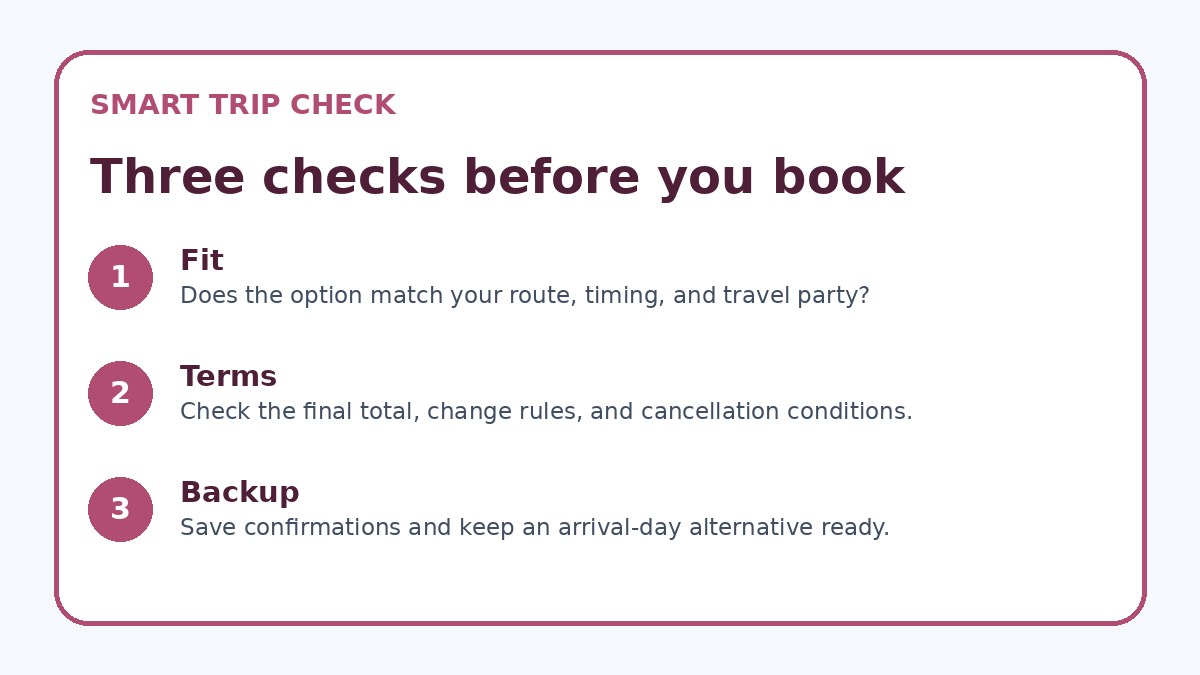
When provider‑specific facts could change, verify three things on the final booking page: the exact timeline for free cancellation or changes, the dollar or percentage fee charged for changes or cancellations, and the refund method and timetable. If travel insurance or a credit card benefit is part of your protection plan, confirm whether it covers cancellation for your reason. Keep screenshots or PDFs of the policy text and confirmation emails—those records help if you need to escalate a dispute later.
| Approach | Best for | Tradeoff to check |
|---|---|---|
| Buy fully refundable international fare | Travelers with uncertain dates or connections | Higher upfront cost but minimizes risk and rebooking hassle |
| Prepaid nonrefundable hotel for savings | Visitors with fixed arrival and short stays | Cheaper now, little recourse if plans change |
| Flexible ticket plus firm activity bookings | Those prioritizing flight stability over tour flexibility | Protects travel backbone but can leave wasted activity fees |
| Split flexibility (first night refundable) | Newcomers who want safety on arrival only | Balances cost and risk but requires additional planning |
Ready to check the option that fits your plan?
Use your exact dates and traveler details so the provider page can show the current total and conditions.
Comparing refundable versus non‑refundable deals for Auckland travel
Refundable or changeable deals reduce risk but typically cost more up front. If you can confidently lock dates and have low risk of disruption, a nonrefundable fare or prepaid hotel might make sense—especially for short trips where savings can be meaningful. However, first‑time travelers often face unknowns (visa timing, itinerary tweaks, or family obligations) that make a bit of extra flexibility valuable. Rather than thinking in absolutes, compare the incremental cost of a flexible option against the maximum plausible cost of rebooking at short notice.
Use a practical threshold: if the flexible rate costs less than the estimated cost of rebooking or losing a nonrefundable booking, take the flexible option. Also check for soft flexibility options—free date changes within a ticket class or travel credit on cancellations—because these sometimes provide most of the convenience of full refunds without the full price premium.
Before you book
- List every trip component (international flights, domestic transfers, accommodation, tours) and mark which would be hardest to replace.
- On each checkout page, read the exact cancellation or change deadline and the stated fee or refund method before you pay.
- Screenshot or save the booking confirmation and the cancellation policy text as proof in case of disputes.
- Compare the extra cost of a flexible rate to the likely rebooking cost if you needed to change that component.
- Confirm whether your credit card or travel insurance covers cancellations for the reasons you care about and document any claim steps.
- Book the most flexible option for the single booking whose failure would cause the biggest cascade of problems.
Booking strategies to maximize flexibility with minimum extra cost
Split risk across suppliers when possible. For example, consider booking an international ticket with flexible terms and choosing a mid‑priced prepaid hotel that allows limited changes; or book a refundable hotel for the first night only and cheaper, firmer rates later once you’re in Auckland. For critical segments like arrival day accommodation and airport transfers, flexibility minimizes stress if your flight is delayed. If you book tours or ferries with tight departure windows, confirm their day‑of change policies before buying.
Another tactic is to hold reservations that allow a short free cancellation window close to your travel date—some booking platforms and hotels offer free cancellation up to 24–72 hours before check‑in. If you plan to use travel insurance, compare insurance cancellation coverage to the added cost of flexible fares; insurance can be a cost‑effective way to recover prepaid, nonrefundable expenses in certain covered circumstances. Always confirm cancellation cutoffs and processing terms on the provider’s final confirmation page.
Frequently asked questions
Should first‑time visitors to Auckland always choose refundable bookings?
Not always. Refundable bookings reduce risk but usually cost more. If your dates and travel plans are firm—such as a specific event—you may prefer a nonrefundable deal to save money. For first‑time visitors who foresee any chance of change (visa timing, connecting flights, work) it’s wise to make at least one key element refundable, typically the international flight or the first night’s accommodation. Evaluate the incremental cost of flexibility against the potential financial and logistical disruption of changing nonrefundable bookings.
How do bundles or package deals affect cancellation flexibility?
Bundles can simplify booking and sometimes offer lower rates, but their cancellation rules vary. Some packages treat each component separately, while others adopt a single combined policy controlled by the package seller. Before you buy, check whether changing one part (like a flight) forces cancellation or fees on the whole package. If policy language is unclear, contact the seller to get written confirmation of who issues refunds, how changes are handled, and whether you can modify components separately. Verify these details on the final booking confirmation page.
Can travel insurance replace flexible bookings for Auckland travel deals?
Travel insurance can cover many risks, such as illness or certain unforeseen events, but it doesn’t automatically replace the convenience of flexible bookings. Insurance often requires documentation, has exclusions, and may reimburse you after the fact rather than preventing the hassle of rebooking. If you rely on insurance, confirm what reasons are covered, claim timelines, and whether it reimburses nonrefundable prepaid costs. Combine insurance with selective flexibility for the best protection—use flexible bookings for the riskiest items and insurance as a secondary safety net.
Final planning note
For first‑time visitors to Auckland, the right level of cancellation flexibility depends on which part of the trip would be hardest or most expensive to replace. Protect the backbone of your plans—usually the international flight and the first night—then use cost‑saving nonrefundable options for lower‑risk items. Read and save the provider’s exact policy language at checkout, compare the premium for flexibility to the likely cost of rebooking, and consider travel insurance for additional protection. When in doubt, prioritize options that limit cascade effects: a flexible flight can prevent large losses even if everything else is prepaid. Verify all policy details on the final booking or confirmation page before you pay.
Continue planning
Check current options and final conditions
Use the provider page to confirm live availability, the final total, cancellation terms, and every condition that matters to your trip.
This evergreen planning guide was created with AI-assisted drafting and a structured quality review. It does not display live prices, schedules, availability, visa guidance, or provider rankings. Verify current details before booking. Some links are affiliate links; we may earn a commission at no additional cost to you.