If you’re planning a family trip from Seoul to Bali, the main decision up front is whether to prioritize a one-leg journey or accept a connection to save money or gain schedule flexibility. For many families, a direct flight reduces stress: fewer transitions, less chance of missing a connection, and simpler logistics for children and carry-on gear. A connecting itinerary can make sense if it shortens the overall travel time with a smart hub, lowers cost enough to fund comforts at your destination, or allows better departure/arrival times. Before you pick, compare door-to-door time, number and length of connections, seat and baggage options, and the airport experience during layovers. Later in the article I’ll list clear tradeoffs, booking checks, and a family-focused checklist so you can decide with confidence and avoid surprises at the airport.
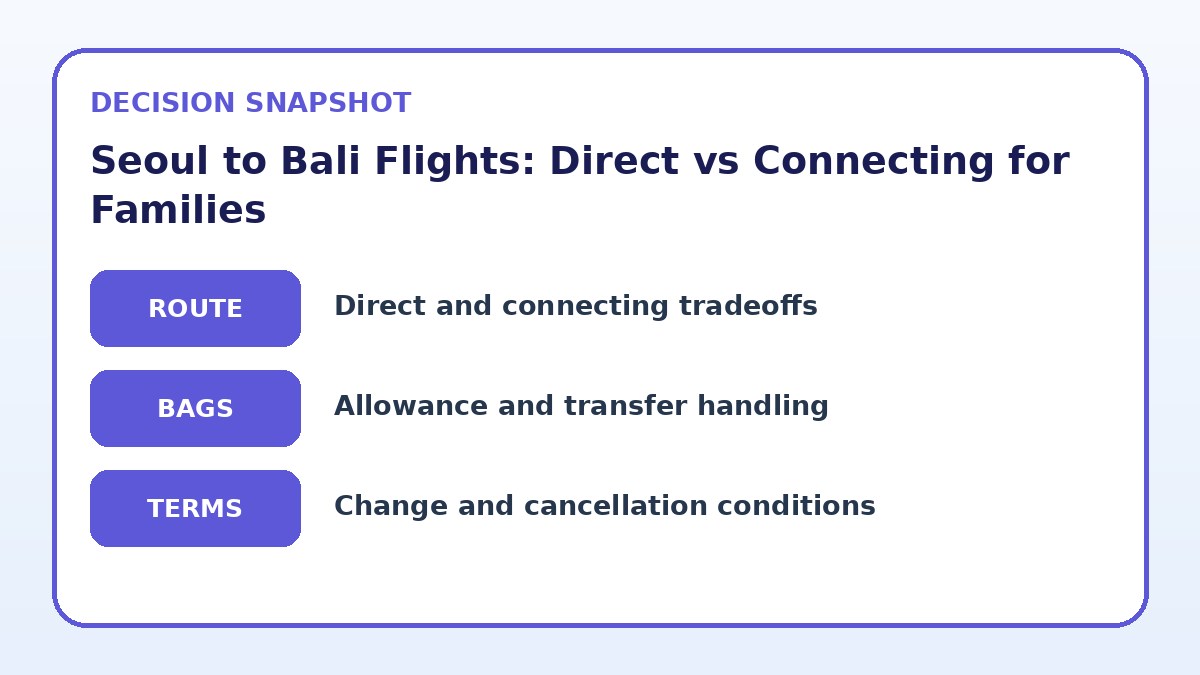
See current options before you compare the details
Availability and final conditions change. Open Trip.com now or keep reading for the practical comparison.
Why direct flights appeal to families
Direct flights reduce the number of times you need to manage security, immigration, and moving luggage—this lowers stress for parents and keeps routines steadier for children. For families traveling with toddlers or several suitcases, a nonstop itinerary means fewer opportunities for delays or lost bags and less time spent corralling kids in busy airports. Fewer transitions also simplify feeding, napping, and entertainment planning: you can book seats near restrooms or bassinets and plan one uninterrupted block of in-flight activities.
The convenience of a direct route often pays off in less fatigue upon arrival, especially when you land at your destination in daylight or at a family-friendly hour. Direct flights also simplify contingency planning: there are no separate carriers or tight connection windows to negotiate if something goes wrong. That said, convenience comes at a cost tradeoff for many families—direct options may be less frequent or more expensive, and you’ll want to compare the marginal benefit to your overall trip budget and priorities before committing.
When connecting flights make sense
Connecting itineraries can be the smart choice when they deliver either significantly lower total cost or a better arrival/departure schedule that suits family needs. A well-timed connection at a friendly hub can reduce overnight travel, provide more comfortable departure times, or let you break a very long trip into manageable chunks. For older children or families who travel light, the inconvenience of a connection is smaller, and savings can be spent on upgraded seats, an extra night in a comfortable hotel on arrival, or activities that make the trip more enjoyable.
If you plan to connect, prioritize layovers that are long enough to move between gates without rushing, yet short enough to avoid a long wait with restless kids. Research the transit airport’s facilities—family rooms, play areas, and terminal transfers—and whether you’ll need to re-check baggage or pass through immigration. Always verify on the airlines’ or booking engine’s final page whether both tickets are on a single reservation and what protections apply for missed connections, especially if different carriers are involved.
| Approach | Best for | Tradeoff to check |
|---|---|---|
| Direct flights | Families valuing simplicity, fewer transitions, and reduced risk of missed connections | Often fewer daily choices and potentially higher fares compared with connecting itineraries |
| Single-hour short connection | Families who want a slightly lower fare without long airport waits | Risk of stress with tight transfers and little margin for delay |
| Long daytime connection | Families who prefer to break the journey and let kids move around during a longer layover | Longer total travel time and possible extra costs for lounge access or short-stay facilities |
| Multi-carrier/split-ticket connections | Budget-focused families willing to manage separate reservations for lower prices | Less protection for missed connections; you must recheck luggage and allow extra transfer time |
Ready to check the option that fits your plan?
Use your exact dates and traveler details so the provider page can show the current total and conditions.
Practical tradeoffs: time, cost, and comfort
Compare total door-to-door time rather than just flight duration: factor in travel to/from the airport, check-in time for family groups, expected security lines, and potential delays. A connecting itinerary may have a shorter scheduled flying time but a longer overall travel day when you add a long layover. Conversely, a direct flight with a less convenient departure time could mean an extra hotel night either before departure or after arrival. Weight these choices against how children cope with odd schedules and whether you prefer arriving refreshed or saving on airfare.
Comfort considerations include seat configuration, whether bassinets are available, and onboard services such as family meals or entertainment suited to kids. If a connecting route allows you to afford extra legroom or exit-row seats with fewer passengers in the way, that could swing your decision. Also consider logistical comfort: easy airport layouts, minimal terminal changes, and clear signage reduce stress during transfers. Always check the carrier’s seat map and family policies on their final booking page because these details vary and change frequently.
Before you book
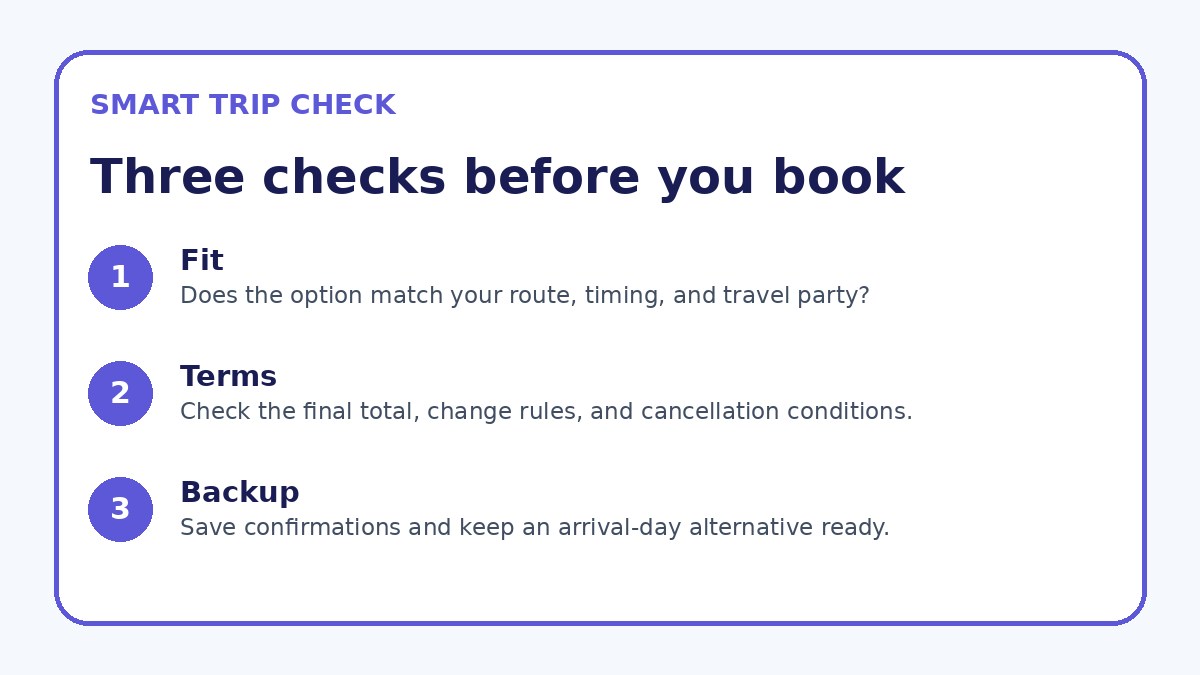
- Note your family’s preferred departure and arrival time windows and limit searches to itineraries that match those windows.
- Compare total door-to-door travel time, not just airborne minutes, including transfers, security, and ground transport.
- Confirm seat assignments, bassinet availability, and whether seats can be booked together on the airline’s final booking page.
- Review checked baggage rules for each fare: verify size, weight limits, and whether infant allowances apply before checkout.
- Check minimum connection times, terminal transfer requirements, and whether re-checking luggage or immigration is required.
- Save contact numbers for the airline and the airport, and add travel insurance that covers missed connections if you book separate tickets.
How to compare options and make the booking
Start by listing acceptable travel days and time windows for your family’s sleep schedule; then search for both direct and connecting options for those specific dates. Compare total door-to-door times, number of secure transfers, and the layover airports’ family-friendly features. Use filters to compare only itineraries that keep seats together or include checked baggage if that matters to you. If you’re evaluating different airlines or alliances, check their rebooking and delay policies for families and whether meals or special assistance are included.
Before you finalize a booking, verify refund/change rules, baggage allowances, and whether seats are guaranteed together on the carrier’s official booking page. If you plan a tight connection, confirm minimum connection time, whether you must clear immigration, and if you need to re-check luggage. For real-time comparisons of schedules and fares, you may check Trip.com as one option, but always confirm operational details, seat assignments, and baggage rules on the airline’s site before paying.
Frequently asked questions
Is a direct flight always better for children?
Not always. Direct flights reduce transitions, which is helpful for very young children and large luggage loads, but they can leave you with less flexible schedules and higher fares. Older children who can walk, use inflight entertainment, or change activity zones during a layover may handle connections well—especially if savings can be spent on comfort upgrades. Consider how your children respond to long continuous travel versus short breaks, and weigh that against cost differences and total travel time. Verify seat and bassinet options on the airline’s booking page when deciding.
How long should a layover be for a family?
Aim for layovers long enough to comfortably transfer between gates, clear any required immigration or security, and allow time for restroom and snack breaks without rushing. Short layovers (under an hour) increase the stress of tight connections; a two- to three-hour daytime connection often balances transfer ease with reasonable total journey time. If you must change terminals, add extra time. Always check the airport map and minimum connection times listed by the airline, and add a buffer for delays when traveling with kids.
What luggage and seating checks matter most when booking?
Confirm the checked baggage allowance for each passenger and whether infant items are exempt from fees; multiple tickets or mixed carriers can mean different rules per segment. Check seat maps to ensure seats are together—some low-cost fares block reserving seats until paid—and look for bulkhead or extra-legroom options if needed. Verify whether strollers and car seats are gate-checked or must be checked at the counter. Always complete these checks on the airline’s official booking page before paying so you’re clear on final policies.
Final planning note
Choosing between direct and connecting Seoul to Bali flights for a family comes down to balancing convenience, total travel time, and cost. Direct flights typically reduce stress by removing airport transitions, which helps families with young children or heavy luggage; connecting itineraries can make sense when they offer significant savings, better departure windows, or opportunities to rest during a long journey. Make comparisons using door-to-door time, family-friendly airport facilities, seat assignments, and baggage rules, and verify those details on the airline’s final booking page. With a clear list of priorities and the checklist above, you’ll be able to pick the itinerary that best matches your family’s energy levels, budget, and comfort needs.
Continue planning
Check current options and final conditions
Use the provider page to confirm live availability, the final total, cancellation terms, and every condition that matters to your trip.
This evergreen planning guide was created with AI-assisted drafting and a structured quality review. It does not display live prices, schedules, availability, visa guidance, or provider rankings. Verify current details before booking. Some links are affiliate links; we may earn a commission at no additional cost to you.