Practical choice first: if you prioritize comfort with larger luggage and minimal handling, a seat or sleeper on an intercity train or a private transfer will usually give you the easiest door-to-door experience; if minimizing transfers and travel time matters most, a flight may be simpler despite extra handling at airports. Solo travelers should match luggage size and handling tolerance to the mode of transport, then verify baggage rules, station-to-city transfer options, and how much carrying you realistically want to do at either end. This article focuses on real-world tradeoffs when moving bags between Bangkok and Chiang Mai by rail, bus, plane, or private car, and gives an actionable checklist for booking and packing. When you compare services, check each provider’s final booking page for official baggage allowances, checked/oversize rules, station luggage storage, and transfer options — Trip.com is one place to compare availability but verify details with the carrier before you confirm.
See current options before you compare the details
Availability and final conditions change. Open Trip.com now or keep reading for the practical comparison.
How luggage affects the transport choice
Luggage size, weight, and how willing you are to carry it through stations or between vehicles should steer your decision before you compare prices. If your bag is a single large checked suitcase, a private transfer or taxi from door to door avoids the repeated loading and unloading that comes with buses and some trains. If you travel with one carry-on backpack, trains and buses become far more attractive because you can stow it near your seat and keep it with you. Think through the whole trip: hotel check-out, getting to the station or airport, any city transfers at your destination, and the effort of moving between platforms or terminals.
Also consider the format of each mode: trains usually have dedicated luggage areas, under-berth space in sleepers, and overhead racks for backpacks, while buses often have underside luggage bays that require lifting and handling by staff. Flights involve airport check-in counters, security screening, and then reclaiming checked bags at baggage claim, which adds standing time and the risk that your bag will be delayed. For solo travelers, the fewer times you need to move your luggage, the lower the chance of fatigue, damage, or misplacement — that’s the practical anchor for comparing options.
Practical packing and luggage tips for the route
Pack to reduce handling: use a single main bag that fits your preferred transport’s constraints and a compact daypack for onboard essentials. Put electronics, travel documents, basic meds, a change of clothes, and valuables in the daypack so you can access them without opening large suitcases. Use lightweight, durable luggage with smooth wheels and comfortable straps — carrying a heavy, awkward bag across platforms or uneven sidewalks is far more tiring than the journey itself. Consider compression packing cubes to make the most of space and keep items organized when you need to repack between modes.
Label your bags with clear contact details and a visible, distinctive strap or ribbon so you can spot them quickly in a crowded luggage bay or at baggage claim. Bring a sturdy lock if you plan to leave luggage in station storage or an unattended compartment. If you need to store bags for a few hours during a layover, check whether stations or airports provide secure left-luggage services and confirm size or weight limits on the provider’s booking page. Finally, test whether your bag fits in overhead compartments on domestic flights and bus overheads — if it doesn’t, you’ll need to check it in, which changes handling time.
| Approach | Best for | Tradeoff to check |
|---|---|---|
| Intercity train (day or sleeper) | Travelers who want fewer handoffs and can manage a slightly longer journey time. | May involve station transfers and limited assistance for very heavy or oversize luggage. |
| Domestic flight | Travelers prioritizing speed and minimal time in transit between cities. | Adds airport security, check-in and baggage reclaim steps that increase handling. |
| Express bus or minivan | Light packers on a budget who accept staff handling of hold luggage. | Frequent loading/unloading and variable comfort or space for large bags. |
| Private door-to-door transfer | Solo travelers with bulky luggage who want the least manual carrying. | Requires confirming trunk capacity and precise pickup logistics in advance. |
Ready to check the option that fits your plan?
Use your exact dates and traveler details so the provider page can show the current total and conditions.
Comparing trains, buses, flights and private transfers
Trains: often the best mix for solo travelers who want to avoid repeated handling while still enjoying a comfortable, scenic ride. Sleeper trains let you leave larger bags near your berth and minimize transfers; daytime express trains may require placing luggage in racks or dedicated areas. When comparing train options, check whether the route is direct or requires a transfer at an intermediate station, as each transfer equals extra lifting. Verify baggage policies, berth allocation, seat layout and whether staff assistance is available for heavy bags on the carrier’s official booking page.
Buses and minivans: typically simple to book and sometimes direct to central terminals, but they usually require staff loading into the hold and then later unloading at the stop. That can be quick, but it does mean you won’t personally keep your bag with you during the ride. Buses are worth considering if you’re traveling light or prefer more frequent departures. For flights, factor in the airport transfers at both ends and the time to check and reclaim luggage; flights reduce time on the road but add handling episodes. Private transfers offer the fewest handoffs, but confirm vehicle size, trunk capacity, exact pickup logistics, and cancellation/refund terms.
Before you book
- Measure and weigh your main bag and daypack; confirm they meet the chosen carrier’s published size and weight limits.
- Check the provider’s booking page for baggage allowances, extra fees, and where luggage is stored onboard or at stations.
- If using a train sleeper or reserved seat, ask how luggage is secured and whether staff can help load heavy items at boarding.
- Confirm pickup points and meeting instructions for flights and private transfers, including wait times and driver contact details.
- Pack valuables and essentials in your daypack so you can keep them with you through security and transfers.
- Label bags clearly and add a distinctive strap; photograph your luggage before travel in case you need to report loss or delay.
Booking strategies and what to verify before you go
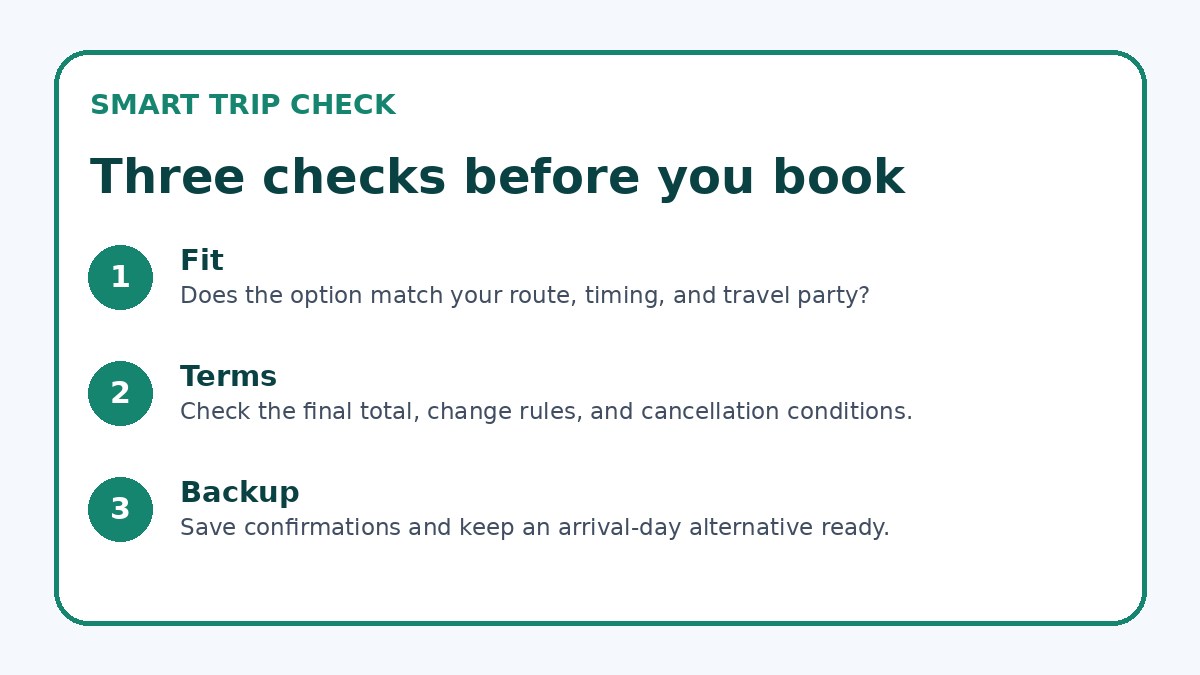
When you’re ready to book, compare total door-to-door time and how many times you will need to move your luggage rather than just headline journey durations. Use the provider’s official page to confirm baggage allowance, extra-baggage charges, permitted bag dimensions, and whether assistance is available for large items. If a service lists seat classes or berths, check photos or seat maps to know where luggage will sit relative to you; on some trains, storing a big suitcase in a corridor or crowded compartment is impractical.
For flights and private transfers, confirm airport or hotel pickup meeting points and whether drivers will help with bags until they are placed in the vehicle. If using station storage, check opening hours and maximum storage durations; some sites close overnight or have limited capacity. If you plan to use Trip.com or another aggregator to compare availability, use it to shortlist options but always verify the baggage rules and cancellation policy on the carrier’s final booking page before payment.
Frequently asked questions
Can I bring large suitcases on the train between Bangkok and Chiang Mai?
Most intercity trains accommodate large suitcases, often with under-berth storage in sleepers or luggage areas at car ends. That said, carriage layouts vary: some day trains have limited floor space and rely on overhead racks or staff-managed compartments. Always confirm baggage policies and photos or seat maps on the official carrier page before booking. If your bag is unusually heavy or oversized, contact the provider to verify whether assistance is available at your boarding station and whether there are any size restrictions or recommended alternatives.
Is it easier to handle luggage if I fly rather than take ground transport?
Flying shortens door-to-door travel time but increases the number of handling steps: airport check-in, security, checked-baggage processing, and baggage claim. For a solo traveler with a single checked bag, a flight can still be simpler because ground transfers are quicker, but you trade frequent short carries for concentrated airport handling. If avoiding lifts and street-level transfers is your priority, a private transfer or a sleeper train that allows you to keep bags near your seat might be preferable. Verify baggage size limits on the airline’s booking page before you buy.
Are station or airport luggage storage options practical on this route?
Short-term luggage storage can be very practical if you have a gap between check-out and departure or want to explore a city unencumbered. Major stations and airports sometimes offer left-luggage services or lockers, but availability, size limits, opening hours, and security vary. Before relying on storage, check the facility’s official information page for maximum bag dimensions, permitted contents, and operating hours. If storage is not available or adequate, plan a transfer that keeps your luggage with you or arrange for luggage pickup and delivery services if you prefer to travel hands-free.
Final planning note
Choosing the right Bangkok to Chiang Mai transport when you have luggage means balancing how much handling you will tolerate against travel time and cost. Trains and private transfers minimize repeated lifting and give solo travelers useful options to keep bags close, while flights reduce time but add airport handling. Buses are practical for light packers but often involve staff-managed loading. Use the checklist to verify dimensions, baggage rules, and pickup logistics on the carrier’s booking page before you purchase. If you compare services on an aggregator like Trip.com, treat that as a starting point and always confirm the final baggage and boarding details with the provider.
Continue planning
Check current options and final conditions
Use the provider page to confirm live availability, the final total, cancellation terms, and every condition that matters to your trip.
This evergreen planning guide was created with AI-assisted drafting and a structured quality review. It does not display live prices, schedules, availability, visa guidance, or provider rankings. Verify current details before booking. Some links are affiliate links; we may earn a commission at no additional cost to you.