If you and your partner are deciding how to travel from Seoul to Osaka, start by choosing whether flexibility or convenience matters more for your trip. Convenience favors direct routing, departure and arrival times close to your plans, and minimal transfer hassles—less stress, more time in Osaka. Flexibility favors refundable or changeable tickets, wider time windows, and options to swap dates if work or weather intervene. For couples, the best choice often mixes the two: pick an itinerary that fits your must-have departure/arrival times while leaving room to change plans without excessive penalties.
Before booking, agree with your partner which elements you cannot compromise (late arrival, early departure, minimal ground transfers) and which you can (seat selection, strict departure times). Use those priorities to compare direct versus connecting options, fare rules, and travel times to and from airports. Verify baggage rules, change/cancellation policies, and transfer times on the airline’s final booking page. Trip.com can be a place to compare availability and conditions, but always confirm the ticket terms directly with the carrier before paying.
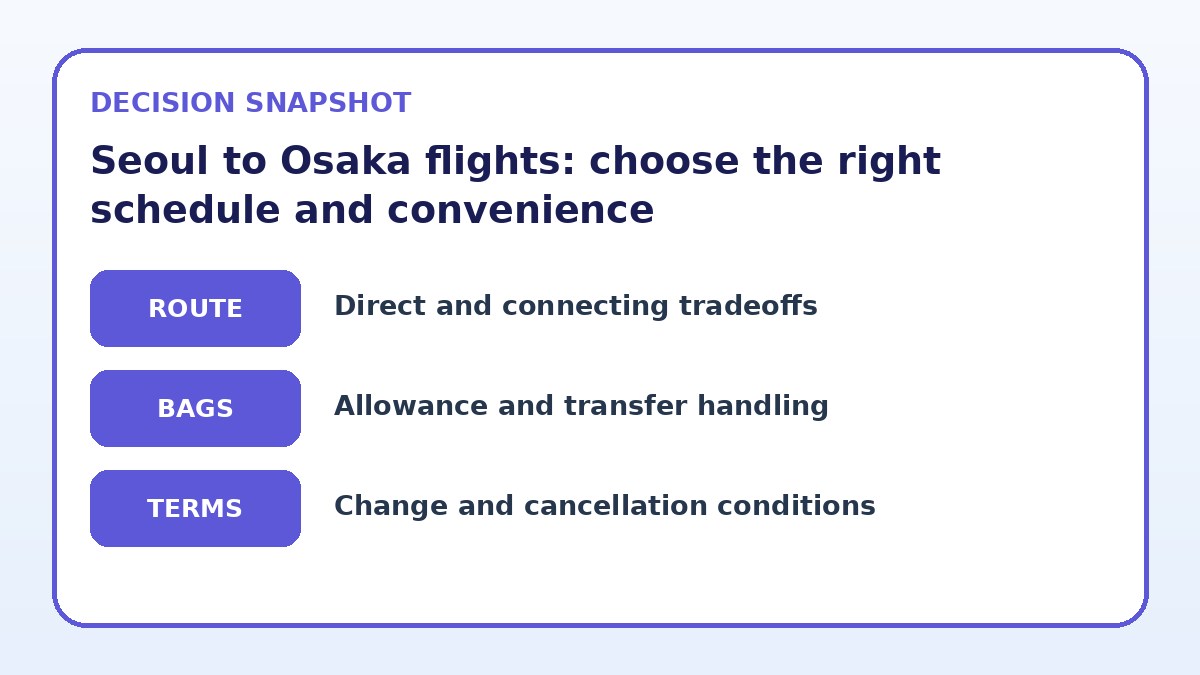
See current options before you compare the details
Availability and final conditions change. Open Trip.com now or keep reading for the practical comparison.
Decide what flexibility means for your relationship
Flexibility has different meanings depending on whether one partner needs work leeway, whether you are open to changing dates, or whether weather is a concern. For example, flexibility might mean booking fares that allow date or time changes without heavy penalties, or simply leaving a larger cushion between flight times and connecting trains. Couples should discuss scenarios that would force a change—unexpected work obligations, delayed visas, or health issues—and decide how much they’re willing to pay to avoid the stress of rebooking. Remember that the most flexible ticket isn’t always necessary if both partners have firm schedules.
When evaluating flexible options, look beyond the label and read the fine print: how much will a change cost, are seat assignments refundable, and does the fare include baggage allowance? For many couples it makes sense to mix approaches—buy a more flexible outbound ticket if one partner’s schedule is uncertain, and a restrictive return if plans are definite. Also consider travel insurance or an airline-provided flexibility add-on if you expect last-minute shifts; those choices can be cheaper than buying fully refundable tickets.
Convenience factors couples should prioritize
Convenience reduces friction during travel and lets couples spend energy on experiences rather than logistics. Key convenience aspects include departure airport proximity in Seoul, arrival airport in Osaka (Kansai International vs. Itami/Narita equivalent), flight time alignment with your accommodation check-in and activities, and the number of transfers. For evenings or short trips, prioritize arrivals that get you into your hotel before local nightlife or restaurant closing times. Also consider transfer options—airport express trains, taxis, and shuttle buses—and how they match your comfort and budget.
Seat selection and cabin experience matter more for couples than solo travelers: a preferred row, the ability to sit together, and minimal mid-flight disruptions contribute to enjoyment. If convenience is the priority, accept slightly higher fares for direct flights and better departure times. But don’t forget the last-mile: a cheap flight that lands very late or at a distant airport can cost extra time and money in taxis or overnight stays, reducing the value of a low base fare.
| Approach | Best for | Tradeoff to check |
|---|---|---|
| Prioritize direct flights | Couples who want minimal travel stress and more time in Osaka | Usually higher base fare and fewer departure time options |
| Prioritize flexible fares | Couples with uncertain schedules who may need to change plans | Higher ticket cost and possibly limited seat selection or less convenient times |
| Choose connections to widen options | Couples seeking specific departure times or lower base fares | Longer total travel time and higher risk of missed connections |
| Mix approaches (flexible outbound, fixed return) | Couples balancing one uncertain leg with a firm return date | More complex planning and potentially higher combined ticket cost |
Ready to check the option that fits your plan?
Use your exact dates and traveler details so the provider page can show the current total and conditions.
How to compare direct and connecting itineraries
Direct flights usually save time and reduce the chance of missed connections—important if you want to maximize your time in Osaka or dislike airport stress. However, connecting flights can open up more departure times or allow you to take advantage of better overall schedules for both partners. When comparing options, calculate total travel time from your Seoul home to final Osaka accommodation, not just the airborne hours. Include recommended arrival times at departure airports and realistic transfer times at connections.
Check connection buffers carefully: a short transfer may be cheaper but increases the risk of missed connections, which can be particularly troublesome for couples traveling with limited time. If you choose a connecting route, aim for connections validated by the same carrier or booking platform so the airline is responsible for rebooking in case of delay. Also compare airport transfer convenience at destination—if a connection uses an airport that requires a long ground transfer in Osaka, the apparent savings may not be worth it.
Before you book
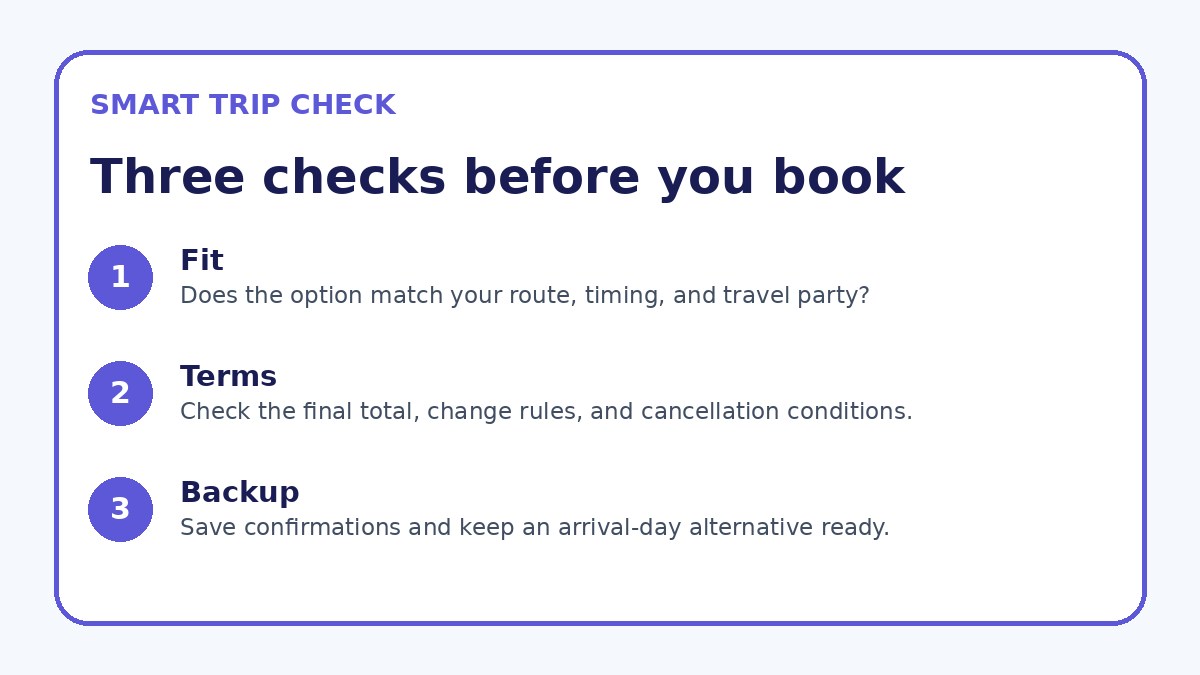
- Agree on non-negotiable travel elements together: arrival window, maximum transfer time, and whether late-night landings are acceptable.
- Compare total door-to-door travel time for each itinerary, including recommended airport arrival and ground transfers at both ends.
- Read the fare rules on the airline’s final booking page: change fees, refundability, and baggage allowances for each passenger.
- Verify seat selection options and confirm you can sit together before you finalize payment.
- Estimate likely ground transportation costs from chosen Osaka airport to your accommodation and add them to the ticket price.
- Consider travel insurance or an airline flexibility add-on if one partner’s schedule is uncertain, and keep screenshots of fare rules and confirmations.
Pricing signals and what to verify before booking
Price differences between convenient and flexible tickets can be significant, but don’t assume the cheapest fare wins. For couples, unexpected fees—baggage charges, seat selection, and change fees—can erase initial savings. When pricing options, build a total cost model that includes likely baggage and transfer costs, possible change fees, and any seat upgrades that matter to you. If one partner values aisle space or extra legroom, factor those choices into the total.
Always verify these items on the airline’s final booking page before you pay: fare rules for changes and cancellations, baggage allowance for each passenger, seating policies, and whether the fare includes necessary taxes or airport fees. If you see a fare that looks attractive on an aggregator like Trip.com, cross-check terms on the airline’s site. Keep screenshots of the fare rules and confirmation emails until travel is complete—those records help resolve disputes if something changes.
Frequently asked questions
Should couples always book direct flights between Seoul and Osaka for convenience?
Direct flights are typically more convenient because they reduce travel time and the chance of disruption, which matters for short trips or when you want more sightseeing time together. However, direct flights may not match every couple’s schedule or budget. If your preferred departure or arrival times aren’t available direct, a well-timed connecting flight can be a reasonable compromise. Compare door-to-door time and the ease of transfers at both airports before deciding.
How can we tell if a flexible fare is worth the extra cost?
Estimate the likelihood and cost impact of needing to change your trip: consider work obligations, health, or unpredictable events. Calculate the extra fee for a flexible fare versus the sum of possible change fees, rebooking costs, and lost nonrefundable reservations. If the flexible fare’s premium is less than potential rebooking pains and gives both partners peace of mind, it’s often worth it. Always check the exact change and cancellation conditions on the carrier’s booking page before purchase.
What practical steps reduce stress when landing late in Osaka as a couple?
Plan ahead: check transportation options that operate at your arrival hour, reserve a taxi or airport transfer if trains are infrequent, and choose a hotel that offers late check-in. Share responsibilities—one partner handles bags and navigation while the other manages tickets and accommodation check-in—to move efficiently. Keep local currency and digital copies of booking confirmations accessible, and let your accommodation know your expected arrival time so they can accommodate a late check-in if needed.
Final planning note
For couples traveling from Seoul to Osaka, the best booking decision balances convenience and flexibility based on your shared priorities. If minimizing travel time and hassle matters most, favor direct flights and convenient arrival airports; if schedules may shift, prioritize flexible fare options or mix flexible and fixed legs. Always calculate total door-to-door time, verify fare rules and baggage allowances on the carrier’s final booking page, and discuss what each partner values before booking. Preparing together will make the journey smoother and let you focus on enjoying Osaka rather than resolving logistics during the trip.
Continue planning
Check current options and final conditions
Use the provider page to confirm live availability, the final total, cancellation terms, and every condition that matters to your trip.
This evergreen planning guide was created with AI-assisted drafting and a structured quality review. It does not display live prices, schedules, availability, visa guidance, or provider rankings. Verify current details before booking. Some links are affiliate links; we may earn a commission at no additional cost to you.