If you need a quick, practical answer: prioritize a direct flight for the least hassle and shortest total travel time, but choose a well-timed connecting itinerary if it saves money, improves departure times, or makes a preferred airline’s service accessible. Families often favor fewer transfers, simpler luggage handling, and shorter door-to-door times; direct options usually win on those points. However, good connecting flights can beat awkward schedules and may offer more competitive fares and seat availability for larger groups. Before booking, compare total travel time, number of transfers, minimum connection times, aircraft type (for bassinets or extra legroom), and what each airline’s final booking page says about carry-on, checked baggage, seat assignments, and change policies.
See current options before you compare the details
Availability and final conditions change. Open Trip.com now or keep reading for the practical comparison.
Why families often prefer direct flights
Direct flights keep the journey straightforward: one takeoff, one landing, and no intermediate queues, security repeats, or additional transfers. For parents traveling with small children, that means fewer opportunities for things to go sideways—lost items, missed connections, or cranky layover hours. Avoiding additional airport navigation is especially valuable with strollers, car seats, and extra hand luggage. Direct itineraries also remove the need to coordinate meal times and nap schedules around unfamiliar lounge or terminal access during layovers.
The benefits are practical rather than glamorous. Less time moving between gates lowers the chance of delays cascading into missed flights, and you won’t have to reassemble a stroller or locate child-friendly facilities at an unfamiliar airport. If your family values simplicity, short overall travel time, and minimizing transitions, a direct option is a strong first choice. Still, verify final booking details like onboard seating layout and whether the airline allows advance bassinet reservations, because not all direct flights have the family amenities you may expect.
When connecting flights make sense for a family
Connecting flights become attractive when direct schedules are limited, inconvenient, or very expensive for the family’s preferred travel dates. A single well-planned connection can open earlier or later departure times, potentially reduce overnight travel for children, and give access to airlines you trust for child services or frequent-flier benefits. Connections can also be useful if you want to split a long trip with a deliberate, child-friendly layover to rest, explore a safe airport hotel, or use family rooms rather than endure a long continuous flight.
That said, not all connections are equal. Short connections that require rapid gate changes or moving between terminals with security re-checks add stress and increase the risk of missed flights. Look for single-carrier itineraries or those with interline baggage checks to avoid dragging checked bags through transfers. On the booking page, confirm whether the layover requires leaving the sterile area, re-clearing immigration, or re-checking baggage—these factors change the complexity for families more than overall minutes on the itinerary.
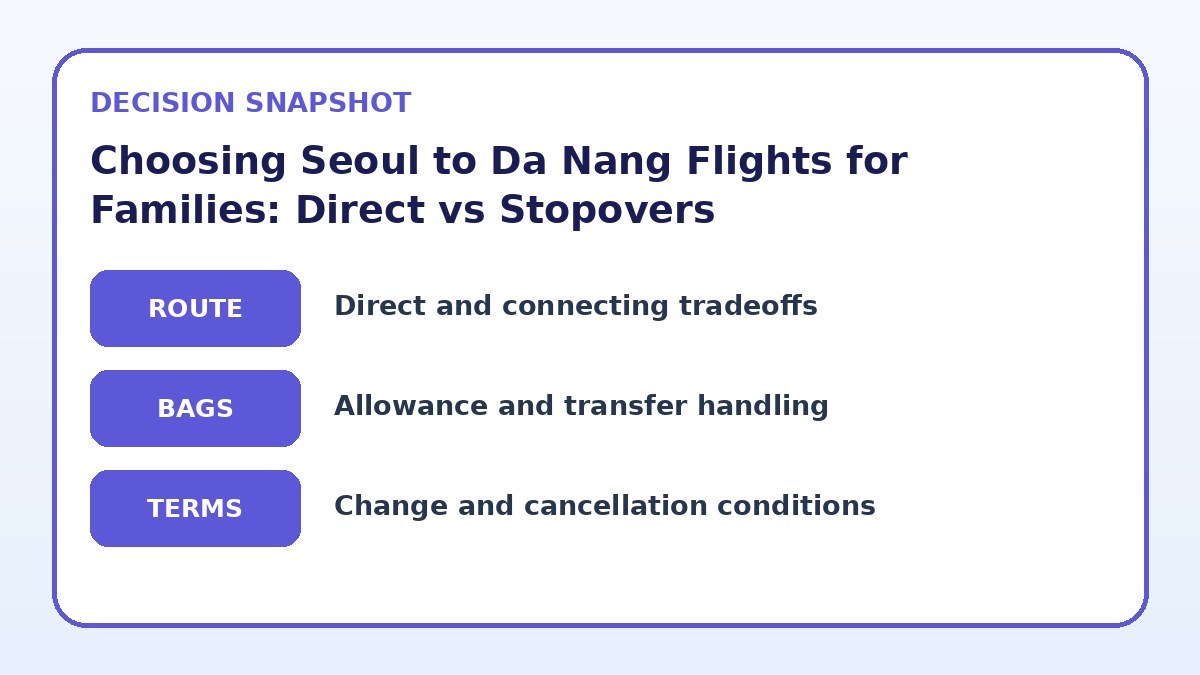
| Approach | Best for | Tradeoff to check |
|---|---|---|
| Direct flights | Families prioritizing minimal transfers and the shortest overall travel time. | May have fewer schedule options and potentially higher fares on some dates. |
| Single-carrier connecting flights | Families wanting more departure times with baggage checked through to destination. | Still involves a transfer but reduces luggage handling and rebooking complexity. |
| Multi-carrier or separate-ticket connections | Budget-conscious families seeking lower fares or specific airline combinations. | Higher risk of missed connections and extra baggage/immigration steps. |
| Planned long layover | Families who prefer a paced journey with rest time or a short stopover activity. | Adds total trip time and may require airport transit logistics or hotel arrangements. |
Ready to check the option that fits your plan?
Use your exact dates and traveler details so the provider page can show the current total and conditions.
Tradeoffs to weigh: time, money, and child comfort
Time is often the most tangible tradeoff. Direct flights typically save hours and reduce the active management parents must do. But sometimes a connecting route will shift departures to family-friendly times—early morning or early evening—reducing the need to wake young children at odd hours. Weigh the saved flying time against the total door-to-door time and how layovers fit into your children’s sleep and meal schedules. A long midday connection may be easier to manage than a late-night direct departure that disrupts routines.
Money matters too, but cost comparisons should include hidden family expenses: extra night hotels for inconvenient connections, transfers to and from different airports, or paid lounge access for a long layover. Also consider comfort: seat pitch, aircraft type, and onboard services—especially if you need an extra seat for a car seat or a bassinet. Use the airline’s final booking page to confirm seat maps, checked-bag fees, and exact connection instructions; those live details affect whether a lower fare remains a clear win for your family.
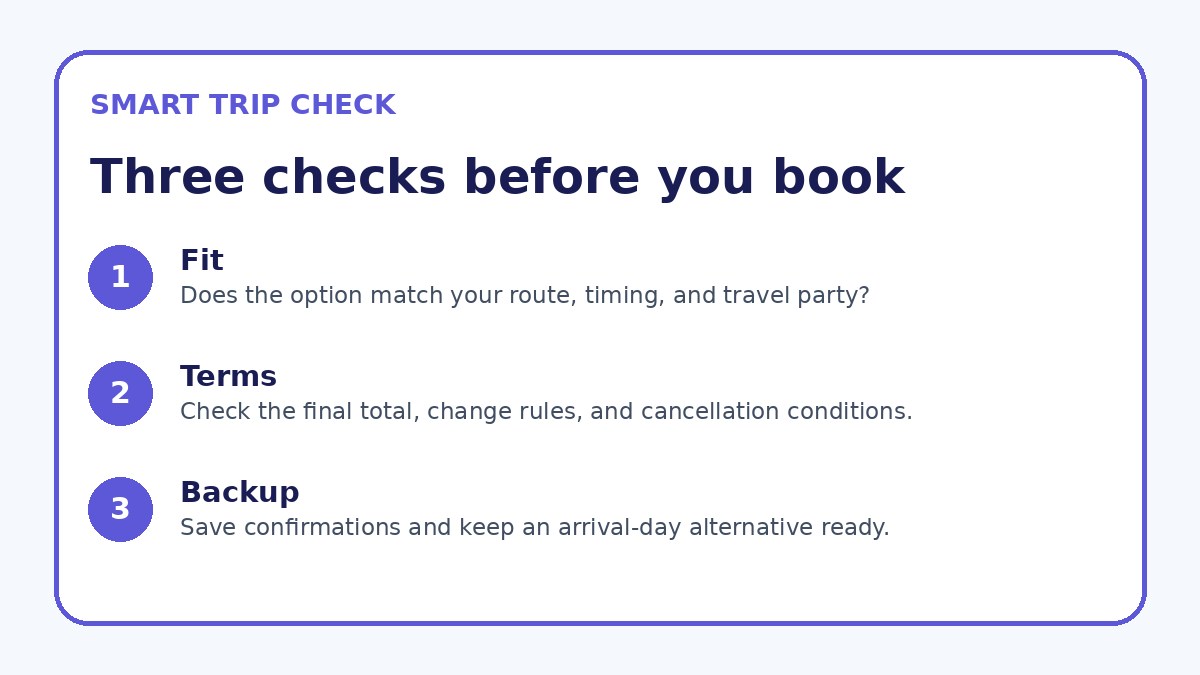
Before you book
- Confirm on the airline’s final booking page whether checked baggage is included and if it is through-checked on connecting itineraries.
- Verify minimum connection times and whether layovers require leaving the sterile area or re-clearing immigration.
- Check seat maps and reserve seats together in advance, and confirm bassinet or extra-legroom options if needed.
- Pack an accessible carry-on with medicines, snacks, entertainment, and a change of clothes for children.
- Plan airport arrival times with extra buffer for family check-in, stroller gate-checking, and security lanes.
- If considering separate tickets, factor in time and budget to rebook missed connections and recheck baggage.
Practical booking checks and airport day-of tips
Before you commit, double-check the total journey on the supplier’s final booking page: baggage rules (including size and weight limits), permitted carry-on pieces, seat assignment fees, and whether infant or child provisions are available. If booking a connection, verify whether your itinerary is protected as a single ticket and whether baggage is checked through to the final destination. If you’re considering separate tickets to save money, understand the risk: missed first-leg flights usually don’t entitle you to a rebooked connecting flight without extra cost.
On travel day, give yourself extra time for check-in, security, and any family-specific processing lanes. Bring a compact, easily collapsible stroller and a checklist of documents and medications in your carry-on. For connections, map the transfer route on the airport website ahead of time—look for family restrooms, playgrounds, and nursing rooms so layover time is comfortable rather than stressful. If you prefer a third-party comparison, Trip.com can be used to view current availability, but always confirm fares and rules on the airline’s official booking page before paying.
Frequently asked questions
Are direct Seoul to Da Nang flights always the fastest option for families?
Direct flights are usually the fastest in terms of airborne time and reduce the complication of transfers, which most families find reassuring. However, sometimes a connecting itinerary can offer a departure time that better fits your children’s sleep or meal schedule, or it can reduce overnight travel. Evaluate total door-to-door time, not just flight hours, and consider how layover timing will affect your family’s routine. Always confirm schedule details and total travel time on the airline’s final booking page before choosing.
What should I check about connections to avoid stressful transfers with kids?
Look up whether your connecting airport requires changing terminals, passing through immigration, or re-checking bags—those steps add time and stress. Prefer single-ticket itineraries where the airline checks your bags through to the final destination, and pick layovers with at least the airline’s recommended minimum connection time for families. Also check airport maps in advance for family restrooms, nursing rooms, and play areas so you can plan breaks during a longer layover.
How do baggage rules and seat assignments affect family bookings on this route?
Baggage allowances, carry-on limits, and seat-assignment policies vary by carrier and fare class and can change the true cost and convenience of a ticket. For families, the ability to reserve seats together and confirm infant policies (such as bassinet availability) is often more important than a small fare saving. Always read the airline’s final booking page for the exact baggage inclusions, fees for additional pieces, and the procedural notes about strollers, car seats, or infant lap policies before completing the purchase.
Final planning note
Choosing between direct and connecting Seoul to Da Nang flights comes down to how your family balances simplicity, total travel time, and cost. If you prioritize fewer transitions, quicker door-to-door travel, and less luggage juggling, a direct flight is usually the best fit. If you need flexibility in departure times, prefer a specific airline’s service, or can arrange an easy layover, a single-carrier connection can work well—just verify baggage through-checking and connection logistics. Whatever you choose, confirm all baggage rules, seat assignments, and bassinet or child-seat policies on the airline’s official booking page before you pay, and plan practical buffers on travel day for a smoother experience.
Continue planning
Check current options and final conditions
Use the provider page to confirm live availability, the final total, cancellation terms, and every condition that matters to your trip.
This evergreen planning guide was created with AI-assisted drafting and a structured quality review. It does not display live prices, schedules, availability, visa guidance, or provider rankings. Verify current details before booking. Some links are affiliate links; we may earn a commission at no additional cost to you.