
If you’re planning travel from Barcelona to Madrid with children, the single most useful decision is how much ticket flexibility you actually need versus what you’re willing to pay for it. Families often balance unpredictability — delays, a child getting sick, or shifting plans — against the stress of complicated exchanges and the cost of fully refundable fares. This guide lays out practical options: fixed nonrefundable tickets, semi-flexible tickets with change fees, refundable fares, and family- or group-friendly booking strategies. Read this first to decide which tradeoffs make sense for your family, then use the checklists and verification steps to confirm rules and fees on the operator’s final booking page. If you want a single place to compare current availability and rules during your research, Trip.com can be used as one comparison tool, but always confirm terms directly with the carrier before paying.
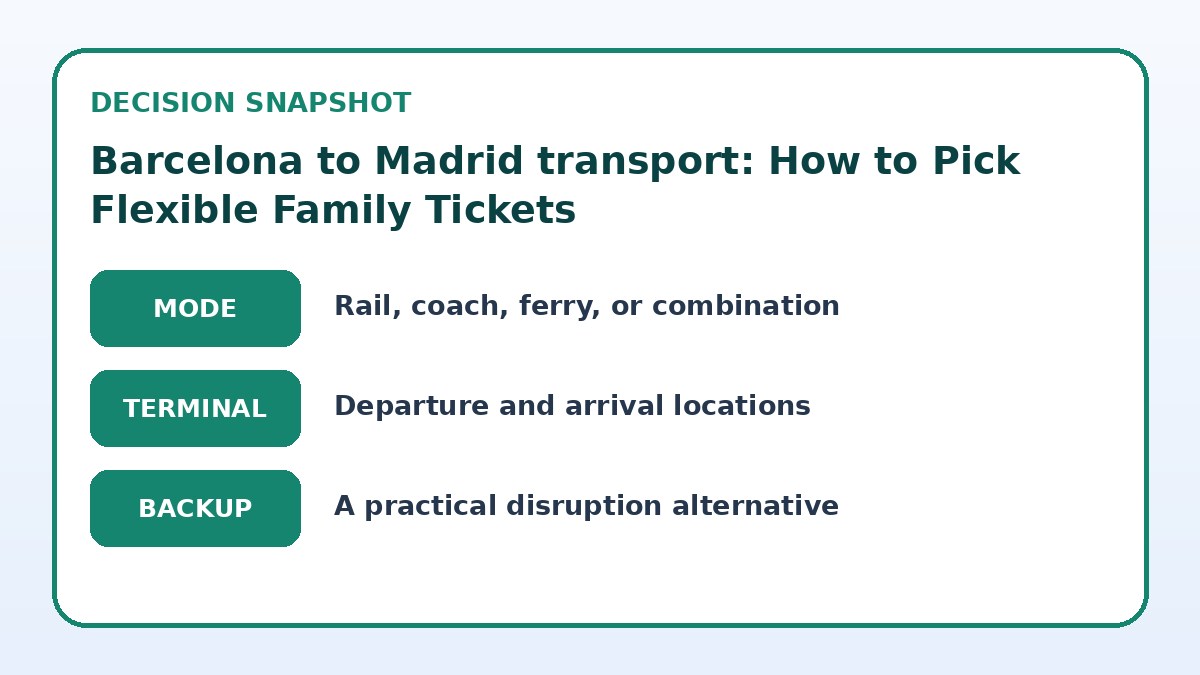
See current options before you compare the details
Availability and final conditions change. Open Trip.com now or keep reading for the practical comparison.
Understand the basic ticket flexibility types
Most operators offer a small set of flexibility types that matter for families: nonrefundable, changeable with fee, and refundable or exchangeable without penalty. Nonrefundable tickets typically prevent refunds but may allow name changes or credit vouchers in some systems; changeable fares come with a defined fee structure and sometimes only permit changes up to a cut-off time. Refundable fares are the most permissive, often allowing full refunds or free exchanges, which reduces stress if schedules shift. For family travel, thinking in scenarios — a child’s illness, an extra day in Barcelona, or an earlier return — clarifies which flexibility will actually be used versus what looks attractive on a booking screen.
When you evaluate these types, pay attention to fine print: whether the fee is a flat amount or a percentage, whether seat reservations are preserved, and whether refunds are immediate or issued as travel credit. Operators also differ on definitions: one provider’s “flex” may only waive part of a change fee, while another’s fully refundable option could still require a small administrative charge. Before you decide, make a short list of acceptable outcomes (refund, transfer, free change within 24 hours) and match ticket types to those outcomes during booking.
How family needs change what flexibility actually costs
Cost is more than the upfront fare. For families, indirect costs — lost days, childcare cancellations, and the hassle of rebooking multiple people — matter. A cheaper nonrefundable fare might look appealing until you factor in the value of days lost or the need to buy separate last-minute fares for family members. Conversely, a flexible ticket can reduce stress and administrative time, especially on journeys where a missed connection or sudden plan change would have cascading effects on hotel bookings and activities.
Think through likely family scenarios and attach a rough monetary or stress value to each. If a single cancelled day causes minimal disruption, saving on a nonrefundable fare may be reasonable. If rearranging affects school schedules, rental car bookings, or multi-city plans, the premium for a refundable ticket can be worthwhile. Use that scenario-driven comparison rather than assuming flexibility has the same worth for every household.
| Approach | Best for | Tradeoff to check |
|---|---|---|
| Nonrefundable low-fare | Families with firm plans who prioritize upfront savings. | Little to no refund or free changes; seat choices and child fare rules may be limited. |
| Changeable fare with fees | Families that may adjust dates but want lower fare than full refundable. | Change fees still apply and can rise close to departure; seats may not be preserved on change. |
| Fully refundable/flexible fare | Families who need last-minute freedom or have unstable schedules. | Higher upfront cost that reduces money available for other trip elements. |
| Hold or reserve then decide | Families testing dates who want short reservation windows without committing. | Not all providers offer holds; temporary holds may require follow-up and still restrict seats. |
Ready to check the option that fits your plan?
Use your exact dates and traveler details so the provider page can show the current total and conditions.
Practical tradeoffs: seat selection, children’s fares and group bookings
Flexibility often bundles with other features that matter for families: seat selection to keep kids together, child or infant fare rules, and the ability to add or remove passengers without severe penalties. Some mid-range flexible fares include reserved seating, while basic nonrefundable fares may leave seat choice to first-come online check-in. Verify whether seat assignments remain if you change the booking; some systems release paid seats on ticket alterations and require you to pay again to reseat the family together.
Also check how child fares and lap infants are handled under each ticket type. Rules for age bands, eligibility for discounted fares, and whether infant tickets can be added after purchase vary. For group bookings, confirm whether adding or removing a passenger triggers a full fare recalculation or a simple change fee. If you need seats together, prioritize tickets that explicitly guarantee or preserve seat assignments during changes.
Before you book
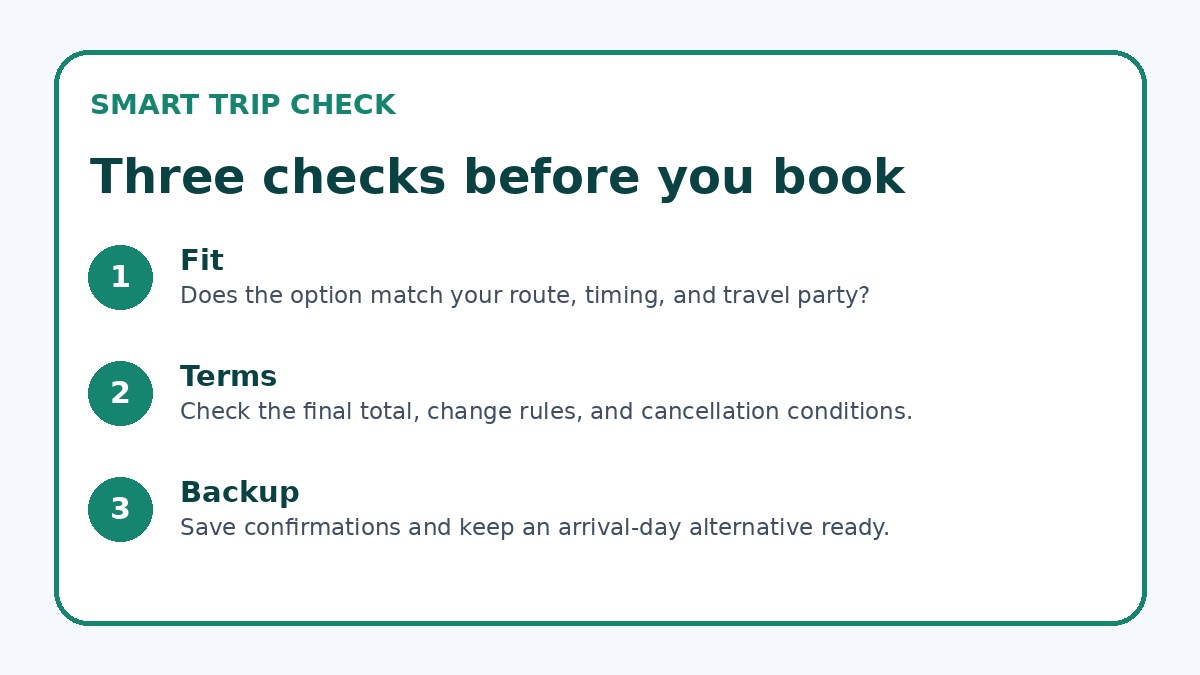
- List three realistic change scenarios (illness, day extension, earlier return) and note which ticket outcome you’d accept for each.
- Compare the final fare rules at checkout for change fees, refund processing method, and any blackout periods before purchase.
- Confirm how seat assignments are handled if you change the booking and whether paid seats will be refunded.
- If booking discounted child fares, verify age bands and whether proof of age is needed at boarding or check-in.
- Save screenshots of the fare rules and your confirmation page; copy the provider’s customer service contact for quick access.
- If you use a third-party site, repeat the verification on the operator’s official booking page before completing payment.
Booking strategy and verification steps before you pay
Start by comparing the same itinerary across fare types: nonrefundable, change-for-fee, and refundable. Don’t assume the cheapest option is the least restrictive — read the fare rules shown at checkout and click through the provider’s detailed policy pop-ups. Verify the change window (how close to departure you can make changes), whether changes must be made online or through customer service, and how refunds are processed (bank transfer, card reversal, or travel credit). These specifics determine how quickly you can recover money or rebook.
Before final payment, screenshot or save the fare rules and confirmation pages. If seats together are important, confirm seat maps and whether seats are allocated immediately or at check-in. For any provider-specific claims about refunds, exchanges, or family discounts, note the exact text from the final booking page and, if useful, copy the support contact method. Trip.com can be used to compare live options, but always verify the definitive rules on the operator’s booking page before completing the transaction.
Frequently asked questions
Can I keep seats together if I change a family booking?
Whether seats stay together after a change depends on the operator’s rules and the fare class. Some flexible fares preserve original seat reservations; others release them and require rebooking. Always check the fare rules and seat-assignment policy shown on the final booking page before you pay. If keeping seats together is critical, look for fares that explicitly state seat retention on change, or contact customer service to confirm how changes will affect seat allocations.
Is it better to buy separate tickets for children or a single group booking?
Group versus separate tickets depends on the operator’s child fare rules and the family’s flexibility needs. A single booking makes managing seats and changes simpler in many systems, but sometimes separate child tickets offer lower fares or different change conditions. Before purchasing, compare the total cost and the change/refund policies for one combined booking versus separate reservations, and verify whether removing or adding a passenger triggers full recalculation of fares or only a change fee.
How do I verify refund and change policies are honored after purchase?
Immediately after purchase, save the full confirmation and the fare rules text from the booking page. If rules are unclear, contact the operator using the support channel listed on the confirmation and request written confirmation of the policy. Keep timestamps of communications and screenshots of the booking terms. For large or expensive family bookings, consider requesting a written statement of the change and refund terms so you can reference it if the provider applies different conditions later.
Final planning note
Choosing the right ticket flexibility for a Barcelona to Madrid family journey is about matching probable scenarios to fare rules, not simply chasing the lowest headline fare. Start by identifying what kinds of changes you are likely to face, then compare how each ticket type handles refunds, change fees, seat retention, and child fare rules. Use the checklist to capture exact terms at checkout and keep confirmation screenshots. If preserving seats together and minimizing rebooking stress matters more than saving a small amount, a higher-flex fare can be worth it. Finally, verify all provider-specific conditions on the operator’s final booking page before you pay; this step avoids surprises and keeps the trip running smoothly.
Continue planning
Check current options and final conditions
Use the provider page to confirm live availability, the final total, cancellation terms, and every condition that matters to your trip.
This evergreen planning guide was created with AI-assisted drafting and a structured quality review. It does not display live prices, schedules, availability, visa guidance, or provider rankings. Verify current details before booking. Some links are affiliate links; we may earn a commission at no additional cost to you.