
When you’re traveling from New York City to Los Angeles on business, the most useful decisions are about baggage and airport time — they determine whether travel feels like work or a delay. First, decide if carry-on only is realistic for your meeting needs; it cuts waiting time but restricts what you can bring. Second, set an airport arrival target that reflects whether you’ll check a bag, need lounge access, or want buffer time for security lines and last-minute prep. Finally, when comparing itineraries, weigh direct versus connecting flights for schedule risk and airport transfer times. Below are concrete steps and tradeoffs to help you book confidently, keep downtime minimal, and arrive with your professional essentials intact.
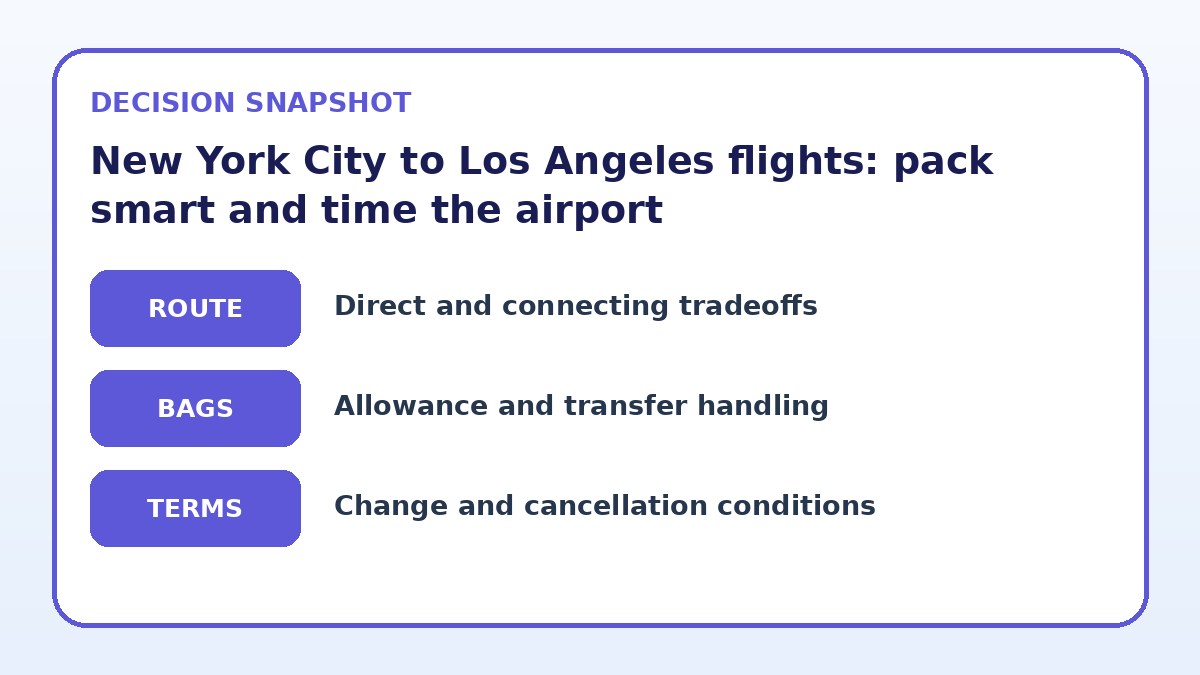
See current options before you compare the details
Availability and final conditions change. Open Trip.com now or keep reading for the practical comparison.
Decide carry-on versus checked baggage
Start by listing what you must have on arrival: suits, shoes, toiletries, presentation materials, and electronics. If everything fits into a compliant carry-on and a small personal item, you eliminate baggage claim time and reduce the chance of delays from mishandled luggage. Use structured packing — garment folders or packing cubes — to keep suits presentable without a full garment bag. For fragile tech, keep laptops and tablets in a protective sleeve in your personal item for faster security removal and to avoid opening a checked suitcase.
Checked baggage is appropriate when you need bulkier clothing, promotional materials, samples, or multiple pairs of shoes that won’t compress well. Expect to add time at check-in and baggage claim; include that in your airport timing. Consider a compact garment bag for suits that won’t fully wrinkle in a checked suitcase, and use a lightweight, lockable roller to simplify handling. Before booking, verify the airline’s baggage size and weight rules on the final booking page because fees and allowances can affect your choice.
Set the right airport arrival buffer
Your arrival buffer depends on two primary factors: whether you will check luggage and how familiar you are with the departure airport terminal. If you travel carry-on only and have online check-in and a mobile boarding pass, you can usually aim for a leaner buffer to security. Factor in potential lines, peak travel windows, and time to reach your gate from security. Allow extra time if you plan to use a lounge, drop off items, or need to print documents. For unfamiliar terminals, add more cushion to avoid a stressful dash to the gate.
When you must check a bag, build time for the bag drop, potential counter queues, and slower security lanes. If you need additional services — expedited security, VIP check-in, or in-person ticketing assistance — account for that too. If you have a tight business schedule on arrival in Los Angeles, prioritize flights with a cushion against delays, even if they depart earlier in the morning or late at night. Always confirm check-in and bag drop cutoffs on the airline’s booking page to determine minimum arrival times.
| Approach | Best for | Tradeoff to check |
|---|---|---|
| Carry-on only | Short trips or single-meeting business travel | Limited clothing and samples; must pack precisely and accept dress restrictions |
| Checked luggage with garment bag | Multi-day trips requiring suits or extra shoes | Adds baggage claim time and slight risk of delayed or mishandled bags |
| Direct flight | Minimizing schedule risk and simplifying logistics | May limit departure times and arrive at less convenient airports |
| Connecting flight | More schedule choices and potential cost flexibility | Higher connection risk and extra time for transfers or re-checking bags |
Ready to check the option that fits your plan?
Use your exact dates and traveler details so the provider page can show the current total and conditions.
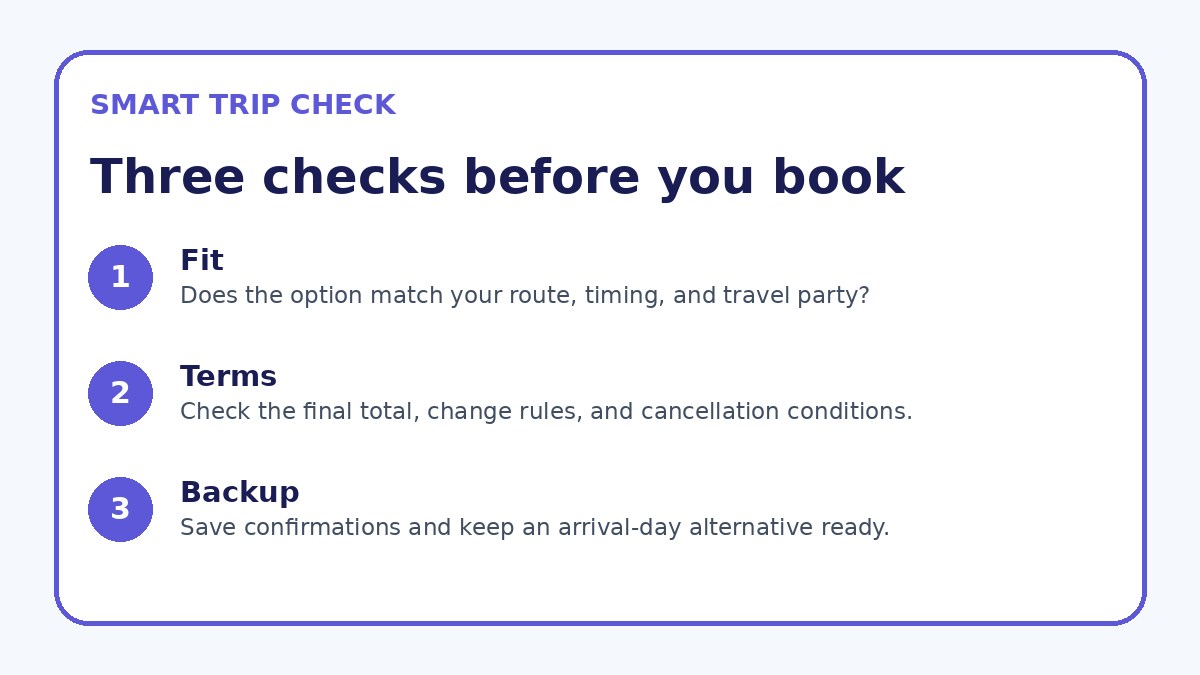
Compare direct flights and connecting options
Direct flights reduce the number of failure points: only one boarding, one security exit at the destination, and no intermediate baggage transfers. For business travelers with inflexible schedules, that simplicity is often worth paying a bit more or accepting less convenient departure times. However, direct flights may depart from different New York City airports or arrive at different Los Angeles airports; compare total door-to-door time, not just flight duration. Also think about ground transport at each end — a longer drive to an alternate airport can offset airborne time savings.
Connecting flights can open more schedule options and sometimes lower fares, but add complexity. If you must connect, choose itineraries with realistic connection times considering the arrival and departure terminals and whether you need to collect and re-check bags. Avoid minimum-layover itineraries if your meeting schedule cannot absorb risk. When comparing routes, use the booking page to check the listed transfer time, the terminal change logistics, and whether the transfer requires passing immigration or collecting baggage; these details are crucial for an informed choice.
Before you book
- Confirm the airline’s carry-on and checked baggage size and weight limits on the final booking page.
- Decide whether a garment bag or packing cubes will keep business attire presentable and pack accordingly.
- Check-in online and load your boarding pass to your phone wallet to skip ticketing lines.
- Plan airport arrival time based on whether you will check bags, need lounge access, or face unfamiliar terminals.
- Reserve a seat that matches your work style (aisle for mobility, window for leaning and privacy).
- Verify connection terminal logistics and minimum connection times on the itinerary before booking a non-direct route.
Streamline airport processes and in-flight work
Pre-flight preparation reduces airport friction: check-in online, download boarding passes to your phone wallet, and save travel documents in an accessible mobile folder. Pack electronics and chargers in an easy-to-reach place for security screening and inflight productivity. If you plan to work on the plane, bring noise-cancelling headphones and a slim mobile battery that complies with airline rules. Consider seat selection for workspace comfort: aisle seats help you stand without disturbing neighbors, while window seats provide a wall to lean against when you need uninterrupted focus.
At both airports, prioritize memberships and single-use services that save time when they match your travel habits — lounge access for meetings, fast-track security if available, or mobile baggage services. If you regularly travel this route, note which terminals have business-class lounges or reliable quiet areas for calls on arrival; verify access requirements on the airline or lounge provider’s page. If you compare options on Trip.com while planning, remember their listings show availability but always validate the final terms and baggage allowances on the airline’s official booking page before purchasing.
Frequently asked questions
Is carry-on only realistic for a two-day business trip from New York City to Los Angeles?
Yes, many business travelers manage two-day trips with carry-on only by limiting shoes and toiletries and using packing cubes or a garment folder. Choose wrinkle-resistant fabrics and a compact toiletry kit that complies with liquid limits. If you must arrive ready to meet, include a travel-size steamer or request pressing services at your hotel. Confirm on the airline’s booking page whether your chosen bag size meets carry-on rules to avoid gate check surprises.
How early should I arrive at New York airports for a business flight to Los Angeles?
Arrival time depends on whether you check a bag, need special assistance, or plan lounge access. If carry-on only and you checked in online, a streamlined buffer may be sufficient; otherwise add time for bag drop and security. Morning peak periods and unfamiliar terminals can add unpredictability, so build extra cushion for those. Always verify check-in and bag-drop cutoff times on the airline’s official booking page so you meet any required minimum times.
If my calendar is tight in Los Angeles, should I prefer direct flights over connecting ones?
Generally, a direct flight reduces transfer and missed-connection risk and is the safer choice when arrival time is critical. However, direct flights may depart or arrive at different airports that affect ground travel time. When comparing options, calculate total door-to-door time — include travel to and from airports, and potential terminal transfers — and verify connection logistics on the booking page for non-direct itineraries to decide which option truly saves time.
Final planning note
For business travel between New York City and Los Angeles, baggage and airport timing decisions determine whether travel supports your objectives or becomes an obstacle. Choose carry-on when you can present professionally from a compact bag; opt for checked baggage when suits or extra materials are essential, and accept a little more time at the airports. Prefer direct flights when low risk and simplicity matter, and vet connections carefully when they offer necessary schedule flexibility. Always confirm baggage allowances, check-in cutoffs, and terminal details on the airline’s final booking page before you buy, and consider using Trip.com as one place to compare availability while verifying all provider-specific rules directly.
Continue planning
Check current options and final conditions
Use the provider page to confirm live availability, the final total, cancellation terms, and every condition that matters to your trip.
This evergreen planning guide was created with AI-assisted drafting and a structured quality review. It does not display live prices, schedules, availability, visa guidance, or provider rankings. Verify current details before booking. Some links are affiliate links; we may earn a commission at no additional cost to you.