If you’re traveling alone to Amsterdam, the practical choice often comes down to two questions: do you want to wake up steps from the canals and nightlife, or would you rather trade proximity for a larger, quieter room? There’s no single right answer—your priorities, planned itinerary, and tolerance for short transit times shape the best trade-off. This guide gives a clear approach: identify your daily activity radius, set a firm budget for room comfort, and compare neighborhoods that match both. Use the checklist and comparison matrix here when you search. For real-time availability and to double-check cancellation and extra-fee policies, compare options on booking platforms (Trip.com can be one place to view current options), then confirm details on the hotel’s final booking page.
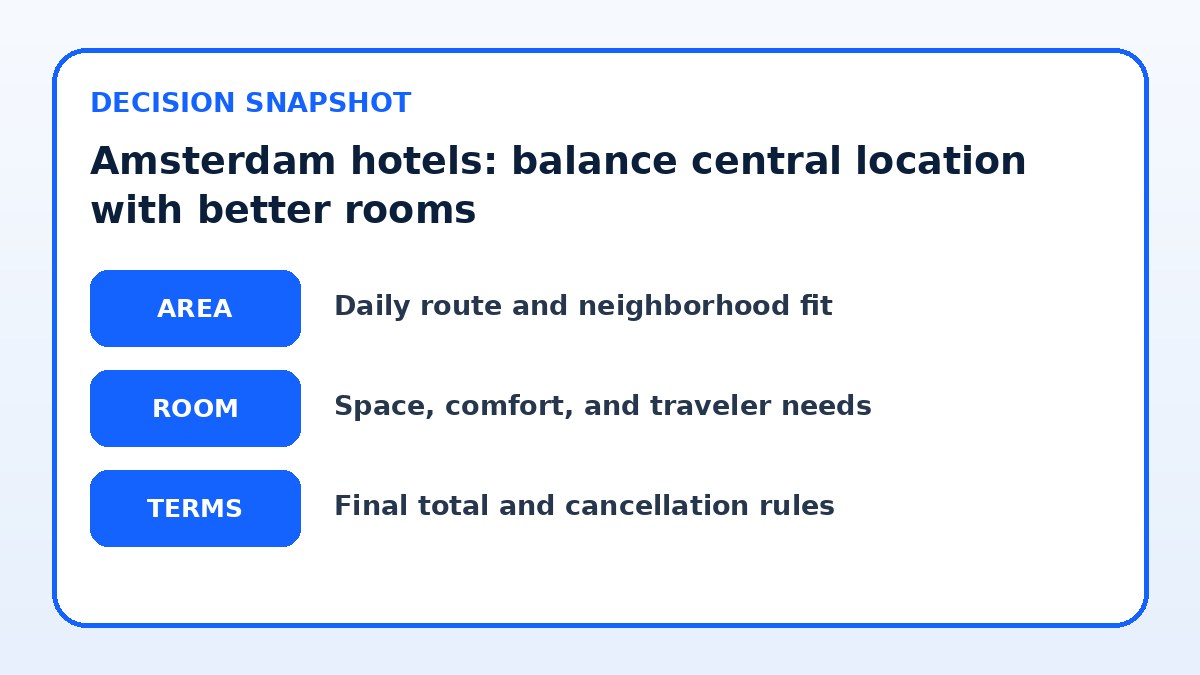
See current options before you compare the details
Availability and final conditions change. Open Trip.com now or keep reading for the practical comparison.
Decide by daily rhythm, not just map distance
Start with an honest assessment of how you will spend most days. If your plan is to walk museum loops, visit cafés, and return midday to rest between activities, being centrally based near the Museumplein, Canal Belt, or Dam Square can save time and give you spontaneous options. For evenings out, a central spot means shorter late-night walks and easier access to a broader range of restaurants and theaters. Remember that a 15-minute walk in Amsterdam can feel longer when you cross bridges or navigate narrow streets, so estimate routes by time rather than straight-line distance.
Conversely, if your days include long work sessions, relaxation, or early starts and late finishes, prioritize room comfort. Neighborhoods such as De Pijp, Oost, and parts of West often offer larger rooms for the same budget as tiny central single rooms. These areas are usually a tram or bike ride away, so you trade a modest commute for a calmer sleep environment and more in-room functionality. Factor in the mental benefit: a restful night and a desk where you can work comfortably can make a trip feel more productive and less rushed.
Neighborhood trade-offs: central vs near-central
Central neighborhoods (Canal Belt, Dam, Jordaan) put you within walking distance of many attractions and give you instant access to nightlife and dining. That convenience increases the likelihood of spontaneous discoveries—popping into a small gallery, catching a live show, or grabbing late-night food. The trade-off is that rooms here tend to be smaller, noisier, and sometimes more expensive for the same amenities you’d get elsewhere. If you choose central, look specifically for rooms with good soundproofing and a private bathroom, and verify what’s included before booking.
Near-central neighborhoods (De Pijp, Oost, some parts of West and Zuid) offer a calmer base while remaining well connected by tram or bike. You’ll find more modern rooms, larger bathrooms, and better chances for a designated workspace. These districts also have excellent cafés and local life, which can be particularly rewarding for solo travelers who like to blend into neighborhood routines. The cost is a predictable short commute; check tram frequency and bike rental options to make sure transfers won’t become a repeated annoyance.
| Approach | Best for | Tradeoff to check |
|---|---|---|
| Central small room | Short stays, heavy sightseeing, nightlife-focused solo travelers | Less space and privacy; noise and smaller beds for the convenience of immediate access |
| Near-central larger room | Travelers valuing a quiet night, workspace, or larger bathrooms | A short commute to main sights; still well connected but less instant convenience |
| Neighborhood apartment or aparthotel | Longer stays and those who want kitchen space or dedicated work areas | Often less central and responsibilities like self-catering can reduce spontaneity |
| Budget chain or hostel private room | Solo travelers prioritizing price while keeping a private bathroom | Simpler rooms and fewer amenities; may require compromise on location or size |
Ready to check the option that fits your plan?
Use your exact dates and traveler details so the provider page can show the current total and conditions.

Room features that change the comfort calculus
When you’re deciding between two properties, focus on a few room-level features that disproportionately affect solo comfort. A private bathroom is usually worth prioritizing for solo travelers. Equally important are bed size and mattress quality—small double beds or firm mattresses can sour a trip if you sleep poorly. Natural light and ventilation count too: a bright, well-ventilated room feels larger and fresher compared with a cramped, interior windowless box, even when square footage is similar.
Work and tech needs are another big factor for solo travelers who work or plan long online sessions. Reliable, fast Wi-Fi and a proper desk or table can transform a simple room into a functional office. Check whether the hotel notes Wi-Fi speed or has a business center, and verify outlets near the desk area. If you expect to spend time in the room, prioritize these features over a marginally more central location—losing an afternoon to poor connectivity is a common regret.
Before you book
- Map your daily itinerary and draw a realistic 20–30 minute travel radius from potential hotels; prioritize locations inside your most-used radius.
- Confirm bed type and bathroom privacy on the hotel’s final booking page—don’t assume pictures represent the exact room you’ll receive.
- Check recent guest comments for soundproofing and street noise; if noise is a concern, request a room away from the street or on a higher floor.
- Verify Wi-Fi availability and whether the hotel lists speed or a business center if you need a reliable workspace.
- Look up tram and metro stops near the hotel and check typical tram frequency for early mornings and late nights.
- Ask the property about luggage storage and late-check-in options before arrival if you expect arrivals outside standard reception hours.
Safety, convenience, and booking verifications
Safety in Amsterdam is generally high, but practical factors matter for solo travelers. Street lighting, well-trafficked routes, and proximity to public transport should influence neighborhood choice, especially for late returns. Look for hotels with secure entry, 24-hour desk service or clear late-arrival policies, and reviews that consistently mention staff helpfulness. If you travel light and prefer to walk, ensure your chosen area offers direct routes back to the hotel after dark.
Before finalizing any booking, verify specifics on the provider’s final page: bed type, bathroom privacy, cancellation and change policies, breakfast inclusion, cleaning frequency, and any extra fees for luggage storage or late check-in. If you intend to rent a bike or need airport transfers, check whether the hotel offers those or partners with trusted providers. Use recent guest photos and multiple booking sites to confirm claims, then double-check the hotel’s own pages or contact them directly for anything that would change your decision.
Frequently asked questions
Is it better to stay inside the Canal Belt or in neighborhoods like De Pijp for a solo trip?
Both are good choices depending on what you value most. If you want to be within walking distance of many tourist sites and evening entertainment, staying in the Canal Belt puts you at the heart of central Amsterdam. However, rooms here can be smaller and the streets busier, which may matter if you value peace and space. De Pijp and nearby neighborhoods offer calmer streets, more room for the same budget, and a lively local food scene; they’re a short tram or bike ride from central attractions. Choose the Canal Belt for immediate convenience; choose De Pijp if in-room comfort, quieter nights, and neighborhood life are priorities.
How should I compare commute times versus room quality when prices are similar?
Think in terms of repeated cost: a daily 20-minute commute each way is time you won’t get back, while a slightly smaller room is a one-time adjustment. If you only plan one or two full days of sightseeing, a central location can maximize time on the street. For trips with regular remote work, long relaxation, or multiple late nights, prioritize room quality and quiet—those hours spent in the room will shape your comfort more than a few saved minutes. Also compare transit reliability: a 15-minute tram ride with frequent service is often more convenient than a 10-minute walk across busy bridges.
What practical things should solo travelers check on the booking page before paying?
Confirm the exact room type, bed configuration, private versus shared bathroom, and the cancellation or change conditions. Look for notes on extra fees such as city tax, early/late check-in, or luggage storage; these often appear at checkout. If you rely on internet, verify Wi-Fi availability and whether there are dedicated workspaces. If you need airport transfers, bike rental, or secure luggage storage, check whether the hotel provides or partners for those services. Finally, if any detail is unclear, contact the hotel directly and save their confirmation in case plans change.
Final planning note
Balancing location and room comfort in Amsterdam comes down to a clear assessment of how you will spend your time. If your trip centers on sightseeing, nightlife, and spontaneous wandering, a central Amsterdam hotel rewards you with saved transit time and easy access. If you need quiet mornings, a proper workspace, or simply a larger room to unwind, moving a short tram or bike ride out to neighborhoods like De Pijp, Oost, or parts of West will usually deliver more comfort for the same budget. Use the checklist to verify essential room details and transit links before booking, compare options on booking platforms, then confirm specifics on the hotel’s final booking page so you arrive with expectations that match reality.
Continue planning
Check current options and final conditions
Use the provider page to confirm live availability, the final total, cancellation terms, and every condition that matters to your trip.
This evergreen planning guide was created with AI-assisted drafting and a structured quality review. It does not display live prices, schedules, availability, visa guidance, or provider rankings. Verify current details before booking. Some links are affiliate links; we may earn a commission at no additional cost to you.