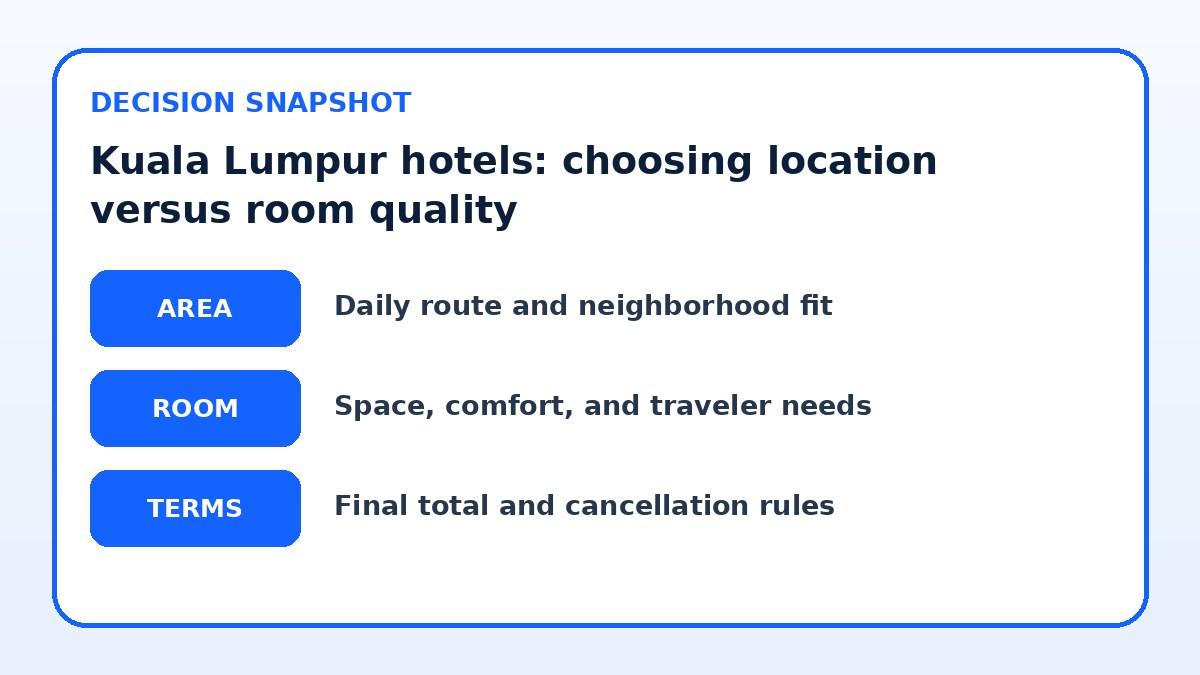
Short practical answer: prioritize location if you plan many short daytime stops, use public transit and walkable neighborhoods to save time; prioritize room comfort if you’ll be working late, need reliable sleep, or value in-room privacy. For most solo travelers to Kuala Lumpur a hybrid approach works best: pick a hotel in a central but slightly quieter neighborhood, or accept a short MRT/Grab ride in exchange for a larger, quieter room. Before you book, compare transit access, typical room sizes and noise mitigation (double glazing, internal courtyards), and the provider’s cancellation and health-safety details. Verify exact room dimensions, mattress type, floor level, and transit connections on the hotel’s booking page — including nearby MRT/LRT stations and walking distances — because those specifics change frequently.
See current options before you compare the details
Availability and final conditions change. Open Trip.com now or keep reading for the practical comparison.
Decide what daily life in Kuala Lumpur will look like
Start by visualizing a typical day: how many stops will you make, how late will you return, and will you use coworking spaces or cafes? If your days are dense with museums, markets, and food stalls clustered around Bukit Bintang, KLCC, and Chinatown, a central base cuts walk-and-ride friction and lets you drop things and rest between activities. Central locations reduce transit planning stress when you only have a few days and want convenience. Consider walking quality, covered sidewalks, and climate — heavy rain or heat can turn a short distance into a barrier, making proximity more valuable.
If your days include working, long reading sessions, or late-night flights and evening meetups, room comfort climbs in importance. A quiet room on an upper floor, a reliable air conditioner, and a desk with good lighting can make a multi-day stay productive and restful. Also think about sleep reliability: noisy streets, late karaoke bars, or thin walls will hurt a solo traveler’s safety sense and recovery. Choose accommodation that matches the rhythm of your trip rather than assuming every night will require high energy.
Location tradeoffs: centrality vs calm neighborhoods
Central neighborhoods such as KLCC and Bukit Bintang put major attractions, malls, and restaurants within walking distance and often have multiple transit lines nearby. The tradeoff is that these areas can be noisier and busier, especially after sundown. For short stays where sightseeing is the priority, the convenience of being close to landmarks outweighs a smaller room. But for longer stays, the cumulative effect of street noise, foot traffic, and higher street-level prices for food and services can erode comfort and budget.
Quieter pockets, including certain parts of Bangsar, Damansara, or areas near quieter MRT stations, deliver larger rooms and calmer nights but add a short commute to the city center. That commute can be efficient if you pick a location with a direct MRT or regular Grab/ride-hailing service; however, the added time per day will matter if your itinerary is tight. Evaluate whether saved money or larger room space compensates for the daily transit time and potential taxi costs, and check public-transport reliability for the hours you plan to travel.
| Approach | Best for | Tradeoff to check |
|---|---|---|
| Central small room (KLCC/Bukit Bintang) | Sightseeing-focused travelers who prioritize short walks and immediate access to attractions. | Smaller rooms and more street noise; lower rest quality for late nights. |
| Larger room farther out (Bangsar/near MRT) | Travelers who need quiet nights, workspaces, or longer stays seeking value and calm. | Extra commuting time and possible transport costs to city-center attractions. |
| Mid-distance compromise (near major MRT/LRT) | Solo travelers wanting a balance of transit access and reasonable room comfort. | May still face some noise and a short transit leg for the busiest tourist spots. |
| Boutique or lifestyle hotel in central area | Travelers valuing design, local character, and on-site dining or social spaces. | Smaller rooms and inconsistent soundproofing; can be pricier for similar comfort. |
Ready to check the option that fits your plan?
Use your exact dates and traveler details so the provider page can show the current total and conditions.
Room comfort: what to check on the booking page
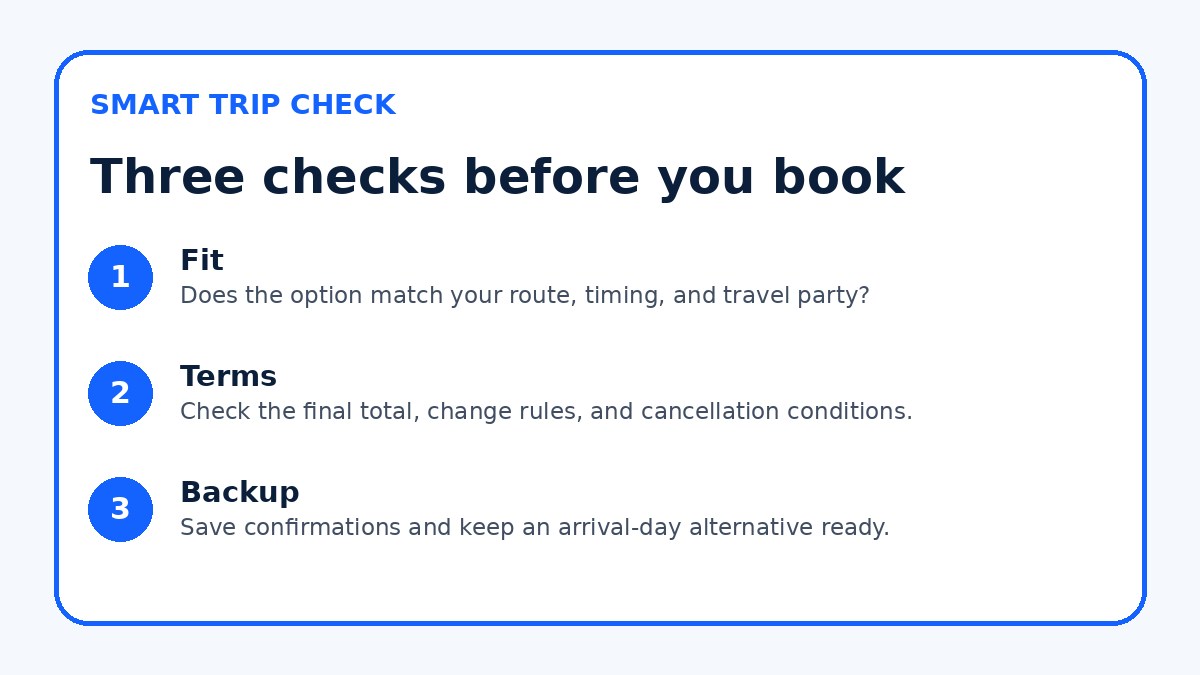
On the hotel booking page, verify concrete details that affect comfort: bed size and mattress type if listed, room square footage or bed measurements, whether the room has a desk or table for work, and the floor level or whether rooms face a courtyard. Look for mentions of double glazing, soundproofing, or quiet rooms; when not stated, ask the property directly. Confirm wifi speed promises or business-center access if you need steady internet. Don’t assume photos show a standard room—room types can vary widely and images sometimes depict upgraded suites.
Also check cancellation policies, check-in window flexibility, and whether the hotel offers 24-hour reception or luggage storage—useful for solo travelers arriving early or leaving late. Verify whether breakfast is included or available at extra cost if that shapes your morning routine. If you rely on hotel-arranged airport transfers or early check-outs for flights, ask the property to confirm current options. Always note the exact room code and bedding configuration shown on the provider page before you complete a booking.
Before you book
- Confirm the nearest MRT/LRT station and realistic walking time to the hotel using maps and the hotel’s own directions.
- Verify exact room type, bed configuration, and floor level on the booking page before selecting or contact the hotel for clarifications.
- Ask the hotel about soundproofing or request a quiet room away from streets and elevators if you value sleep.
- Check the hotel’s reception hours, luggage storage, and early check-in/late-check-out policies if your flight times are unusual.
- Compare included amenities like breakfast, wifi speed, and laundry to avoid extra daily costs that affect solo budgets.
- Read recent guest comments for noise, safety, and transit convenience, then confirm crucial facts with the hotel directly.
Safety, solo-friendly services, and cost-conscious choices
Safety and convenience are linked: choose hotels with 24-hour reception, secure keycard access, and a visible staff presence if you value a sense of security. Solo travelers can benefit from properties that provide lockers, night concierges, or escorted drop-offs for late-night pickups. Read the hotel’s description for guest policy details and ask about on-site medical assistance or nearby pharmacies if you have health concerns. If you’ll use ride-hailing apps, confirm the hotel’s typical pickup points to avoid blocked areas or traffic restrictions.
To stay cost-conscious without sacrificing safety, consider weekday stays or hotels a quick MRT stop outside the busiest districts. Compare room sizes and included amenities rather than focusing on brand names alone: a modestly branded hotel with a larger room and good soundproofing may be more restorative than a small, central boutique room. For current availability and to compare conditions you can use Trip.com as one of several booking platforms, but rely on the hotel’s page or direct contact for final confirmations of room specifics and policies.
Frequently asked questions
Is it better to stay in Bukit Bintang or near KLCC for a short solo trip?
Both Bukit Bintang and KLCC are excellent for short trips because they cluster shopping, dining, and major attractions. If your priority is nightlife and street food variety choose Bukit Bintang; for landmark views (such as the Petronas Towers) and slightly more straightforward transit connections, KLCC is convenient. Evaluate whether you mind nighttime activity noise—Bukit Bintang can be busier after dark. Consider how many early mornings versus late nights you expect and pick the neighborhood that minimizes travel for the activities you care about most.
How can I judge room noise levels before booking a Kuala Lumpur hotel?
Noise is often reported in recent guest reviews—look specifically for mentions of traffic, nightlife, and thin walls. On the booking page check for descriptions like ‘quiet rooms,’ double glazing, or rooms facing a courtyard; if that language is absent, message the hotel to request a quiet room on a higher floor. Use map satellite view to see if the hotel borders major roads or entertainment areas, and search for nearby nightlife venues. Finally, consider choosing a property that allows free cancellations or changes so you can switch if noise is worse than expected.
Can I rely on taxis and ride-hailing to bridge location compromises at night?
Yes, ride-hailing apps and metered taxis are commonly used in Kuala Lumpur and can make slightly out-of-center hotels practical for evening returns. However, factor in variable traffic during peak hours and the need to know safe pickup points at your hotel. Check whether your hotel has a recommended pickup area and if there are restrictions at nearby malls or roads. If you are traveling very late, confirm the availability of ride-hailing services in the area and whether the hotel offers any assistance for late pickups to reduce wait times and ambiguity.
Final planning note
Choosing Kuala Lumpur hotels as a solo traveler is about matching your daily rhythm to what the room and location deliver. If your itinerary is dense with short stops, central neighborhoods minimize wasted time; if rest and workspace matter, a quieter, slightly outlying hotel often provides better nights and more space for the same budget. Use the hotel booking page to confirm room type, bed size, floor, transit walking times, and reception hours before you finalize a reservation. Balance comfort and convenience with realistic transit expectations, and if uncertain, contact the property directly or compare options on a booking platform such as Trip.com in addition to the hotel’s official page.
Continue planning
Check current options and final conditions
Use the provider page to confirm live availability, the final total, cancellation terms, and every condition that matters to your trip.
This evergreen planning guide was created with AI-assisted drafting and a structured quality review. It does not display live prices, schedules, availability, visa guidance, or provider rankings. Verify current details before booking. Some links are affiliate links; we may earn a commission at no additional cost to you.