Practical answer first: set targeted price alerts for flights and flexible hotels, but pair each alert with a short decision checklist and a clear booking deadline. For business travelers heading to Fukuoka, that means creating alerts for the routes and date ranges you realistically need, limiting alerts to high-signal windows (conference days, client meetings), and deciding in advance which savings justify the disruption of changing plans. Use calendar blocks and a monetary threshold to stop impulse purchases — for example, only act if savings exceed your pre-set amount and you can rebook meetings or change trains without cost. The rest of this guide explains how to choose alert settings, compare options, evaluate refundable versus nonrefundable fares and hotels, and what to verify on the provider’s final booking page before confirming.
See current options before you compare the details
Availability and final conditions change. Open Trip.com now or keep reading for the practical comparison.
Choose the right alerts and keep them focused
Start by narrowing alerts to the exact Fukuoka arrival airport and the nearest major departure airports you actually use for business travel. Business itineraries often hinge on specific meeting dates and times, so set alerts that monitor a compact date window (for example, two days before and after your meeting). Avoid broad searches for ‘Japan’ or large multi-city ranges; those generate many irrelevant alerts and increase the urge to buy on impulse. If you frequently travel from multiple origin cities, create separate alerts for each origin–Fukuoka pair and label them so you can instantly see which meeting they relate to.
Decide the acceptable itinerary flexibility before you let alerts pile up. For most business travelers a one-time change to a flight or hotel should not disrupt the trip — set alerts to include reasonable connection options and filter for total travel time if that matters to you. If you only accept direct flight options, explicitly choose that filter so you’re not tempted by low fares that add awkward connections. Finally, schedule a regular tidy-up of unused alerts: turn off alerts that no longer match upcoming meetings or budgets to reduce noise and decision fatigue.
Set actionable thresholds and a cooldown rule
An alert without a decision rule invites impulsive clicks. Define a monetary or percentage threshold for acting on an alert — for instance, only consider booking if the price is at least a set currency amount lower than your current plan or company-approved budget. Translate soft benefits into concrete terms: include estimated time lost for rebooking, potential change fees, and whether the fare class allows work-related changes. This helps weigh whether savings are actually worth the administrative or schedule cost.
Pair the threshold with a cooldown period: when an alert meets criteria, wait a short, fixed time (for example, two to six hours) to prevent buying solely from excitement. Use that time to confirm meeting details, check alternative schedules, and consult a colleague or travel manager if required. If you’re booking through a corporate travel tool, verify policy compliance before completing the purchase. The cooldown is especially useful for weekend alerts or late-night notifications when haste often overrides practical checks.
| Approach | Best for | Tradeoff to check |
|---|---|---|
| Aggressive alerting and instant booking | Travelers who prioritize lowest fares and can flex schedules without approvals | Higher risk of disruptive schedule changes, potential change fees, and impulse purchases that need later adjustments |
| Targeted alerts with thresholds and cooldowns | Business travelers who want savings but require control and predictable schedules | You may miss some low fares that fall outside your threshold or cooldown window |
| Only refundable fares with alerting for price drops | Those needing maximum flexibility and minimal administrative hassle if plans shift | Refundable rates are often higher, reducing the immediate savings from alerts |
| Corporate travel tool with managed alerts | Travelers subject to company policy and approval workflows | Less personal control over alert criteria and potentially fewer impulse purchases, but you may lose access to some retail-only fares |
Ready to check the option that fits your plan?
Use your exact dates and traveler details so the provider page can show the current total and conditions.
Compare refundable, changeable, and nonrefundable options
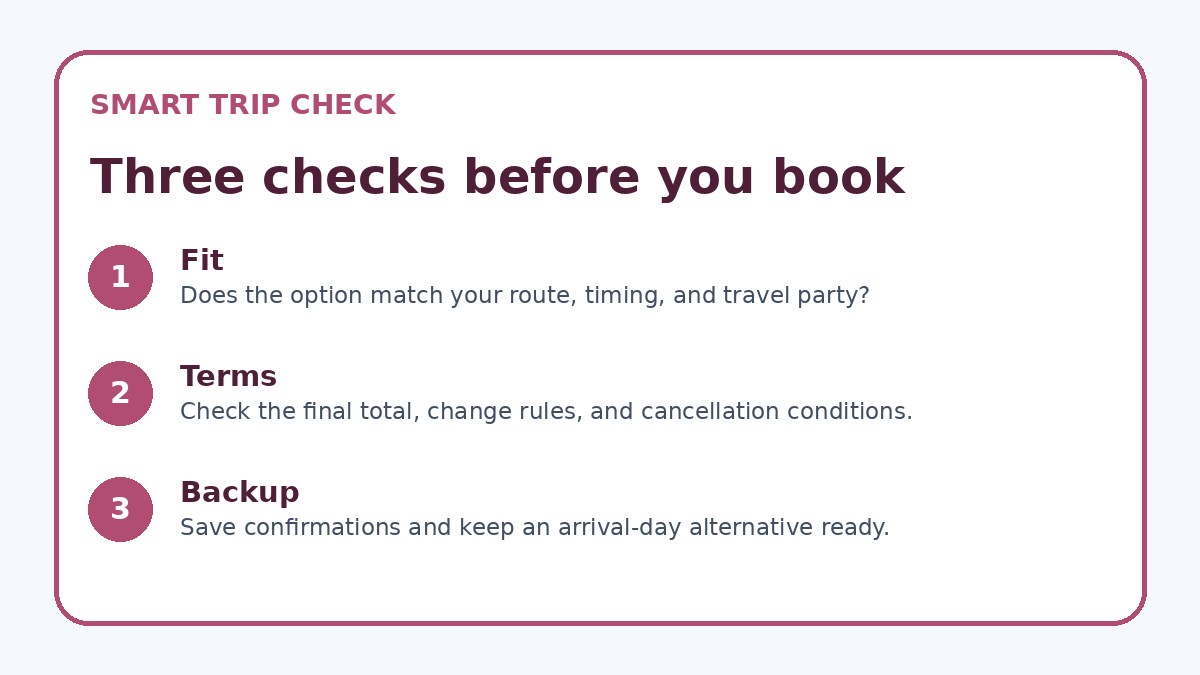
Business travel often benefits from flexibility, so compare the total cost of refundable or changeable fares versus cheaper nonrefundable options. When a cheaper fare looks attractive, open the provider’s final booking page and read the fare conditions: what changes are allowed, what fees apply, and what penalties exist for changes or cancellations. Don’t rely only on summary lines shown in alert emails; the final booking page contains exact rules and any carrier-specific conditions. If you use a corporate card or travel program, check whether it covers change fees or provides travel credits that alter the tradeoff.
Also evaluate hotel rate types: pay-now, pay-later, and refundable rates each have different tradeoffs for business stays. A slightly higher refundable rate can be worth the premium if your schedule might shift. If you must secure the lowest rate, verify whether the booking platform displays deposit requirements, refund processing times, and any blackout dates. When in doubt, note the cancellation deadline and keep a reminder on your calendar so you can cancel within the free window if plans change.
Before you book
- Create separate alerts for each origin–Fukuoka airport pair and label them with the meeting or project name.
- Set a clear monetary or percentage savings threshold that justifies changing existing plans and stick to it.
- Decide a cooldown period for alert-driven purchases and use it to verify schedules and approvals.
- Open the airline or hotel’s final booking page to read exact change and cancellation rules before confirming.
- Save booking references and confirmation screenshots to the calendar entry related to your Fukuoka trip.
- Turn off or archive alerts that no longer match your confirmed meeting dates to avoid distracting notifications.
What to verify on the provider page before finalizing
Before hitting confirm, verify these critical items on the provider’s final booking page: exact travel dates and times, total price with taxes and fees, fare or rate rules on changes and cancellations, baggage allowances, seat or room guarantees, and the supplier contact details for last-minute changes. If you plan to use loyalty points, corporate travel credits, or invoicing, ensure the final page accepts those options. If you rely on a third-party platform like Trip.com for comparison, use it to cross-check availability but read the airline’s or hotel’s own terms where possible.
Check payment and post-booking support options so you know how to reach the provider if problems arise. For corporate bookings, confirm whether the itinerary automatically copies to your travel manager or expense system. Finally, take a screenshot or save the confirmation page and store booking reference numbers in your calendar invite for the meeting — that small habit saves time if you must rebook or dispute a charge later.
Frequently asked questions
How far in advance should I set price alerts for Fukuoka business trips?
Set alerts as soon as tentative dates are known, especially for high-demand periods like trade shows or fiscal-year meetings, but focus the monitored range to a few days around your fixed commitments. Early alerts give you a sense of price trends, yet narrow windows reduce irrelevant options and the urge to buy. If your dates are flexible, maintain alerts across the flex window and raise your action threshold since more variability increases noise. Always pair alerts with a decision rule so you’re not reacting to every fluctuation.
Are nonrefundable fares ever worth booking for business travel to Fukuoka?
Nonrefundable fares can be worthwhile when your schedule is firmly fixed, the savings exceed administrative or potential penalty costs, and your company policy allows it. Before purchasing, calculate the worst-case cost of changing or canceling and compare that to the immediate savings. Also check whether rebooking fees, fare class restrictions, and baggage allowances make the deal less attractive. If uncertainty exists, prioritize flexible fares or refundable hotel rates even if they cost more up front.
How do I involve my travel manager without losing alert-driven savings opportunities?
Share your alert criteria and decision thresholds with your travel manager so alerts become part of the approval workflow rather than bypassing it. Set a short notification window and provide a clear summary: origin–Fukuoka pair, dates, fare type, and suggested action if the alert meets your threshold. Use corporate booking tools when possible to capture managed fares; if you find a better retail fare, confirm policy compliance and ask the travel manager to approve an exception before purchase. Clear communication prevents policy conflicts and preserves potential savings.
Final planning note
Price alerts are powerful for finding Fukuoka travel deals, but they’re only useful when paired with disciplined decision rules that suit business needs. Focus alerts narrowly on the airports and date windows that matter, set a monetary or percentage threshold for action, and enforce a short cooldown period to check schedules, approval requirements, and fare rules. Always review the final provider booking page for exact change and cancellation terms and document confirmations in your calendar. With these practices you can capture meaningful savings without letting an alert dictate actions that disrupt meetings or create administrative headaches.
Continue planning
Check current options and final conditions
Use the provider page to confirm live availability, the final total, cancellation terms, and every condition that matters to your trip.
This evergreen planning guide was created with AI-assisted drafting and a structured quality review. It does not display live prices, schedules, availability, visa guidance, or provider rankings. Verify current details before booking. Some links are affiliate links; we may earn a commission at no additional cost to you.