
Practical answer first: if you want sun and a resort-feel, choose Haeundae; for nightlife and cafes near a long beach and views of Gwangan Bridge, pick Gwangalli; if you prefer historic markets, ports, and close access to Gamcheon Culture Village, stay near Nampo-dong; and if you want the best transport hub with a wide choice of restaurants and shopping, base yourself in Seomyeon. Those four neighborhoods cover most first-time visitor needs and are well connected by Busan Metro and taxis. How you trade convenience, atmosphere, budget flexibility and evening noise determines which area suits you. Below I compare practical tradeoffs, how to check hotels and transport connections, and simple decision rules so you can pick the exact hotel that matches your itinerary and comfort priorities.
Haeundae: beach-first stays and quieter mornings
Haeundae is the instinctive pick for travelers who prioritize sand, sunrise walks and a resort-style hotel experience. The district’s long stretch of beach is lined with high-rise hotels, guesthouses and a scattering of boutique properties that lean into sea views and swim-friendly amenities. If you plan to spend mornings on the sand and afternoons in cafés or casual seafood restaurants, Haeundae saves travel time; many hotels will put you within a short walk of the beach, public parks and aquarium-style attractions that appeal to families. Haeundae’s summer festival calendar and beachfront vendors bring energy to the area, so expect a lively atmosphere that softens toward late evening.
Tradeoffs in Haeundae focus on price and seasonality. Hotels closest to the beach tend to be pricier and book early for weekends, while quieter side streets and nearby apartment-style rentals offer better value but require a short walk or bus ride. If you want quieter evenings, look for accommodations on the northern edge of the beach or along quieter side streets rather than right on the boardwalk. For transport, Haeundae is on the metro but some point-to-point journeys to other neighborhoods may need a line change or a taxi; always check walking distance to the nearest station when you book.
Gwangalli: bridge views, nightlife and compact hotels
Gwangalli’s draw is the waterfront strip with sweeping views of Gwangan Bridge, which lights up at night. It suits couples and younger travelers who want a beach-by-day, bar-and-café-by-night scene without the scale of Haeundae. Hotels here are often smaller — think boutique guesthouses, family-run inns and medium-size hotels — which can make the area feel intimate and walkable. Evening dining revolves around seafood, contemporary Korean bistros and bars that open late; you can comfortably plan an after-dinner stroll with illuminated bridge views as a backdrop.
The tradeoff in Gwangalli is that rooms with the best views are limited and often located in buildings with fewer facilities than larger resorts. If you need an on-site gym or extensive lobby services, verify those amenities on the hotel’s booking page before reserving. Also consider how you’ll move between Gwangalli and other parts of Busan: the metro serves the area but some transfers are required to reach Nampo-dong or several cultural sites. Decide if the waterfront vibe and nightlife access outweigh slightly longer transfers for daytime sightseeing.
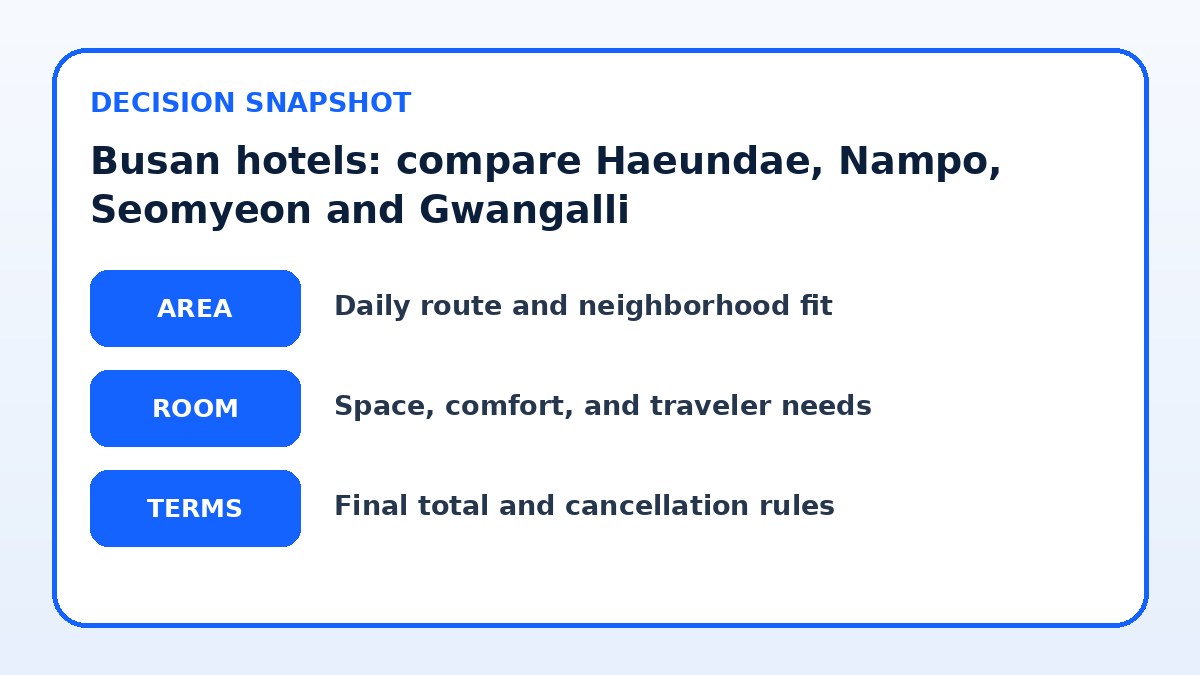
| Approach | Best for | Tradeoff to check |
|---|---|---|
| Choose Haeundae | Beach days, family stays, resort-style amenities | Higher summer busyness and possibly higher rates near the shore |
| Choose Gwangalli | Evening views, bars and a younger nightlife crowd | Smaller hotels and fewer on-site facilities than large resorts |
| Choose Nampo-dong | Markets, historic neighborhoods, easy port access | Noisier streets and steeper, less accessible alleys in places |
| Choose Seomyeon | Best transit connections, shopping and late-night convenience | Urban commercial vibe without a nearby major beach |

Nampo-dong & Jagalchi: markets, port access and historic walks
Nampo-dong puts you in the thick of Busan’s historic port life: street markets, seafood stalls, ferry terminals and access to Gamcheon Culture Village. It’s an ideal base for travelers who want to prioritize local food, market shopping and short ferry rides to nearby islands. The neighborhood’s streets are varied — from flat shopping promenades to steep alleys — and offer a lively daytime atmosphere that’s especially rewarding for those who enjoy wandering city markets and photographing colorful neighborhoods. You’ll also be a short walk from some museums and the cable car up to certain viewpoints.
The main tradeoffs are noise and terrain. Market districts are busy and can be noisy into the evening; streets around the port can be narrow with some steep sections, so consider luggage handling if you plan to arrive by train or bus. Hotel room choices range from budget guesthouses near the market to mid-range properties closer to the waterfront; check the exact address and whether the property offers elevator access if mobility or heavy bags are concerns. Also confirm ferry schedules and pier pickup points on the operator’s page when planning island day trips.
Before you book
- Confirm the hotel’s exact address and nearest subway exit so you can plan arrival and evening returns efficiently.
- Verify room amenities you care about (elevator, sea view, ensuite bathroom, AC) directly on the hotel’s booking page before paying.
- Check how closely the property matches your preferred atmosphere (beachfront, nightlife, market access) by viewing recent guest photos and location on a map.
- If arriving by plane or train, compare taxi or shuttle options from the airport or Busan Station and note estimated walk times from drop-off points.
- For beach days, check whether the hotel provides beach towels or has partnerships with local rental vendors and confirm on the booking page.
- Read cancellation and check-in policies on the provider’s final booking page so you know how flexible plans are if schedules change.
Seomyeon: central transport hub and all-night conveniences
Seomyeon is Busan’s commercial heart and the practical choice if you want fast connections. It’s a major subway interchange with an abundance of shopping streets, restaurants and 24-hour conveniences — useful for late arrivals and flexible itineraries. This neighborhood doesn’t have a major beach but compensates with a broad choice of accommodations across price bands and easy access to airport buses, train stations and night food markets. For travelers planning multiple day trips or relying on public transit, Seomyeon minimizes transfer times and provides plentiful dining options within walking distance.
Seomyeon’s tradeoff is atmosphere: it’s busy and urban rather than scenic. Hotels here emphasize practical comforts over sea views or beachfront vibes. If you want to balance Seomyeon’s centrality with occasional beach days, choose a hotel that’s an easy metro ride to Haeundae or Gwangalli. When booking, check how close your chosen property is to the Seomyeon subway exits you plan to use; distances between exits and hotels can vary and affect how convenient late-night returns or early departures feel.
Frequently asked questions
Which Busan neighborhood is best for a short two-night trip?
For a two-night visit prioritize convenience that maximizes time on-site. Choose Haeundae if you want to spend both mornings on a beach, or Seomyeon if you want quick transit access and varied dining without long transfers. If your short trip prioritizes markets and a historic feel, Nampo-dong places you near Jagalchi Market and Gamcheon Culture Village, but plan your route carefully so you aren't spending most of your time moving between neighborhoods. For any short stay, book a hotel close to a metro station to avoid wasting hours in transit.
Are there quiet hotel options in busy Busan neighborhoods?
Yes—many busy neighborhoods have quieter pockets. Look for hotels on side streets or the lee side of main thoroughfares; properties facing internal courtyards rather than the street can be noticeably quieter. Read recent guest reviews focusing on night noise and check whether the hotel offers blackout curtains and double-glazed windows. If noise is a top concern, confirm the room location or request a higher-floor room away from nightlife venues on the hotel’s booking page before arriving.
How should I compare hotels when I know which area I want?
Start by filtering hotels by neighborhood, then compare three practical items: exact location relative to your points of interest and transit, the specific amenities you need (elevator, luggage storage, breakfast) and cancellation/check-in policies. Use the map view to estimate walking times and check recent guest photos for room size and condition. If an operator lists shuttle or airport transfer options, verify those details on the provider’s final booking page. Optionally, use a site like Trip.com to compare availability and policies, but confirm any specifics with the hotel directly before booking.
Final planning note
Choosing where to stay in Busan is mainly a question of what you want from each day: beach time and seaside resorts point to Haeundae, evening bridge views and a lively bar scene point to Gwangalli, market culture and waterfront access point to Nampo-dong, and fast transport links and shopping point to Seomyeon. Start by matching your priorities—beach, nightlife, markets, or transport—then use the checklist items above to verify exact location, amenities and policies on a hotel’s final booking page. With those checks done, pick the neighborhood that aligns with how you want to spend your days and evenings, and you’ll spend more time enjoying Busan and less time navigating it.
Continue planning
Check current options and final conditions
Use the provider page to confirm live availability, the final total, cancellation terms, and every condition that matters to your trip.
This evergreen planning guide was created with AI-assisted drafting and a structured quality review. It does not display live prices, schedules, availability, visa guidance, or provider rankings. Verify current details before booking. Some links are affiliate links; we may earn a commission at no additional cost to you.