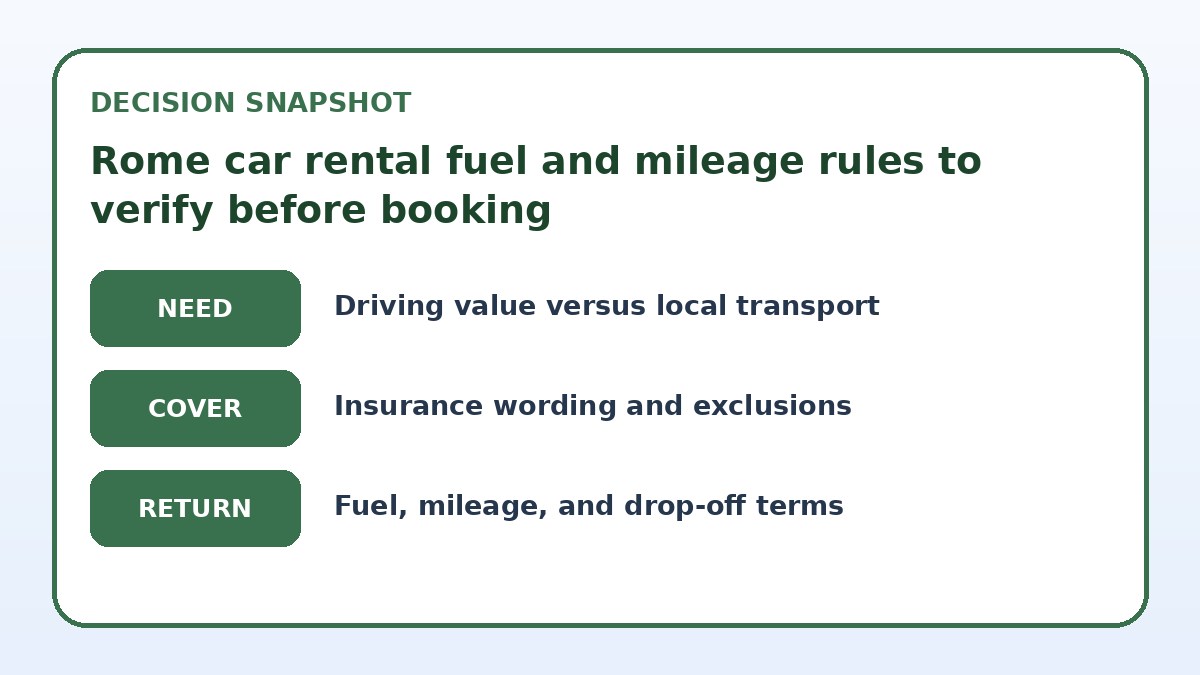
If you're renting a car in Rome for work, check the fuel and mileage rules before you book — that single step can prevent administrative headaches, unexpected charges, and wasted time on trip expense reports. For a business traveler, the key practical checks are whether the rental is full-to-full or full-to-empty, who pays for refuelling if you return with less fuel, whether unlimited mileage is included, and how mileage overage is calculated and billed. Also confirm how cross-border travel, corporate billing, and fuel receipts are handled if you need VAT documentation for expense reimbursement. This article explains the tradeoffs between different fuel options, how to compare mileage packages, and the documentation and provider-page details you must verify to make a smooth, defensible rental choice for a Rome business trip.
See current options before you compare the details
Availability and final conditions change. Open Trip.com now or keep reading for the practical comparison.
Understanding common fuel policies and their business tradeoffs
Rental companies in Rome typically offer a few standard fuel options: full-to-full, full-to-empty (prepaid fuel), and sometimes a fair-policy where you pay for fuel used. Full-to-full requires you to return the car with the same fuel level you picked up and is easiest to reconcile with corporate expenses — you can show a fuel receipt and the rental contract. Prepaid fuel means you pay for a full tank up front and usually won’t get a refund for unused fuel; it’s convenient if you’re short on time but can be more expensive and harder to justify on expense reports.
For business travelers weigh convenience versus auditability. Full-to-full minimizes waste and paperwork uncertainty when you keep fuel receipts and note the pickup level. Prepaid options remove the need to refuel before return but often lack precise refunds and may complicate VAT recovery. Also check whether a fair-policy includes refuelling at an overpriced station or charges a refuelling service fee — those amounts can be billed to the corporate card and flagged during accounting reviews.
Mileage allowances: how to compare packages and avoid surprise fees
Mileage terms vary; some rates include unlimited kilometres, others set a daily or overall mileage cap with a per-kilometre overage charge. For a Rome-centric itinerary where most meetings stay within the city and surrounding business districts, a capped mileage plan can be economical. But if your schedule includes day trips to places like Tivoli, Ostia, or regional meetings across Lazio, unlimited mileage or a high cap will be less risky. Always calculate estimated total kilometres and compare that to the cap before choosing a rate.
When reviewing mileage terms, note whether caps are expressed per day, per rental, or per driver, and how overage is billed — some providers round up partial kilometres or bill in fixed increments. Also confirm whether cross-border travel counts differently; driving into neighbouring regions or countries may be allowed but could trigger different mileage rules or surcharges. For business travel, ensure the rental contract or booking page explicitly records the odometer reading at pickup and drop-off.
| Approach | Best for | Tradeoff to check |
|---|---|---|
| Full-to-full fuel | Travelers who want lower cost and clear receipts for expense reports | Requires time to refill before return and attention to fuel gauge documentation |
| Prepaid/full-to-empty fuel | Busy itineraries where you can’t refill before drop-off | Often more expensive with limited or no refund for unused fuel |
| Limited-mileage rate | Short, city-focused business trips staying within Rome | Risk of overage fees if schedule includes regional day trips |
| Unlimited mileage rate | Itineraries with long day trips or variable travel distances | Higher base cost that may be unnecessary for city-only use |
Ready to check the option that fits your plan?
Use your exact dates and traveler details so the provider page can show the current total and conditions.
Documentation and receipts you must capture for corporate reimbursement
To satisfy corporate finance or tax teams, collect the right documentation: the rental agreement detailing the fuel policy and mileage allowance, an itemized final invoice showing fuel or mileage charges, and fuel receipts showing litres and price per litre when you refuel. Take photos of the fuel gauge and odometer at pickup and return, and ask the rental agent to note readings on the contract. If your company needs VAT invoices, verify how the provider issues VAT documentation and whether it requires a separate request on the booking page.
If you sign at the desk, request printed copies of everything you sign and ensure the agent’s stamp or initials appear beside odometer and fuel notations. If you use an app or email confirmation, download PDFs immediately and save them to your expense system. For cross-border drives, make sure receipts are acceptable for your home finance office — some companies need the original paper receipt for VAT claims, while others accept electronic copies.
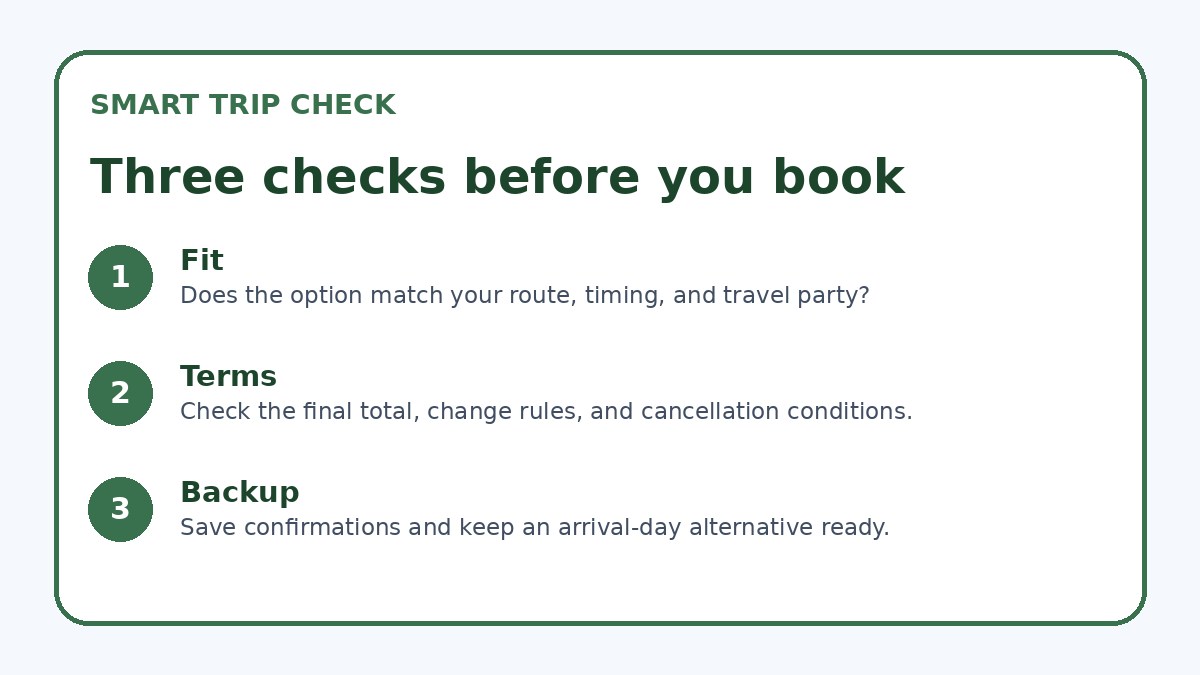
Before you book
- Confirm the fuel policy on the final booking page (full-to-full, prepaid, or fair policy) and save a copy of the terms.
- Request how the provider issues VAT invoices and whether a separate request is required for business receipts.
- Photograph the fuel gauge and odometer at pickup and again at drop-off; ensure readings are recorded on the rental contract.
- Calculate estimated total kilometres for your trip and compare to the offered mileage allowance; note the per-kilometre overage rate.
- Ask at pickup how fuel holds on your corporate card work and how long the hold will remain after the car is returned.
- Keep all fuel receipts showing litres and price per litre and get an itemized final invoice for expense submission.
What to verify on the provider’s booking page and at pickup
Before you commit, read the provider’s fuel and mileage policy language on the final booking page: does the rate include unlimited kilometres, how is fuel charged on return, and are there additional refuelling service fees or recovery charges? If the policy references a partner station or local rules, note that too. When the booking page is ambiguous, call the provider or check the rental terms PDF linked in the confirmation. Trip.com can be used to compare current offers and conditions, but always confirm the exact wording on the rental operator’s final booking page before relying on it for corporate approvals.
At pickup, verify the car’s fuel level and odometer with the agent and insist it’s recorded on the contract or in the app screenshot you take. Confirm whether pre-authorizations will include a fuel hold and how long any hold will remain against your corporate card. Ask the agent how they will document return readings and request a final invoice on-company letterhead if required for expense reporting. These checks take a few minutes but prevent disputes and streamline finance reconciliation after your business trip.
Frequently asked questions
Is prepaid fuel a good idea for a short business trip in Rome?
Prepaid fuel can save time at drop-off, which is handy when your schedule is tight. However, for short trips inside Rome it often costs more than buying fuel yourself and can complicate expense reconciliation because there is no proportional refund for unused fuel. If you opt for prepaid, verify on the booking page whether refunds for unused fuel are offered and keep that booking language on file. Whenever possible, compare prepaid cost versus estimated fuel purchases and weigh convenience against corporate expense policies.
How can I prove mileage to my finance team when returning a rental in Rome?
The best proof for mileage is an odometer reading recorded on the rental contract at pickup and drop-off plus photos of the odometer taken at both times. Ask the agent to initial or stamp the readings on the contract and request a final invoice that lists the total kilometres. If your company requires it, retain the signed rental agreement and any electronic confirmation emails. For cross-border trips, also verify whether separate documentation is needed for international mileage reporting.
Can I drive a rental from Rome into another country and keep the same fuel and mileage terms?
Cross-border travel rules vary between operators and often require explicit permission at booking. Mileage allowances may still apply but additional fees, different insurance requirements, or restrictions can be triggered by driving into another country. Before booking, check the final booking page or terms for cross-border permissions and any associated surcharges. If you plan international travel for meetings, get written confirmation from the provider about how fuel policies and mileage are handled when leaving Italy.
Final planning note
For business travel in Rome, fuel and mileage rules are decisions worth making deliberately. Full-to-full policies generally offer better cost control and clearer receipts for expense teams, while prepaid fuel trades convenience for potential extra cost. Mileage options should be matched to your itinerary: city-only schedules can use capped plans, while regional or international day trips favor unlimited mileage. Always verify the precise wording on the provider’s final booking page, capture odometer and fuel evidence at pickup and return, and secure itemized invoices and receipts for corporate reimbursement. These steps protect your company’s expenses and keep your Rome trip running smoothly.
Continue planning
Check current options and final conditions
Use the provider page to confirm live availability, the final total, cancellation terms, and every condition that matters to your trip.
This evergreen planning guide was created with AI-assisted drafting and a structured quality review. It does not display live prices, schedules, availability, visa guidance, or provider rankings. Verify current details before booking. Some links are affiliate links; we may earn a commission at no additional cost to you.