
Families traveling between Amsterdam and Berlin often juggle schedules, children’s needs, and luggage. The practical answer: choose the ticket flexibility that matches how fixed your travel plans are. If your dates and times are locked—school holiday windows, shared childcare pick-up, or connecting onward travel—a lower-cost non-flexible fare can work if you can commit. If you value the option to change departure times, swap passengers, or cancel with limited penalties because of unpredictable kids, go for a flexible ticket even if the upfront fare is higher and the booking process slightly different.
This article explains the tradeoffs families should weigh: how much flexibility you truly need, where to look for refund/change rules, how seat reservations and family compartments matter, and what to verify on the provider’s final booking page. I’ll also outline decision approaches, a simple comparison table, and a practical checklist you can use before you buy or travel.
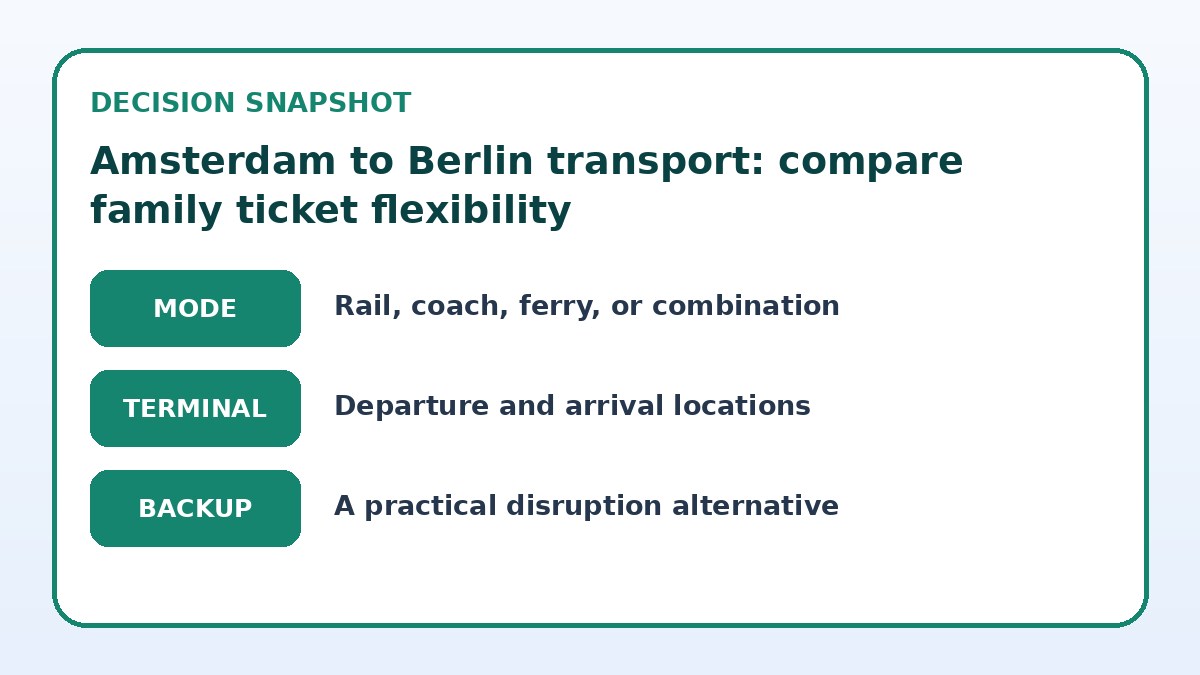
See current options before you compare the details
Availability and final conditions change. Open Trip.com now or keep reading for the practical comparison.
Decide how much flexibility your family really needs
Start by listing the non-negotiables for this trip: fixed event times, onward connections, childcare handoffs, or critical appointments. For families, late arrivals, missed connections, and sudden illness are common so weight how likely changes are. If you have rigid constraints—school return dates, an international flight you must catch, or a booked rental car—prioritize tickets that allow changes without heavy penalties. If you can shift your travel day by a few hours or a day without consequence, a more restricted fare might be a reasonable way to save money while accepting some risk.
Think beyond pure schedule flexibility. Some fares let you change passenger names or transfer a booking to another person; others limit the number of changes or require fees per passenger. For families, the total change cost can be higher due to multiple passengers. Also consider baggage rules, seat reservations, and whether infants or children travel free or reduced fare—these elements affect overall convenience even if the base ticket appears flexible or not.
Compare policy details, not marketing labels
Ticket labels such as “flex,” “flexible,” “standard,” or “economy” vary widely between rail operators and booking platforms. Don't rely on the name alone: read the specific conditions on changes, cancellations, refunds, and whether the ticket is exchangeable for another date or time. Key items to check on the provider’s final booking page include the deadline for free changes, change fees per passenger, whether refunds are partial or full, and whether the fare difference applies when rebooking. If a booking includes seat reservations, confirm whether those are refundable or transferable.
Compare direct and connecting options explicitly: a direct train might reduce the chance of missed connections and therefore lower the value of flexibility, while a cheaper connecting itinerary increases the risk of delays and the usefulness of changeable tickets. If the operator allows open returns or multi-segment changes, verify if those conditions apply across borders. Remember you can use Trip.com once to compare current availability and conditions, but always rely on the operator’s final booking terms before committing.
| Approach | Best for | Tradeoff to check |
|---|---|---|
| Buy the cheapest non-flexible fare | Families with fixed, certain travel dates and low risk of changes | Lower upfront cost but limited or no refunds and higher per-person change fees |
| Choose a fully flexible ticket | Families with unpredictable schedules or important onward connections | Higher fare upfront but easier rebooking, lower stress if plans change |
| Buy restricted fare + separate seat reservations | Families wanting lower fares while ensuring seats together | Saves money on seats but change policies still apply to the base fare |
| Book a flexible fare for one adult and cheap tickets for others | Families where one adult manages changes and can swap roles if needed | Balances cost and flexibility but may complicate group name-change rules |
Ready to check the option that fits your plan?
Use your exact dates and traveler details so the provider page can show the current total and conditions.
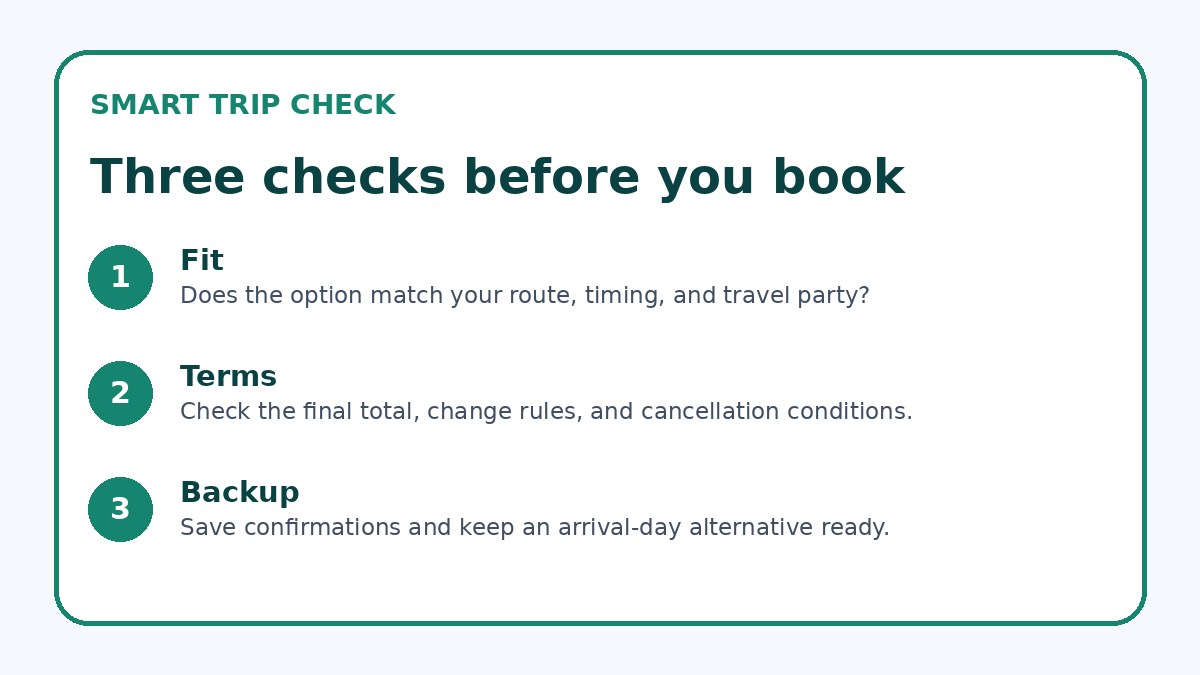
Practical tradeoffs families should weigh
Upfront cost versus emotional and logistical cost is the core tradeoff. Flexible tickets typically have higher fares but can save money and stress if you need to rebook multiple passengers or alter plans at short notice. On the other hand, if your itinerary is fixed and you are confident about travel dates, a restricted fare plus travel insurance and a modest cushion for contingencies can be more economical. For families, calculate potential change fees multiplied by the number of passengers and compare that total to the price difference for a flexible fare.
Also consider convenience items that matter on travel day. Seat reservations together, family compartments (if available), easier boarding, and luggage allowances are often separate line items. A flexible fare without guaranteed seats may still leave you scrambling for space on busy departures. If the route requires a connection, factor in buffer time to account for delays; that buffer may reduce the need to pay for the most flexible fare. Ultimately, match the ticket’s flexibility to the real probability and cost of a change for your group.
Before you book
- List fixed timing constraints (flights, childcare pick-ups, events) to determine how much flexibility you need.
- On the operator’s final booking page, read the change, cancellation, and refund rules line by line before entering payment.
- Confirm whether seat reservations for your family are included or must be purchased separately and whether they can be changed.
- If the itinerary has connections, add buffer time between legs and check if the booking protects you across all segments.
- Document the booking reference and save screenshots of the fare conditions and the vendor’s stated phone/email for changes.
- Compare the aggregated cost of potential change fees for all passengers against the premium for a flexible fare.
How to book and what to verify before you pay
When booking, use a side-by-side comparison: list the change and cancellation rules, whether seat reservations are included, the per-passenger change fee, and the deadline for free changes. If using an aggregator or third-party seller, confirm whether their terms differ from the operator’s—some intermediaries impose their own service fees or limitations. On the final booking page of the train operator or retailer, verify who issues the ticket, where refunds are processed, and the exact steps for making a change after purchase. Keep screenshots or receipts showing the fare conditions.
For cross-border travel, double-check any passport, boarding, or documentation notes and whether the ticket covers all legs through a single booking reference. If your plan involves children traveling under different rules (age cutoffs for free travel, required child IDs), verify those policies on the operator’s site. Finally, confirm payment protection, whether tickets can be reissued on the same booking, and contact methods for urgent changes on travel day; write down emergency numbers and have a contingency plan for missed trains.
Frequently asked questions
Can I change passengers on a family train ticket after booking?
Policies vary by operator. Some tickets allow name changes while others tie the ticket to the original passenger names. For families, changing names or transferring tickets can incur fees per passenger, and some fares prohibit it entirely. Always read the final booking terms where the operator explains whether name swaps are permitted, what documentation is required, and how fees are calculated. If this is important, choose a ticket that explicitly allows passenger changes or contact the operator before booking to confirm the practical steps and costs.
Are seat reservations included with flexible tickets for family seating?
Seat reservation rules differ across services. A flexible fare may or may not include reserved seats; sometimes seat reservations are an add-on regardless of ticket flexibility. For families who need guaranteed adjacent seats, check whether reservations are included, whether they can be changed without penalty, and whether family compartments exist on the route. Verify these details on the provider’s booking page and, if necessary, secure seat reservations at the same time you buy the tickets to avoid separate availability issues later.
If my train itinerary includes a connection, how does flexibility affect risk?
Connections increase the chance that a delay on one leg disrupts the rest of the trip. Flexible tickets reduce the risk by allowing you to change to a later train with lower penalties or rebook the affected segment. If you book separate single-leg tickets, you may bear the full cost of any missed connection; through-tickets or flexible multi-segment bookings often provide better protection. Always check whether your booking is protected across connections and, if not, build extra buffer time or select more flexible options for critical legs.
Final planning note
For families traveling between Amsterdam and Berlin, the right ticket depends on how fixed your schedule truly is and how you value stress reduction versus upfront cost. If dates are firm and connections are robust, a restricted fare with careful planning and seat reservations can save money. If there’s any chance of last-minute changes—illness, childcare shifts, or tight onward connections—the premium for more flexible tickets often pays off in reduced hassle and lower cumulative change fees. Before you complete any purchase, read the operator’s final booking page for exact change, refund, and seat reservation policies, save the booking terms and reference numbers, and weigh the total potential change cost for all passengers against the flexible fare premium.
Continue planning
Check current options and final conditions
Use the provider page to confirm live availability, the final total, cancellation terms, and every condition that matters to your trip.
This evergreen planning guide was created with AI-assisted drafting and a structured quality review. It does not display live prices, schedules, availability, visa guidance, or provider rankings. Verify current details before booking. Some links are affiliate links; we may earn a commission at no additional cost to you.