
If you’re traveling alone to Jeju and hunting travel deals, plan around the island’s shoulder seasons (late spring and early autumn) to balance weather, lower crowds, and better accommodation choices. The practical approach: decide whether you value quieter nature time, cheaper but less predictable weather, or more activity options — then use those priorities to choose dates, neighborhoods, and how far in advance to book. Start by comparing flight options and arrival times, then match lodging to your priorities (coast for sunsets, central town for transport and cafés). Always verify the provider’s cancellation policy, final price breakdown, and exact inclusions on the booking page before paying. Below you’ll find decision criteria, tradeoffs for solo travelers, and checklists to turn those choices into a smooth Jeju trip.
See current options before you compare the details
Availability and final conditions change. Open Trip.com now or keep reading for the practical comparison.
Choosing shoulder-season dates: what to prioritize
When you pick dates in a shoulder season, you’re balancing three main priorities: weather predictability, crowd levels, and cost. Late spring and early autumn typically sit between the island’s busy summer tourism and cooler winter months, offering milder temperatures and fewer tour groups. If you’re a solo hiker or photographer seeking empty trails, midweek dates during shoulder periods usually have the lightest foot traffic. Conversely, if you prefer guaranteed sunny beach days, shoulder seasons are less predictable than peak summer — so be prepared to adapt your daily plans or include a weather-flex buffer in your itinerary.
Use your priorities to set a booking rule: if flexibility and solitude trump everything, book accommodation with lenient cancellation and keep flights refundable or rebookable. If cost is the larger concern, look slightly outside the narrowest shoulder windows where deals sometimes reappear, but accept possible weather variability. For social options like language exchanges or local meetups, check event calendars — some cafés and activities shift schedules off-peak. In short, decide whether you’re buying calm, savings, or certainty, then let that decision guide how rigidly you lock in dates.
Where to stay as a solo traveler: neighborhoods and tradeoffs
Jeju City is the logical hub for flights, bus connections, and a denser selection of cafés, coworking spots, and evening eateries — useful for solo travelers who want convenience and social options. If you prioritize easy onward travel and quick access to local life, look for lodging in neighborhoods near the city center or the harbor. Staying central reduces taxi and bus time to day tours and makes it simpler to join small-group activities. The tradeoff is that central hotels and guesthouses can feel busier and slightly pricier during popular windows, even in shoulder seasons.
Seogwipo and the southern coast appeal to hikers, waterfall-goers, and people wanting calmer evenings and scenic drives. Small guesthouses and pensions along the south coast are excellent if you plan independent exploration, but check transport frequency: buses and some services reduce runs compared with Jeju City. If you prefer a coastal view or easy access to hiking routes, weigh the quieter setting against the need for a rental car or careful bus timetable checks. For true solitude, the east coast offers raw landscapes and fewer tourists, but fewer solo-traveler amenities.
| Approach | Best for | Tradeoff to check |
|---|---|---|
| Book early in the shoulder window | Travelers who prioritize lower rates and more lodging choices | You accept slightly higher weather uncertainty and may need flexible plans |
| Wait for last-minute deals close to travel | Solo travelers with flexible schedules and tolerance for change | Risk lodging shortages and limited transport options on specific dates |
| Choose central Jeju City lodging | Those wanting convenience, nightlife, and easier day-trip logistics | Less scenic solitude and possibly higher nightly rates |
| Stay in Seogwipo or coastal guesthouses | Hikers and nature-focused solo travelers seeking quieter evenings | Requires more planning for buses, taxis, or a rental car |
Ready to check the option that fits your plan?
Use your exact dates and traveler details so the provider page can show the current total and conditions.
Comparing travel deals: flights, lodging, and package options
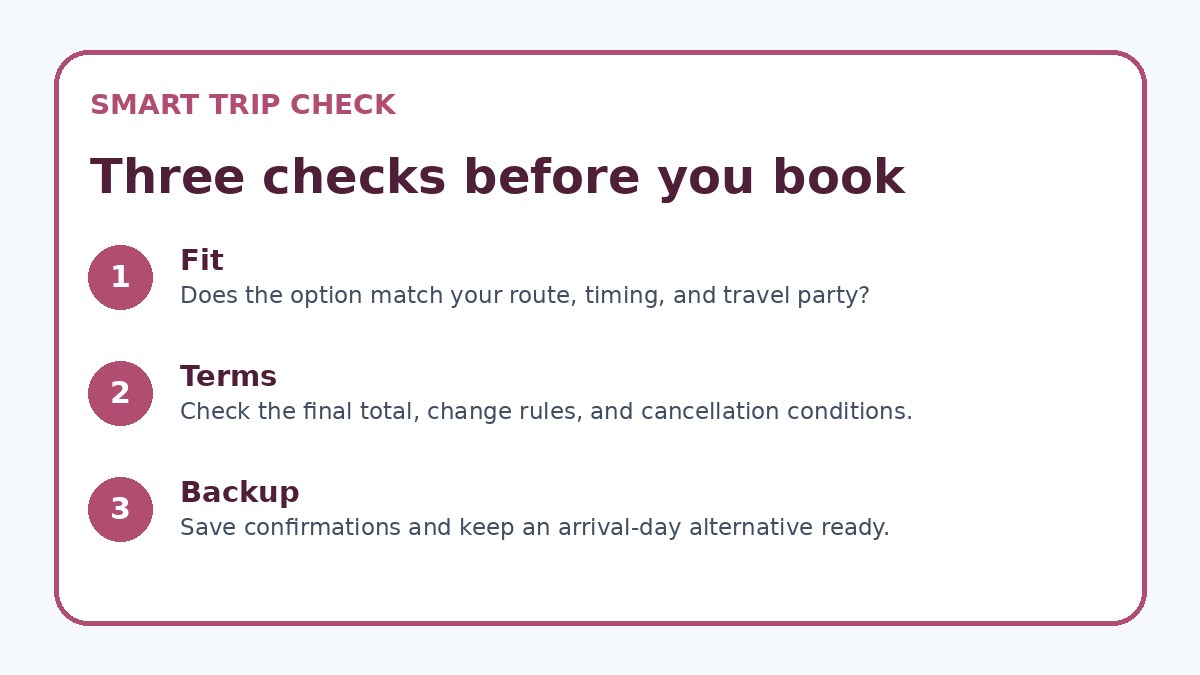
When comparing deals, don’t focus solely on headline price. Compare what’s included — luggage, seat selection, and change fees for flights; breakfast, taxes, and cleaning fees for lodging; and any mandatory transfers for packages. For solo travelers, single-room supplements and nonrefundable rates can quickly add hidden costs. If a package looks cheaper but includes a fixed arrival window or group-only transfers, factor in the loss of flexibility. Always open the final booking page to confirm the total cost and the cancellation or change policy before you commit.
Evaluate convenience metrics that matter to a solo traveler: flight arrival time relative to your first day, the acclimatization buffer before major hikes, walking distance from lodging to cafés or bus stops, and whether the deal offers flexibility for date changes. If you plan to rent a car, compare how the package’s pickup location aligns with rental desks. Trip.com can be one quick place to compare current availability, but verify each provider’s final terms on their booking page. Use a short checklist to ensure you understand pickup times, deposit requirements, and refund windows before booking.
Before you book
- Decide whether solitude, lowest cost, or best-weather certainty is your top priority for date selection.
- Compare final total prices on the provider’s booking page, including taxes, cleaning fees, and single-room supplements.
- Verify cancellation and change policies for flights and lodging before committing to a nonrefundable deal.
- Check local bus timetables or rental car pickup hours to ensure your arrival and departure times are practical.
- Book your first one or two nights in advance to have a secure base and confirm how to reach the property late at night.
- Download offline maps and save screenshots of reservation confirmations and emergency contact information.
Packing, safety, and solo-friendly planning tips for shoulder seasons
Shoulder seasons mean changeable weather: mornings and evenings can be cool, while midday may warm quickly. Pack lightweight layers, a compact rain shell, and comfortable walking shoes suited for rocky coastal trails. Solo travelers should carry a basic first-aid kit, portable charger, and photocopies or screenshots of reservation confirmations and emergency contact numbers. If you’ll hike Hallasan or other longer trails, register your planned route where required and tell a contact your rough schedule. Check local bus timetables for your return leg, especially if you plan to finish a day trip late in the afternoon.
For safety and social needs, book at least your first two nights before arrival so you have a settled base to check logistics and meet others at cafés or guesthouse common areas. Choose accommodations with good reviews for solo travelers mentioning secure lockers, staff availability, or common spaces — then confirm these features on the booking page. When considering activities like boat trips or remote hikes, verify weather-dependant cancellations and confirm refund or transfer terms. Finally, carry a small amount of local currency for remote areas and have a reliable map app with offline downloads.
Frequently asked questions
What are the main advantages of traveling to Jeju during shoulder seasons as a solo traveler?
Shoulder seasons offer a balance of fewer crowds and generally lower accommodation pressure, which can make solo travel more relaxed and social opportunities easier to find in guesthouses or cafés. You’ll often encounter quieter trails and shorter waits at popular viewpoints, which helps if you want to set your own pace without large tour groups. The tradeoff is more variable weather than peak summer and possibly fewer scheduled events or services, so build flexibility into your daily plans and book core nights with lenient cancellation terms.
How should I compare flight and package deals for a solo trip to Jeju?
Focus on what’s included rather than the headline fare: baggage, change fees, seat selection, and exact pickup or transfer arrangements. For packages, confirm arrival windows and whether group transfer times constrain your schedule. Solo travelers should also check single-room supplements and whether the package assumes shared rooms or group-only activities. Always open the final booking page to verify the total charge and read the provider’s cancellation and change policy before you pay; Trip.com can be used to compare listings, but confirm details directly with the supplier.
Do I need a rental car in Jeju during shoulder seasons as a solo traveler?
A rental car gives maximum flexibility for reaching remote coastal trails and dispersed attractions, and it may make sense if you prefer independent exploration. However, buses connect major towns and many sites, and staying in Jeju City or Seogwipo reduces the need for a car. If you rely on public transport, plan around reduced bus frequencies during off-peak times and confirm pickup or drop-off windows on any booked tours. Decide based on your daily itinerary: if you plan multiple remote stops in one day, a car will likely save time and simplify logistics.
Final planning note
For solo travelers, planning Jeju trips around shoulder seasons is about choosing which compromise you’ll accept: fewer crowds and better lodging choice at the cost of some weather unpredictability, or firmer weather certainty at peak-season prices and crowds. Start by setting your top priority, then compare flight and accommodation deals with that priority as the filter. Confirm full costs and cancellation terms on the provider’s booking page before you pay, and prepare flexible daily plans so a wet morning can become an indoor museum visit or café work session. With a small checklist and attention to transport timetables, shoulder-season Jeju can deliver calm hikes, friendly guesthouse conversations, and good value for an independent traveler.
Continue planning
Check current options and final conditions
Use the provider page to confirm live availability, the final total, cancellation terms, and every condition that matters to your trip.
This evergreen planning guide was created with AI-assisted drafting and a structured quality review. It does not display live prices, schedules, availability, visa guidance, or provider rankings. Verify current details before booking. Some links are affiliate links; we may earn a commission at no additional cost to you.