If you’re flying from Dubai to Auckland alone, the two decisions that shape your whole trip are what you pack and how you allocate time at airports. Make them deliberately and you’ll remove the usual last-minute scrambles: choose luggage that matches connection rules and immigration needs, then build a timeline that accounts for check-in, security, possible transfers and immigration at arrival. This guide gives a clear, practical starting point: recommended baggage configurations, a timing template you can adapt to your itinerary, and the tradeoffs to weigh when you’re deciding whether to check bags, carry everything on, or add buffer time for connections. Before you finalize any booking, verify airline baggage allowances, connection minimums and required arrival times on the carrier’s official pages or on a live comparison site such as Trip.com.
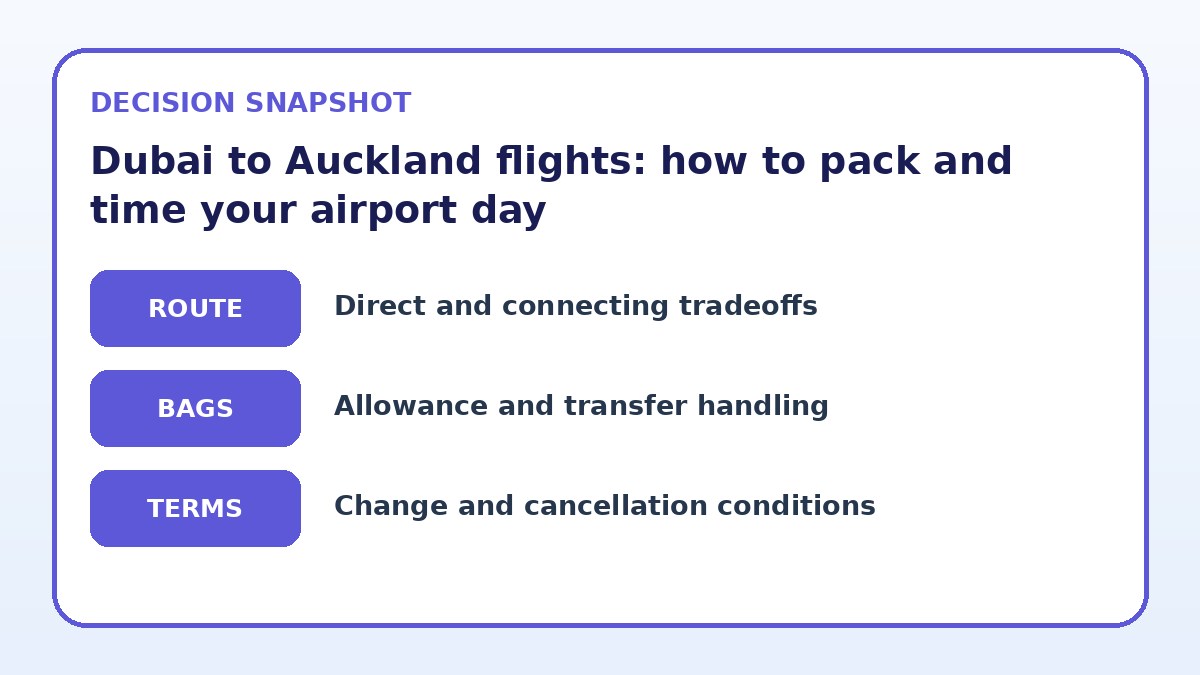
See current options before you compare the details
Availability and final conditions change. Open Trip.com now or keep reading for the practical comparison.
Choosing the right baggage mix
Start by deciding between carry‑on only and checking a bag. A carry‑on keeps you mobile and reduces the chance of lost baggage, but it restricts what you can bring and usually limits liquids and full‑size toiletries. If you rely on checked luggage for shoes, winter clothing or larger electronics, pick one checked bag and consolidate everything else into a single, compliant carry‑on. For comfort on a long Dubai‑to‑Auckland route, include a small daypack or personal item that holds essentials you’ll want in-flight and during a connection.
When choosing sizes and weights, match them to the airline’s published rules for the fare class you intend to buy. If your itinerary includes different carriers or codeshares, check each segment’s allowance because low‑cost and regional partners sometimes differ. Use soft‑sided luggage to squeeze items into overhead bins and choose lightweight pieces so you’re not eating into the airline weight limit with the bag itself. Finally, invest in packing aids—compression cubes, a toiletry bag with a clear sleeve and a padded sleeve for laptops—to keep items accessible and avoid repacking during tight layovers.
Timing your departure from Dubai
Work backwards from your flight’s departure time to create a realistic pre‑flight schedule. For international long‑haul departures, many travellers find arriving two to three hours before boarding gives enough time for check‑in, security and a buffer for queues. If you have a lot of checked luggage, need seat assistance, or are travelling during busy periods, add another 30–60 minutes. If you’re based in Dubai and using public transport, allow time for transfers; if using a taxi or rideshare, factor in potential traffic delays, especially during peak hours or near holidays.
If your Dubai‑Auckland routing includes a connection, align your arrival at the first airport with the minimum connection time plus extra cushion. Connections that require switching terminals, passing through immigration, or rechecking baggage demand more time than same‑terminal transfers. Keep copies of any transit instructions the airline provides and confirm terminal information on the airline’s site before you leave. If your reserve plan involves paying for fast‑track security or lounge access to reduce stress, check availability and eligibility for those services in advance.
| Approach | Best for | Tradeoff to check |
|---|---|---|
| Carry-on only | Highly mobile solo travellers who want minimal connection hassle | Limited space for bulky clothing and full-size liquids |
| One checked bag + carry-on | Balanced travellers needing more clothing or equipment | Longer check‑in and baggage claim time on arrival |
| Separate tickets with recheck | Budget-conscious planners who accept longer connections | Higher risk of missed connections and extra transfer time |
| Through-checked single ticket | Travelers prioritising simplicity and fewer transfer tasks | Typically less flexible if delays cause missed connections |
Ready to check the option that fits your plan?
Use your exact dates and traveler details so the provider page can show the current total and conditions.
Managing connections and rechecking luggage
Not all Dubai to Auckland tickets are nonstop; you may connect through another hub. Compare itineraries by total elapsed travel time, number of transfers and whether luggage is checked through to Auckland. If a single ticket checks your bags through, you’ll save time and stress at the connection. But if you must clear immigration and recheck luggage, plan an extra 60–120 minutes depending on the airport, and confirm whether you need a transit visa or specific documentation for the stopover.
If you book separate tickets for segments to save money or to combine operators, assume you will need to collect and recheck bags and that the second carrier won’t be responsible for missed connections. That scenario requires a longer buffer and contingency planning—carry essentials and a change of clothes in your cabin bag, know the baggage recheck counters’ locations, and buy travel insurance that covers missed connections caused by delays on your incoming flight.
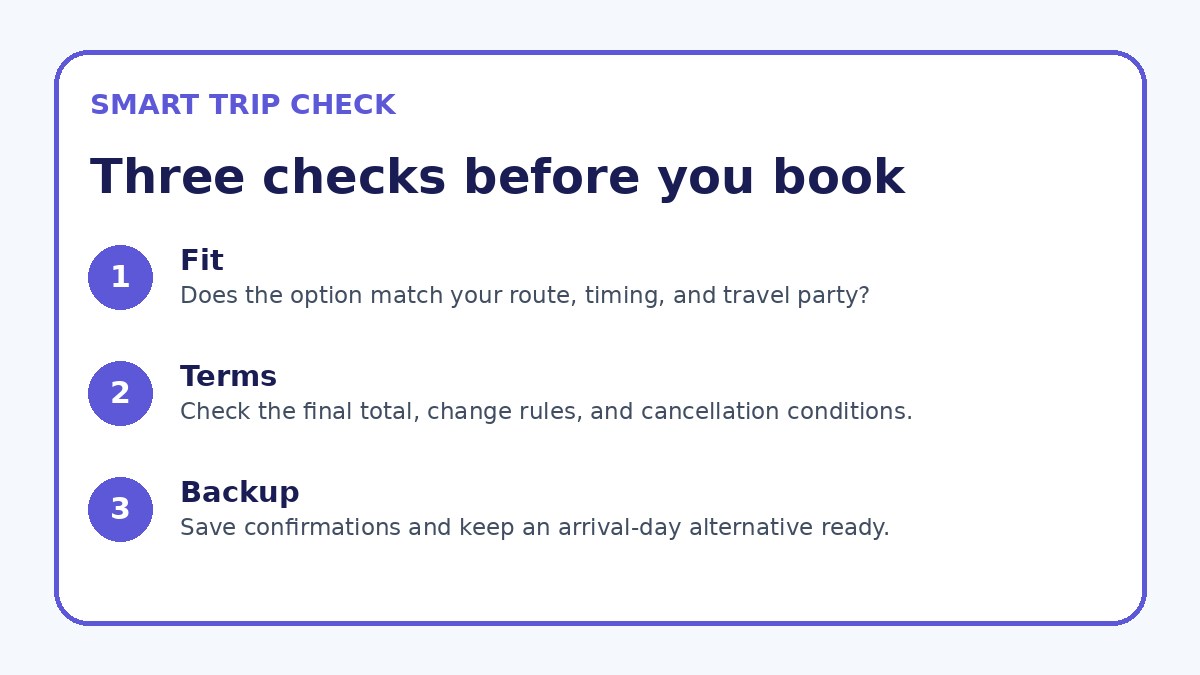
Before you book
- Confirm baggage allowances, weight limits and extra-fee rules on every airline segment before booking.
- Pack a carry-on with essentials: travel documents, medication, a change of clothes, chargers, and toiletries in a clear pouch.
- Label all bags inside and out and add a unique ribbon or tag for quick identification at baggage claim.
- Create a timing plan: departure buffer from home, airport arrival time, minimum connection plus cushion, and arrival exit buffer.
- Save screenshots or printouts of terminal maps and transfer instructions for each airport on your itinerary.
- Purchase travel insurance that explicitly covers missed connections and baggage delay for multi‑segment itineraries.
Arrival in Auckland: timing for immigration and onward travel
On arrival, expect immigration, baggage claim and customs to be the slowest part of the journey. Solo travellers should have travel documents and completed landing forms ready before you queue, with passports and any required visas easily accessible. If you’re meeting someone or catching a domestic connection, avoid booking time‑sensitive appointments or tight onward flights until you can reasonably add 60–120 minutes to the published arrival-to-exit time. Plan ground transport with extra cushion; prebook taxis or ride apps with an arrival buffer or choose a flexible shuttle.
If you’re continuing your trip within New Zealand, check whether your domestic carrier requires you to be at the regional terminal a certain time before departure and whether they accept through-checked baggage from international arrivals. For those staying in Auckland, consider the practicality of luggage: a large checked bag may be heavy to carry to city accommodations, while a compact two-bag setup often makes transfers and city travel easier. Confirm baggage rules and terminal info on the airline’s booking page before finalizing onward bookings.
Frequently asked questions
How much time should I allow for a Dubai departure when flying to Auckland?
For international long‑haul departures from Dubai, most solo travellers plan to arrive at the terminal two to three hours before the flight. If you have checked bags, need special assistance, or anticipate busy queues at peak times, add 30–60 minutes. If your itinerary includes an early morning rush or public events that could increase traffic, factor in an extra cushion for the ride to the airport. Always verify the airline’s recommended check‑in time on their official booking page and adjust your schedule to meet any specific carrier or terminal instructions.
What’s the safest baggage strategy for a flight with one or more connections?
If the itinerary is issued on a single ticket and the airline checks baggage through to Auckland, that is usually the least stressful option because you avoid rechecking during connections. When tickets are separate, assume you’ll need to collect and recheck bags and plan additional time. For critical items—prescriptions, essential electronics, travel documents—keep them in a cabin bag so a delayed or lost checked bag won’t disrupt the rest of your trip. Check each carrier’s baggage rules before you book to know weight limits and potential transfer requirements.
How should I plan my arrival time in Auckland for onward travel?
When scheduling onward transport or domestic flights after arriving in Auckland, include time for immigration, baggage claim and customs—typically add 60–120 minutes beyond the scheduled arrival time. If you must catch a domestic flight, compare the international arrival terminal and the domestic departure terminal; transfers between terminals can add significant time. Avoid booking tight domestic connections immediately after a long international leg unless the airline explicitly guarantees through‑checked luggage and a minimum connection buffer. Confirm terminal locations and any inter‑terminal transfer details on the airlines’ pages before booking onward travel.
Final planning note
Organising luggage and airport time for a Dubai to Auckland trip comes down to three practical choices: how much you carry, how much buffer you build into connections, and where you accept risk. Solo travellers who travel light and keep essentials in a carry‑on minimise transfer stress and speed up arrival. Those who need checked bags should add time for check‑in and baggage reclaim and verify whether luggage is checked through on multi‑segment tickets. Finally, always confirm baggage allowances, minimum connection times and terminal details on the airline’s booking page before finalizing plans; a quick check there and on a live site such as Trip.com can prevent most surprises.
Continue planning
Check current options and final conditions
Use the provider page to confirm live availability, the final total, cancellation terms, and every condition that matters to your trip.
This evergreen planning guide was created with AI-assisted drafting and a structured quality review. It does not display live prices, schedules, availability, visa guidance, or provider rankings. Verify current details before booking. Some links are affiliate links; we may earn a commission at no additional cost to you.