If you need to travel from Auckland to Wellington and want a clear multi-city ground-transport plan, start by picking your main priorities: speed, scenery, budget, or comfort. The practical answer for most first-time visitors is to sketch a route that combines one longer intercity leg (coach, train, or drive) with shorter regional transfers and overnight stops chosen to match your stamina and interests. Decide upfront whether you prefer fewer changes (direct intercity service plus local transit or taxis at each end) or to break the journey into several scenic legs that let you explore towns and attractions along the way. After choosing a core option, compare schedules, luggage rules, and baggage transfers, then book the longest leg first and local connections second. Later sections explain tradeoffs, how to evaluate multi-stop itineraries, and the specific checks to make on provider booking pages.
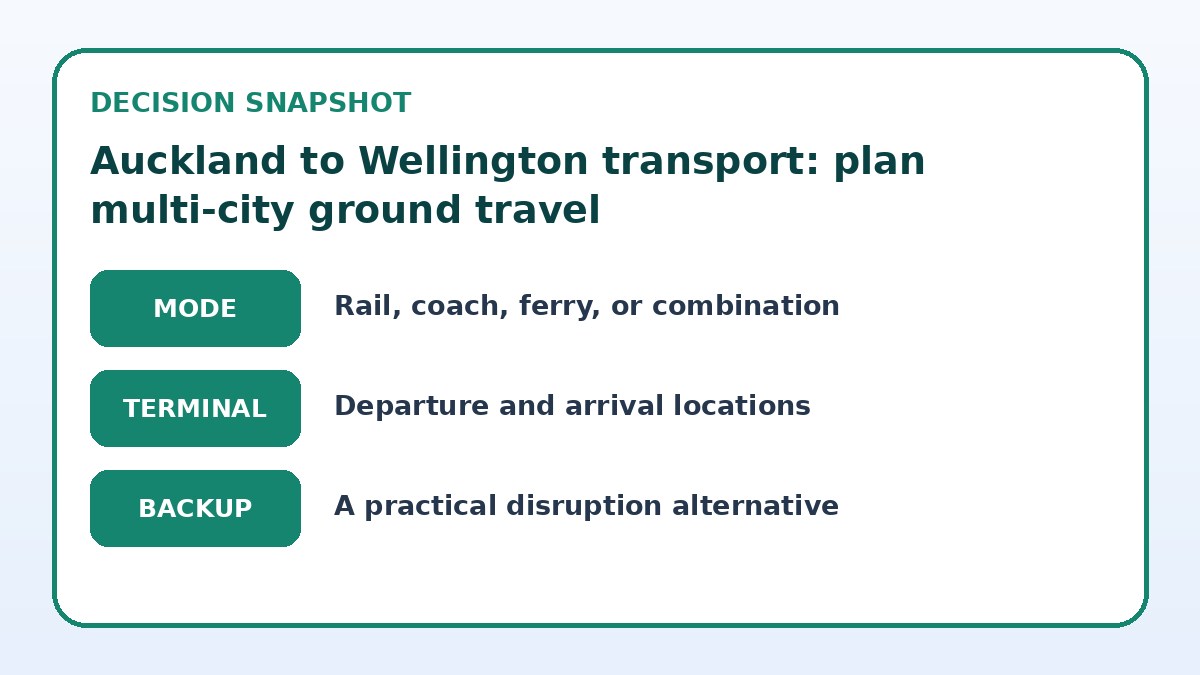
See current options before you compare the details
Availability and final conditions change. Open Trip.com now or keep reading for the practical comparison.
Deciding the backbone: drive, coach, or train
Begin your plan by choosing a backbone option that suits how you want to travel between Auckland and Wellington. Driving gives maximum flexibility to stop where you like and create a bespoke multi-city route; it’s best if you’re comfortable navigating regional roads and managing parking. Coach services focus on economy and often stop at major towns—good for travelers who prefer to avoid driving and want predictable point-to-point transfers. Trains prioritize comfort and scenic views where available; they reduce the stress of driving and often have space to relax or work onboard, but may run on limited schedules and require complementary ground transfers at either end.
When deciding, compare how each backbone affects the rest of your plan. A single long drive lets you control timing of overnight stops, but you also need to factor in fatigue and local driving conventions. Choosing coach or rail means syncing regional buses, shuttles, or taxis at both stations to reach accommodation or attractions; that can be efficient if you book connecting legs with realistic transfer buffers. Prioritize reliability and the least-complex itinerary for your first trip: first-time visitors often gain the most from a simple backbone that minimizes the number of separate bookings and tight connections.
Building multi-city stops and overnight choices
Once you have a backbone, pick intermediate stops that break the trip into manageable segments. Aim for 1–3 overnight stops depending on how much you want to explore and how long you have. Select towns with practical transport links—bus or train stations, reliable shuttle options, and a range of accommodation choices—to avoid ending the day with complex transfers. Consider whether a town will be an overnight base for local activities or simply a restful stop; bases require time to drop bags and move between lodging and sights, while simple stops can be quick and keep you moving.
Balance attraction types across stops to keep travel days varied: mix coastal towns, hiking areas, and cultural centers if you want a rounded trip. Check lodging locations relative to arrival and departure points to minimize taxi or shuttle needs early in the morning. If you plan to use public transport for regional legs, aim to align your overnight stays with scheduled services rather than forcing off-schedule connections. For driving itineraries, pick accommodations with easy parking and reasonable check-in times to smooth arrivals after long driving days.
| Approach | Best for | Tradeoff to check |
|---|---|---|
| Drive your own or rental car | Travelers wanting full flexibility and scenic detours | More responsibility for navigation, parking, and fatigue; variable fuel and rental terms to check |
| Intercity coach backbone | Budget-focused travelers who prefer not to drive | Fixed schedules and potential roadside stops; requires syncing local transport to reach accommodations |
| Train backbone where available | Those prioritizing comfort and relaxed scenery | Limited frequencies and station locations that may need extra transfers |
| Mix-and-match (e.g., drive part, coach part) | Travelers wanting both flexibility and lower-cost segments | More complex planning and multiple bookings; needs careful transfer timing |
Ready to check the option that fits your plan?
Use your exact dates and traveler details so the provider page can show the current total and conditions.
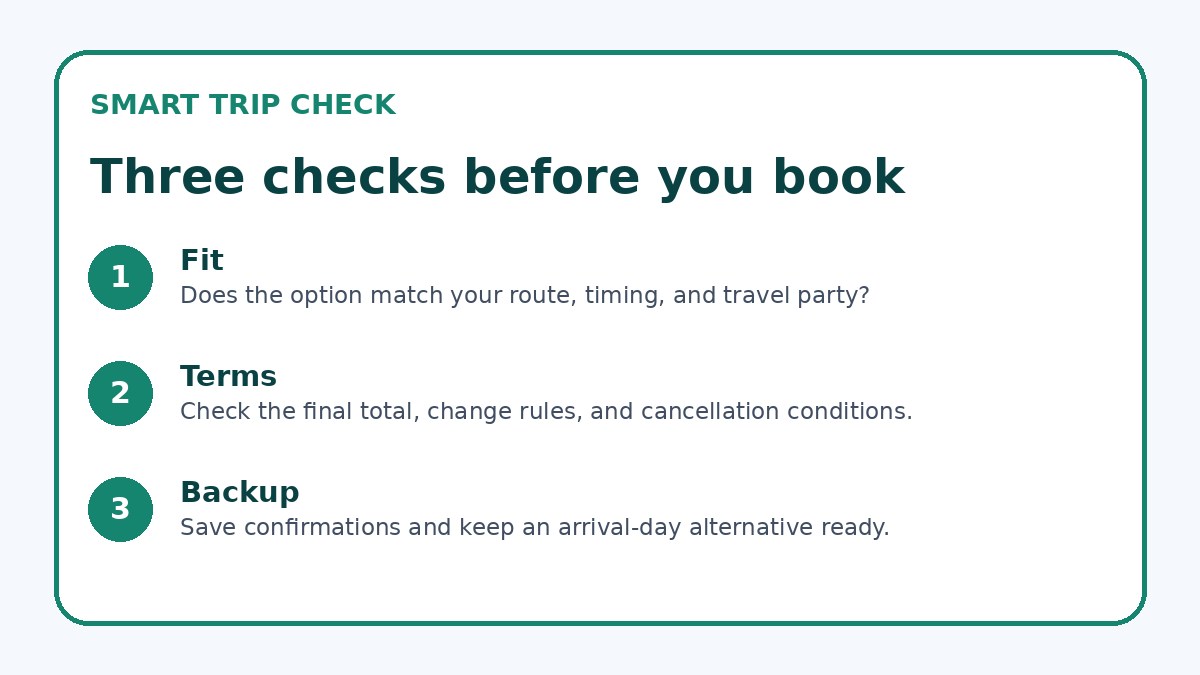
Practical checks before booking each leg
Before you commit, verify several practical items on each provider’s booking page. Confirm departure and arrival points precisely—some services use different stations or roadside stops—and note how far they are from central accommodation. Look for baggage allowances and size or weight restrictions, and clarify whether transfers between services require you to collect and re-check luggage. Also check whether advance reservations are needed for onboard amenities such as reserved seating or sleeper berths, and whether there are mandatory check-in windows or identity requirements.
Also read the provider’s stated change and cancellation policies, and note any conditions that might affect your flexibility. For multi-leg plans, determine whether separate tickets are independent or if the provider offers through-ticketing in case of missed connections. If a particular regional leg is infrequent, build a larger buffer into your schedule or choose an overnight stop to avoid missed connections. When booking, confirm pickup points for shuttles and taxis, and double-check local transit timetables on a trusted site or with the provider; Trip.com can be used as a comparison source for current availability but always re-verify specifics on the supplier’s official page.
Before you book
- Choose your priority (speed, scenery, cost, or comfort) to determine the backbone transport mode before booking.
- Map must-see towns and allocate overnight stops that align with realistic daily travel distances.
- Verify exact departure/arrival points, baggage rules, and any seat or berth reservation requirements on each booking page.
- Confirm change and cancellation terms for every ticket, and consider travel insurance if flexibility is important.
- Build transfer buffers into schedules for regional legs and double-check local transit or shuttle timetables.
- Save key addresses and pickup points offline and note local taxi or shuttle contact options for night or early arrivals.
Packing, timing, and local transport on arrival
Pack with transfers in mind: use luggage that’s easy to handle on and off buses or trains and that complies with the baggage rules you confirmed earlier. Include a compact daypack for short explorations around multi-city stops so you can leave larger bags at your accommodation. For driving itineraries, plan vehicle trunk space and carry essentials for sudden weather or terrain changes; for public transport plans, keep important documents and medications in carry-on items in case you need them during a connection.
On arrival in towns or cities, prioritize how you’ll move from station areas to accommodation or attractions. Look up local bus routes, taxi ranks, and shared-ride apps ahead of time and save key addresses in both local format and a mapping app. Allow extra time in tight schedules for unexpected delays, and consider booking a meet-and-greet or private transfer for early-morning or late-night arrivals. Good timing and modest buffers make a multi-city ground plan considerably less stressful for first-time visitors.
Frequently asked questions
How do I choose between driving and public transport for this route?
Decide based on priorities: if you want control over stops, timing, and scenic detours, driving is best; if you prefer to avoid navigation and relax, public transport reduces stress. For public transport, compare coach and train backbones by frequency, station locations, and how easy local transfers will be; pick the option that minimizes the number of separate, tight connections. Also weigh practicalities like parking needs, comfort during long legs, and whether your multi-city plan requires late departures or early arrivals that public services may not cover.
Can I combine different providers on a single journey safely?
Yes, combining providers is common for multi-city plans, but it increases complexity and risk of missed connections. Treat each ticket as potentially independent unless the provider explicitly offers through-ticketing or a protected connection. Build time buffers between legs, especially when transferring between modes or when you need to collect luggage. Keep emergency contact numbers for each supplier, and consider overnighting in a town rather than chasing tight same-day connections when services are infrequent.
What are the most important things to check on a provider’s booking page?
Look for exact pickup and drop-off locations (station names and platforms or roadside stop descriptions), baggage allowances and rules, required ID or check-in windows, seat or berth reservation policies, and the provider’s change and cancellation terms. If you rely on connections, check whether through-ticketing exists or if separate tickets are needed. Confirm whether tickets are electronic or paper, and whether any shuttle or transfer must be pre-booked separately; verify these details on the provider’s final page before paying.
Final planning note
Planning ground transport from Auckland to Wellington as a first-time visitor is about choosing a clear backbone, building realistic multi-city stops, and verifying practical details before booking. Start by picking the mode that matches your priorities—drive for flexibility, coach for economy, or train for comfort—then book the longest leg first and arrange regional connections and overnight stays around it. Prioritize exact pickup points, baggage rules, and transfer buffers to avoid stress on travel days. With modest planning, balanced buffers, and careful checks on provider pages, you can create a multi-city route that delivers the scenery and experiences you want without last-minute surprises.
Continue planning
Check current options and final conditions
Use the provider page to confirm live availability, the final total, cancellation terms, and every condition that matters to your trip.
This evergreen planning guide was created with AI-assisted drafting and a structured quality review. It does not display live prices, schedules, availability, visa guidance, or provider rankings. Verify current details before booking. Some links are affiliate links; we may earn a commission at no additional cost to you.